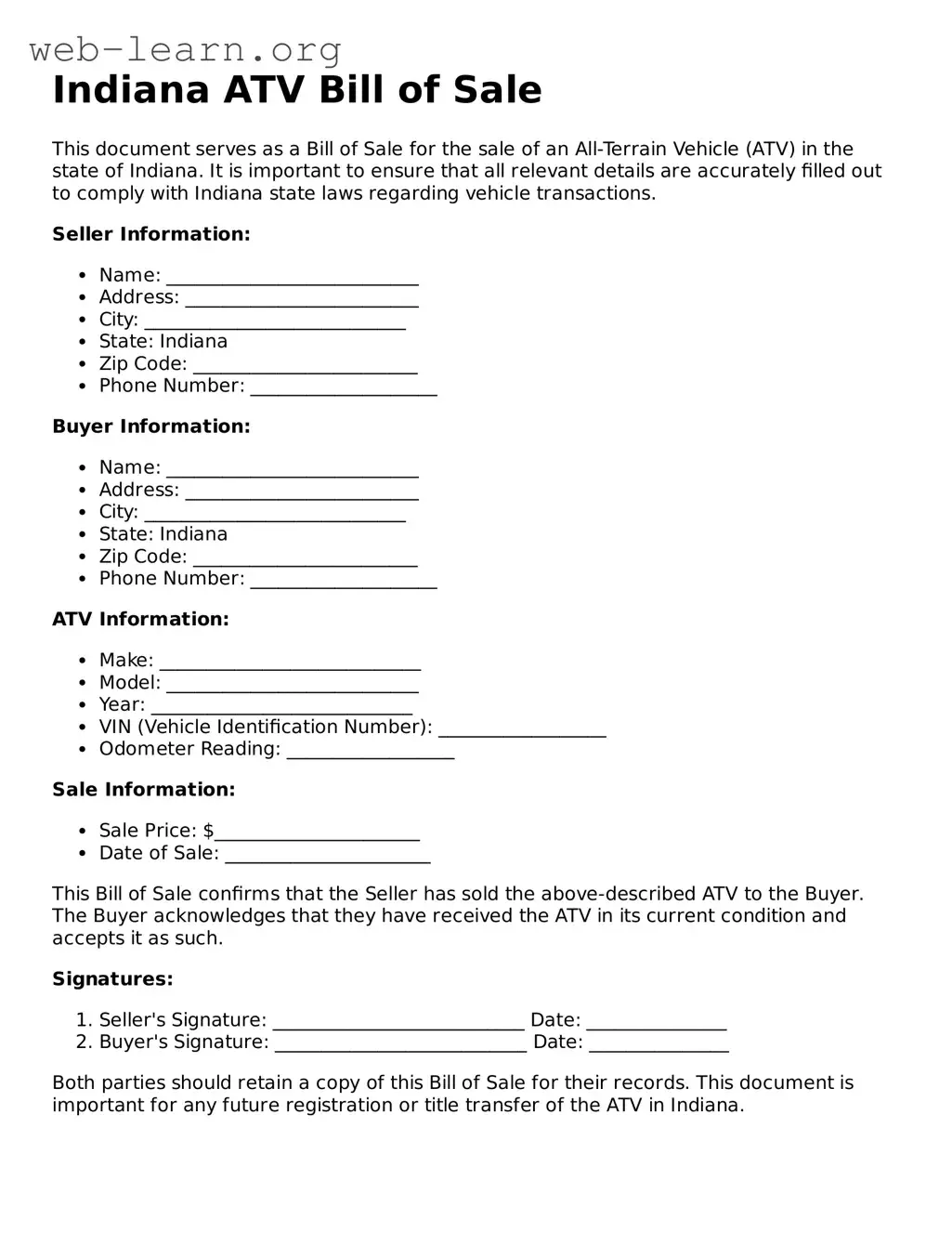
In the vibrant landscape of Indiana's recreational activities, the All-Terrain Vehicle (ATV) Bill of Sale form plays a crucial role for both buyers and sellers engaged in the exchange of these popular vehicles. This document serves as a tangible record of the transaction, detailing essential information such as the names and addresses of the parties involved, the vehicle's make, model, and identification number, and the agreed purchase price. By providing a clear outline of the sale, the form helps protect the interests of both parties, ensuring that the seller can demonstrate ownership and the buyer can confirm the vehicle's legitimacy. Furthermore, the completion of this form can facilitate the registration process with the Indiana Bureau of Motor Vehicles, making it an indispensable tool for those venturing into the world of ATV ownership. Understanding the nuances of this form is essential for anyone looking to navigate the complexities of buying or selling an ATV in Indiana, as it not only formalizes the transaction but also helps prevent potential disputes down the road.
Indiana ATV Bill of Sale
This document serves as a Bill of Sale for the sale of an All-Terrain Vehicle (ATV) in the state of Indiana. It is important to ensure that all relevant details are accurately filled out to comply with Indiana state laws regarding vehicle transactions.
Seller Information:
Buyer Information:
ATV Information:
Sale Information:
This Bill of Sale confirms that the Seller has sold the above-described ATV to the Buyer. The Buyer acknowledges that they have received the ATV in its current condition and accepts it as such.
Signatures:
Both parties should retain a copy of this Bill of Sale for their records. This document is important for any future registration or title transfer of the ATV in Indiana.
| Fact Name | Description |
|---|---|
| Purpose | The Indiana ATV Bill of Sale form is used to document the sale of an all-terrain vehicle in the state of Indiana. |
| Governing Law | This form is governed by Indiana Code Title 9, Article 27, which covers the operation of ATVs. |
| Seller Information | The form requires the seller's name, address, and contact information to ensure proper identification. |
| Buyer Information | Buyers must also provide their name, address, and contact information on the form. |
| Vehicle Details | Specific details about the ATV, including make, model, year, and Vehicle Identification Number (VIN), must be included. |
| Sale Price | The agreed-upon sale price of the ATV must be clearly stated in the form. |
| Date of Sale | The date on which the sale occurs must be recorded to establish the transaction timeline. |
| Signatures | Both the seller and buyer must sign the document to validate the sale and transfer of ownership. |
| Notarization | While notarization is not required, it is recommended for added legal protection. |
| Record Keeping | Both parties should keep a copy of the Bill of Sale for their records, as it serves as proof of the transaction. |
After gathering the necessary information, you will proceed to fill out the Indiana ATV Bill of Sale form. This document is essential for transferring ownership of an all-terrain vehicle. Ensure all details are accurate to avoid any issues in the future.
Once completed, both parties should retain a copy for their records. This will serve as proof of the transaction and help ensure a smooth transfer of ownership.
What is an Indiana ATV Bill of Sale form?
The Indiana ATV Bill of Sale form is a legal document used to record the sale of an all-terrain vehicle (ATV) in the state of Indiana. This form serves as proof of the transaction between the buyer and the seller. It typically includes details such as the names and addresses of both parties, a description of the ATV, the sale price, and the date of the transaction.
Why is an ATV Bill of Sale important?
An ATV Bill of Sale is important for several reasons:
What information is typically included in the form?
The form generally includes the following information:
How should the form be completed and submitted?
The form should be completed by both the buyer and seller at the time of the sale. Each party should ensure that all information is accurate and legible. After signing, both parties should retain a copy for their records. If the buyer intends to register the ATV, they will need to present the Bill of Sale to the Indiana BMV along with any other required documentation.
When completing the Indiana ATV Bill of Sale form, individuals often overlook essential details. One common mistake is failing to provide accurate information about the all-terrain vehicle (ATV). This includes the make, model, year, and Vehicle Identification Number (VIN). Inaccurate or incomplete information can lead to confusion and potential legal issues in the future.
Another frequent error involves not including the purchase price. This detail is crucial for both the buyer and seller, as it establishes the value of the transaction. Omitting this information can create complications during registration or if disputes arise later.
Many individuals neglect to sign the form. A signature is a vital component that signifies agreement between the buyer and seller. Without it, the document may not hold legal weight. Both parties should ensure they sign the form and date it appropriately.
Additionally, some people forget to provide their contact information. Including a phone number or email address helps facilitate communication between the buyer and seller, especially if questions arise after the sale.
Not having a witness present during the signing of the Bill of Sale is another mistake. While not always required, having a witness can add an extra layer of credibility to the transaction. It may help in resolving disputes if they occur in the future.
Errors in the buyer's or seller's information can also lead to complications. Individuals should double-check their names, addresses, and other identifying details. A simple typo can create unnecessary challenges down the line.
Some individuals may use outdated forms. It is essential to ensure that the most current version of the Indiana ATV Bill of Sale is being utilized. Using an outdated form can lead to rejection by the Department of Natural Resources.
Failing to keep a copy of the completed Bill of Sale is another oversight. Both the buyer and seller should retain a copy for their records. This document serves as proof of the transaction and may be needed for future reference.
People sometimes rush through the process without reading the entire form. Taking the time to understand each section can prevent errors and ensure that all necessary information is included. A thorough review can save time and frustration later.
Lastly, individuals might not check for any additional requirements specific to their county or municipality. Local regulations can vary, and being unaware of these can lead to complications. It is advisable to research any local requirements before finalizing the sale.
When purchasing or selling an ATV in Indiana, several documents can accompany the ATV Bill of Sale form to ensure a smooth transaction. Each of these forms plays a crucial role in verifying ownership, ensuring legal compliance, and protecting the interests of both parties involved in the sale.
By utilizing these additional forms alongside the Indiana ATV Bill of Sale, both buyers and sellers can ensure that their transaction is legally sound and that all necessary information is accurately documented. This comprehensive approach helps foster trust and transparency in the buying and selling process.
The ATV Bill of Sale form serves a specific purpose in the transaction of all-terrain vehicles. However, it shares similarities with several other important documents. Here’s a look at four documents that resemble the ATV Bill of Sale, along with an explanation of how they are alike:
When completing the Indiana ATV Bill of Sale form, it’s essential to follow certain guidelines to ensure the process goes smoothly. Here’s a list of things you should and shouldn’t do:
By following these guidelines, you can ensure that the ATV Bill of Sale is filled out correctly, protecting both the buyer and the seller in the transaction.
There are several misconceptions about the Indiana ATV Bill of Sale form that can lead to confusion. Below is a list of common misunderstandings, along with clarifications to help you navigate the process more effectively.
This is false. A Bill of Sale is required for both new and used ATVs to document the transfer of ownership.
While notarization is not always required, having a notarized Bill of Sale can provide additional legal protection in case of disputes.
In addition to the Bill of Sale, you may also need proof of identification and possibly other documents to register your ATV.
Sellers are not legally required to provide a warranty. The Bill of Sale can specify whether the sale is "as-is" or includes any guarantees.
Typically, the buyer pays sales tax, but the seller may also have responsibilities depending on local laws.
A verbal agreement is not enough. A written Bill of Sale is essential for legal documentation of the transaction.
Including the Vehicle Identification Number (VIN) is crucial. It helps identify the specific ATV being sold.
Both the seller and the buyer should sign the Bill of Sale to validate the transaction.
This is incorrect. The Bill of Sale serves as proof of ownership and may be needed for future reference, including registration and insurance purposes.
When filling out and using the Indiana ATV Bill of Sale form, keep the following key takeaways in mind:
Do You Need a Bill of Sale in Ga - Keep your ATV sale process simple and efficient with this form.
Atv Bill of Sale Template - Can help establish the market value of the ATV sold.
Florida Trailer Title - Facilitates the transfer of liability and ownership from seller to buyer.