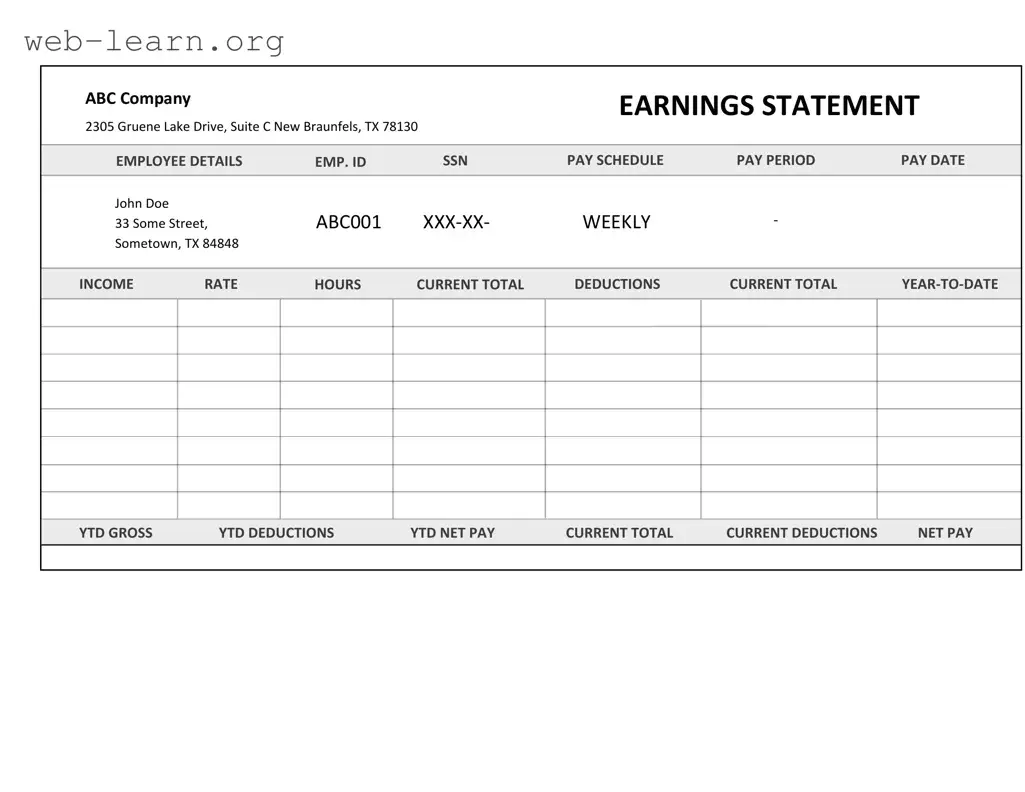
The Independent Contractor Pay Stub form serves as a vital document in the relationship between businesses and independent contractors. This form provides a detailed breakdown of payments made to contractors, ensuring transparency and clarity in financial transactions. It typically includes essential information such as the contractor's name, payment period, and the total amount earned. Additionally, the form may outline any deductions, such as taxes or fees, which can affect the net payment received by the contractor. By documenting these details, the pay stub not only helps contractors track their income but also serves as proof of earnings for tax purposes. Understanding the components of this form is crucial for both contractors and businesses, as it fosters trust and compliance in a landscape where independent work is increasingly common.
ABC Company |
|
|
|
EARNINGS STATEMENT |
||
|
|
|
|
|
|
|
2305 Gruene Lake Drive, Suite C New Braunfels, TX 78130 |
|
|
|
|||
EMPLOYEE DETAILS |
EMP. ID |
SSN |
PAY SCHEDULE |
PAY PERIOD |
PAY DATE |
|
John Doe |
|
ABC001 |
WEEKLY |
- |
|
|
33 Some Street, |
|
|||||
Sometown, TX 84848 |
|
|
|
|
|
|
INCOME |
RATE |
HOURS |
CURRENT TOTAL |
DEDUCTIONS |
CURRENT TOTAL |
|
YTD GROSS |
YTD DEDUCTIONS |
YTD NET PAY |
CURRENT TOTAL |
CURRENT DEDUCTIONS |
NET PAY |
| Fact Name | Details |
|---|---|
| Definition | An Independent Contractor Pay Stub is a document that outlines the earnings and deductions for independent contractors. |
| Purpose | This form helps contractors keep track of their income and provides a record for tax purposes. |
| Required Information | Typically includes the contractor's name, payment date, payment amount, and any deductions. |
| State-Specific Forms | Some states may have specific requirements for pay stubs. For example, California mandates detailed itemization under Labor Code Section 226. |
| Tax Implications | Independent contractors are responsible for reporting their income and paying self-employment taxes. |
| Record Keeping | Contractors should retain pay stubs for at least three years for tax and audit purposes. |
Filling out the Independent Contractor Pay Stub form is a straightforward process that ensures accurate record-keeping for payments made to independent contractors. This form is essential for both the contractor and the hiring entity, as it helps clarify the payment details and serves as a reference for tax purposes. Follow the steps below to complete the form accurately.
What is an Independent Contractor Pay Stub?
An Independent Contractor Pay Stub is a document that outlines the earnings and deductions for a contractor during a specific pay period. It serves as a record of payment, detailing the amount earned, any taxes withheld, and other relevant information. This form is essential for contractors to keep track of their income and for tax purposes.
Why do I need a Pay Stub as an Independent Contractor?
Having a pay stub is important for several reasons:
What information is included in the Pay Stub?
The Pay Stub typically includes:
How can I obtain my Independent Contractor Pay Stub?
To obtain your pay stub, you should contact the company that hired you. Many companies provide pay stubs electronically through a payroll system, while others may issue them in paper form. If you haven’t received your pay stub, don’t hesitate to reach out to the payroll or human resources department for assistance.
What should I do if I find an error on my Pay Stub?
If you notice an error on your pay stub, it’s important to address it promptly. Start by reviewing the details carefully to ensure it’s indeed an error. Then, contact the company’s payroll department to report the discrepancy. Provide any supporting documentation you have, and they will guide you through the process of correcting the issue.
Filling out the Independent Contractor Pay Stub form can be a straightforward process, but many individuals make common mistakes that can lead to confusion or delays in payment. Understanding these pitfalls is essential for ensuring that the form is completed accurately.
One frequent mistake is not providing accurate personal information. Contractors must ensure that their name, address, and tax identification number are correct. Errors in this section can lead to issues with tax reporting and payment processing.
Another common error is failing to itemize services rendered. It is crucial to list each service provided, along with the corresponding dates and rates. This clarity helps both the contractor and the client understand what services were performed and ensures proper compensation.
Some individuals neglect to include the correct payment period. The pay stub should clearly indicate the start and end dates of the payment period. Without this information, clients may struggle to verify the timing of services rendered, which can complicate payment schedules.
Additionally, miscalculating the total amount due is a prevalent issue. Contractors should double-check their math when adding up hours worked or services rendered. An incorrect total can lead to disputes or delays in payment.
Another mistake involves overlooking deductions. Contractors must be aware of any applicable taxes or fees that should be deducted from their gross earnings. Failing to account for these can result in unexpected financial issues later on.
Lastly, some contractors forget to sign the pay stub. A signature is often necessary to validate the document and confirm that the information provided is accurate. Without a signature, the pay stub may be considered incomplete, leading to potential payment delays.
By avoiding these common mistakes, independent contractors can ensure that their pay stub is filled out correctly, facilitating a smoother payment process and reducing the likelihood of misunderstandings.
When managing payments for independent contractors, several forms and documents complement the Independent Contractor Pay Stub. These documents help ensure clarity, compliance, and proper record-keeping. Below is a list of commonly used forms that facilitate the payment process and maintain accurate financial records.
Utilizing these forms and documents in conjunction with the Independent Contractor Pay Stub can streamline the payment process, enhance communication, and foster a professional relationship between contractors and hiring entities. Keeping accurate records and adhering to established protocols not only benefits both parties but also promotes a smoother workflow.
When filling out the Independent Contractor Pay Stub form, it’s essential to ensure accuracy and clarity. Here’s a list of things you should and shouldn’t do to make the process smoother.
By following these guidelines, you can ensure that your Independent Contractor Pay Stub form is filled out correctly, which can help prevent misunderstandings and ensure timely payment.
Understanding the Independent Contractor Pay Stub form can be challenging. Here are five common misconceptions about it:
Many believe that pay stubs are only for employees. However, independent contractors can benefit from having a pay stub as it provides a clear record of earnings and can help with tax reporting.
Pay stubs can vary widely in format and content. Each contractor may have a different style depending on their business practices, but they should generally include similar information such as earnings, deductions, and payment dates.
This is a significant misconception. Independent contractors are responsible for paying their own taxes, including self-employment tax. A pay stub can help track income for tax purposes.
Receiving a pay stub does not ensure that payment has been made. It serves as documentation of the amount due, but actual payment depends on the contractor's agreement with the client.
Even for smaller contracts, having a pay stub can be beneficial. It helps maintain clear records, which can be useful for budgeting and tax filing, regardless of the contract size.
Filling out and using the Independent Contractor Pay Stub form is an important task for both contractors and businesses. Here are ten key takeaways to keep in mind:
By keeping these points in mind, both independent contractors and businesses can navigate the process of using the pay stub form effectively.