In today's dynamic work environment, many individuals and businesses are turning to independent contractors to meet their needs. This shift has made the Independent Contractor Agreement form an essential tool for establishing clear expectations and protecting the interests of both parties involved. This document outlines the nature of the relationship between the contractor and the client, detailing the scope of work, payment terms, and deadlines. It also addresses important elements such as confidentiality, ownership of work products, and dispute resolution procedures. By clearly defining these aspects, the agreement helps prevent misunderstandings and provides a solid foundation for a successful working relationship. Whether you are hiring a freelancer for a short-term project or engaging a contractor for ongoing services, having a well-structured Independent Contractor Agreement in place is crucial for ensuring that everyone is on the same page.
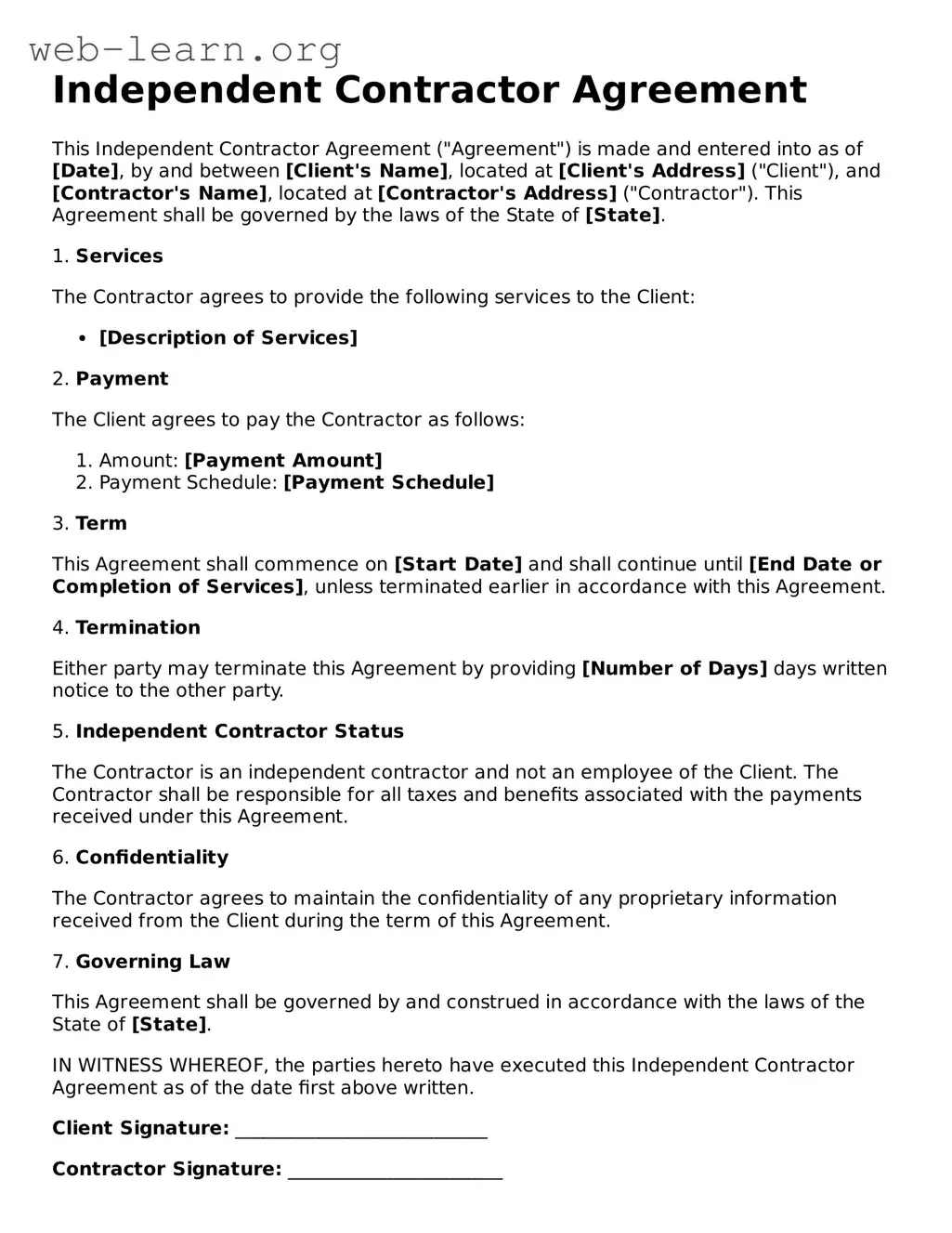
Independent Contractor Agreement
This Independent Contractor Agreement ("Agreement") is made and entered into as of [Date], by and between [Client's Name], located at [Client's Address] ("Client"), and [Contractor's Name], located at [Contractor's Address] ("Contractor"). This Agreement shall be governed by the laws of the State of [State].
1. Services
The Contractor agrees to provide the following services to the Client:
2. Payment
The Client agrees to pay the Contractor as follows:
3. Term
This Agreement shall commence on [Start Date] and shall continue until [End Date or Completion of Services], unless terminated earlier in accordance with this Agreement.
4. Termination
Either party may terminate this Agreement by providing [Number of Days] days written notice to the other party.
5. Independent Contractor Status
The Contractor is an independent contractor and not an employee of the Client. The Contractor shall be responsible for all taxes and benefits associated with the payments received under this Agreement.
6. Confidentiality
The Contractor agrees to maintain the confidentiality of any proprietary information received from the Client during the term of this Agreement.
7. Governing Law
This Agreement shall be governed by and construed in accordance with the laws of the State of [State].
IN WITNESS WHEREOF, the parties hereto have executed this Independent Contractor Agreement as of the date first above written.
Client Signature: ___________________________
Contractor Signature: _______________________
Date: ___________________________
| Fact Name | Description |
|---|---|
| Definition | An Independent Contractor Agreement outlines the relationship between a contractor and a client, specifying the terms of work. |
| Purpose | This agreement clarifies expectations, responsibilities, and payment terms, helping to prevent misunderstandings. |
| Legal Status | Independent contractors are not employees. They have different rights and obligations under the law. |
| Governing Law (California) | In California, the agreement is governed by state laws, including the California Labor Code. |
| Governing Law (New York) | In New York, the agreement follows state laws, particularly the New York State Labor Law. |
| Tax Implications | Independent contractors are responsible for their own taxes, including self-employment tax. |
| Termination Clause | The agreement should include terms for termination, detailing how either party can end the contract. |
| Confidentiality | Many agreements include confidentiality clauses to protect sensitive information shared during the contract. |
Filling out the Independent Contractor Agreement form is an essential step in establishing a clear understanding between the contractor and the client. This document outlines the terms of the working relationship, ensuring that both parties are on the same page regarding expectations, responsibilities, and compensation. Follow these steps carefully to complete the form accurately.
By following these steps, you will create a comprehensive Independent Contractor Agreement that serves as a solid foundation for the working relationship. This document can help prevent misunderstandings and ensure that both parties are clear about their roles and responsibilities.
What is an Independent Contractor Agreement?
An Independent Contractor Agreement is a legal document that outlines the relationship between a business and an independent contractor. This agreement specifies the terms of the working relationship, including the scope of work, payment terms, deadlines, and any other expectations. It is important because it helps clarify the rights and responsibilities of both parties, ensuring that everyone is on the same page.
Why do I need an Independent Contractor Agreement?
Having an Independent Contractor Agreement is crucial for several reasons:
What should be included in an Independent Contractor Agreement?
When drafting an Independent Contractor Agreement, consider including the following elements:
Can I modify an Independent Contractor Agreement after it has been signed?
Yes, an Independent Contractor Agreement can be modified after it has been signed, but both parties must agree to any changes. It's best to document any modifications in writing to ensure clarity and maintain a record of the agreement's evolution. This can help avoid confusion and protect both parties in the future.
When filling out the Independent Contractor Agreement form, many people make common mistakes that can lead to misunderstandings later on. One frequent error is not including the correct names of the parties involved. It’s crucial to ensure that the names match the legal documents of both the contractor and the hiring party.
Another mistake is failing to provide a clear description of the services to be performed. Vague descriptions can create confusion about the contractor's responsibilities. Make sure to detail the tasks expected to avoid any ambiguity.
People often overlook the importance of specifying payment terms. This includes not only the amount but also how and when the payments will be made. Clarity in payment terms helps prevent disputes over finances.
Additionally, some individuals neglect to outline the duration of the agreement. It’s important to state whether the contract is for a specific project or an ongoing arrangement. This helps both parties understand the timeline and expectations.
Many also forget to include confidentiality clauses when necessary. If sensitive information will be shared, it’s wise to have a clear agreement on how that information should be handled. This protects both parties and their interests.
Another common error is not addressing the issue of liability. Failing to specify who is responsible for damages or accidents can lead to complications later. Clearly stating liability terms can save a lot of trouble down the line.
Some people skip the signature section or forget to date the agreement. Without signatures and dates, the contract may not be legally binding. Always ensure that both parties sign and date the document.
Inconsistent terms can also be a problem. Using different terms to describe the same thing throughout the document can lead to confusion. Stick to consistent language to maintain clarity.
Lastly, many individuals do not review the agreement thoroughly before submission. Rushing through the process can lead to overlooked mistakes. Taking the time to review ensures that all details are correct and that the agreement is complete.
By avoiding these common mistakes, you can create a more effective and clear Independent Contractor Agreement. This helps to ensure a smoother working relationship and protects the interests of both parties involved.
When engaging independent contractors, it is essential to have a comprehensive set of documents to ensure clarity and protect both parties' interests. Below is a list of forms and documents commonly used alongside the Independent Contractor Agreement.
Utilizing these documents in conjunction with the Independent Contractor Agreement can significantly enhance the professionalism of the engagement and help mitigate potential disputes. Each form serves a distinct purpose, contributing to a clear understanding of expectations and responsibilities.
When filling out an Independent Contractor Agreement form, it’s crucial to get it right. Here’s a helpful list of things to do and avoid.
By following these guidelines, you can fill out the Independent Contractor Agreement form with confidence and clarity.
Many people have misunderstandings about the Independent Contractor Agreement form. Here are four common misconceptions:
This is not true. Independent contractors have rights under various laws, including the right to be paid for their work and the right to work in a safe environment. They are also protected from discrimination and harassment.
While many independent contractors are self-employed, not all of them are. Some may work through a third-party company or agency, which can affect their tax obligations and benefits.
In most cases, having a written agreement is essential. It clarifies the terms of the working relationship, including payment, scope of work, and deadlines. Without it, misunderstandings can arise.
This is a misconception. Independent contractors have the right to negotiate the terms of their agreements. They can discuss payment rates, deadlines, and other important factors before signing.
When filling out and using the Independent Contractor Agreement form, keep the following key takeaways in mind:
By following these guidelines, both parties can foster a productive and professional working relationship.