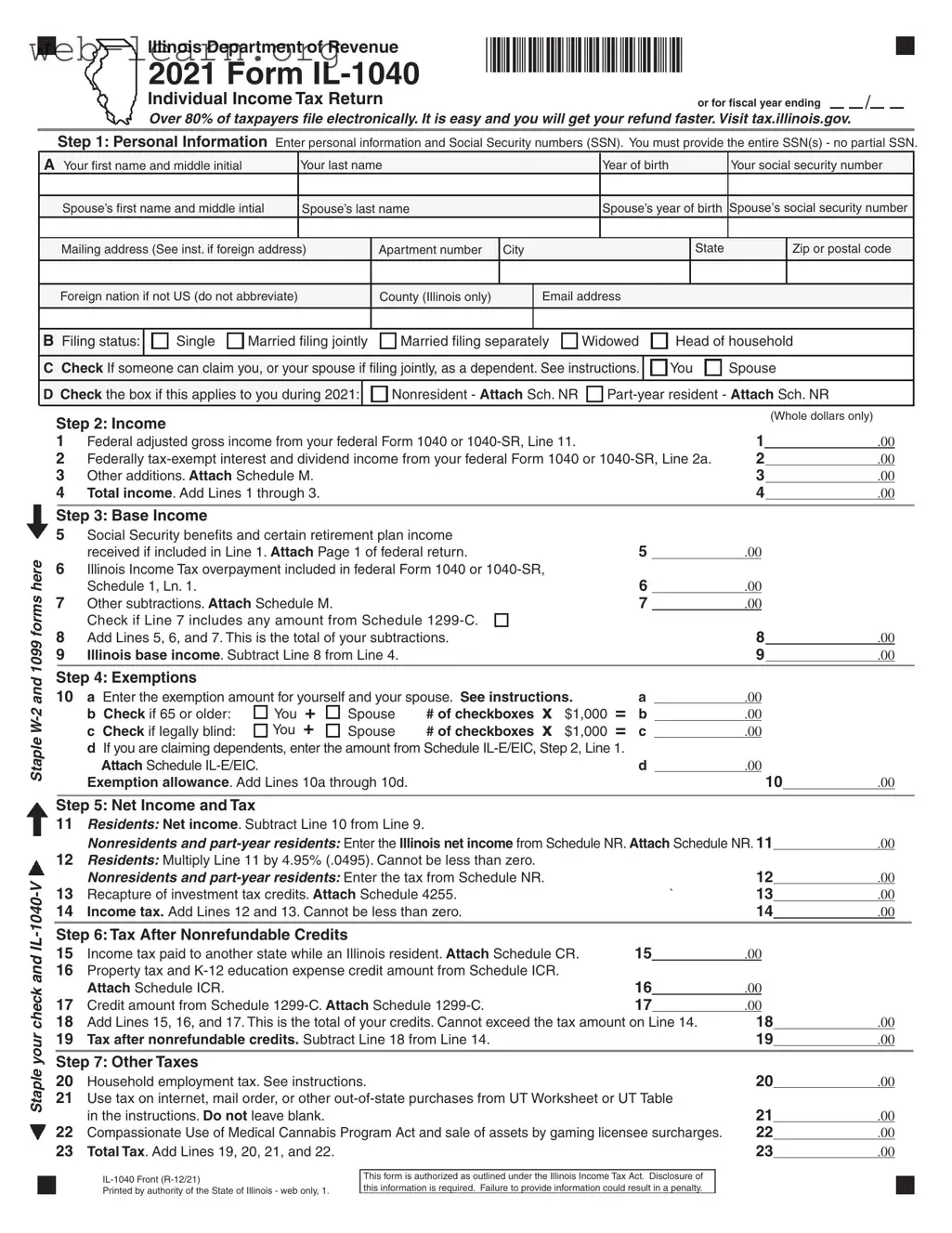
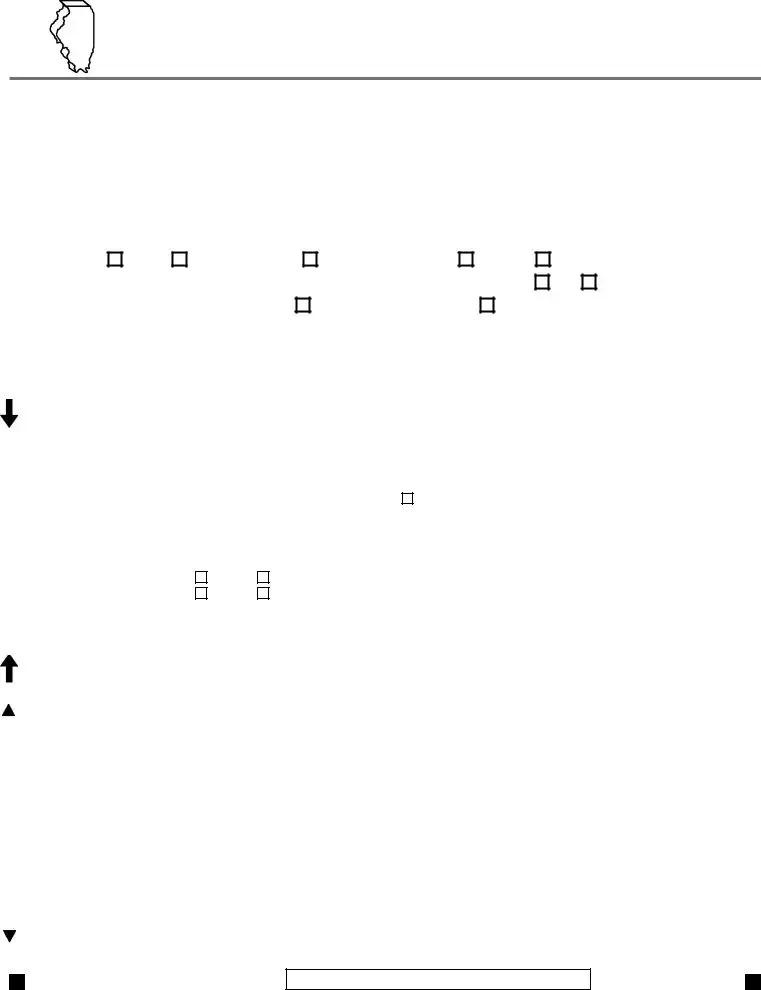
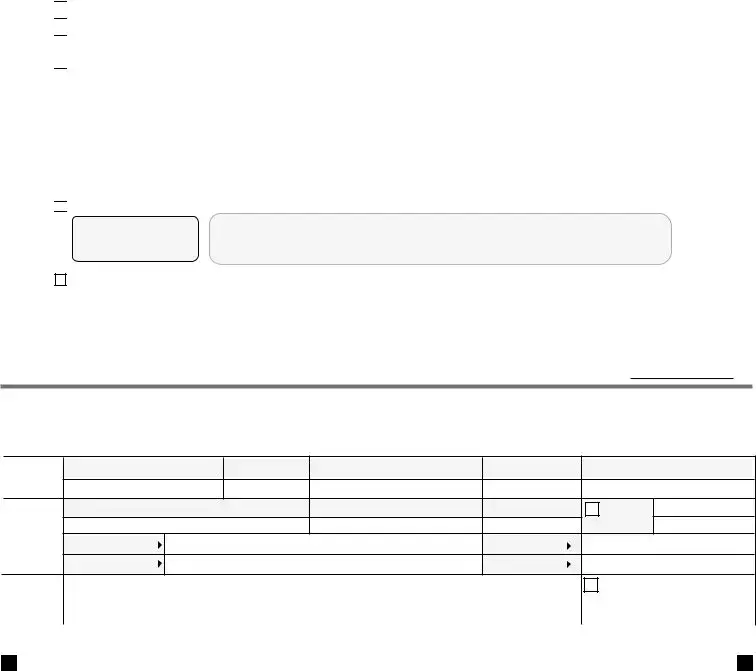
Completing your Illinois Tax Form IL-1040 is an important step in fulfilling your tax obligations and ensuring that you receive any potential refunds. This form is designed to help individuals report their income, calculate taxes owed, and claim any eligible credits or exemptions. The process begins with gathering personal information, including Social Security numbers for you and your spouse, if applicable. You will also need to determine your filing status, which can affect your tax calculations. The form requires you to report your total income, including any federal adjusted gross income and tax-exempt interest. As you progress through the form, you will calculate your base income by accounting for any subtractions, such as Social Security benefits or other allowable deductions. Exemptions are also an essential part of the process, allowing you to reduce your taxable income based on personal circumstances, such as age or blindness. After calculating your net income, you will determine your tax liability and any applicable credits that may reduce the amount owed. Finally, the form guides you through the payment process, helping you understand if you owe money or if you will receive a refund. Understanding each step of the IL-1040 can make tax season less daunting and ensure that you are compliant with state tax laws.
|
Illinois Department of Revenue |
*60012211W* |
|
|
|
|
|||||
|
2021 Form |
|
|
|
|
|
|
|
|
|
|
|
Individual Income Tax Return |
or for fiscal year ending |
|
|
|
/ |
|
|
|
|
|
Over 80% of taxpayers file electronically. It is easy and you will get your refund faster. Visit tax.illinois.gov.
Step 1: Personal Information Enter personal information and Social Security numbers (SSN). You must provide the entire SSN(s) - no partial SSN.
A Your first name and middle initial |
|
Your last name |
|
|
|
Year of birth |
|
|
Your social security number |
|||||
|
|
|
|
|
|
|
|
|
|
|
|
|
|
|
Spouse’s first name and middle intial |
Spouse’s last name |
|
|
|
Spouse’s year of birth |
Spouse’s social security number |
||||||||
|
|
|
|
|
|
|
|
|
|
|
|
|
|
|
Mailing address (See inst. if foreign address) |
Apartment number |
City |
|
|
|
|
State |
|
Zip or postal code |
|||||
|
|
|
|
|
|
|
|
|
|
|
|
|
|
|
Foreign nation if not US (do not abbreviate) |
|
|
County (Illinois only) |
|
Email address |
|
|
|
|
|||||
|
|
|
|
|
|
|
|
|
|
|
|
|
|
|
|
|
|
|
|
|
|
|
|
|
|
|
|
|
|
B Filing status: |
Single |
Married filing jointly |
Married filing separately |
Widowed |
Head of household |
|||||||||
|
|
|
|
|
|
|
|
|
|
|
|
|
||
C Check If someone can claim you, or your spouse if filing jointly, as a dependent. See instructions. |
|
You |
Spouse |
|||||||||||
D Check the box if this applies to you during 2021: |
|
Nonresident - Attach Sch. NR |
|
|||||||||||
Staple
Staple your check and
Step 2: Income |
|
|
|
|
(Whole dollars only) |
|
|
|
|
|
|
|
|
||
1 |
Federal adjusted gross income from your federal Form 1040 or |
|
|
1 |
.00 |
|
|
2 |
Federally |
2 |
.00 |
|
|||
3 |
Other additions. Attach Schedule M. |
|
|
3 |
.00 |
|
|
4 |
Total income. Add Lines 1 through 3. |
|
|
4 |
.00 |
|
|
|
|
|
|
|
|
|
|
Step 3: Base Income |
|
|
|
|
|
|
|
5 |
Social Security benefits and certain retirement plan income |
|
|
|
|
|
|
|
received if included in Line 1. Attach Page 1 of federal return. |
5 |
|
.00 |
|
|
|
6Illinois Income Tax overpayment included in federal Form 1040 or
|
Schedule 1, Ln. 1. |
|
|
|
|
|
|
6 |
.00 |
|
|
|
|
7 |
Other subtractions. Attach Schedule M. |
|
|
|
|
7 |
.00 |
|
|
|
|||
|
Check if Line 7 includes any amount from Schedule |
|
|
|
|
|
|
|
|
||||
8 |
Add Lines 5, 6, and 7. This is the total of your subtractions. |
|
|
|
8 |
.00 |
|
||||||
9 |
Illinois base income. Subtract Line 8 from Line 4. |
|
|
|
|
9 |
.00 |
|
|||||
|
|
|
|
|
|
|
|
|
|
|
|
|
|
Step 4: Exemptions |
|
|
|
|
|
|
|
|
|
|
|
|
|
10 |
a Enter the exemption amount for yourself and your spouse. See instructions. |
|
a |
|
.00 |
|
|
|
|||||
|
b Check if 65 or older: |
You |
+ |
Spouse |
# of checkboxes x |
$1,000 |
= |
b |
|
.00 |
|
|
|
|
c Check if legally blind: |
You |
+ |
Spouse |
# of checkboxes x |
$1,000 |
= |
c |
|
.00 |
|
|
|
dIf you are claiming dependents, enter the amount from Schedule
Attach Schedule |
d |
.00 |
|
|
|
Exemption allowance. Add Lines 10a through 10d. |
|
10 |
.00 |
|
|
|
|
|
|
|
|
Step 5: Net Income and Tax
11Residents: Net income. Subtract Line 10 from Line 9.
|
Nonresidents and |
.00 |
|
||||
12 |
Residents: Multiply Line 11 by 4.95% (.0495). Cannot be less than zero. |
|
|
|
|
|
|
|
Nonresidents and |
|
|
12 |
.00 |
|
|
13 |
Recapture of investment tax credits. Attach Schedule 4255. |
` |
13 |
.00 |
|
||
14 |
Income tax. Add Lines 12 and 13. Cannot be less than zero. |
|
|
14 |
.00 |
|
|
|
|
|
|
|
|
|
|
Step 6: Tax After Nonrefundable Credits |
|
|
|
|
|
|
|
15 |
Income tax paid to another state while an Illinois resident. Attach Schedule CR. |
15 |
|
.00 |
|
|
|
16Property tax and
|
Attach Schedule ICR. |
16 |
|
.00 |
|
|
|
17 |
Credit amount from Schedule |
17 |
|
.00 |
|
|
|
18 |
Add Lines 15, 16, and 17. This is the total of your credits. Cannot exceed the tax amount on Line 14. |
18 |
.00 |
|
|||
19 |
Tax after nonrefundable credits. Subtract Line 18 from Line 14. |
|
|
19 |
.00 |
|
|
|
|
|
|
|
|
|
|
Step 7: Other Taxes |
|
|
|
|
|
|
|
20 |
Household employment tax. See instructions. |
|
|
20 |
.00 |
|
|
21Use tax on internet, mail order, or other
|
in the instructions. Do not leave blank. |
21 |
.00 |
22 |
Compassionate Use of Medical Cannabis Program Act and sale of assets by gaming licensee surcharges. |
22 |
.00 |
23 |
Total Tax. Add Lines 19, 20, 21, and 22. |
23 |
.00 |
Printed by authority of the State of Illinois - web only, 1.
This form is authorized as outlined under the Illinois Income Tax Act. Disclosure of this information is required. Failure to provide information could result in a penalty.
|
|
*60012212W* |
|
|
|
|
|
||
24 |
24 |
|
|
|
|||||
Total tax from Page 1, Line 23. |
|
|
.00 |
|
|||||
|
|
|
|
|
|
|
|
|
|
|
Step 8: Payments and Refundable Credit |
|
|
|
|
|
|
|
|
25 |
Illinois Income Tax withheld. Attach Schedule |
25 |
|
.00 |
|
|
|
|
|
26 |
Estimated payments from Forms |
|
|
|
|
|
|
|
|
|
|
including any overpayment applied from a prior year return. |
26 |
|
.00 |
|
|
|
|
27 |
27 |
|
.00 |
|
|
|
|
||
28 |
28 |
|
.00 |
|
|
|
|
||
29 |
Earned Income Credit from Schedule |
29 |
|
.00 |
|
|
|
|
|
30 |
Total payments and refundable credit. Add Lines 25 through 29. |
30 |
.00 |
|
|
|
|
|
|
Step 9: Total |
|
|
|
|
31 |
If Line 30 is greater than Line 24, subtract Line 24 from Line 30. |
31 |
.00 |
|
32 |
If Line 24 is greater than Line 30, subtract Line 30 from Line 24. |
32 |
.00 |
|
|
|
|
|
|
Step 10: Underpayment of Estimated Tax Penalty and Donations - Only complete Step 10 for
33 |
33 |
|
.00 |
a Check if at least
b Check if you or your spouse are 65 or older and permanently living in a nursing home.
c Check if your income was not received evenly during the year and you annualized your income on Form
d Check if you were not required to file an Illinois Individual Income Tax return in the previous tax year.
34 |
Voluntary charitable donations. Attach Schedule G. |
34 |
|
.00 |
|
|
35 |
Total penalty and donations. Add Lines 33 and 34. |
|
35 |
.00 |
|
|
|
|
|
|
|
|
|
Step 11: Refund
36If you have an amount on Line 31 and this amount is greater than Line 35, subtract Line 35 from Line 31.
This is your overpayment. |
36 |
.00 |
37 Amount from Line 36 you want refunded to you. Check one box on Line 38. See instructions. |
37 |
.00 |
38I choose to receive my refund by
a direct deposit - Complete the information below if you check this box.
You may also contribute |
Routing number |
|
|
|
|
|
|
|
|
|
|
|
|
|
Checking or |
|
Savings |
||||
to college savings funds |
|
|
|
|
|
|
|
|
|
|
|
|
|
|
|
|
|
|
|
|
|
|
|
|
|
|
|
|
|
|
|
|
|
|
|
|
|
|
|
|
|
|
|
here. See instructions! |
Account number |
|
|
|
|
|
|
|
|
|
|
|
|
|
|
|
|
|
|
|
|
|
|
|
|
|
|
|
|
|
|
|
|
|
|
|
|
|
|
|
|
|
|
b
paper check.
39 Amount to be credited forward. Subtract Line 37 from Line 36. See instructions. |
39 |
.00 |
|
|
|
|
|
Step 12: Amount You Owe
40 If you have an amount on Line 32, add Lines 32 and 35. - or - |
|
|
If you have an amount on Line 31 and this amount is less than Line 35, |
|
|
subtract Line 31 from Line 35. This is the amount you owe. See instructions. |
40 |
.00 |
Step 13: If this is a joint return, both you and your spouse must sign below.
Under penalties of perjury, I state that I have examined this return and, to the best of my knowledge, it is true, correct, and complete.
Sign |
Your signature |
Date (mm/dd/yyyy) Spouse’s signature |
Date (mm/dd/yyyy) Daytime phone number |
|||
Here |
|
|
|
( |
) |
|
|
|
|
|
|
||
Paid |
Print/Type paid preparer’s name |
Paid preparer’s signature |
Date (mm/dd/yyyy) |
|
Check if |
Paid Preparer’s PTIN |
|
|
|
|
|||
Preparer |
Firm’s name |
|
Firm’s FEIN |
|
|
|
Use Only |
|
|
|
|
||
|
|
|
( |
) |
|
|
|
Firm’s address |
|
Firm’s phone |
|
||
Third |
Designee’s name (please print) |
Designee’s phone number |
|
Check if the Department may |
|
|||
Party |
|
|
|
|
discuss this return with the third |
|
||
|
|
( |
) |
|
||||
Designee |
|
party designee shown in this step. |
|
|||||
|
|
|
|
|
|
|
|
|
Refer to the 2021
.
DR |
|
AP |
|
RR DC IR ID |
| Fact Name | Description |
|---|---|
| Form Number | The Illinois Individual Income Tax Return is officially designated as Form IL-1040. |
| Filing Options | Over 80% of taxpayers choose to file electronically, which speeds up refunds. |
| Governing Law | This form is authorized under the Illinois Income Tax Act. |
| Personal Information Requirement | Taxpayers must provide full Social Security numbers for themselves and their spouses. |
| Filing Status | Options include Single, Married Filing Jointly, Married Filing Separately, Widowed, and Head of Household. |
| Exemption Allowance | Taxpayers can claim exemptions for themselves, their spouses, and dependents. |
| Net Income Calculation | Net income is calculated by subtracting the exemption allowance from the base income. |
| Tax Rate | The income tax rate for residents is 4.95% of the net income. |
| Refund Process | Taxpayers can choose to receive refunds via direct deposit or paper check. |
| Penalties for Non-compliance | Failure to provide required information may result in penalties. |
Completing the Illinois Tax form requires careful attention to detail. You will need to gather your financial documents, including W-2 and 1099 forms, before starting. Follow these steps to ensure accurate completion of the form.
Once you have completed the form, review it for accuracy. Make sure all calculations are correct and that you have attached any necessary schedules. Follow the instructions for submission, whether you choose to file electronically or by mail.
What is the Illinois Tax form IL-1040?
The Illinois Tax form IL-1040 is the Individual Income Tax Return that residents and certain non-residents of Illinois must complete to report their income and calculate their state tax liability. This form helps the Illinois Department of Revenue assess how much tax you owe or if you are entitled to a refund.
Who needs to file the IL-1040?
Generally, anyone who earns income in Illinois must file an IL-1040. This includes residents, non-residents, and part-year residents. If you are unsure whether you need to file, consider your income sources and consult the instructions provided with the form.
What information do I need to provide on the form?
You will need to enter personal information, including your name, Social Security number, and mailing address. Additionally, you must report your income, exemptions, and any applicable deductions. Be prepared to attach supporting documents, such as W-2 and 1099 forms, if required.
How do I calculate my taxable income?
To determine your taxable income, start with your total income from all sources. Then, subtract any exemptions and deductions you qualify for. This will give you your net income, which is used to calculate your tax liability.
What should I do if I owe taxes?
If you find that you owe taxes after completing the form, you can pay the amount directly through various methods. Options may include mailing a check, making an electronic payment, or using the Illinois Department of Revenue's online payment system. Ensure that you pay by the due date to avoid penalties.
Can I file the IL-1040 electronically?
Yes, over 80% of taxpayers in Illinois choose to file electronically. Filing online is often easier and can result in faster refunds. You can visit the Illinois Department of Revenue's website for more information on e-filing options.
What if I need help with the IL-1040?
If you have questions or need assistance while completing your IL-1040, consider reaching out to a tax professional or consulting the instructions provided with the form. The Illinois Department of Revenue also offers resources and support for taxpayers.
Filling out the Illinois Tax form can be straightforward, but many people make common mistakes that can delay their refunds or lead to penalties. One major error is failing to provide complete personal information. It’s essential to include your full name, Social Security number, and the same for your spouse if filing jointly. Leaving out even one digit of the Social Security number can cause issues.
Another frequent mistake is not checking the correct filing status. Whether you are single, married filing jointly, or head of household, it’s crucial to select the right option. Choosing the wrong status can affect your tax rate and the deductions you qualify for.
Many taxpayers also overlook the income section. Ensure you report your federal adjusted gross income accurately. Mistakes in this area can lead to discrepancies that might trigger an audit. Remember, only whole dollars should be entered. Rounding can lead to errors.
Additionally, some individuals forget to include all necessary attachments. For example, if you have income from a W-2 or 1099, these forms must be stapled to your tax return. Not including them can delay processing and refunds.
Claiming exemptions incorrectly is another common pitfall. Make sure to check all applicable boxes and calculate the exemption amounts accurately. If you are 65 or older or legally blind, don’t forget to include these exemptions, as they can significantly reduce your taxable income.
People often miscalculate their total tax due. When adding lines for your tax liability, double-check your math. Errors here can lead to either underpayment penalties or overpayment, which means waiting longer for your refund.
Another mistake involves the payment section. Be sure to include all applicable payments and credits. This includes Illinois income tax withheld and any estimated payments. Missing these can result in an incorrect balance due.
Finally, many filers forget to sign and date their return. Both you and your spouse must sign if filing jointly. A missing signature can delay the processing of your return. Always review the entire form before submission to catch any overlooked details.
When filing your Illinois tax return, it's essential to include additional forms and documents that support your submission. Below is a list of commonly used forms that you may need alongside the Illinois Tax form.
Including the correct forms will help ensure a smooth filing process and may expedite your refund. Always double-check your documents for accuracy before submission.
When filling out the Illinois Tax form, there are several important dos and don'ts to keep in mind. Following these guidelines can help ensure that your submission is accurate and timely.
When it comes to filing taxes in Illinois, many individuals hold misconceptions that can lead to confusion or mistakes. Here are eight common misunderstandings about the Illinois Tax form, along with clarifications to help taxpayers navigate the process more effectively.
Understanding these misconceptions can help Illinois taxpayers approach their tax filings with greater confidence and accuracy. Always refer to the latest guidelines from the Illinois Department of Revenue for the most current information.
Key Takeaways for Filling Out the Illinois Tax Form