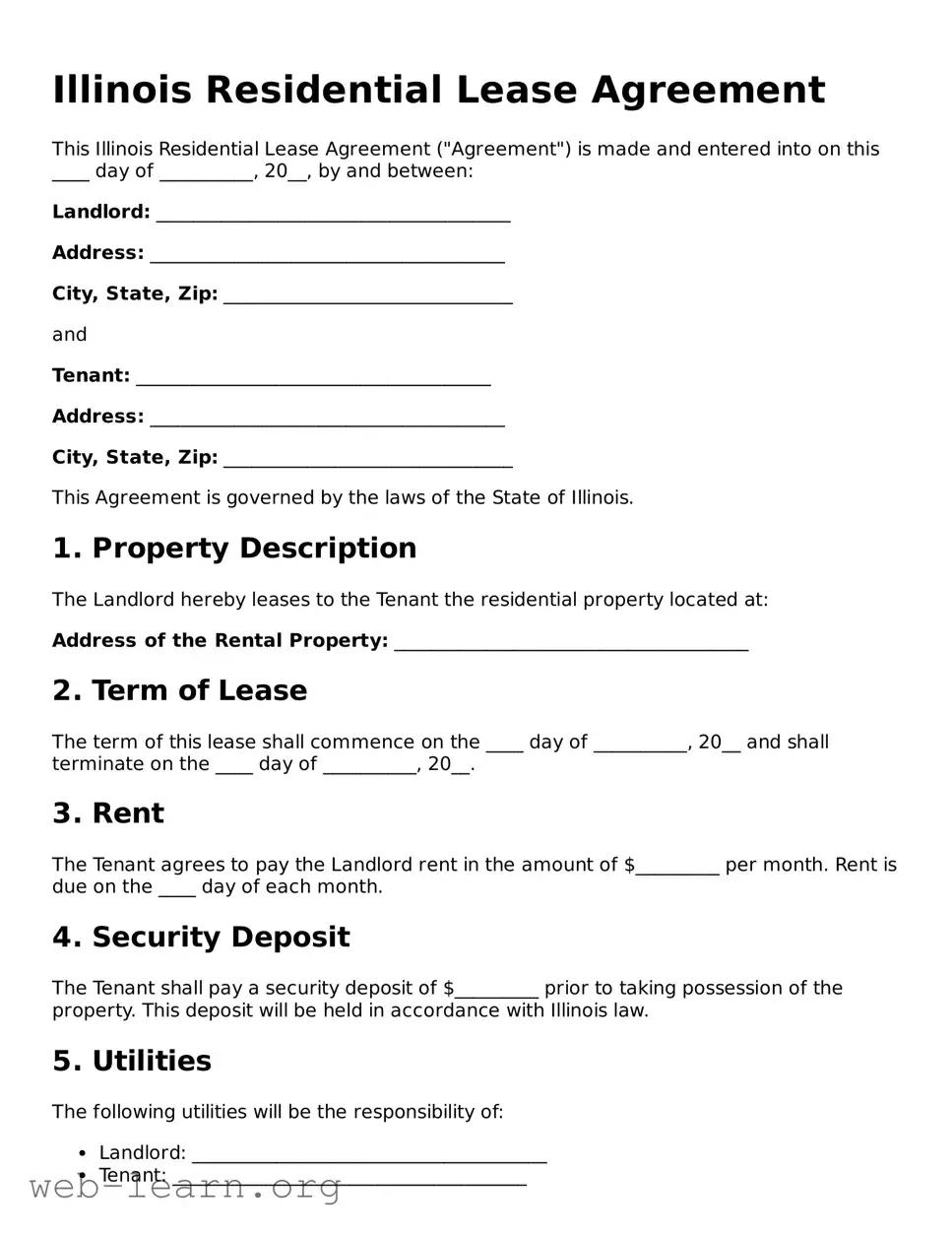
The Illinois Residential Lease Agreement is a vital document for both landlords and tenants in the state of Illinois. This agreement outlines the terms and conditions under which a residential property is rented, ensuring that both parties understand their rights and responsibilities. Key elements include the duration of the lease, rental payment details, security deposit requirements, and maintenance obligations. Additionally, the agreement addresses issues such as late fees, property rules, and termination procedures. By clearly defining these aspects, the lease helps prevent misunderstandings and disputes during the tenancy. Understanding this form is essential for a smooth rental experience, whether you are a first-time renter or an experienced landlord.
Illinois Residential Lease Agreement
This Illinois Residential Lease Agreement ("Agreement") is made and entered into on this ____ day of __________, 20__, by and between:
Landlord: ______________________________________
Address: ______________________________________
City, State, Zip: _______________________________
and
Tenant: ______________________________________
Address: ______________________________________
City, State, Zip: _______________________________
This Agreement is governed by the laws of the State of Illinois.
1. Property Description
The Landlord hereby leases to the Tenant the residential property located at:
Address of the Rental Property: ______________________________________
2. Term of Lease
The term of this lease shall commence on the ____ day of __________, 20__ and shall terminate on the ____ day of __________, 20__.
3. Rent
The Tenant agrees to pay the Landlord rent in the amount of $_________ per month. Rent is due on the ____ day of each month.
4. Security Deposit
The Tenant shall pay a security deposit of $_________ prior to taking possession of the property. This deposit will be held in accordance with Illinois law.
5. Utilities
The following utilities will be the responsibility of:
6. Maintenance and Repairs
The Tenant agrees to maintain the property in a clean and sanitary manner. The Landlord is responsible for major repairs unless damage is caused by the Tenant's negligence.
7. Use of Property
The property shall be used exclusively for residential purposes. No illegal activities are permitted on the premises.
8. Termination
Either party may terminate this lease by providing written notice at least ____ days in advance, as required by Illinois law.
9. Governing Law
This Agreement shall be governed by the laws of the State of Illinois. Any disputes arising from this Agreement shall be resolved in accordance with Illinois law.
10. Signatures
By signing below, both parties agree to the terms outlined in this Agreement.
Landlord Signature: ___________________________ Date: ___________
Tenant Signature: ____________________________ Date: ___________
| Fact Name | Description |
|---|---|
| Governing Law | The Illinois Residential Lease Agreement is governed by the Illinois Compiled Statutes, particularly 765 ILCS 705/1. |
| Parties Involved | The lease agreement must clearly identify the landlord and tenant, including their full names and contact information. |
| Property Description | A detailed description of the rental property is required, including the address and any specific unit number. |
| Lease Term | The lease should specify the duration, whether it is a fixed-term lease or a month-to-month agreement. |
| Rent Amount | The agreement must state the monthly rent amount, payment due date, and acceptable payment methods. |
| Security Deposit | Illinois law regulates security deposits, including maximum amounts and requirements for returning the deposit. |
| Utilities | The lease should outline which utilities are included in the rent and which are the tenant's responsibility. |
| Maintenance Responsibilities | The agreement must clarify the responsibilities of both the landlord and tenant regarding property maintenance and repairs. |
| Termination Conditions | Conditions for terminating the lease should be included, detailing notice periods and any penalties for early termination. |
Filling out the Illinois Residential Lease Agreement form is an essential step in establishing a clear understanding between a landlord and a tenant. This document outlines the terms of the rental arrangement, ensuring both parties are on the same page. By carefully completing this form, you can help prevent misunderstandings and protect your rights.
Once the form is filled out and signed, each party should retain a copy for their records. This ensures that everyone has access to the agreed-upon terms and can refer back to them if needed. Proper documentation is key to a successful rental experience.
The Illinois Residential Lease Agreement is a legal document that outlines the terms and conditions between a landlord and a tenant for renting a residential property. This agreement covers essential aspects such as rent amount, duration of the lease, and responsibilities of both parties.
A comprehensive lease agreement should include the following elements:
Yes, landlords in Illinois can require a security deposit. However, there are specific regulations regarding the amount and how it must be handled. Generally, the security deposit cannot exceed one and a half times the monthly rent. The landlord must also return the deposit within a specified time frame after the lease ends, minus any deductions for damages.
In most cases, a landlord must provide reasonable notice before entering a tenant's rental unit. Illinois law typically requires at least 24 hours' notice, except in emergencies. The lease agreement may specify additional terms regarding entry and notice requirements.
If a tenant needs to break the lease early, they should first review the lease agreement for any specific terms related to early termination. Generally, tenants may be responsible for paying rent until a new tenant is found or until the lease term ends. Open communication with the landlord can sometimes lead to a mutually agreeable solution.
Yes, the lease agreement can outline specific restrictions on property use. Common restrictions may include limitations on subletting, keeping pets, or conducting business activities. It is important for tenants to understand these restrictions to avoid potential lease violations.
Tenants should promptly notify the landlord of any necessary repairs. The lease agreement may specify how and when to report these issues. If the landlord fails to address repairs in a reasonable timeframe, tenants may have legal options to pursue further action, including withholding rent or seeking repairs independently.
In Illinois, a landlord generally cannot evict a tenant without cause. Landlords must follow legal procedures and provide proper notice, typically 5, 10, or 30 days, depending on the reason for eviction. Causes for eviction can include non-payment of rent, lease violations, or illegal activities.
Tenants in Illinois can access various resources to better understand their rights. Local housing authorities, legal aid organizations, and tenant advocacy groups can provide information and assistance. Additionally, the Illinois Department of Human Rights offers resources related to housing discrimination and tenant rights.
When filling out the Illinois Residential Lease Agreement form, many individuals make common mistakes that can lead to misunderstandings or legal issues. One frequent error is failing to include the full names of all tenants. Each person who will be residing in the rental unit should be listed. Omitting a tenant's name can create complications if disputes arise later.
Another mistake is not specifying the rental term. The lease should clearly state whether it is a month-to-month agreement or a fixed-term lease. Without this information, both parties may have different expectations regarding the duration of the tenancy.
Many people neglect to fill in the rental amount correctly. It is essential to write the monthly rent clearly and to include details about when it is due. Inaccuracies can lead to disputes about payment obligations.
Some individuals forget to address security deposits. The lease should outline the amount of the security deposit, the conditions for its return, and any deductions that may be taken. This information protects both the landlord and the tenant.
Another common oversight is failing to include maintenance responsibilities. The lease should specify who is responsible for repairs and maintenance. This clarity can prevent conflicts about who must handle issues like plumbing or electrical problems.
Not mentioning utilities is also a frequent mistake. It is important to clarify which utilities are included in the rent and which ones the tenant is responsible for. This information helps tenants budget their monthly expenses accurately.
Some people do not read the lease thoroughly before signing. This oversight can lead to agreeing to terms that are not fully understood. Each party should review the document carefully to ensure that all terms are clear and acceptable.
Another error involves not including any additional terms or conditions. If there are specific rules regarding pets, smoking, or noise, these should be explicitly stated in the lease. Failure to do so can lead to disputes later on.
Landlords sometimes forget to provide their contact information in the lease. It is vital for tenants to know how to reach their landlord for any issues that may arise during the tenancy. Clear communication channels can facilitate a better rental experience.
Finally, not keeping a copy of the signed lease is a significant mistake. Both parties should retain a copy of the lease for their records. This ensures that everyone has access to the agreed-upon terms in case questions or disputes arise.
When entering into a rental agreement in Illinois, it's important to have all the necessary forms and documents in place. These documents help protect both the landlord and tenant, ensuring that everyone understands their rights and responsibilities. Here are some commonly used forms that often accompany the Illinois Residential Lease Agreement:
Having these forms ready can streamline the rental process and help avoid misunderstandings. Always ensure that you understand each document before signing or submitting it. This way, both landlords and tenants can enjoy a smoother rental experience.
When filling out the Illinois Residential Lease Agreement form, it’s important to follow certain guidelines to ensure accuracy and compliance. Here’s a helpful list of what to do and what to avoid.
Understanding the Illinois Residential Lease Agreement form can be challenging. Here are five common misconceptions about this important document:
Being informed about these misconceptions can help both landlords and tenants navigate their lease agreements more effectively.
When filling out and using the Illinois Residential Lease Agreement form, several important considerations should be kept in mind. The following key takeaways can help ensure a smooth leasing process.
By adhering to these key points, both landlords and tenants can protect their rights and responsibilities throughout the leasing period.