When seeking a new rental home in Illinois, understanding the rental application form is crucial for both tenants and landlords. This form serves as a vital tool in the leasing process, providing essential information about prospective tenants. Key components typically include personal details such as the applicant's name, contact information, and employment history. Additionally, the form often requires financial information to assess the applicant's ability to pay rent, including income sources and credit history. Landlords may also request references from previous landlords or personal contacts to gauge reliability. It's important for applicants to be prepared to provide documentation that supports their claims, such as pay stubs or bank statements. Overall, the Illinois rental application form is designed to facilitate a transparent and fair rental process, ensuring that both parties have the necessary information to make informed decisions.
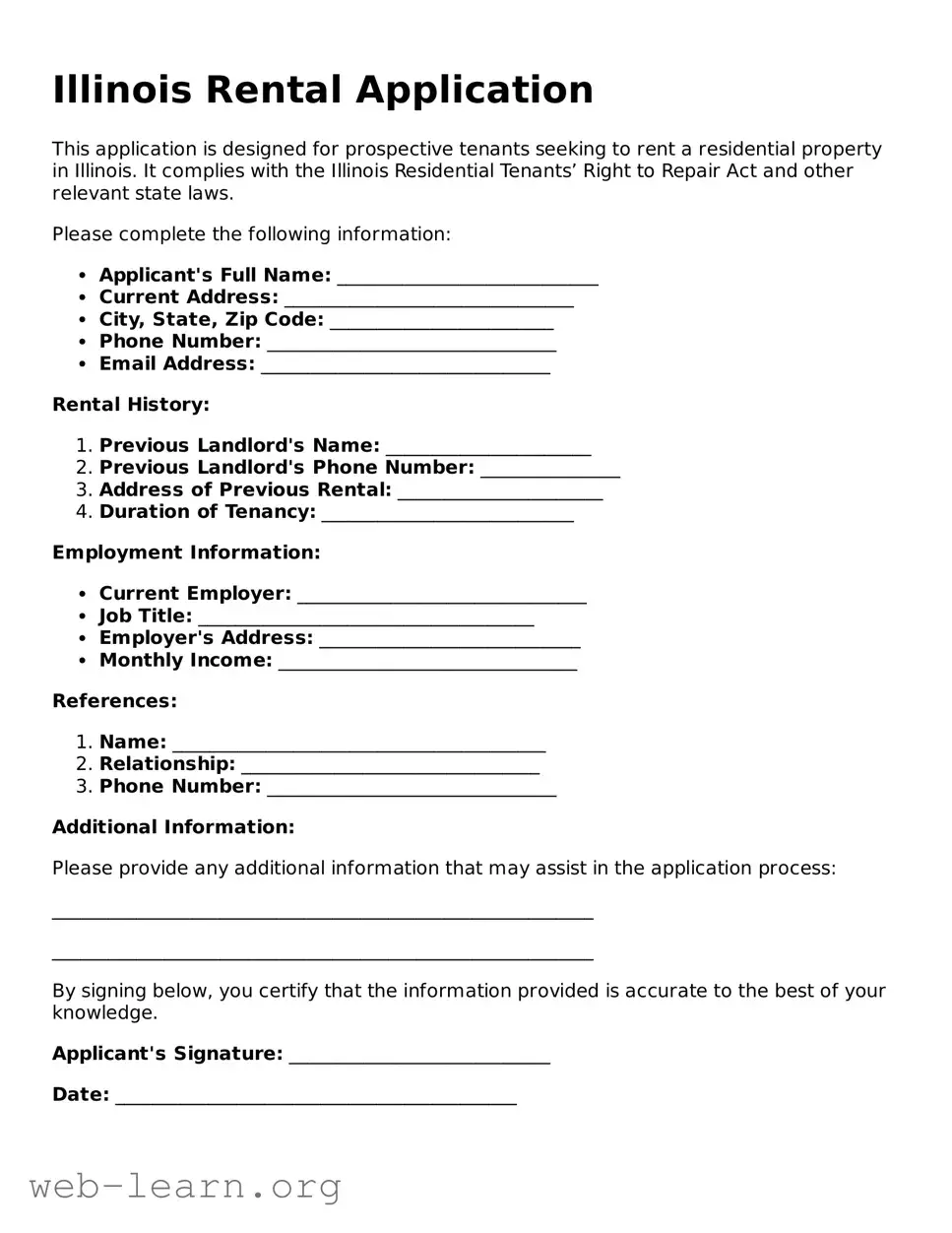
Illinois Rental Application
This application is designed for prospective tenants seeking to rent a residential property in Illinois. It complies with the Illinois Residential Tenants’ Right to Repair Act and other relevant state laws.
Please complete the following information:
Rental History:
Employment Information:
References:
Additional Information:
Please provide any additional information that may assist in the application process:
__________________________________________________________
__________________________________________________________
By signing below, you certify that the information provided is accurate to the best of your knowledge.
Applicant's Signature: ____________________________
Date: ___________________________________________
| Fact Name | Description |
|---|---|
| Purpose | The Illinois Rental Application form is used by landlords to screen potential tenants. |
| Governing Law | This form is governed by the Illinois Residential Tenants' Right to Privacy Act. |
| Information Required | Applicants must provide personal information, including name, contact details, and rental history. |
| Background Check | Landlords may conduct background checks, including credit history and criminal records. |
| Application Fee | Landlords can charge an application fee, but it must be reasonable and disclosed upfront. |
| Fair Housing Compliance | The application process must comply with the Fair Housing Act, prohibiting discrimination. |
| Signature Requirement | Applicants are typically required to sign the application, acknowledging the information provided. |
| Approval Process | Landlords must notify applicants of their approval or denial, often within a few days. |
| Record Keeping | Landlords should keep applications on file for a certain period, usually one year. |
| Security Deposit | The application may include information about the required security deposit and its conditions. |
Completing the Illinois Rental Application form is an essential step in the rental process. After filling out the form, it will be submitted to the landlord or property manager for review. This process helps them assess the suitability of potential tenants based on the information provided.
After completing these steps, submit the application to the appropriate party as instructed, and await their response regarding your rental inquiry.
The Illinois Rental Application form is a crucial document used by landlords to gather important information about potential tenants. This form helps landlords assess the suitability of applicants based on their financial stability, rental history, and personal references. By collecting this information, landlords can make informed decisions regarding whom to rent their property to, ensuring a good fit for both parties.
When filling out the Illinois Rental Application, applicants will generally need to provide a variety of personal and financial details. Common requirements include:
This information helps landlords evaluate the applicant's reliability and ability to meet rental obligations.
Yes, many landlords charge a non-refundable application fee. This fee typically covers the costs of processing the application, which may include background checks and credit reports. The amount can vary widely depending on the landlord or property management company. It is important for applicants to inquire about the fee beforehand and understand what it entails.
The processing time for an Illinois Rental Application can vary depending on several factors, including the landlord's policies and the volume of applications received. Generally, applicants can expect to hear back within a few days to a week. In some cases, landlords may require additional time for thorough background checks or to contact references. To ensure a smooth process, applicants should provide accurate and complete information on their application.
Completing the Illinois Rental Application form can be straightforward, but many applicants make common mistakes that could jeopardize their chances of securing a rental. One frequent error is failing to provide complete and accurate personal information. This includes not only your name and contact details but also your Social Security number and employment history. Landlords rely on this information to conduct background checks, and missing or incorrect data can lead to delays or denials.
Another mistake often seen is neglecting to disclose all sources of income. Applicants may only list their primary job, but landlords typically want a full picture of your financial stability. Include any additional income such as side jobs, freelance work, or government assistance. Failing to do so can raise red flags about your financial reliability.
Many people also overlook the importance of providing references. A lack of references or insufficient information about them can weaken your application. It's advisable to include both personal and professional references, along with their contact information. Landlords appreciate having multiple points of contact to verify your reliability as a tenant.
Inaccurate or incomplete rental history is another common pitfall. If you have moved frequently, ensure that you list all previous addresses along with the dates of residency. Omitting this information can lead to questions about your rental history and may suggest instability, which landlords typically want to avoid.
Lastly, applicants often forget to read the entire application thoroughly before submission. This includes checking for any required signatures or additional documentation that may be necessary. A missing signature or document can delay the processing of your application, potentially costing you the rental opportunity. Always double-check your application for completeness and accuracy.
When applying for a rental property in Illinois, several documents and forms are often required in addition to the Illinois Rental Application. These documents help landlords assess potential tenants and ensure a smooth leasing process. Below is a list of commonly used forms and documents that may accompany the rental application.
Having these documents ready can significantly streamline the rental application process. By providing thorough and accurate information, applicants can improve their chances of securing the rental property they desire. Being prepared is key in today's competitive rental market.
Lease Agreement: This document outlines the terms and conditions of renting a property. Like the rental application, it requires personal information and details about the tenant’s rental history. Both documents serve to assess the suitability of a tenant.
Credit Report: A credit report provides a detailed account of an individual’s credit history. Similar to the rental application, it helps landlords evaluate a tenant's financial responsibility. Both documents are crucial in determining whether a tenant can meet rental obligations.
Background Check Authorization: This document gives permission for landlords to conduct a background check on potential tenants. Like the rental application, it gathers information about a person’s history, ensuring that landlords can make informed decisions.
Employment Verification Form: This form confirms a tenant’s employment status and income level. Similar to the rental application, it helps landlords assess whether a tenant has the financial means to pay rent consistently.
Guarantor Agreement: A guarantor agreement involves a third party who agrees to take responsibility for the lease if the tenant defaults. Like the rental application, it requires personal and financial information, providing an additional layer of security for landlords.
When filling out the Illinois Rental Application form, there are some important dos and don’ts to keep in mind. Following these guidelines can help ensure a smooth application process.
By following these tips, you’ll present yourself as a responsible and reliable tenant. Good luck with your application!
Understanding the Illinois Rental Application form is crucial for both tenants and landlords. However, several misconceptions can lead to confusion and misunderstandings. Below is a list of common misconceptions about this form.
This is not true. Each landlord or property management company may have its own specific application form with different requirements.
Submitting an application does not guarantee that a tenant will be approved. Landlords consider various factors before making a decision.
While income is important, landlords also evaluate credit history, rental history, and background checks when reviewing applications.
In Illinois, landlords can charge an application fee, but it must be reasonable and disclosed upfront.
Landlords are allowed to request personal information, such as Social Security numbers, to conduct background checks.
Applicants can often update or amend their application if circumstances change before a decision is made.
Current tenants may also need to complete a rental application if they wish to renew their lease or transfer to a different unit.
Landlords typically take time to review applications thoroughly, so applicants should not expect immediate responses.
Different landlords may use different services and criteria for background checks, leading to varying results.
Even after approval, tenants may need to sign a lease and complete other requirements before moving in.
By understanding these misconceptions, both tenants and landlords can navigate the rental application process more effectively.
Filling out the Illinois Rental Application form is an important step for both prospective tenants and landlords. Here are some key takeaways to keep in mind:
Understanding these aspects of the Illinois Rental Application can help facilitate a smoother rental process for all parties involved.