Homepage Attorney-Approved Real Estate Purchase Agreement Template Attorney-Approved Real Estate Purchase Agreement Document for the State of Illinois
Outline

When embarking on the journey of buying or selling a home in Illinois, understanding the Real Estate Purchase Agreement form is crucial. This document serves as the foundation of the transaction, outlining the essential terms and conditions that both the buyer and seller must agree upon. Key aspects of the agreement include the purchase price, financing details, and the closing date, all of which play a significant role in ensuring a smooth transaction. Additionally, the form addresses contingencies, such as home inspections and financing approvals, which protect both parties and provide a clear path forward. By clearly stating the rights and responsibilities of each party, the Illinois Real Estate Purchase Agreement fosters transparency and helps to minimize misunderstandings. As you navigate the complexities of real estate transactions, familiarity with this form will empower you to make informed decisions and facilitate a successful sale or purchase.

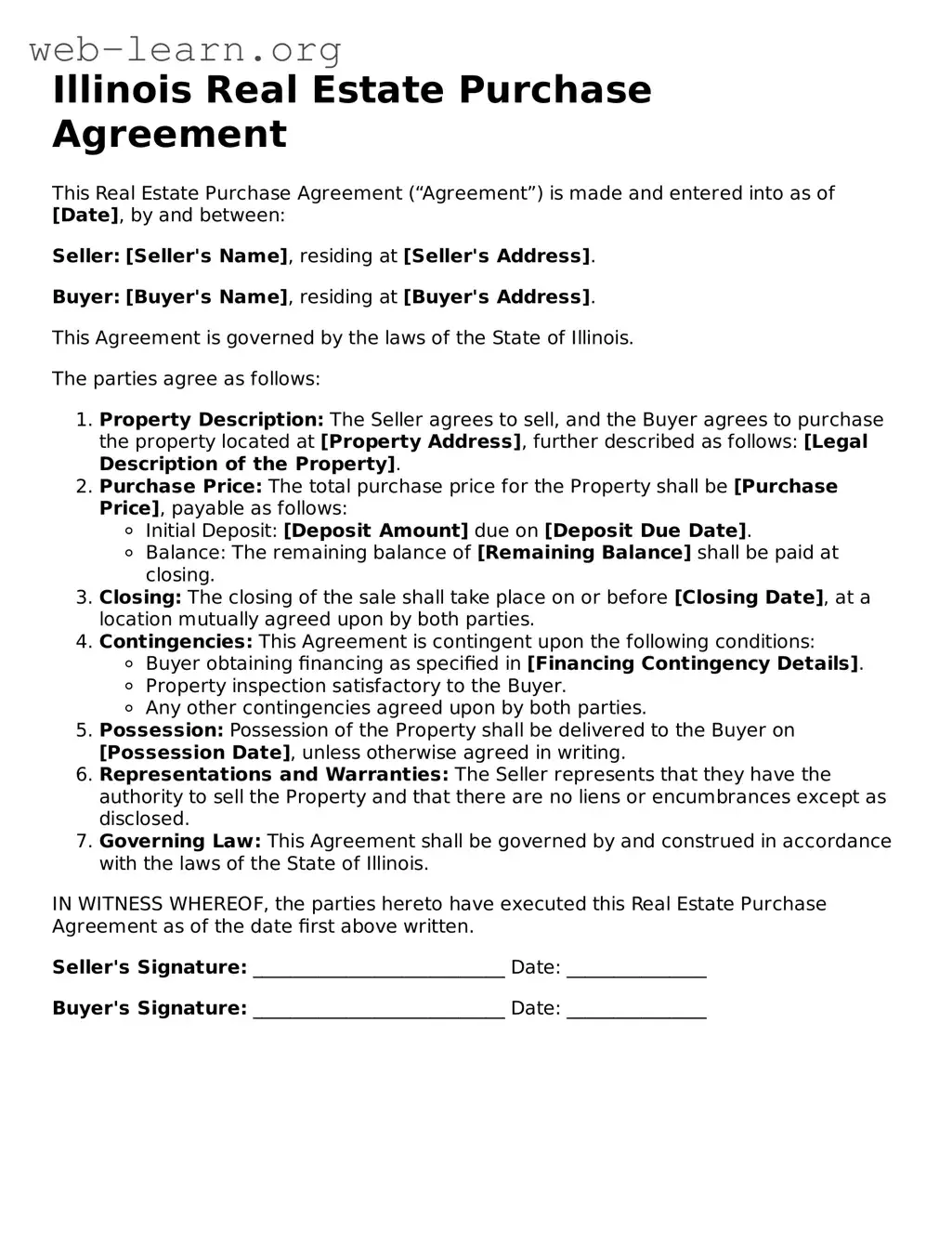
Sample - Illinois Real Estate Purchase Agreement Form

Illinois Real Estate Purchase Agreement

This Real Estate Purchase Agreement (“Agreement”) is made and entered into as of [Date], by and between:

Seller: [Seller's Name], residing at [Seller's Address].

Buyer: [Buyer's Name], residing at [Buyer's Address].

This Agreement is governed by the laws of the State of Illinois.

The parties agree as follows:

  1. Property Description: The Seller agrees to sell, and the Buyer agrees to purchase the property located at [Property Address], further described as follows: [Legal Description of the Property].
  2. Purchase Price: The total purchase price for the Property shall be [Purchase Price], payable as follows:
    • Initial Deposit: [Deposit Amount] due on [Deposit Due Date].
    • Balance: The remaining balance of [Remaining Balance] shall be paid at closing.
  3. Closing: The closing of the sale shall take place on or before [Closing Date], at a location mutually agreed upon by both parties.
  4. Contingencies: This Agreement is contingent upon the following conditions:
    • Buyer obtaining financing as specified in [Financing Contingency Details].
    • Property inspection satisfactory to the Buyer.
    • Any other contingencies agreed upon by both parties.
  5. Possession: Possession of the Property shall be delivered to the Buyer on [Possession Date], unless otherwise agreed in writing.
  6. Representations and Warranties: The Seller represents that they have the authority to sell the Property and that there are no liens or encumbrances except as disclosed.
  7. Governing Law: This Agreement shall be governed by and construed in accordance with the laws of the State of Illinois.

IN WITNESS WHEREOF, the parties hereto have executed this Real Estate Purchase Agreement as of the date first above written.

Seller's Signature: ___________________________ Date: _______________

Buyer's Signature: ___________________________ Date: _______________

File Characteristics

Fact Name Details
Governing Law The Illinois Real Estate Purchase Agreement is governed by the laws of the State of Illinois.
Purpose This form outlines the terms and conditions for the sale of real property in Illinois.
Parties Involved The agreement involves a buyer and a seller, each identified in the document.
Property Description A detailed description of the property being sold must be included in the agreement.
Contingencies Common contingencies may include financing, inspection, and appraisal conditions.
Signature Requirement Both parties must sign the agreement for it to be legally binding.

Detailed Guide for Filling Out Illinois Real Estate Purchase Agreement

After obtaining the Illinois Real Estate Purchase Agreement form, you will need to carefully fill it out to ensure all necessary information is included. This process will help facilitate the sale and purchase of the property in question.

  1. Start by entering the date at the top of the form.
  2. Provide the names of the buyer(s) and seller(s) in the designated sections.
  3. Clearly write the property address, including city, state, and ZIP code.
  4. Specify the purchase price of the property.
  5. Fill in the amount of earnest money that will be deposited.
  6. Indicate the closing date or time frame for the transaction.
  7. Include any contingencies, such as financing or inspection requirements.
  8. Sign and date the form at the bottom, ensuring all parties have done so.

Obtain Answers on Illinois Real Estate Purchase Agreement

  1. What is the Illinois Real Estate Purchase Agreement?

    The Illinois Real Estate Purchase Agreement is a legal document that outlines the terms and conditions of a real estate transaction between a buyer and a seller. This agreement includes essential details such as the purchase price, property description, closing date, and any contingencies that must be met before the sale can be finalized. It serves as a binding contract once both parties sign it.

  2. What are the key components of the agreement?

    The agreement typically includes:

    • Buyer and seller information
    • Property details, including address and legal description
    • Purchase price and payment terms
    • Closing date and possession date
    • Contingencies, such as financing or inspection conditions
    • Disclosures required by law

    Each of these components is crucial for ensuring that both parties understand their rights and obligations throughout the transaction.

  3. Are there any contingencies that can be included?

    Yes, contingencies are an important part of the agreement. Common contingencies include:

    • Financing contingency: This allows the buyer to back out if they cannot secure a mortgage.
    • Inspection contingency: This permits the buyer to have the property inspected and request repairs or negotiate the price based on the findings.
    • Appraisal contingency: This ensures that the property is appraised at or above the purchase price.

    Including these contingencies protects the buyer and helps facilitate a smoother transaction.

  4. What happens after the agreement is signed?

    Once both parties sign the agreement, it becomes legally binding. The buyer typically submits an earnest money deposit to show their commitment. Following this, the buyer will proceed with any contingencies, such as inspections or securing financing. The closing process will then be scheduled, during which the final paperwork is signed, and ownership of the property is transferred. It is essential for both parties to adhere to the timeline and conditions outlined in the agreement to ensure a successful transaction.

Common mistakes

When filling out the Illinois Real Estate Purchase Agreement form, many people make common mistakes that can lead to confusion or even legal issues down the line. One frequent error is failing to include all necessary parties. It's crucial to ensure that all buyers and sellers are listed correctly. Omitting a party can create complications, especially if that individual has a legal claim to the property.

Another mistake often encountered is the misinterpretation of terms. Real estate terminology can be tricky. For instance, understanding the difference between "contingent" and "non-contingent" offers is essential. A contingent offer may seem appealing, but it comes with conditions that must be met. If these terms are misunderstood, it could lead to significant issues during the transaction.

Inaccurate property descriptions are also a common pitfall. The agreement should clearly identify the property being sold, including the address and legal description. If this information is incorrect or vague, it may result in disputes later. Buyers and sellers should take the time to verify that the details match official records.

Another area where mistakes can occur is in the financial details. It's important to specify the purchase price clearly and outline how the buyer intends to finance the property. This includes any contingencies related to financing. If these details are not accurately represented, it could lead to misunderstandings about the buyer's ability to complete the purchase.

Lastly, many individuals overlook the importance of signatures and dates. All parties must sign the agreement for it to be valid. Additionally, dating the document is crucial, as it establishes the timeline for the transaction. Without proper signatures and dates, the agreement may not hold up in a legal context.

Documents used along the form

When engaging in real estate transactions in Illinois, several documents accompany the Real Estate Purchase Agreement. Each of these forms serves a specific purpose and helps facilitate a smooth transaction process. Below is a list of commonly used documents.

  • Property Disclosure Statement: This document requires the seller to disclose any known defects or issues with the property. It provides potential buyers with essential information about the property's condition.
  • Lead-Based Paint Disclosure: For properties built before 1978, this form informs buyers about the potential presence of lead-based paint, which can pose health risks, especially to children.
  • Title Commitment: Issued by a title company, this document outlines the current status of the property's title, including any liens or encumbrances. It assures buyers that the title can be transferred free of issues.
  • Closing Statement: This document details all financial transactions that occur during the closing process. It includes the purchase price, closing costs, and any adjustments made at closing.
  • Escrow Agreement: This agreement outlines the terms under which an escrow agent will hold funds and documents until the conditions of the sale are met. It protects both the buyer and seller during the transaction.
  • Loan Estimate: If the buyer is financing the purchase, this document provides a summary of the loan terms, estimated monthly payments, and closing costs. It helps buyers understand their financial obligations.
  • Affidavit of Title: This sworn statement by the seller confirms their ownership of the property and that there are no undisclosed liens or claims against it. It is a crucial document for ensuring clear title transfer.
  • Home Warranty Agreement: This optional agreement offers protection for the buyer against certain repairs or replacements of home systems and appliances for a specified period after purchase.

Understanding these documents can enhance the real estate transaction experience. Each plays a vital role in protecting the interests of both buyers and sellers, ensuring a transparent and efficient process.

Similar forms

  • Lease Agreement: This document outlines the terms under which a tenant can occupy a property. Like the Real Estate Purchase Agreement, it specifies the parties involved, the property in question, and the terms of the agreement, such as duration and payment details.
  • Option to Purchase Agreement: This agreement gives a tenant the right to purchase the property at a later date. Similar to the Real Estate Purchase Agreement, it includes details about the property, the purchase price, and the timeframe for exercising the option.
  • Real Estate Listing Agreement: This document is used between a property owner and a real estate agent. It shares similarities with the Real Estate Purchase Agreement in that it outlines the terms of sale, including commission rates and property details, although it focuses on the marketing aspect.
  • Counteroffer: This document is a response to an initial offer. It details modifications to the original terms. Like the Real Estate Purchase Agreement, it must be clear about the parties involved and the specifics of the offer, ensuring mutual understanding.
  • Purchase and Sale Agreement: This document is used in commercial real estate transactions. It serves a similar purpose to the Real Estate Purchase Agreement, detailing the terms of the sale, including price, contingencies, and closing dates, while often being more complex due to the nature of commercial properties.

Dos and Don'ts

When filling out the Illinois Real Estate Purchase Agreement form, it is crucial to approach the task with care and attention to detail. Here are some important dos and don'ts to keep in mind.

  • Do read the entire agreement thoroughly before starting to fill it out. Understanding the terms will help you avoid mistakes.
  • Do provide accurate information. Ensure that names, addresses, and other details are correct to prevent issues later on.
  • Do consult with a real estate professional if you have questions. Their expertise can guide you through the process.
  • Do sign and date the form in the appropriate places. Missing signatures can delay the transaction.
  • Don't leave any sections blank. If a section does not apply, write "N/A" to indicate that it is not relevant.
  • Don't rush through the form. Taking your time will help ensure that all information is accurate and complete.

By following these guidelines, you can help facilitate a smoother transaction and minimize potential complications in the real estate process.

Misconceptions

There are several misconceptions surrounding the Illinois Real Estate Purchase Agreement form that can lead to confusion for buyers and sellers. Below is a list of common misunderstandings, along with clarifications to help ensure a smoother transaction process.

  • The form is only for residential properties. The Illinois Real Estate Purchase Agreement can be used for both residential and commercial properties, making it versatile for various real estate transactions.
  • All terms are set in stone once the agreement is signed. While the agreement is a binding contract, parties can negotiate terms and conditions even after signing, as long as both parties consent to any changes.
  • It is unnecessary to have a real estate agent. Although the form can be completed without an agent, having professional guidance can help ensure that all necessary details are correctly addressed.
  • Only the buyer needs to sign the agreement. Both the buyer and the seller must sign the agreement for it to be valid and enforceable.
  • The agreement guarantees financing. The purchase agreement does not guarantee that financing will be obtained; buyers must still secure their own financing before the sale can proceed.
  • All contingencies must be included in the initial agreement. While it is advisable to include contingencies, they can be added later as long as both parties agree to the changes.
  • Once the agreement is signed, the buyer cannot back out. Buyers can back out under certain conditions, such as failing to meet contingencies, but doing so may have legal consequences.
  • The form is the same for every transaction. The Illinois Real Estate Purchase Agreement can be customized to fit the specifics of each transaction, allowing for flexibility in terms and conditions.
  • Legal advice is not necessary. While it is possible to complete the form without legal assistance, consulting an attorney can provide valuable insights and help prevent potential issues.
  • Once the agreement is signed, the closing date is fixed. The closing date can be modified if both parties agree to a new date, allowing for adjustments as needed.

Understanding these misconceptions can help buyers and sellers navigate the real estate process more effectively. It is always best to seek guidance and clarify any uncertainties before proceeding with a transaction.

Key takeaways

When dealing with the Illinois Real Estate Purchase Agreement form, it’s important to understand several key aspects. Here are some essential takeaways to keep in mind:

  • Ensure that all parties involved are clearly identified. This includes the buyer and seller, as well as any agents representing them.
  • Clearly outline the property details. Include the address, legal description, and any additional information that defines the property.
  • Specify the purchase price. This should be a clear and agreed-upon amount that both parties understand.
  • Include the earnest money deposit. This shows the buyer's commitment and should be a specified amount to be held in trust.
  • Detail the closing date. Both parties should agree on when the transaction will be finalized.
  • Address contingencies. This may include financing, inspections, or other conditions that must be met before the sale can proceed.
  • Understand the obligations of both parties. Each party should be aware of their responsibilities in the transaction.
  • Review any disclosures required by Illinois law. Sellers are often required to disclose certain information about the property.
  • Consider legal advice. While the form is straightforward, having a lawyer review it can help prevent future issues.

By following these guidelines, you can navigate the Illinois Real Estate Purchase Agreement with more confidence.