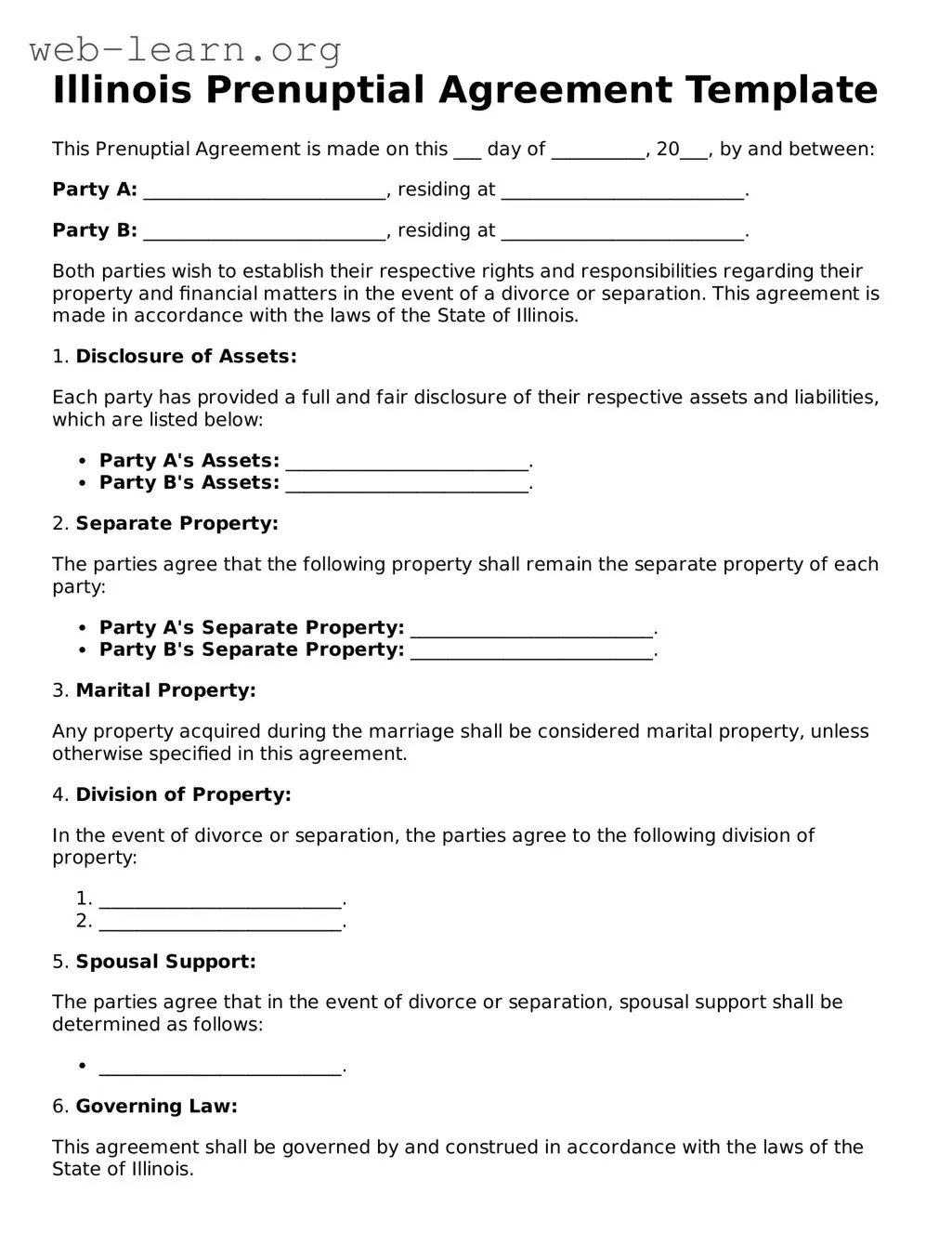
In Illinois, a prenuptial agreement serves as a critical tool for couples preparing to marry, allowing them to outline their financial rights and responsibilities before tying the knot. This legal document can address various aspects, including the division of assets, debt management, and spousal support in the event of divorce or separation. By clearly defining each partner's expectations and obligations, the agreement aims to minimize potential conflicts and misunderstandings in the future. It is essential for both parties to fully disclose their financial situations, as transparency is key to creating a valid and enforceable agreement. Additionally, the form must comply with Illinois law, which requires that it be in writing and signed by both partners. Understanding the nuances of the Illinois Prenuptial Agreement form can empower couples to enter marriage with clarity and confidence, ensuring that their individual and shared interests are protected.
Illinois Prenuptial Agreement Template
This Prenuptial Agreement is made on this ___ day of __________, 20___, by and between:
Party A: __________________________, residing at __________________________.
Party B: __________________________, residing at __________________________.
Both parties wish to establish their respective rights and responsibilities regarding their property and financial matters in the event of a divorce or separation. This agreement is made in accordance with the laws of the State of Illinois.
1. Disclosure of Assets:
Each party has provided a full and fair disclosure of their respective assets and liabilities, which are listed below:
2. Separate Property:
The parties agree that the following property shall remain the separate property of each party:
3. Marital Property:
Any property acquired during the marriage shall be considered marital property, unless otherwise specified in this agreement.
4. Division of Property:
In the event of divorce or separation, the parties agree to the following division of property:
5. Spousal Support:
The parties agree that in the event of divorce or separation, spousal support shall be determined as follows:
6. Governing Law:
This agreement shall be governed by and construed in accordance with the laws of the State of Illinois.
7. Amendments:
This agreement may only be amended in writing, signed by both parties.
8. Severability:
If any provision of this agreement is found to be invalid or unenforceable, the remaining provisions shall continue to be valid and enforceable.
IN WITNESS WHEREOF, the parties have executed this Prenuptial Agreement on the day and year first above written.
Party A Signature: __________________________
Date: __________________________
Party B Signature: __________________________
Date: __________________________
| Fact Name | Description |
|---|---|
| Governing Law | Illinois Prenuptial Agreements are governed by the Illinois Uniform Premarital Agreement Act. |
| Purpose | The form is used to outline the financial rights and responsibilities of each spouse in the event of divorce or separation. |
| Requirements | Both parties must voluntarily sign the agreement, and it should be in writing to be enforceable. |
| Disclosure | Full financial disclosure by both parties is recommended to ensure fairness and transparency. |
Filling out the Illinois Prenuptial Agreement form is an important step for couples who wish to outline their financial arrangements before marriage. This process can help ensure clarity and mutual understanding regarding assets and responsibilities. Here’s how to complete the form effectively.
What is a prenuptial agreement?
A prenuptial agreement, often called a prenup, is a legal contract between two individuals before they get married. It outlines how assets and debts will be divided in the event of divorce or death. This agreement can help clarify financial rights and responsibilities, providing peace of mind for both parties.
Why should I consider a prenuptial agreement in Illinois?
Considering a prenup can be beneficial for various reasons. It can protect individual assets acquired before marriage, clarify financial obligations, and minimize potential disputes during a divorce. If one partner has significantly more wealth or if there are children from previous relationships, a prenup can ensure that financial matters are addressed clearly.
What should be included in an Illinois prenuptial agreement?
While each prenup can be tailored to the couple's needs, common elements include:
Do both parties need a lawyer for the prenuptial agreement?
While it is not legally required for both parties to have separate lawyers, it is highly recommended. Having independent legal counsel ensures that both individuals understand their rights and obligations. This can also help avoid claims of coercion or unfairness in the agreement.
How do we create a valid prenuptial agreement in Illinois?
To create a valid prenup in Illinois, follow these steps:
Make sure to allow enough time for review before the wedding. Last-minute agreements may be challenged in court.
Can a prenuptial agreement be changed after marriage?
Yes, a prenuptial agreement can be modified after marriage. This requires both parties to agree to the changes and to document them formally. It's advisable to consult legal counsel during this process to ensure that any modifications are enforceable.
When preparing a prenuptial agreement in Illinois, individuals often make several common mistakes that can lead to complications down the line. Understanding these pitfalls can help ensure that the agreement is effective and enforceable. Here are seven mistakes to watch out for.
One frequent error is failing to disclose all assets and debts. Transparency is crucial in a prenuptial agreement. If one party hides financial information, it can lead to disputes later. Both partners should openly share their financial situations, including income, property, and liabilities. This honesty fosters trust and creates a solid foundation for the agreement.
Another mistake involves not considering future changes in circumstances. Life can be unpredictable. Changes such as having children, career advancements, or significant financial shifts should be anticipated. Couples should include provisions in their agreement that address how these changes might affect their financial arrangements.
People often overlook the importance of having the agreement reviewed by legal professionals. While it may seem tempting to draft the document independently or use a generic template, consulting with a lawyer can provide valuable insights. A legal expert can help ensure that the agreement complies with Illinois law and that both parties understand their rights and obligations.
Additionally, couples sometimes rush the process. Filling out the prenuptial agreement should not be an afterthought or a last-minute task. Taking the time to discuss and negotiate the terms can lead to a more comprehensive and satisfactory agreement. Rushed decisions often result in overlooked details that could cause issues later.
Another common mistake is failing to update the agreement after significant life events. Once a prenuptial agreement is in place, it is essential to revisit it periodically. Major life changes, such as marriage, divorce, or the birth of a child, may necessitate adjustments to the agreement. Keeping it current ensures that it remains relevant and effective.
Some individuals also make the mistake of not considering the emotional aspects of the agreement. While a prenuptial agreement is a legal document, it can also carry emotional weight. Discussing the agreement openly and respectfully can help both partners feel valued and understood, making the process smoother.
Finally, many people forget to include a dispute resolution clause. In the event of a disagreement about the terms of the prenuptial agreement, having a clear method for resolving conflicts can save time and stress. Whether through mediation, arbitration, or another method, specifying how disputes will be handled is a smart move.
By avoiding these common mistakes, couples can create a prenuptial agreement that not only protects their interests but also strengthens their relationship. Taking the time to understand and address these issues will lead to a more secure and harmonious future together.
When considering a prenuptial agreement in Illinois, it is essential to understand that several other documents may complement this important legal contract. Each of these forms serves a specific purpose, helping to clarify and protect the interests of both parties as they prepare for marriage. Below is a list of commonly used forms and documents that may accompany a prenuptial agreement.
These documents, when used alongside a prenuptial agreement, can provide a comprehensive framework for addressing financial and personal matters within a marriage. It is advisable to consult with a legal professional to ensure that all necessary forms are properly prepared and tailored to meet the specific needs of both parties.
When filling out the Illinois Prenuptial Agreement form, it is essential to approach the process with care and attention to detail. This legal document can significantly impact your future, so here are some important dos and don'ts to consider.
When considering a prenuptial agreement in Illinois, several misconceptions can lead to confusion. Understanding the truth behind these common beliefs can help couples make informed decisions.
By addressing these misconceptions, couples can approach their prenuptial agreements with clarity and confidence.
When considering a prenuptial agreement in Illinois, it is crucial to understand the implications and requirements of the document. Below are key takeaways regarding the process of filling out and utilizing the Illinois Prenuptial Agreement form:
Understanding these points can help ensure that the prenuptial agreement serves its intended purpose effectively.
Idaho Prenup - It can help couples establish a mutual understanding of their financial landscape.
Connecticut Prenup - A prenuptial agreement can be tailored to fit the unique needs of the couple.
Georgia Prenup - A prenuptial agreement can include clauses about the division of retirement accounts.