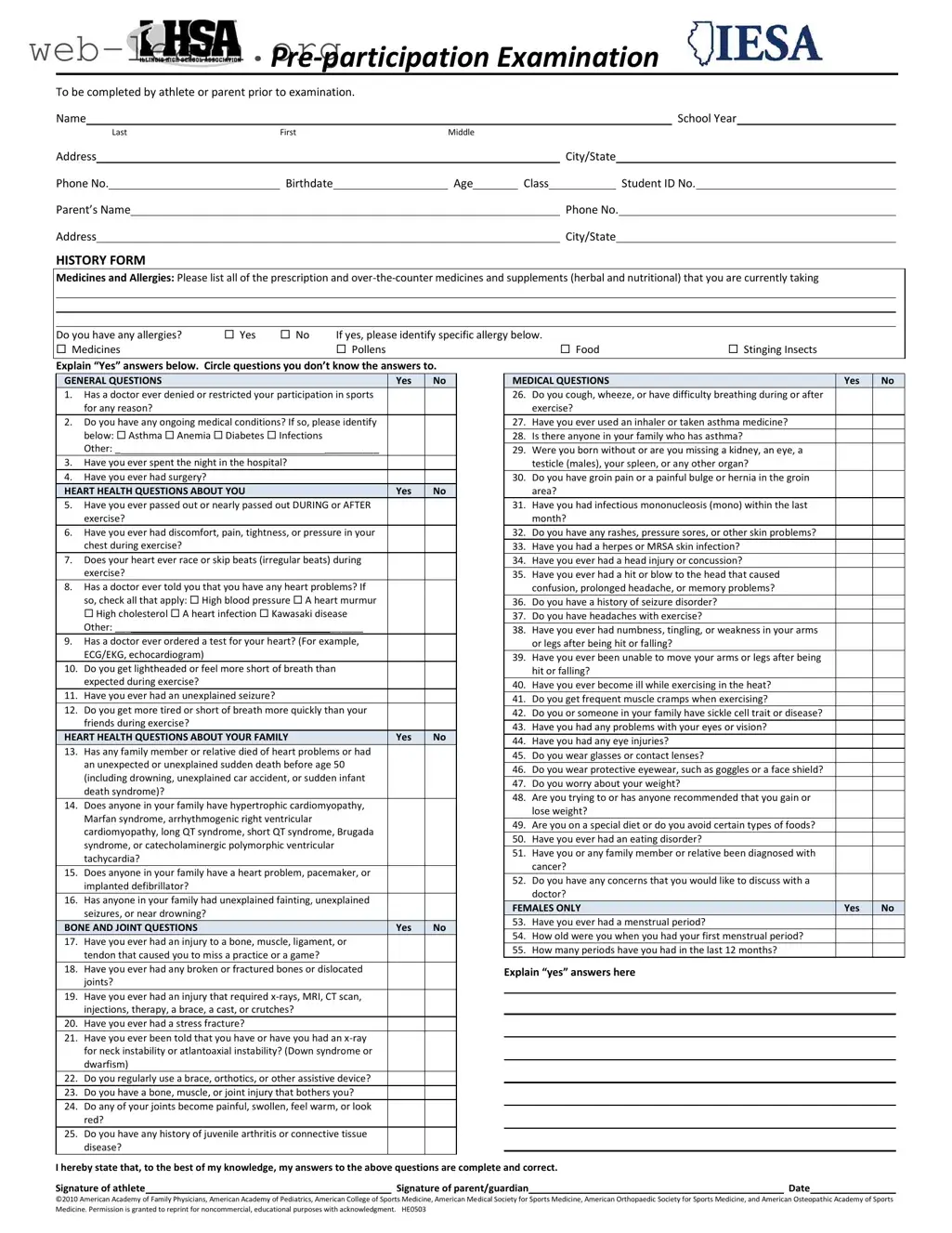
The Illinois Pre Participation Physical form plays a crucial role in ensuring the safety and well-being of student-athletes before they engage in sports activities. This comprehensive document requires detailed information about the athlete's medical history, including any medications, allergies, and previous health issues. Parents or guardians must provide accurate responses to a series of questions that cover general health, heart health, bone and joint conditions, and other medical concerns. Notably, the form also includes specific inquiries about family medical history, particularly regarding heart conditions, which can be vital for identifying potential risks. Additionally, the physical examination section assesses the athlete's overall health, including vital signs and a thorough check of various body systems. The form culminates in a consent section related to performance-enhancing substance testing, underscoring the commitment to fair play in athletics. By requiring this form, schools aim to protect students and promote a safe sporting environment.

To be completed by athlete or parent prior to examination. |
|
|
|
|
|
|
|
|
|
|
||||||
Name |
|
|
|
|
|
|
|
|
|
School Year |
||||||
|
|
|
Last |
First |
Middle |
|
|
|
|
|
|
|
|
|||
Address |
|
|
|
|
|
|
|
City/State |
|
|||||||
Phone No. |
|
Birthdate |
|
Age |
Class |
|
|
Student ID No. |
||||||||
|
|
|
|
|
|
|
|
|
|
|
|
|
|
|||
Pare t’s Na e |
|
|
|
|
|
|
Phone No. |
|||||||||
Address |
|
|
|
|
|
|
|
|
City/State |
|
|
|||||
HISTORY FORM
Medicines and Allergies: Please list all of the prescription and
Do you have any allergies? |
Yes |
No |
If yes, please identify specific allergy below. |
|
|
Medicines |
|
|
Pollens |
Food |
Stinging Insects |
|
|
|
|
||
E plain Yes answe s elow. Ci |
le uestions ou don’t know the answe s to. |
|
|
||
|
GENERAL QUESTIONS |
|
|
|
Yes |
No |
|||
1. |
Has a doctor ever denied or restricted your participation in sports |
|
|
||||||
|
|
for any reason? |
|
|
|
|
|
||
2. |
Do you have any ongoing medical conditions? If so, please identify |
|
|
||||||
|
|
below: Asthma Anemia Diabetes Infections |
|
|
|
|
|
||
|
|
Other: _ |
|
__________ |
|
|
|
||
|
|
|
|
|
|
|
|
||
3. |
Have you ever spent the night in the hospital? |
|
|
|
|
|
|||
4. |
Have you ever had surgery? |
|
|
|
|
|
|||
|
HEART HEALTH QUESTIONS ABOUT YOU |
|
|
|
Yes |
No |
|||
5. |
Have you ever passed out or nearly passed out DURING or AFTER |
|
|
||||||
|
|
exercise? |
|
|
|
|
|
||
6. |
Have you ever had discomfort, pain, tightness, or pressure in your |
|
|
||||||
|
|
chest during exercise? |
|
|
|
|
|
||
7. |
Does your heart ever race or skip beats (irregular beats) during |
|
|
||||||
|
|
exercise? |
|
|
|
|
|
||
8. |
Has a doctor ever told you that you have any heart problems? If |
|
|
||||||
|
|
so, check all that apply: High blood pressure A heart murmur |
|
|
|||||
|
|
High cholesterol A heart infection Kawasaki disease |
|
|
|||||
|
|
Other: ___ |
|
|
______ |
|
|
|
|
|
|
|
|
||||||
9. |
Has a doctor ever ordered a test for your heart? (For example, |
|
|
||||||
|
|
ECG/EKG, echocardiogram) |
|
|
|
|
|
||
10. |
Do you get lightheaded or feel more short of breath than |
|
|
||||||
|
|
expected during exercise? |
|
|
|
|
|
||
11. |
Have you ever had an unexplained seizure? |
|
|
|
|
|
|||
12. |
Do you get more tired or short of breath more quickly than your |
|
|
||||||
|
|
friends during exercise? |
|
|
|
|
|
||
|
HEART HEALTH QUESTIONS ABOUT YOUR FAMILY |
|
|
|
Yes |
No |
|||
13. |
Has any family member or relative died of heart problems or had |
|
|
||||||
|
|
an unexpected or unexplained sudden death before age 50 |
|
|
|||||
|
|
(including drowning, unexplained car accident, or sudden infant |
|
|
|||||
|
|
death syndrome)? |
|
|
|
|
|
||
14. |
Does anyone in your family have hypertrophic cardiomyopathy, |
|
|
||||||
|
|
Marfan syndrome, arrhythmogenic right ventricular |
|
|
|
|
|
||
|
|
cardiomyopathy, long QT syndrome, short QT syndrome, Brugada |
|
|
|||||
|
|
syndrome, or catecholaminergic polymorphic ventricular |
|
|
|||||
|
|
tachycardia? |
|
|
|
|
|
||
15. |
Does anyone in your family have a heart problem, pacemaker, or |
|
|
||||||
|
|
implanted defibrillator? |
|
|
|
|
|
||
16. |
Has anyone in your family had unexplained fainting, unexplained |
|
|
||||||
|
|
seizures, or near drowning? |
|
|
|
|
|
||
|
BONE AND JOINT QUESTIONS |
|
|
|
Yes |
No |
|||
17. |
Have you ever had an injury to a bone, muscle, ligament, or |
|
|
||||||
|
|
tendon that caused you to miss a practice or a game? |
|
|
|
|
|
||
18. |
Have you ever had any broken or fractured bones or dislocated |
|
|
||||||
|
|
joints? |
|
|
|
|
|
||
19. |
Have you ever had an injury that required |
|
|
||||||
|
|
injections, therapy, a brace, a cast, or crutches? |
|
|
|
|
|
||
20. |
Have you ever had a stress fracture? |
|
|
|
|
|
|||
21. |
Have you ever been told that you have or have you had an |
|
|
||||||
|
|
for neck instability or atlantoaxial instability? (Down syndrome or |
|
|
|||||
|
|
dwarfism) |
|
|
|
|
|
||
22. |
Do you regularly use a brace, orthotics, or other assistive device? |
|
|
||||||
23. |
Do you have a bone, muscle, or joint injury that bothers you? |
|
|
||||||
24. |
Do any of your joints become painful, swollen, feel warm, or look |
|
|
||||||
|
|
red? |
|
|
|
|
|
||
25. |
Do you have any history of juvenile arthritis or connective tissue |
|
|
||||||
|
|
disease? |
|
|
|
|
|
||
MEDICAL QUESTIONS |
Yes |
No |
26.Do you cough, wheeze, or have difficulty breathing during or after exercise?
27. |
Have you ever used an inhaler or taken asthma medicine? |
|
|
28. |
Is there anyone in your family who has asthma? |
|
|
29. |
Were you born without or are you missing a kidney, an eye, a |
|
|
|
testicle (males), your spleen, or any other organ? |
|
|
30. |
Do you have groin pain or a painful bulge or hernia in the groin |
|
|
|
area? |
|
|
31. |
Have you had infectious mononucleosis (mono) within the last |
|
|
|
month? |
|
|
32. |
Do you have any rashes, pressure sores, or other skin problems? |
|
|
33. |
Have you had a herpes or MRSA skin infection? |
|
|
34. |
Have you ever had a head injury or concussion? |
|
|
35. |
Have you ever had a hit or blow to the head that caused |
|
|
|
confusion, prolonged headache, or memory problems? |
|
|
36. |
Do you have a history of seizure disorder? |
|
|
37. |
Do you have headaches with exercise? |
|
|
38. |
Have you ever had numbness, tingling, or weakness in your arms |
|
|
|
or legs after being hit or falling? |
|
|
39. |
Have you ever been unable to move your arms or legs after being |
|
|
|
hit or falling? |
|
|
40. |
Have you ever become ill while exercising in the heat? |
|
|
41. |
Do you get frequent muscle cramps when exercising? |
|
|
42. |
Do you or someone in your family have sickle cell trait or disease? |
|
|
43. |
Have you had any problems with your eyes or vision? |
|
|
44. |
Have you had any eye injuries? |
|
|
45. |
Do you wear glasses or contact lenses? |
|
|
46. |
Do you wear protective eyewear, such as goggles or a face shield? |
|
|
47. |
Do you worry about your weight? |
|
|
48. |
Are you trying to or has anyone recommended that you gain or |
|
|
|
lose weight? |
|
|
49. |
Are you on a special diet or do you avoid certain types of foods? |
|
|
50. |
Have you ever had an eating disorder? |
|
|
51. |
Have you or any family member or relative been diagnosed with |
|
|
|
cancer? |
|
|
52. |
Do you have any concerns that you would like to discuss with a |
|
|
|
doctor? |
|
|
FEMALES ONLY |
Yes |
No |
|
53. |
Have you ever had a menstrual period? |
|
|
54.How old were you when you had your first menstrual period?
55.How many periods have you had in the last 12 months?
Explain es answe s he e
I hereby state that, to the best of my knowledge, my answers to the above questions are complete and correct.
Signature of athlete |
|
Signature of parent/guardian |
|
Date |
©2010 American Academy of Family Physicians, American Academy of Pediatrics, American College of Sports Medicine, American Medical Society for Sports Medicine, American Orthopaedic Society for Sports Medicine, and American Osteopathic Academy of Sports Medicine. Permission is granted to reprint for noncommercial, educational purposes with acknowledgment. HE0503

PHYSICAL EXAMINATION FORM
|
EXAMINATION |
|
|
|
|
|
|
|
|
|
|
|
|
|
|
|
|
Height |
|
|
Weight |
|
Male |
Female |
|
|
|
|
|
|
|
||
|
BP |
/ |
( |
/ |
) |
Pulse |
Vision R 20/ |
L 20/ |
|
|
Corrected |
Y N |
||||
|
MEDICAL |
|
|
|
|
|
|
|
NORMAL |
|
|
ABNORMAL FINDINGS |
|
|
||
|
Appearance |
|
|
|
|
|
|
|
|
|
|
|
|
|
|
|
|
• Marfan stigmata (kyphoscoliosis, |
|
|
|
|
|
|
|
|
|
||||||
|
arachnodactyly, arm span > height, hyperlaxity, myopia, MVP, aortic insufficiency) |
|
|
|
|
|
|
|
|
|||||||
|
Eyes/ears/nose/throat |
|
|
|
|
|
|
|
|
|
|
|
|
|
||
|
Pupils equal |
|
|
|
|
|
|
|
|
|
|
|
|
|
|
|
|
Hearing |
|
|
|
|
|
|
|
|
|
|
|
|
|
|
|
|
Lymph nodes |
|
|
|
|
|
|
|
|
|
|
|
|
|
|
|
|
Heart a |
|
|
|
|
|
|
|
|
|
|
|
|
|
|
|
|
Murmurs (auscultation standing, supine, +/- Valsalva) |
|
|
|
|
|
|
|
|
|
|
|||||
|
Location of point of maximal impulse (PMI) |
|
|
|
|
|
|
|
|
|
|
|||||
|
Pulses |
|
|
|
|
|
|
|
|
|
|
|
|
|
|
|
|
Simultaneous femoral and radial pulses |
|
|
|
|
|
|
|
|
|
|
|||||
|
Lungs |
|
|
|
|
|
|
|
|
|
|
|
|
|
|
|
|
Abdomen |
|
|
|
|
|
|
|
|
|
|
|
|
|
|
|
|
Genitourinary (males only)b |
|
|
|
|
|
|
|
|
|
|
|
|
|||
|
Skin |
|
|
|
|
|
|
|
|
|
|
|
|
|
|
|
|
HSV, lesions suggestive of MRSA, tinea corporis |
|
|
|
|
|
|
|
|
|
|
|||||
|
Neurologic c |
|
|
|
|
|
|
|
|
|
|
|
|
|
|
|
|
MUSCULOSKELETAL |
|
|
|
|
|
|
|
|
|
|
|
|
|
||
|
Neck |
|
|
|
|
|
|
|
|
|
|
|
|
|
|
|
|
Back |
|
|
|
|
|
|
|
|
|
|
|
|
|
|
|
|
Shoulder/arm |
|
|
|
|
|
|
|
|
|
|
|
|
|
|
|
|
Elbow/forearm |
|
|
|
|
|
|
|
|
|
|
|
|
|
|
|
|
Wrist/hand/fingers |
|
|
|
|
|
|
|
|
|
|
|
|
|
|
|
|
Hip/thigh |
|
|
|
|
|
|
|
|
|
|
|
|
|
|
|
|
Knee |
|
|
|
|
|
|
|
|
|
|
|
|
|
|
|
|
Leg/Ankle |
|
|
|
|
|
|
|
|
|
|
|
|
|
|
|
|
Foot/toes |
|
|
|
|
|
|
|
|
|
|
|
|
|
|
|
|
Functional |
|
|
|
|
|
|
|
|
|
|
|
|
|
|
|
|
|
|
|
|
|
|
|
|
|
|
|
|
||||
aConsider ECG, echocardiogram, and referral to cardiology for abnormal cardiac history or exam. |
|
|
|
|
|
|
|
|
|
|||||||
bConsider GU exam if in private setting. Having third party present is recommended. |
|
|
|
|
|
|
|
|
|
|||||||
cConsider cognitive evaluation or baseline neuropsychiatric testing if a history of significant concussion. |
|
|
|
|
|
|
|
|
|
|||||||
O the |
asis of the e a i |
atio |
o this da |
, I appro e this |
hild’s parti ipatio i |
i ters holasti |
sports for o |
e year. |
|
|
||||||
Yes |
|
|
|
No |
|
Limited |
|
|
|
|
|
Examination Date |
|
|
||
Additional Comments:
Ph |
si ia |
’s Sig ature |
|
Ph |
si ia |
’s Assista t Sig ature* |
|
Ad a ed Nurse Pra titio er’s Sig ature* |
|
||
*effective January 2003, the IHSA Board of Dire tors appro ed a re o |
e datio , o siste t ith the Illi ois S hool Code, that allo s Ph si ia ’s Assista ts or |
||
Advanced Nurse Practitioners to sign off on physicals. |
|
||
IHSA Steroid Testing Policy Consent to Random Testing
(This section for high school students only)
As a prerequisite to participation in IHSA athletic activities, we agree that I/our student will not use
day, and I/our student do/does hereby agree to submit to such testing and analysis by a certified laboratory. We further understand and agree that the results of the
A complete list of the current IHSA Banned Substance Classes can be accessed at
http://www.ihsa.org/initiatives/sportsMedicine/files/IHSA_banned_substance_classes.pdf
|
|
|
|
|
|
|
|
|
|
Signature of |
|
Date |
|
Signature of |
|
Date |
|
| Fact Name | Details |
|---|---|
| Purpose | The Illinois Pre-Participation Physical form is designed to assess an athlete's health and fitness before participating in sports. |
| Completion Requirement | The form must be completed by the athlete or their parent prior to the physical examination. |
| Medical History | It includes questions about medical history, current medications, allergies, and previous injuries. |
| Heart Health Assessment | Specific heart health questions are included to evaluate potential risks related to cardiovascular conditions. |
| Family Medical History | The form asks about family history of heart problems and other significant medical issues. |
| Governing Law | This form is governed by the Illinois School Code, which outlines requirements for student-athlete health assessments. |
| Signature Requirement | Both the athlete and a parent or guardian must sign the form, indicating their acknowledgment of the information provided. |
Completing the Illinois Pre Participation Physical form is essential for student-athletes before they can participate in sports. This process involves providing personal information, medical history, and consent for testing. Follow the steps outlined below to ensure the form is filled out accurately.
After completing the form, it should be submitted to the designated healthcare provider for review and physical examination. Ensure that all sections are filled out thoroughly to avoid delays in processing. Follow any additional instructions provided by the school or healthcare provider regarding the next steps in the physical examination process.
The Illinois Pre Participation Physical form is designed to assess an athlete's physical health before they participate in sports. It helps identify any medical conditions or risk factors that could affect their ability to safely engage in athletic activities. This form must be completed by the athlete or their parent before the physical examination.
All student-athletes in Illinois who wish to participate in school sports must complete the Illinois Pre Participation Physical form. This includes students of all ages and sports disciplines. The form must be filled out accurately to ensure the safety and well-being of the athlete.
The form requires various personal details, including:
This information helps healthcare providers evaluate the athlete's readiness for sports participation.
If the athlete has a medical condition, it is crucial to disclose this on the form. The form includes specific questions about ongoing medical issues, past surgeries, and any heart-related concerns. Providing complete and honest information allows healthcare professionals to make informed decisions about the athlete's health and safety.
The Illinois Pre Participation Physical form must be submitted annually. Each school year requires a new form to ensure that the athlete's health status is up-to-date. This annual requirement helps schools monitor any changes in the athlete's health that could impact their participation in sports.
Once the form is completed, it must be submitted to the school's athletic department. A healthcare provider will review the information and conduct a physical examination. If the athlete is cleared for participation, the provider will sign the form, indicating that the athlete is fit to play. If there are concerns, the provider may recommend further evaluation or restrictions.
Completing the Illinois Pre Participation Physical form is an essential step for athletes, but mistakes can occur that may delay or complicate the process. One common error is failing to provide complete and accurate medical histories. Athletes or parents may overlook important details about past injuries, surgeries, or ongoing medical conditions. This information is crucial for healthcare providers to assess the athlete’s fitness for participation in sports. Omitting details can lead to misunderstandings or even jeopardize the athlete's health during physical activities.
Another frequent mistake is neglecting to disclose all medications and allergies. When filling out the section regarding medicines and allergies, individuals sometimes forget to list over-the-counter medications or supplements they are taking. This oversight can be problematic, especially if an athlete has an allergic reaction or requires medical attention during a sporting event. It is vital to provide a comprehensive list to ensure that medical professionals have all the necessary information to respond effectively in case of an emergency.
In addition, many people fail to answer all questions thoroughly. Some may leave questions blank or check "no" without considering the implications. For example, questions related to heart health or previous injuries are critical for determining an athlete's readiness to compete. Each question is designed to gather essential information, and skipping them could lead to serious consequences. It is important to take the time to read each question carefully and respond honestly.
Lastly, misunderstanding the significance of the signatures required on the form can lead to complications. Both the athlete and a parent or guardian must sign the document, indicating their acknowledgment of the information provided. Failing to secure both signatures can render the form invalid. This step is not merely a formality; it signifies that both parties understand the athlete’s health status and agree to the terms outlined in the document. Ensuring that all signatures are present is a simple but vital step in the process.
When preparing for athletic participation in Illinois, several forms accompany the Illinois Pre Participation Physical form. Each document serves a specific purpose to ensure the health and safety of student-athletes. Below is a list of essential forms often required alongside the physical examination.
Having these documents prepared and submitted is vital for ensuring a smooth and safe athletic experience. Each form plays a role in safeguarding the health of student-athletes and fostering a supportive environment for participation in sports.
The Illinois Pre Participation Physical form shares similarities with several other documents used in sports and health contexts. Here are four documents that are comparable:
When filling out the Illinois Pre Participation Physical form, it's important to be thorough and accurate. Here are some guidelines to help you navigate the process effectively.
This is not true. The Illinois Pre Participation Physical form is designed for all student-athletes, regardless of their medical history. It helps identify potential health risks that may not be apparent, ensuring that every athlete is fit to participate in sports safely.
Every section of the form is important. Skipping questions can lead to missing critical health information. Each question is crafted to gather comprehensive details about the athlete's health, which can influence their safety and performance.
In fact, the physical examination must be completed annually. This ensures that any changes in the athlete's health are monitored regularly, providing updated information for their safety in sports.
While a physician's signature is required, advanced nurse practitioners and physician assistants can also sign off on the physical examination. This flexibility allows for more accessible healthcare options for families.
The form addresses various aspects of health, including mental and emotional well-being. Questions about weight, diet, and previous injuries help create a holistic view of the athlete's health, which is crucial for their overall performance and safety.
Filling out the Illinois Pre Participation Physical form is an important step for student-athletes. Here are some key takeaways to keep in mind:
These steps can help ensure a smooth process for student-athletes as they prepare for participation in sports.