In Illinois, the Power of Attorney form serves as a crucial legal document that allows individuals to appoint someone they trust to make decisions on their behalf, particularly in matters related to health care and financial management. This form is designed to ensure that a person’s wishes are respected when they are unable to communicate or make decisions due to illness or incapacity. There are two primary types of Power of Attorney in Illinois: the Power of Attorney for Health Care, which focuses on medical decisions, and the Power of Attorney for Property, which pertains to financial matters. Each type of form includes specific provisions that outline the powers granted to the agent, as well as any limitations the principal wishes to impose. Importantly, the document must be signed by the principal and witnessed or notarized to be legally valid. Understanding the nuances of the Illinois Power of Attorney form can empower individuals to take control of their future, ensuring that their preferences are honored when it matters most.
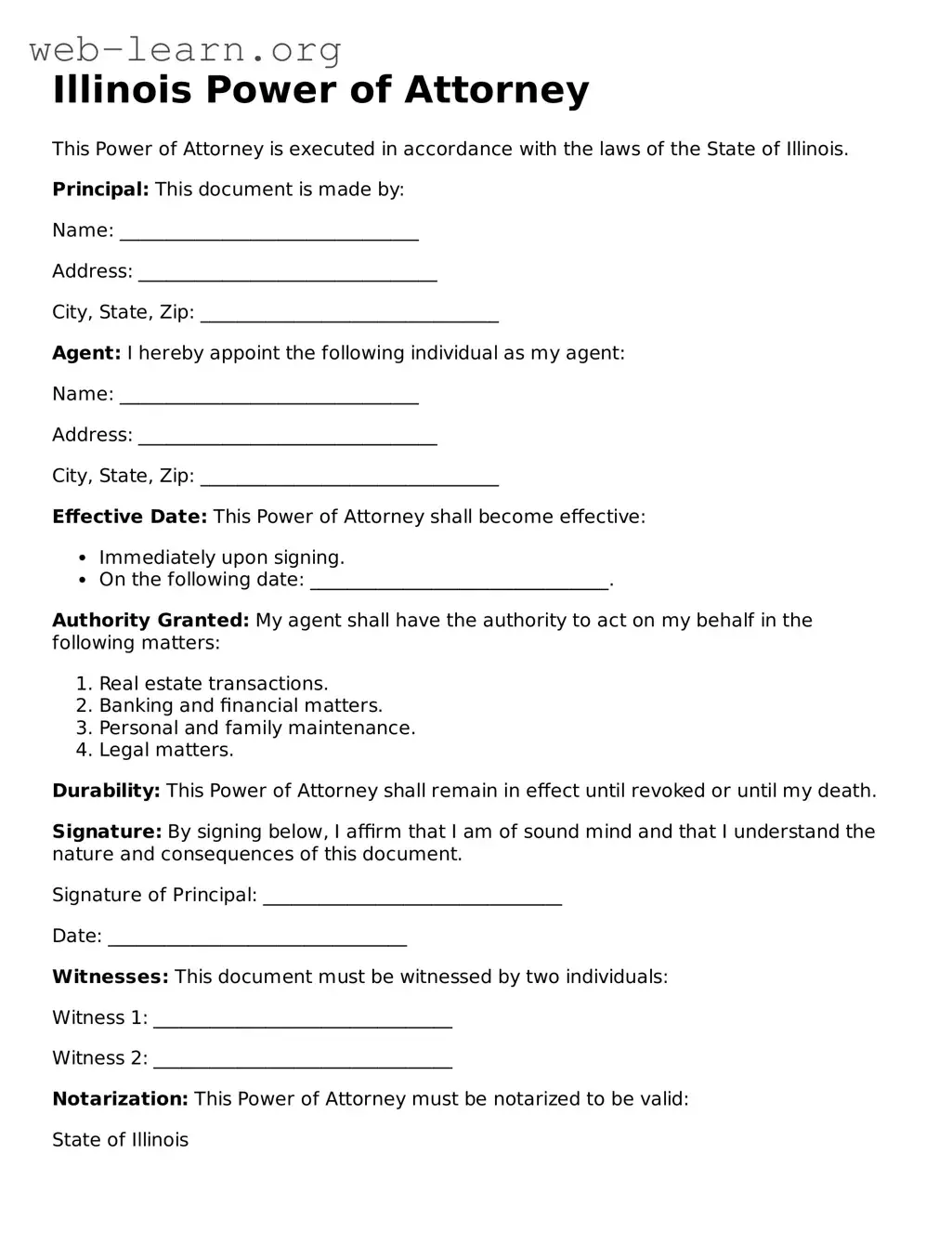
Illinois Power of Attorney
This Power of Attorney is executed in accordance with the laws of the State of Illinois.
Principal: This document is made by:
Name: ________________________________
Address: ________________________________
City, State, Zip: ________________________________
Agent: I hereby appoint the following individual as my agent:
Name: ________________________________
Address: ________________________________
City, State, Zip: ________________________________
Effective Date: This Power of Attorney shall become effective:
Authority Granted: My agent shall have the authority to act on my behalf in the following matters:
Durability: This Power of Attorney shall remain in effect until revoked or until my death.
Signature: By signing below, I affirm that I am of sound mind and that I understand the nature and consequences of this document.
Signature of Principal: ________________________________
Date: ________________________________
Witnesses: This document must be witnessed by two individuals:
Witness 1: ________________________________
Witness 2: ________________________________
Notarization: This Power of Attorney must be notarized to be valid:
State of Illinois
County of ________________________________
Subscribed and sworn to before me this ____ day of __________, 20__.
Notary Public: ________________________________
My commission expires: ________________________________
| Fact Name | Description |
|---|---|
| Definition | The Illinois Power of Attorney form allows an individual to designate someone to make decisions on their behalf. |
| Types | There are two main types: Power of Attorney for Health Care and Power of Attorney for Property. |
| Governing Laws | The form is governed by the Illinois Power of Attorney Act (755 ILCS 45/1-1 et seq.). |
| Signatures Required | The document must be signed by the principal and witnessed by two individuals or notarized. |
| Durability | The Power of Attorney can remain effective even if the principal becomes incapacitated, unless stated otherwise. |
| Revocation | The principal can revoke the Power of Attorney at any time, as long as they are mentally competent. |
| Agent's Authority | The agent's authority can be broad or limited, depending on the specifications outlined in the document. |
| Healthcare Decisions | In the case of health care, the agent can make medical decisions if the principal is unable to do so. |
| Legal Advice | While the form can be completed without legal assistance, consulting an attorney is advisable for clarity and compliance. |
Completing the Illinois Power of Attorney form requires careful attention to detail. This document is important for designating someone to make decisions on your behalf. Follow the steps outlined below to ensure the form is filled out correctly.
What is a Power of Attorney in Illinois?
A Power of Attorney (POA) in Illinois is a legal document that allows you to appoint someone to make decisions on your behalf. This can include financial decisions, medical care, and other important matters. The person you appoint is called your agent or attorney-in-fact. It's crucial to choose someone you trust, as they will have significant authority over your affairs.
What types of Power of Attorney are available in Illinois?
Illinois recognizes several types of Power of Attorney, including:
How do I create a Power of Attorney in Illinois?
To create a Power of Attorney in Illinois, follow these steps:
Make sure to provide copies to your agent and any relevant institutions.
Can I revoke a Power of Attorney in Illinois?
Yes, you can revoke a Power of Attorney at any time, as long as you are mentally competent. To revoke, you must create a written revocation document and notify your agent. It’s also a good idea to inform any institutions that had a copy of the original POA.
What happens if I do not have a Power of Attorney?
If you do not have a Power of Attorney and become incapacitated, a court may appoint a guardian to make decisions for you. This process can be lengthy, costly, and may not reflect your wishes. Having a POA in place ensures your preferences are respected and your affairs are managed by someone you trust.
Is a Power of Attorney valid if I move to another state?
A Power of Attorney created in Illinois may be recognized in other states, but laws vary. It’s essential to check the specific requirements of the state you move to. In some cases, you might need to create a new POA that complies with the new state's laws.
Filling out the Illinois Power of Attorney form can be a straightforward process, but many people make common mistakes that can lead to complications down the line. One frequent error is failing to specify the powers granted. The form allows you to choose between general and specific powers, but if you leave this section vague or unchecked, it can create confusion about what your agent can and cannot do. Clarity is key. Be explicit about the powers you wish to delegate.
Another mistake involves not properly dating the document. While it may seem trivial, the date on your Power of Attorney form is crucial. Without a date, there could be questions about when the authority was granted, potentially leading to disputes. Always ensure that the date is clearly marked and that it reflects the moment you intend for the powers to take effect.
Many individuals overlook the importance of having witnesses or a notary present during the signing. In Illinois, the law requires that the Power of Attorney form be signed in front of a witness or notarized. Failing to meet this requirement can render the document invalid. It’s essential to follow the legal guidelines to ensure that your wishes are honored.
People often forget to inform their agents about their role. Once the form is completed and signed, it’s not enough to assume your agent knows what to do. A conversation about your expectations and the decisions you would like them to make is vital. This not only prepares your agent for their responsibilities but also helps ensure that your wishes are respected.
Another common pitfall is neglecting to review and update the document periodically. Life changes—such as a marriage, divorce, or the birth of a child—can impact your choices. If you don’t update your Power of Attorney accordingly, you may inadvertently grant authority to someone you no longer trust or wish to involve. Regularly reviewing your documents is a good practice.
Lastly, many people fail to keep copies of the completed form. After signing, it’s important to distribute copies to your agent, any relevant family members, and your attorney. If the original document is lost or misplaced, having copies can save a lot of trouble. Keeping track of your documents ensures that your wishes are easily accessible when needed.
When preparing a Power of Attorney in Illinois, it's important to consider additional forms and documents that may complement it. These documents can help clarify your intentions and ensure that your wishes are respected. Below is a list of commonly used forms that often accompany a Power of Attorney.
Having these documents in place can provide peace of mind, ensuring that your wishes are honored in various circumstances. It’s wise to consult with a legal professional to determine which forms are best suited for your needs.
Filling out the Illinois Power of Attorney form is an important step in ensuring that your wishes are respected regarding your financial and healthcare decisions. Here are some essential guidelines to consider.
By following these guidelines, you can help ensure that your Power of Attorney is executed properly and reflects your intentions. It is always advisable to consult with a legal professional if you have questions or concerns about the process.
When it comes to the Illinois Power of Attorney form, many people hold misconceptions that can lead to confusion and misinformed decisions. Here are five common misunderstandings:
Many believe that a Power of Attorney is limited to financial decisions. In reality, Illinois offers both a financial Power of Attorney and a healthcare Power of Attorney. The former allows someone to manage your financial affairs, while the latter grants authority over your medical decisions if you become unable to make them yourself.
Some think that once a Power of Attorney is signed, it is set in stone. However, you can revoke or change your Power of Attorney at any time, as long as you are mentally competent. This flexibility allows you to adapt your choices as your circumstances change.
While it is wise to consult a lawyer for legal advice, you do not need one to create a Power of Attorney in Illinois. The form can be filled out by anyone, provided that it meets the state’s requirements. However, legal guidance can help ensure that your document is properly executed and tailored to your needs.
This misconception suggests that the appointed agent has unlimited power. In fact, the Power of Attorney document can specify the extent of authority granted. You can limit their powers to certain actions or decisions, providing you with control over what they can and cannot do on your behalf.
Many people think that only seniors need a Power of Attorney. However, accidents or unexpected health issues can affect anyone at any age. Establishing a Power of Attorney can be a proactive step for adults of all ages, ensuring that your wishes are respected in case of unforeseen circumstances.
Understanding these misconceptions can help individuals make informed decisions about their Power of Attorney needs in Illinois. It is essential to approach this important document with clarity and awareness.
When filling out and using the Illinois Power of Attorney form, it is important to consider several key points to ensure the document serves its intended purpose effectively. Below are essential takeaways:
How to Get Power of Attorney for Elderly Parent in Georgia - It helps ensure that bills are paid and obligations are met when you're unavailable.
Power of Attorney Form Arizona Free - Regular communication between the principal and agent is important.