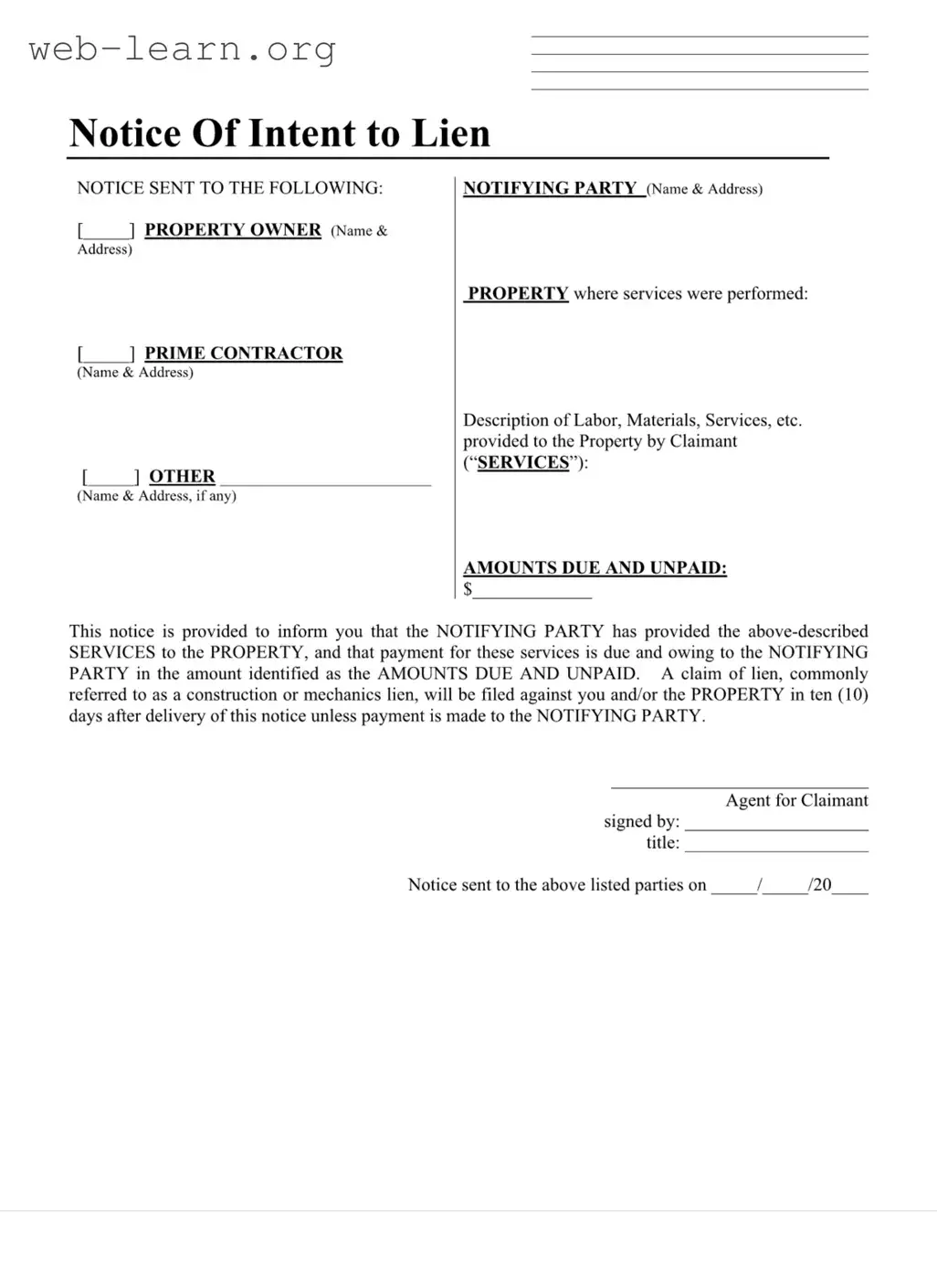
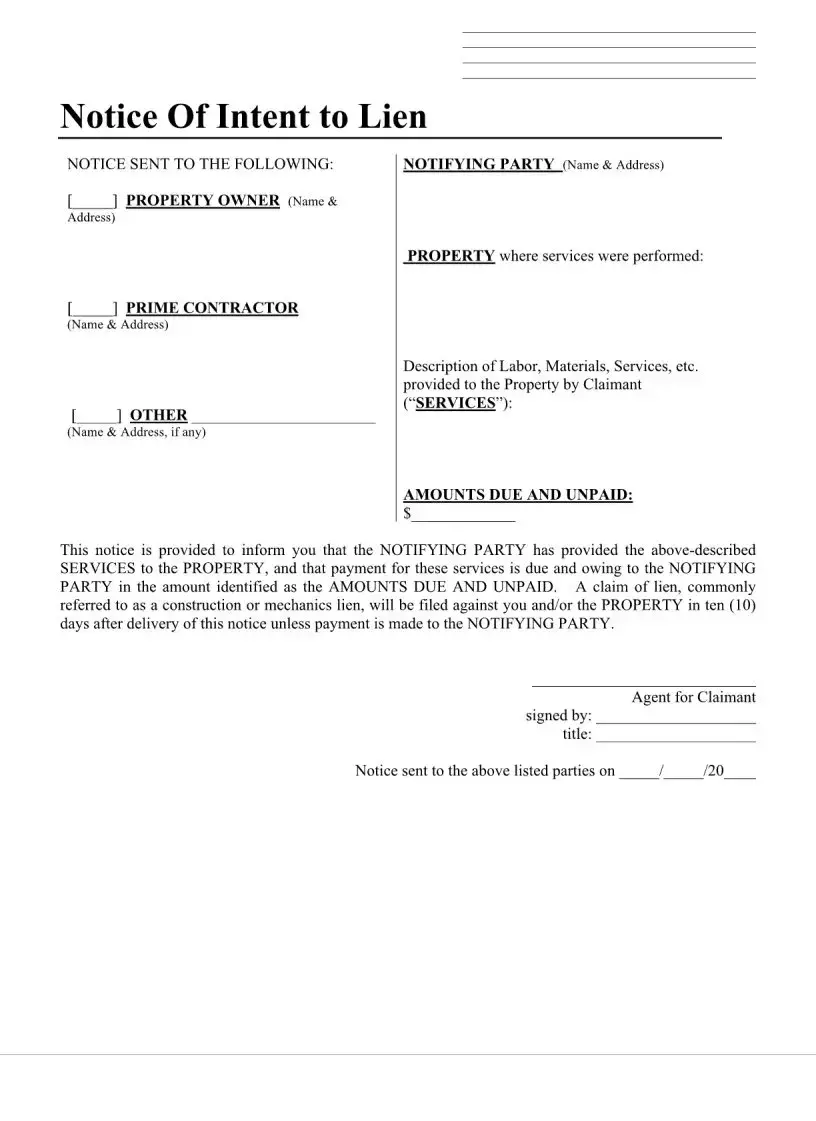
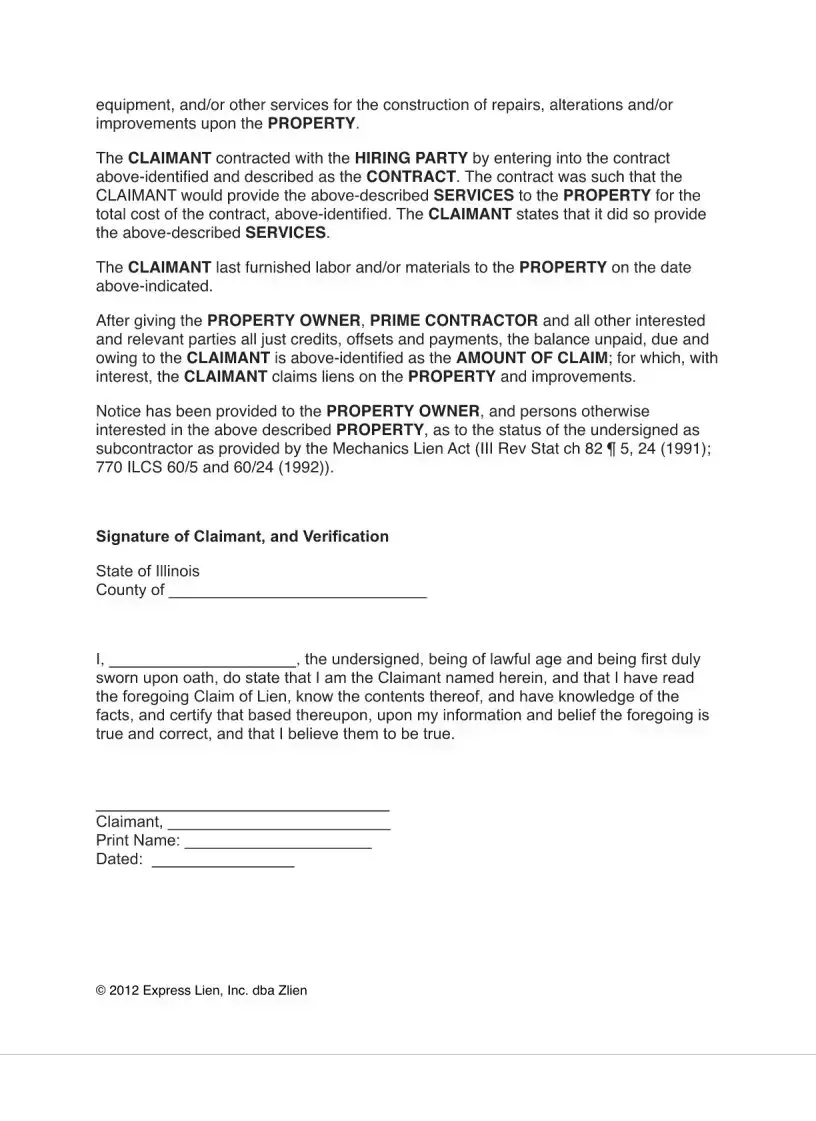
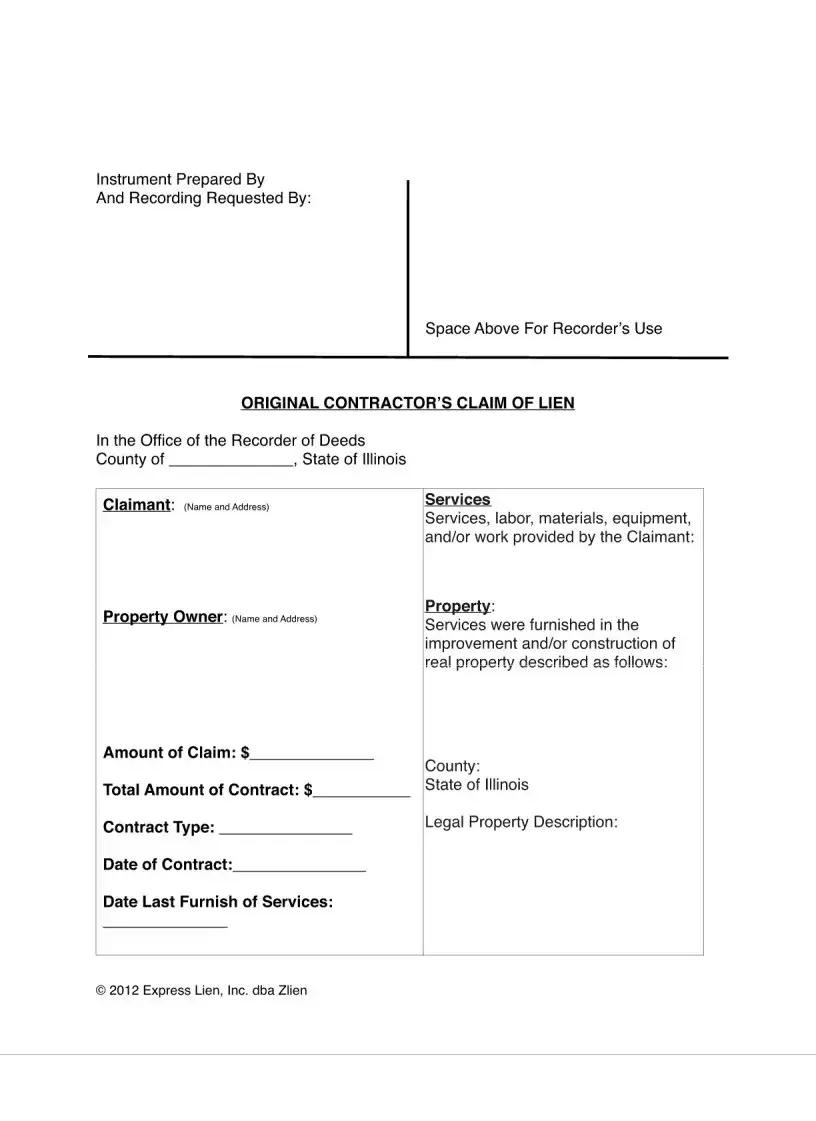
The Illinois Notice Lien form serves as a critical tool for contractors and subcontractors seeking payment for their services on construction projects. This form is designed to formally notify property owners and prime contractors that a claim for a mechanics lien is being asserted due to unpaid amounts for labor, materials, or services provided. It includes essential details such as the names and addresses of the property owner, prime contractor, and notifying party, ensuring that all relevant parties are informed. The form specifies the property where the services were performed and provides a description of the labor or materials supplied. Most importantly, it outlines the total amount due and unpaid, creating a clear record of the financial obligation. If payment is not received within ten days of the notice, the notifying party may proceed to file a lien against the property. This proactive step is vital in protecting the rights of those who contribute to the construction process, ensuring they have a legal avenue to seek compensation. Additionally, the form requires a signature from the claimant, affirming the accuracy of the information provided and reinforcing the legal weight of the notice. By understanding the components and implications of the Illinois Notice Lien form, parties involved in construction can better navigate the complexities of payment disputes and protect their interests in the process.


| Fact Name | Description |
|---|---|
| Purpose | The Illinois Notice Lien form informs property owners of unpaid services provided by contractors or subcontractors. |
| Governing Law | This form is governed by the Illinois Mechanics Lien Act, specifically 770 ILCS 60/5 and 60/24. |
| Parties Involved | The form includes sections for the property owner, prime contractor, and notifying party. |
| Deadline for Payment | Payment must be made within ten days of receiving the notice to avoid a lien being filed. |
| Amount Due | The form specifies the total amount due and unpaid for services rendered. |
| Property Description | It requires a description of the property where the services were performed. |
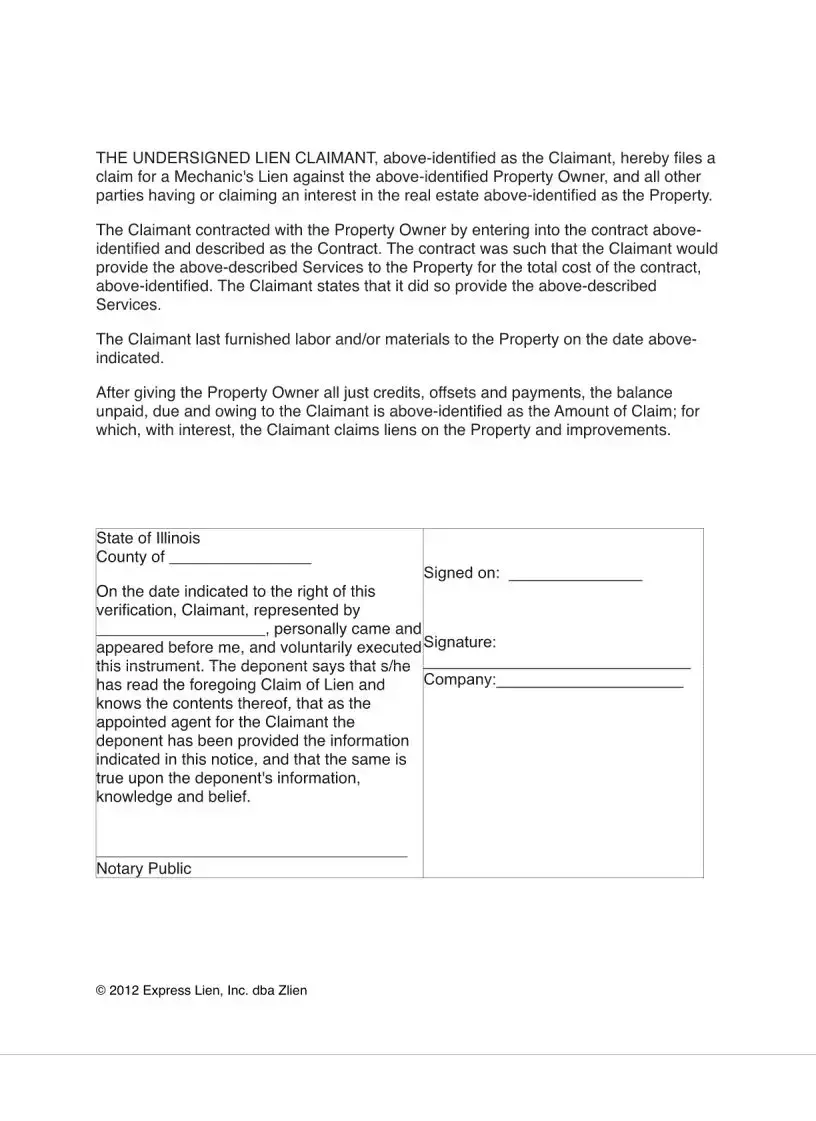
| Signature Requirement | The claimant must sign the form, certifying the accuracy of the information provided. |
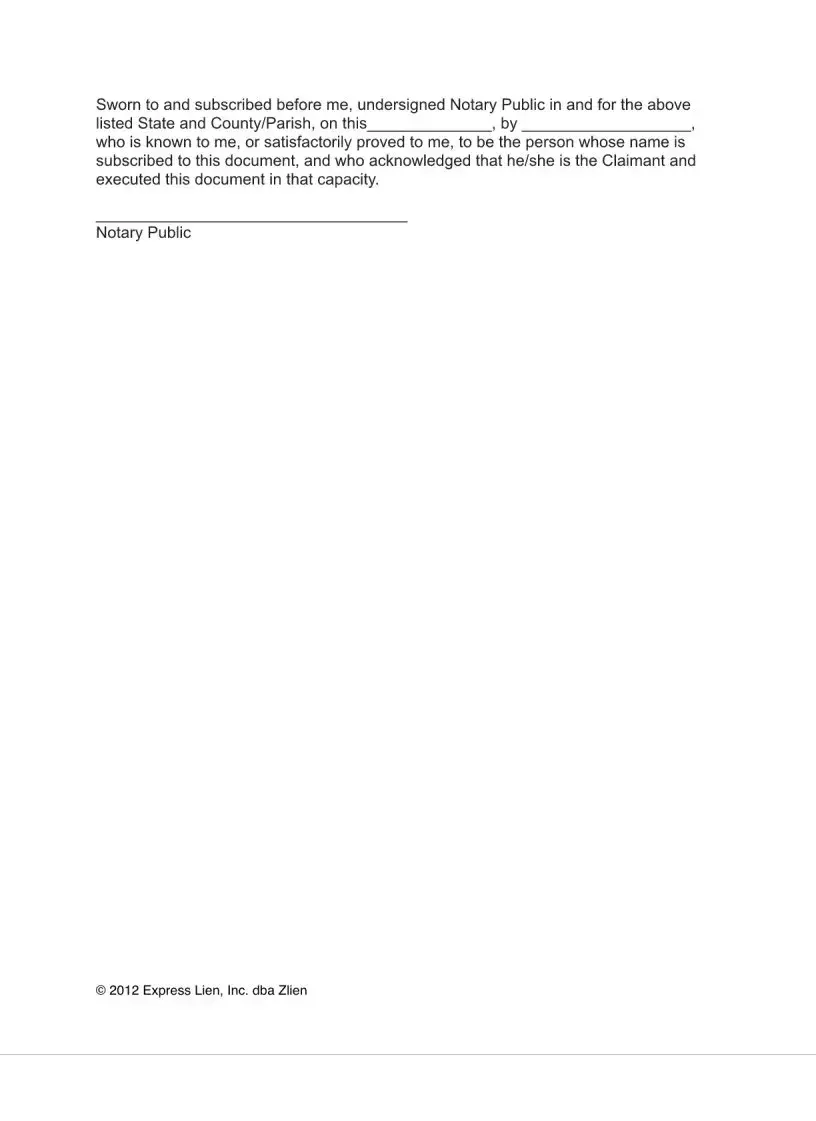
| Notary Public | A notary public must witness the signing of the form to validate it. |
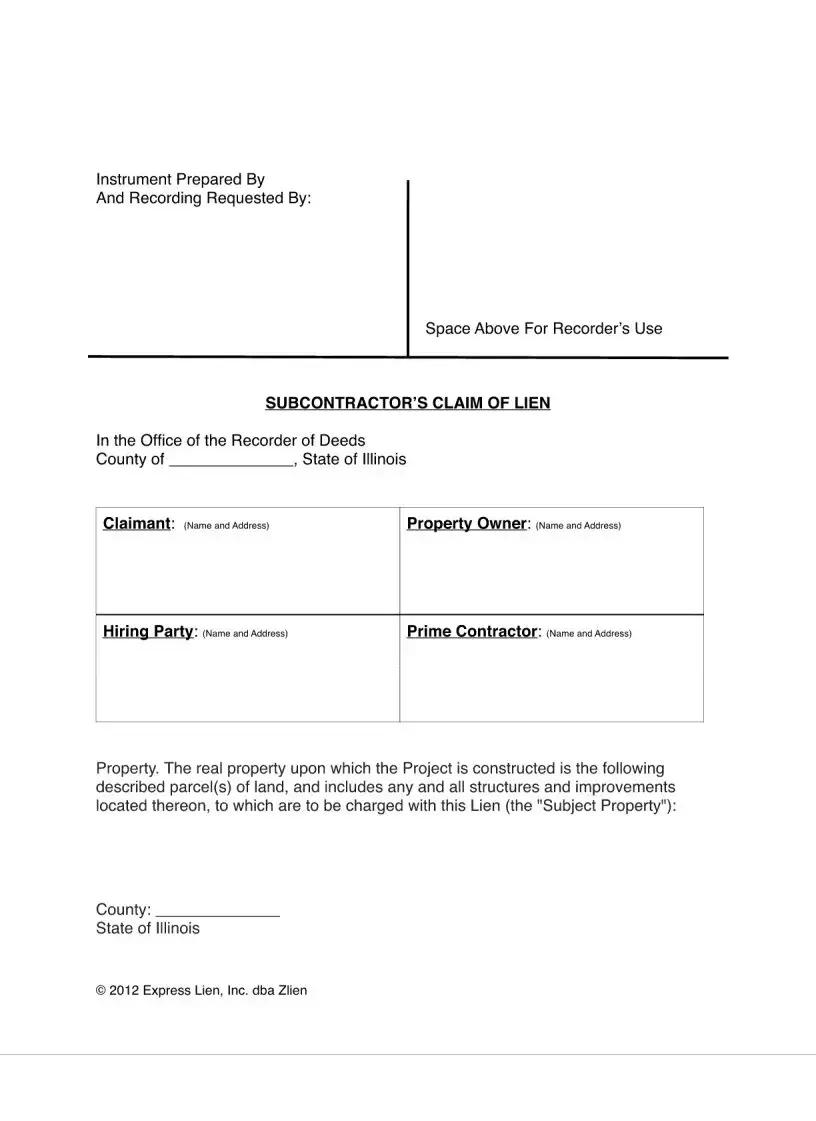
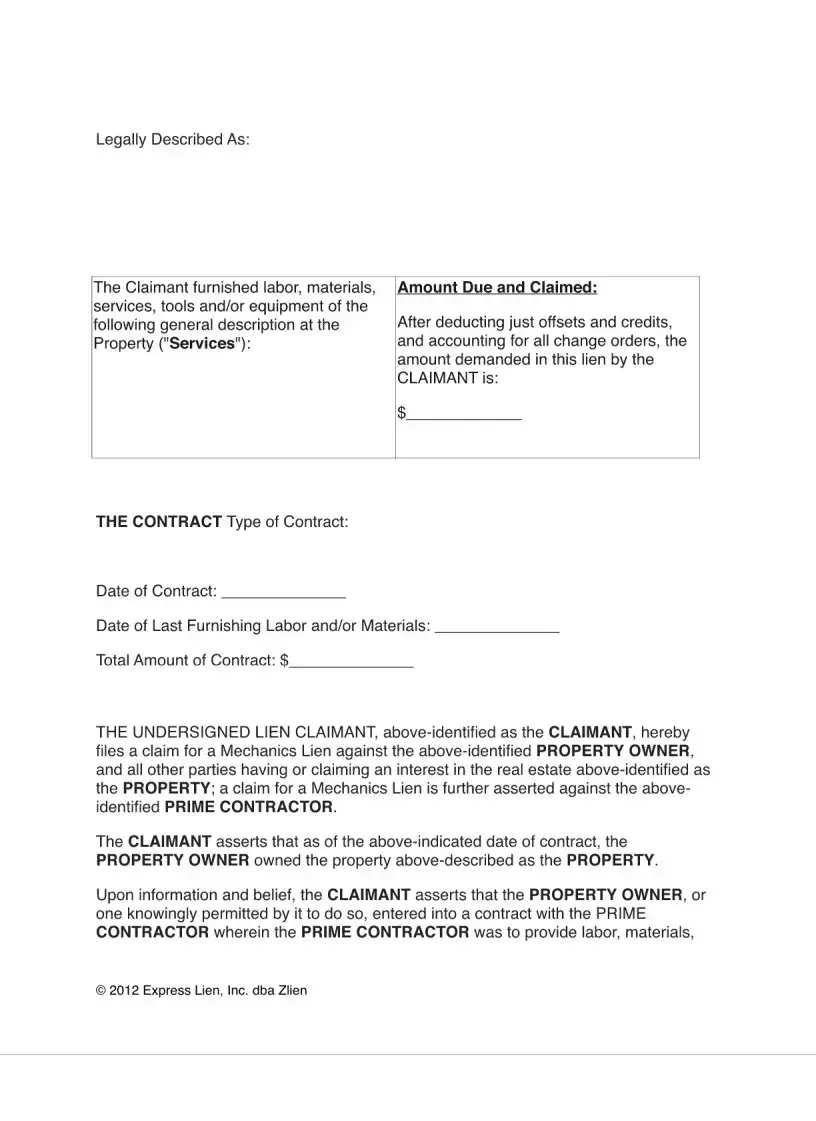
| Subcontractor's Claim | This form can be used by subcontractors to assert their claims for payment. |
| Record Keeping | The form should be recorded with the local county recorder's office to establish the lien officially. |
Filling out the Illinois Notice Lien form requires careful attention to detail. Ensure that all information is accurate and complete to avoid delays or complications. Once the form is filled out, it must be delivered to the relevant parties, and a claim for a mechanics lien may be filed if payment is not received within the specified timeframe.
What is the Illinois Notice Lien form?
The Illinois Notice Lien form is a legal document used to inform property owners and contractors that a party, typically a subcontractor or supplier, has provided labor or materials for a property and has not received payment. This notice serves as a warning that a mechanics lien may be filed if payment is not made within a specified time frame.
Who needs to use the Illinois Notice Lien form?
This form is primarily used by subcontractors, suppliers, or anyone who has provided services or materials to a property but has not been paid. It is essential for protecting their right to file a lien against the property if payment issues arise.
What information is required on the form?
To complete the Illinois Notice Lien form, you will need to provide:
How does the notice process work?
Once the form is completed, it must be sent to the property owner and other relevant parties. The notifying party should keep a record of when the notice was sent. If payment is not made within ten days of sending the notice, the notifying party can file a mechanics lien against the property.
What happens if I don’t send the notice?
If you fail to send the notice, you may lose your right to file a mechanics lien. This could make it much more difficult to collect the unpaid amount. Sending the notice is a crucial step in protecting your financial interests.
Is there a deadline for sending the notice?
Yes, the notice must be sent within a specific time frame, typically before filing a mechanics lien. It is advisable to send the notice as soon as you realize payment is overdue to maintain your rights.
Can I file a lien without sending the notice?
In most cases, you must send the notice before filing a lien. Skipping this step can jeopardize your ability to claim your payment. Always follow the required procedures to protect your rights.
What should I do if I receive a notice lien?
If you receive a notice lien, it’s essential to take it seriously. Review the details carefully, and if you believe the claim is valid, arrange for payment as soon as possible. If you dispute the claim, consider consulting with a legal professional to understand your options.
Where can I find the Illinois Notice Lien form?
The form can typically be obtained from legal document providers, local government offices, or online legal resources. Ensure you are using the most current version of the form to comply with Illinois laws.
Filling out the Illinois Notice Lien form can be a straightforward process, but mistakes can easily occur. One common error is failing to provide complete and accurate information about the property owner. It is essential to include the full name and address of the property owner. Incomplete details can lead to delays or even the rejection of the lien.
Another frequent mistake involves the description of the services provided. The form requires a clear and detailed description of the labor, materials, or services rendered. Vague or generic descriptions can create confusion and weaken the validity of the lien. It's crucial to be specific to ensure that all parties understand the basis of the claim.
People often overlook the importance of including the correct amount due. It is vital to accurately calculate the total amount owed, accounting for any offsets or credits. An incorrect amount can undermine the claim and complicate the resolution process. Double-checking calculations can save a lot of trouble down the line.
Another common oversight is not providing the date of the last furnishing of labor or materials. This date is critical, as it establishes the timeline for the lien. Missing this information can lead to disputes regarding the validity of the claim.
Some individuals neglect to notify all relevant parties. The form should be sent to all parties involved, including the prime contractor and any other interested parties. Failing to do so can result in legal challenges and may invalidate the lien.
Signature errors can also pose significant issues. The form must be signed by the claimant, and it should be clear who the claimant is. Incomplete or unclear signatures can raise questions about the legitimacy of the lien.
Additionally, people sometimes forget to include the date the notice was sent. This date is important for establishing timelines and ensuring compliance with legal requirements. Omitting it can lead to complications in enforcing the lien.
Many individuals do not take the time to review the entire form before submission. A thorough review can catch mistakes that may otherwise go unnoticed. Taking a moment to check for accuracy can prevent delays and legal issues.
Finally, failing to keep a copy of the submitted form for personal records is a mistake that can lead to problems later. Having a copy ensures that the claimant has proof of the notice sent, which can be essential if disputes arise in the future.
When dealing with construction projects in Illinois, it is important to understand the various forms and documents that may accompany the Illinois Notice Lien form. Each of these documents plays a crucial role in ensuring that all parties are informed about their rights and obligations regarding payment for services rendered. Below is a list of commonly used forms that often accompany the Notice Lien.
Understanding these documents is essential for anyone involved in construction projects in Illinois. Each form serves a specific purpose and helps protect the rights of all parties involved. If you have questions or need assistance, it is advisable to seek guidance to ensure compliance with the relevant laws and procedures.
The Illinois Notice Lien form is similar to several other documents that serve similar purposes in construction and property management. Below is a list of six such documents:
When filling out the Illinois Notice Lien form, it's essential to approach the task with care. Here are six important dos and don'ts to keep in mind:
By following these guidelines, you can help ensure that your Notice Lien form is completed correctly and effectively. Properly filling out this form is a vital step in protecting your rights as a claimant in the construction industry.
Here are some common misconceptions about the Illinois Notice Lien form:
Filling out and using the Illinois Notice Lien form is a crucial process for those in the construction industry. Here are some key takeaways to consider:
By following these guidelines, individuals can effectively navigate the process of filing a lien in Illinois, protecting their rights and interests in construction projects.