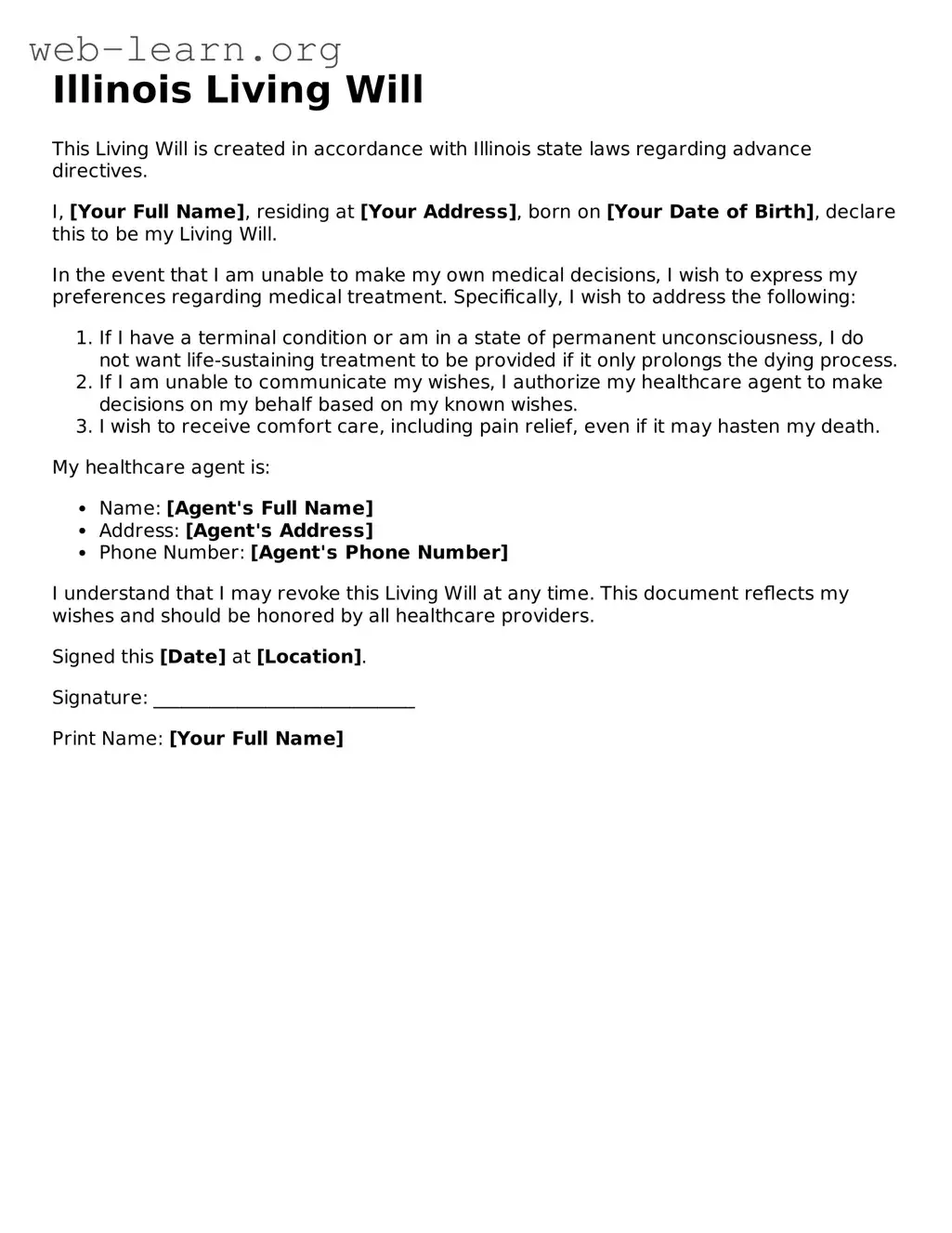
In Illinois, the Living Will form serves as a crucial tool for individuals wishing to express their healthcare preferences in the event they become unable to communicate their wishes. This legal document outlines specific medical treatments one may or may not want, particularly in situations involving terminal illness or irreversible conditions. By completing a Living Will, individuals can ensure their values and desires regarding end-of-life care are respected, providing guidance to family members and healthcare providers. Key elements of the form include decisions about life-sustaining treatments, such as resuscitation efforts and artificial nutrition or hydration. Furthermore, the form emphasizes the importance of appointing a healthcare proxy, someone who can make medical decisions on behalf of the individual if they are incapacitated. Understanding the Illinois Living Will form is essential for anyone looking to take proactive steps in managing their healthcare choices and ensuring their voice is heard, even when they cannot speak for themselves.
Illinois Living Will
This Living Will is created in accordance with Illinois state laws regarding advance directives.
I, [Your Full Name], residing at [Your Address], born on [Your Date of Birth], declare this to be my Living Will.
In the event that I am unable to make my own medical decisions, I wish to express my preferences regarding medical treatment. Specifically, I wish to address the following:
My healthcare agent is:
I understand that I may revoke this Living Will at any time. This document reflects my wishes and should be honored by all healthcare providers.
Signed this [Date] at [Location].
Signature: ____________________________
Print Name: [Your Full Name]
| Fact Name | Details |
|---|---|
| Governing Law | The Illinois Living Will is governed by the Illinois Compiled Statutes, Chapter 755, Act 35. |
| Purpose | This form allows individuals to express their wishes regarding medical treatment in the event they become unable to communicate. |
| Eligibility | Any adult who is at least 18 years old can complete an Illinois Living Will. |
| Witness Requirement | The form must be signed in the presence of two witnesses who are not related to the individual. |
| Revocation | A Living Will can be revoked at any time by the individual, either verbally or in writing. |
| Health Care Proxy | This form does not appoint a health care proxy. A separate document is needed for that purpose. |
| Effectiveness | The Living Will becomes effective when the individual is diagnosed with a terminal condition or is in a persistent vegetative state. |
| Distribution | It is advisable to provide copies of the Living Will to family members and health care providers. |
Filling out the Illinois Living Will form is an important step in ensuring your healthcare wishes are respected. After completing the form, it’s advisable to keep it in a safe place and share copies with your healthcare provider and family members. This way, everyone involved understands your preferences regarding medical treatment in case you cannot communicate them yourself.
What is a Living Will in Illinois?
A Living Will is a legal document that allows individuals to express their wishes regarding medical treatment in the event they become unable to communicate their preferences. This document specifically addresses situations where a person is diagnosed with a terminal illness or is in a persistent vegetative state. In Illinois, it serves to guide healthcare providers and loved ones in making decisions that align with the individual’s values and desires.
Who can create a Living Will in Illinois?
Any adult who is at least 18 years old and of sound mind can create a Living Will in Illinois. It is essential that the person understands the implications of the document and can make informed decisions about their medical care. Individuals are encouraged to discuss their wishes with family members and healthcare providers before completing the form.
How do I create a Living Will in Illinois?
To create a Living Will, you must complete the official form provided by the state of Illinois. This form typically includes sections where you can specify your preferences for medical treatment, such as whether you wish to receive life-sustaining measures or palliative care. Once completed, the document must be signed in the presence of two witnesses or a notary public to ensure its validity. It is advisable to keep copies in accessible locations and share them with your healthcare providers and family members.
Can I change or revoke my Living Will?
Yes, you can change or revoke your Living Will at any time as long as you are mentally competent. To modify your wishes, simply create a new Living Will that clearly states your updated preferences. Ensure that the new document is signed and witnessed, just like the original. If you decide to revoke your Living Will, it is important to inform your healthcare providers and family members to prevent any confusion regarding your medical care.
What happens if I do not have a Living Will?
If you do not have a Living Will and become unable to communicate your wishes, your healthcare decisions will be made by your family members or legal representatives. This can sometimes lead to disagreements or decisions that may not reflect your true desires. Having a Living Will helps ensure that your preferences are known and respected, providing peace of mind for both you and your loved ones.
Filling out the Illinois Living Will form is an important step in ensuring that your healthcare wishes are respected. However, many individuals make common mistakes that can lead to confusion or even invalidate the document. Understanding these pitfalls can help ensure that your intentions are clearly communicated.
One frequent error is failing to specify the types of medical treatment you do or do not want. The form allows you to articulate your preferences regarding life-sustaining treatments, yet some people leave these sections blank. This omission can lead to uncertainty for healthcare providers and loved ones when critical decisions must be made.
Another mistake occurs when individuals do not sign or date the form correctly. In Illinois, your Living Will must be signed in the presence of a witness or a notary. Neglecting to follow these requirements can render the document ineffective. It’s essential to ensure that all signatures are obtained properly to avoid potential issues in the future.
Some individuals also overlook the importance of choosing the right witnesses. Illinois law requires that the witnesses be at least 18 years old and not related to you, nor entitled to any part of your estate. Choosing someone who does not meet these criteria can invalidate the Living Will, leaving your wishes unprotected.
Additionally, many people fail to provide copies of their Living Will to their healthcare providers and family members. Once the form is completed, it is vital to distribute copies to ensure that those who may need to act on your behalf are aware of your wishes. Without proper communication, your intentions may not be honored when it matters most.
Another common oversight is using vague language in the document. Clear and precise wording is crucial to convey your desires accurately. Ambiguous statements can lead to different interpretations, potentially conflicting with your true intentions. Take the time to articulate your preferences in a straightforward manner.
Some individuals neglect to review and update their Living Will as their circumstances change. Life events such as marriage, divorce, or changes in health can impact your wishes. Regularly revisiting the document ensures that it remains aligned with your current values and desires.
Lastly, many people do not discuss their Living Will with their loved ones. Engaging in conversations about your healthcare preferences can foster understanding and support among family members. This dialogue can help alleviate confusion during difficult times, ensuring that your wishes are honored as you intended.
When preparing your Illinois Living Will, you may also need several other important documents. These forms work together to ensure your healthcare wishes are clearly understood and respected. Below is a list of commonly used documents alongside the Living Will.
Having these documents in place can provide peace of mind for you and your loved ones. They help ensure that your healthcare preferences are respected, even when you may not be able to voice them yourself.
A Living Will is a legal document that outlines a person's preferences for medical treatment in situations where they are unable to communicate their wishes. Several other documents serve similar purposes in guiding medical decisions and ensuring that an individual's preferences are honored. Here are four documents that share similarities with a Living Will:
Filling out an Illinois Living Will form is an important step in ensuring your healthcare wishes are respected. Here are some guidelines to follow, as well as some pitfalls to avoid.
By adhering to these guidelines, you can help ensure that your healthcare preferences are clearly communicated and respected in times of need.
Understanding the Illinois Living Will form is essential for anyone considering their healthcare preferences. However, several misconceptions can cloud this important topic. Here are six common misunderstandings:
This is a common confusion. A Living Will outlines your wishes regarding medical treatment in the event you cannot communicate, while a DNR specifically instructs medical personnel not to perform CPR if your heart stops.
While legal advice can be helpful, it is not necessary to hire a lawyer to complete a Living Will in Illinois. The form can be filled out and signed without legal assistance, as long as you follow the state guidelines.
This is misleading. A Living Will can address a range of medical conditions where you may be unable to express your wishes, not just terminal illnesses. It covers scenarios like severe injury or incapacitating illness.
This is not true. You can revoke or update your Living Will at any time, as long as you are mentally competent. It's important to review your wishes periodically and make adjustments as necessary.
Assuming your family understands your preferences can lead to confusion and conflict. It’s crucial to communicate your wishes clearly and provide them with a copy of your Living Will.
This misconception overlooks the fact that anyone, regardless of age, can benefit from having a Living Will. Accidents and unexpected health issues can happen at any age, making it wise to plan ahead.
By dispelling these misconceptions, individuals can better understand the importance of a Living Will and ensure their healthcare preferences are honored when it matters most.
When considering a Living Will in Illinois, it’s important to understand the following key points:
Free Colorado Living Will Form - This form can help avoid potential legal disputes about your care.
Medical Power of Attorney Form Idaho - While a Living Will addresses medical treatment, it does not cover financial or legal decisions.