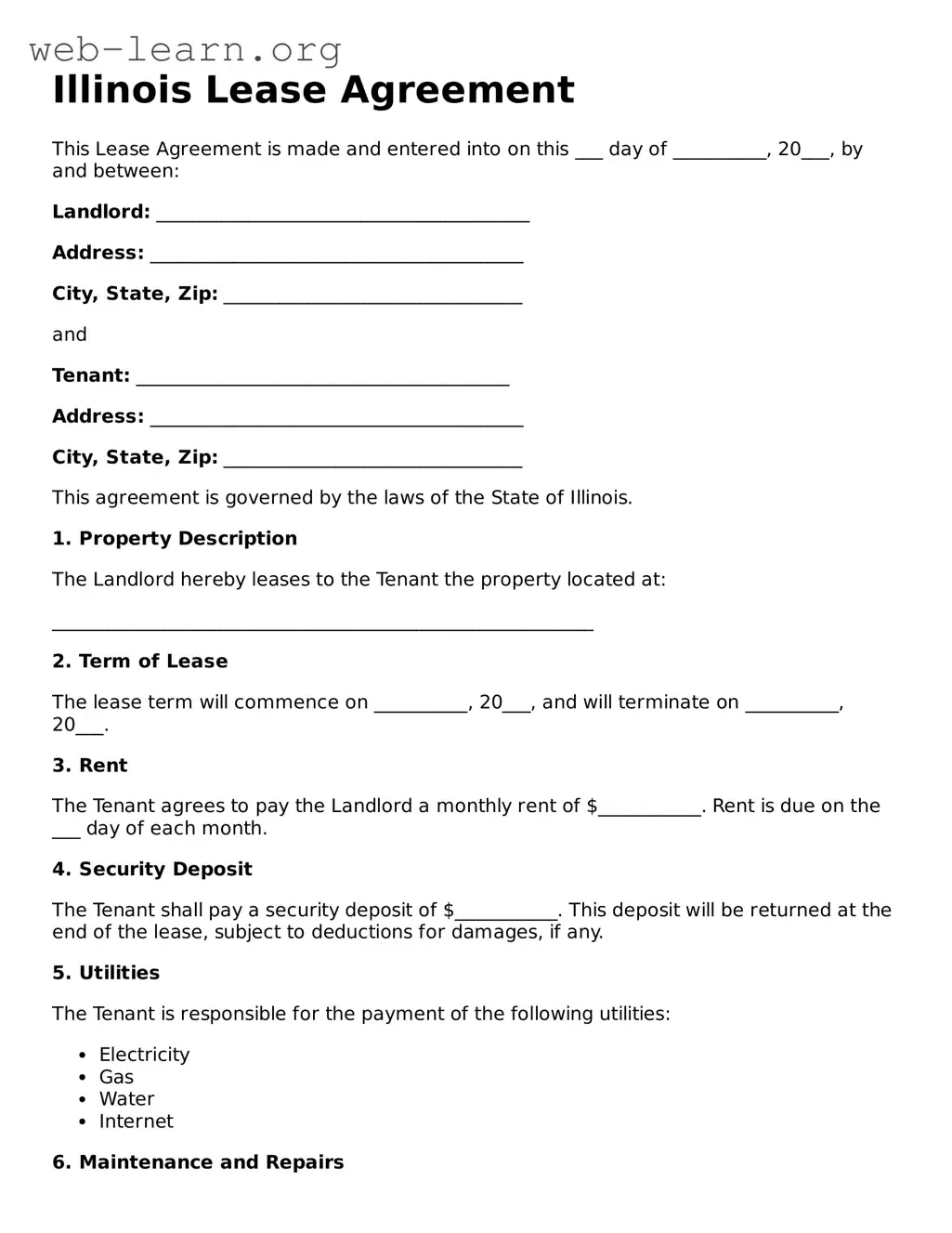
The Illinois Lease Agreement form serves as a crucial document in the rental process, outlining the rights and responsibilities of both landlords and tenants. This legally binding contract typically includes essential details such as the duration of the lease, the rental amount, and the payment schedule. Additionally, it specifies the security deposit requirements, maintenance responsibilities, and conditions for termination. Both parties must understand the implications of clauses related to property use, repairs, and alterations, as these can significantly impact their experience throughout the lease term. Furthermore, the form often addresses issues such as late fees, eviction procedures, and dispute resolution methods, ensuring that both landlords and tenants are aware of their obligations and rights. By carefully reviewing and completing this form, individuals can foster a transparent and respectful rental relationship, minimizing misunderstandings and potential conflicts.
Illinois Lease Agreement
This Lease Agreement is made and entered into on this ___ day of __________, 20___, by and between:
Landlord: ________________________________________
Address: ________________________________________
City, State, Zip: ________________________________
and
Tenant: ________________________________________
Address: ________________________________________
City, State, Zip: ________________________________
This agreement is governed by the laws of the State of Illinois.
1. Property Description
The Landlord hereby leases to the Tenant the property located at:
__________________________________________________________
2. Term of Lease
The lease term will commence on __________, 20___, and will terminate on __________, 20___.
3. Rent
The Tenant agrees to pay the Landlord a monthly rent of $___________. Rent is due on the ___ day of each month.
4. Security Deposit
The Tenant shall pay a security deposit of $___________. This deposit will be returned at the end of the lease, subject to deductions for damages, if any.
5. Utilities
The Tenant is responsible for the payment of the following utilities:
6. Maintenance and Repairs
The Tenant agrees to maintain the property in good condition. The Landlord will be responsible for major repairs unless damage is caused by the Tenant's actions.
7. Termination
Either party may terminate this agreement by providing written notice at least ___ days in advance.
8. Governing Law
This lease is governed by the laws of the State of Illinois. Any disputes will be resolved in accordance with state law.
IN WITNESS WHEREOF, the parties have executed this Lease Agreement as of the date first above written.
Landlord Signature: ___________________________
Date: ______________________________________
Tenant Signature: ___________________________
Date: ______________________________________
| Fact Name | Description |
|---|---|
| Purpose | The Illinois Lease Agreement form establishes the terms and conditions between a landlord and a tenant for renting residential property. |
| Governing Law | This agreement is governed by the Illinois Compiled Statutes, specifically the Residential Tenants' Right Act. |
| Duration | The lease can be for a fixed term or month-to-month, depending on the agreement between the parties. |
| Security Deposit | Landlords may require a security deposit, which is typically limited to one and a half times the monthly rent. |
| Termination Notice | For month-to-month leases, either party must provide a written notice of at least 30 days to terminate the agreement. |
Completing the Illinois Lease Agreement form is a crucial step in establishing a rental arrangement. This process ensures that both landlords and tenants are clear on their responsibilities and rights. Below are the steps to guide you through filling out the form accurately.
What is an Illinois Lease Agreement?
An Illinois Lease Agreement is a legally binding document that outlines the terms and conditions between a landlord and tenant for renting a residential property in the state of Illinois. This agreement typically includes details such as the duration of the lease, rental amount, payment due dates, and responsibilities of both parties.
What essential elements should be included in the lease?
A comprehensive Illinois Lease Agreement should include the following key elements:
How long is a typical lease term in Illinois?
Lease terms in Illinois can vary widely. Commonly, leases are set for one year, but month-to-month agreements are also popular. The choice of lease duration often depends on the needs of both the landlord and tenant. Shorter leases offer flexibility, while longer leases provide stability.
Can a landlord raise the rent during a lease term?
Generally, a landlord cannot raise the rent during the term of a fixed lease unless the lease specifically allows for such increases. For month-to-month leases, landlords must provide proper notice, usually 30 days, before implementing a rent increase.
What is a security deposit, and how is it handled?
A security deposit is a sum of money collected by the landlord at the beginning of the lease to cover potential damages or unpaid rent. In Illinois, landlords can charge a security deposit, typically equal to one month's rent. Upon lease termination, the landlord must return the deposit within 45 days, minus any lawful deductions.
What happens if a tenant wants to break the lease early?
If a tenant wishes to break the lease before its expiration, they may face penalties as outlined in the lease agreement. Commonly, tenants are responsible for paying rent until a new tenant is found or until the lease term ends. Open communication with the landlord can sometimes lead to a mutually agreeable solution.
Are there any specific tenant rights in Illinois?
Yes, tenants in Illinois have several rights, including the right to a habitable living environment, the right to privacy, and the right to not face retaliation for exercising their legal rights. Understanding these rights can help tenants navigate their lease agreements more effectively.
Can a landlord evict a tenant without notice?
No, a landlord cannot evict a tenant without proper notice. Illinois law requires landlords to provide written notice before initiating eviction proceedings. The notice period can vary based on the reason for eviction, such as non-payment of rent or lease violations.
Is it necessary to have a written lease agreement?
While verbal agreements can be legally binding, having a written lease agreement is highly recommended. A written document clearly outlines the terms and conditions, reducing the likelihood of misunderstandings and disputes between landlords and tenants.
What should a tenant do if they have a dispute with their landlord?
If a tenant encounters a dispute with their landlord, they should first attempt to resolve the issue through open communication. If that fails, tenants can seek assistance from local housing authorities or legal aid organizations. Mediation or small claims court may also be viable options for resolving disputes.
Filling out the Illinois Lease Agreement form can be straightforward, but many people make common mistakes that can lead to complications later. One frequent error is not providing accurate tenant information. This includes names, addresses, and contact numbers. Incorrect details can create confusion and may affect communication between landlords and tenants.
Another common mistake is failing to specify the lease term. Many individuals overlook the importance of clearly stating the start and end dates of the lease. Without this information, disputes may arise regarding when the lease begins and ends, leading to potential legal issues.
Omitting details about rent payment is also a frequent error. It is essential to outline the amount of rent due, the payment method, and the due date. If these details are not included, it can create misunderstandings and payment delays.
Additionally, some people neglect to include information about security deposits. The lease should specify the amount of the deposit, the conditions for its return, and any deductions that may apply. Failing to address this can lead to disagreements when the lease ends.
Not addressing maintenance responsibilities can cause problems down the line. The lease should clearly outline who is responsible for repairs and maintenance. If this is left vague, tenants and landlords may have differing expectations about who handles repairs.
Lastly, many individuals forget to review the entire document before signing. It’s crucial to read through the lease agreement carefully to ensure all terms are understood and agreed upon. Skipping this step can result in accepting unfavorable terms without realizing it.
When entering into a lease agreement in Illinois, several other forms and documents may be necessary to ensure clarity and protect the interests of both the landlord and tenant. Each of these documents serves a specific purpose in the leasing process.
Having these documents prepared and organized can facilitate a smoother leasing process. They help clarify expectations and protect the rights of both landlords and tenants, ensuring a more positive rental experience.
When filling out the Illinois Lease Agreement form, it's essential to approach the task with care. Here are some key dos and don'ts to keep in mind:
When it comes to the Illinois Lease Agreement form, several misconceptions can lead to confusion for both landlords and tenants. Here are seven common misunderstandings:
Many people believe that all lease agreements are standardized. In reality, each lease can be tailored to fit the specific needs of the landlord and tenant. Variations can occur based on local laws and individual circumstances.
Some assume that a verbal agreement is enough to establish a lease. However, without a written document, it becomes difficult to prove the terms agreed upon, which can lead to disputes later.
It is a common belief that lease terms can be altered whenever one party feels like it. In truth, changes typically require mutual consent and should be documented in writing to avoid misunderstandings.
Some people think that only landlords have the right to end a lease. Tenants also have the ability to terminate a lease under certain conditions, such as breaches of the lease terms by the landlord.
There is a misconception that security deposits are always non-refundable. In reality, tenants can reclaim their deposits, minus any deductions for damages or unpaid rent, provided they meet specific conditions.
Some believe that a lease is valid as long as one party signs it. However, for a lease to be enforceable, both the landlord and tenant must sign the agreement.
Many think that notarization is a requirement for lease agreements. While notarization can add an extra layer of security, it is not a legal requirement for the validity of most residential leases in Illinois.
When filling out and using the Illinois Lease Agreement form, there are several important points to keep in mind:
Lease Agreement Colorado - A Lease Agreement can specify the condition of the property at the start of the lease.
House Rental Agreement Template - The document can specify the length of notice required for lease termination.
Lease of Agreement - Provisions for early termination by either party may be included.
Free Rental Agreement Template - It may include information about local laws and regulations affecting the lease.