The Illinois Independent Contractor Agreement form serves as a crucial document for individuals and businesses entering into a working relationship without establishing an employer-employee dynamic. This form outlines the expectations, responsibilities, and rights of both parties involved. It typically includes essential details such as the scope of work, payment terms, and deadlines. Furthermore, it addresses confidentiality, intellectual property rights, and termination conditions, ensuring that both the contractor and the hiring entity are on the same page. By clearly defining these aspects, the agreement helps prevent misunderstandings and disputes down the line. Understanding this form is vital for anyone looking to engage independent contractors in Illinois, as it lays the groundwork for a successful partnership while adhering to state laws and regulations.
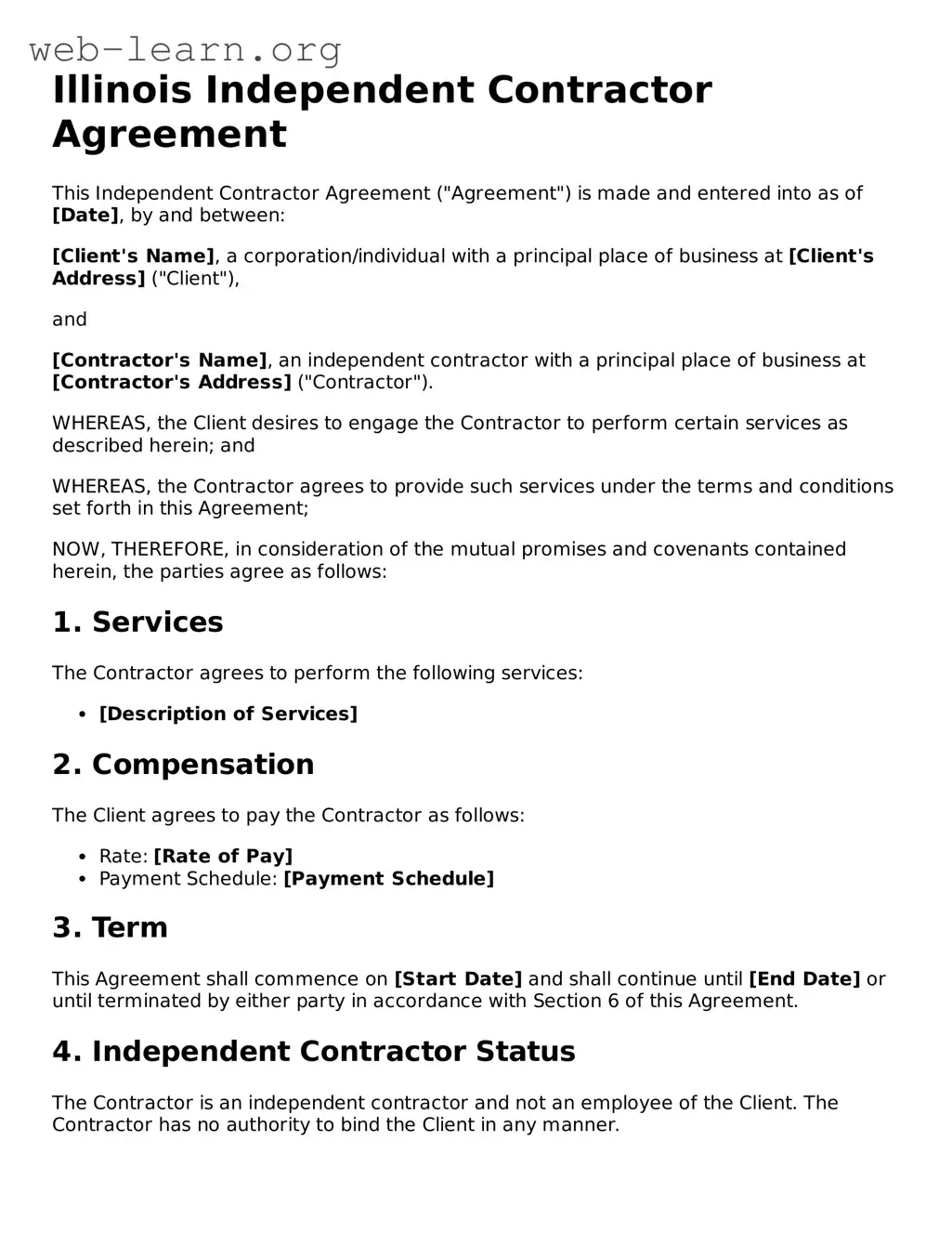
Illinois Independent Contractor Agreement
This Independent Contractor Agreement ("Agreement") is made and entered into as of [Date], by and between:
[Client's Name], a corporation/individual with a principal place of business at [Client's Address] ("Client"),
and
[Contractor's Name], an independent contractor with a principal place of business at [Contractor's Address] ("Contractor").
WHEREAS, the Client desires to engage the Contractor to perform certain services as described herein; and
WHEREAS, the Contractor agrees to provide such services under the terms and conditions set forth in this Agreement;
NOW, THEREFORE, in consideration of the mutual promises and covenants contained herein, the parties agree as follows:
1. Services
The Contractor agrees to perform the following services:
2. Compensation
The Client agrees to pay the Contractor as follows:
3. Term
This Agreement shall commence on [Start Date] and shall continue until [End Date] or until terminated by either party in accordance with Section 6 of this Agreement.
4. Independent Contractor Status
The Contractor is an independent contractor and not an employee of the Client. The Contractor has no authority to bind the Client in any manner.
5. Confidentiality
The Contractor agrees to maintain the confidentiality of all proprietary information received from the Client during the term of this Agreement.
6. Termination
7. Governing Law
This Agreement shall be governed by and construed in accordance with the laws of the State of Illinois.
8. Entire Agreement
This Agreement constitutes the entire understanding between the parties and supersedes all prior agreements, whether written or oral.
IN WITNESS WHEREOF, the parties hereto have executed this Independent Contractor Agreement as of the date first above written.
CLIENT:
_____________________________
[Client's Name]
CONTRACTOR:
_____________________________
[Contractor's Name]
| Fact Name | Description |
|---|---|
| Purpose | The Illinois Independent Contractor Agreement outlines the terms of engagement between a business and an independent contractor. |
| Governing Law | This agreement is governed by the laws of the State of Illinois. |
| Key Elements | Important components include the scope of work, payment terms, and confidentiality clauses. |
| Signature Requirement | Both parties must sign the agreement to make it legally binding. |
Filling out the Illinois Independent Contractor Agreement form is straightforward. You'll need to provide specific information about the contractor and the terms of the agreement. Follow the steps below to ensure you complete the form accurately.
Once you have completed the form, review it carefully to ensure all information is accurate. Keep a copy for your records and provide one to the contractor. This will help both parties stay on the same page regarding the terms of the agreement.
What is the Illinois Independent Contractor Agreement form?
The Illinois Independent Contractor Agreement form is a legal document that outlines the relationship between a business and an independent contractor. This agreement specifies the terms of the working relationship, including payment, responsibilities, and the duration of the contract. It serves to protect both parties by clearly defining expectations and obligations.
Why is an Independent Contractor Agreement important?
An Independent Contractor Agreement is crucial for several reasons:
What should be included in the agreement?
The agreement should contain several key elements to be effective:
How can I ensure the agreement is legally binding?
To make the agreement legally binding, consider the following steps:
Filling out the Illinois Independent Contractor Agreement form can seem straightforward, but many individuals make common mistakes that could lead to misunderstandings or legal complications. One frequent error is failing to clearly define the scope of work. It is essential to specify what tasks the contractor is expected to perform. Without this clarity, both parties may have differing expectations, which can result in disputes later on.
Another mistake is neglecting to include payment terms. It is vital to outline how much the contractor will be paid, the payment schedule, and the method of payment. Ambiguity in financial arrangements can lead to frustration and mistrust. Clearly stating these terms ensures both parties are on the same page and helps avoid potential conflicts.
Some individuals also overlook the importance of including a termination clause. This clause should explain how either party can terminate the agreement and under what conditions. Without this provision, a contractor may feel insecure in their position, while the hiring party may find it challenging to end the relationship if it becomes necessary.
Additionally, many people fail to specify the independent contractor's status. It is crucial to clarify that the individual is not an employee, as this distinction affects tax obligations and liability. Misclassification can lead to significant legal and financial repercussions for both parties.
Another common oversight involves not including confidentiality provisions. If the contractor will have access to sensitive information, outlining expectations regarding confidentiality is essential. This helps protect proprietary information and ensures that both parties understand their obligations regarding privacy.
Some individuals also forget to address intellectual property rights. When a contractor creates work for a company, it is vital to clarify who owns that work. Failing to do so can lead to disputes over ownership and usage rights in the future.
Moreover, many people neglect to include a dispute resolution process. Establishing a method for resolving disagreements, such as mediation or arbitration, can save both time and money in the long run. Without a clear process, conflicts may escalate unnecessarily.
Finally, not reviewing the agreement before signing is a mistake that can have serious consequences. Both parties should take the time to read through the entire document carefully. This ensures that all terms are understood and agreed upon, minimizing the risk of future misunderstandings.
When entering into an Independent Contractor Agreement in Illinois, several other forms and documents may be necessary to ensure clarity and compliance with state regulations. Each of these documents serves a specific purpose in the relationship between the contractor and the hiring entity.
Having these documents in place helps establish a professional relationship between the contractor and the hiring entity. It minimizes misunderstandings and provides a framework for cooperation. Each document plays a vital role in protecting the interests of both parties, ensuring a smoother working relationship.
When filling out the Illinois Independent Contractor Agreement form, it's important to follow certain guidelines to ensure accuracy and compliance. Here are seven things you should and shouldn't do:
When it comes to the Illinois Independent Contractor Agreement form, several misconceptions can lead to confusion for both contractors and employers. Understanding these misunderstandings is crucial for ensuring compliance and protecting rights. Here are four common misconceptions:
Being aware of these misconceptions can help both independent contractors and employers navigate their working relationships more effectively. Clear communication and a well-drafted agreement are essential for a successful partnership.
When filling out and using the Illinois Independent Contractor Agreement form, consider the following key takeaways:
Review the agreement periodically to ensure it remains relevant and reflects any changes in the working relationship.
Independent Contractor Agreement Colorado - The Independent Contractor Agreement is a foundational document for freelance and contract work.
Contract Template for Independent Contractor - It can help clarify the contractor's role in relation to the business's overall goals.
1099 Agreement - The agreement may specify the geographical area in which the contractor can operate.
New York Independent Contractor Test - The agreement can include a clause addressing ownership of work-related materials or resources.