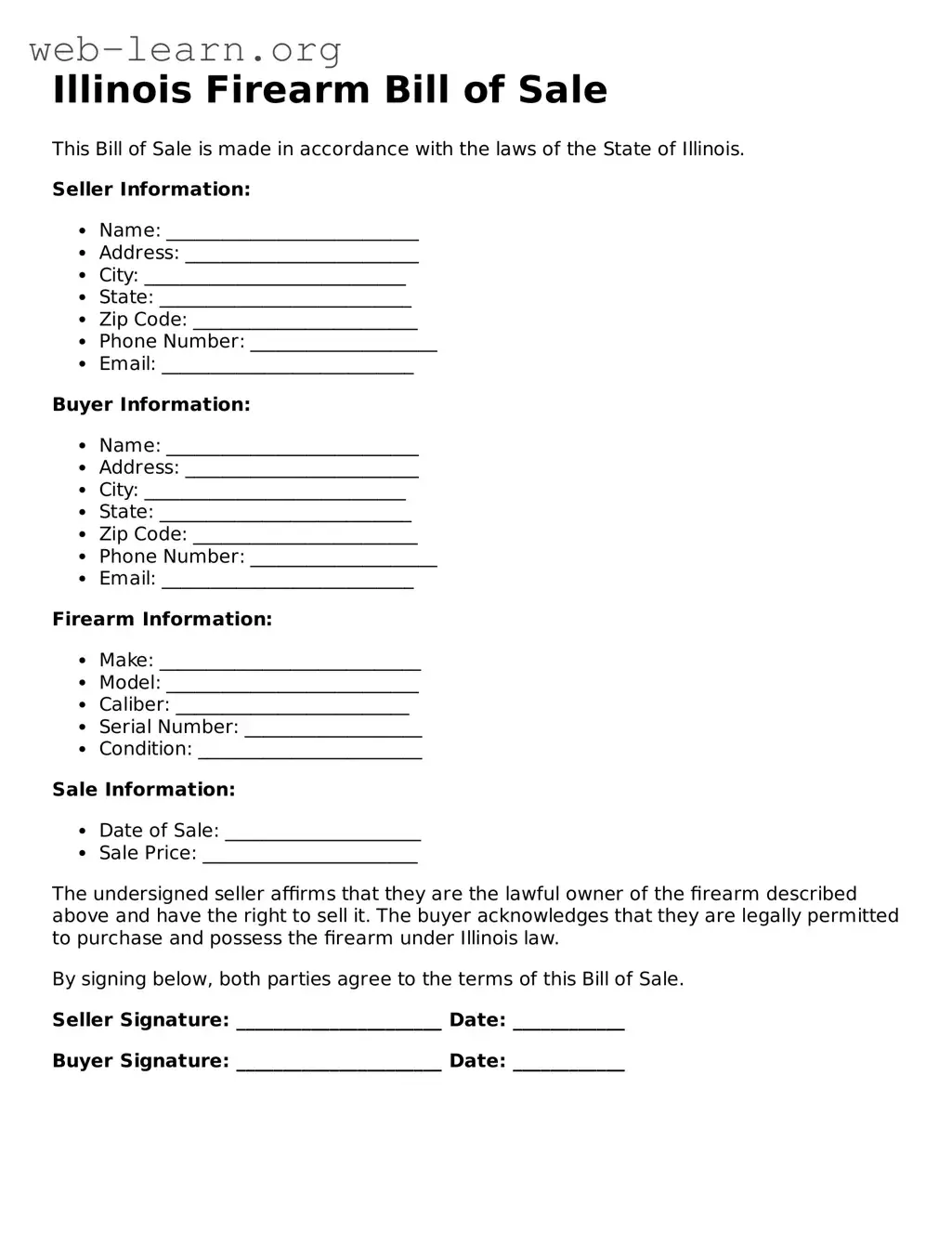
In the state of Illinois, the transfer of firearm ownership is a regulated process that requires careful documentation to ensure compliance with state laws. One essential component of this process is the Firearm Bill of Sale form. This form serves as a legal record of the sale or transfer of a firearm between a seller and a buyer. It includes important details such as the names and addresses of both parties, a description of the firearm being sold—including its make, model, and serial number—and the date of the transaction. Additionally, the form may require the buyer to provide proof of eligibility to own a firearm, which often involves presenting a valid Firearm Owner's Identification (FOID) card. By documenting the sale in this manner, both parties can protect themselves and ensure that the transaction adheres to Illinois law. The Firearm Bill of Sale form not only facilitates the legal transfer of ownership but also serves as a safeguard against potential disputes or legal issues that may arise in the future.
Illinois Firearm Bill of Sale
This Bill of Sale is made in accordance with the laws of the State of Illinois.
Seller Information:
Buyer Information:
Firearm Information:
Sale Information:
The undersigned seller affirms that they are the lawful owner of the firearm described above and have the right to sell it. The buyer acknowledges that they are legally permitted to purchase and possess the firearm under Illinois law.
By signing below, both parties agree to the terms of this Bill of Sale.
Seller Signature: ______________________ Date: ____________
Buyer Signature: ______________________ Date: ____________
| Fact Name | Description |
|---|---|
| Purpose | The Illinois Firearm Bill of Sale form is used to document the sale or transfer of a firearm between private parties. |
| Governing Law | This form is governed by the Illinois Compiled Statutes, specifically 430 ILCS 65/2. |
| Identification | Both the seller and buyer must provide valid identification, such as a driver's license or state ID. |
| Record Keeping | It is advisable for both parties to keep a copy of the completed Bill of Sale for their records. |
| Firearm Details | The form should include detailed information about the firearm, including make, model, and serial number. |
| Legal Age | Both the seller and buyer must be at least 18 years old to legally engage in the sale of a firearm. |
| Transfer Restrictions | Certain individuals, such as felons or those with restraining orders, are prohibited from purchasing firearms. |
Filling out the Illinois Firearm Bill of Sale form is an important step in the process of transferring ownership of a firearm. This document ensures that both the buyer and seller have a clear record of the transaction. To complete the form accurately, follow these straightforward steps.
Once you have completed the form, keep a copy for your records. This documentation may be important for future reference, especially for legal purposes. Ensure that both parties retain their copies to avoid any misunderstandings later on.
What is the Illinois Firearm Bill of Sale form?
The Illinois Firearm Bill of Sale form is a legal document used to record the sale or transfer of a firearm between two parties. It serves as proof of the transaction and includes important details about the firearm, the buyer, and the seller.
Why do I need a Bill of Sale for a firearm?
A Bill of Sale is crucial for both the buyer and the seller. It protects the seller by documenting the transfer of ownership, ensuring they are not held liable for any future actions involving the firearm. For the buyer, it provides proof of ownership, which may be necessary for registration or legal purposes.
What information is required on the form?
The form typically requires:
Is the Bill of Sale required by law in Illinois?
While Illinois law does not mandate a Bill of Sale for private sales, it is highly recommended. Having this document can prevent disputes and clarify ownership in case of legal issues down the line.
Can I create my own Bill of Sale?
Yes, you can create your own Bill of Sale as long as it includes all necessary information. However, using a standardized form can help ensure that you don’t miss any critical details.
Do I need to have the Bill of Sale notarized?
Notarization is not required for the Bill of Sale in Illinois. However, having it notarized can add an extra layer of security and authenticity to the document.
What should I do with the completed Bill of Sale?
Both the buyer and seller should keep a copy of the completed Bill of Sale for their records. This documentation may be needed for future reference or in case of any legal inquiries.
Where can I obtain a Firearm Bill of Sale form?
You can find the Illinois Firearm Bill of Sale form online through various legal websites, or you can create your own using templates available for download. Make sure it complies with state requirements.
Filling out the Illinois Firearm Bill of Sale form can be straightforward, but many individuals make common mistakes that can lead to complications. One frequent error is failing to provide complete information. Both the seller and buyer must fill out their names, addresses, and signatures accurately. Omitting even one detail can render the form invalid.
Another mistake involves using incorrect identification. Buyers must provide a valid Firearm Owner's Identification (FOID) card number. If this number is incorrect or expired, the sale may not be legally recognized. It's essential to double-check this information before finalizing the form.
Many people overlook the importance of documenting the firearm's details. The make, model, and serial number of the firearm should be included. Leaving out any of these details can lead to confusion or disputes later on.
Some individuals neglect to date the form. The date is crucial as it indicates when the transaction took place. Without a date, it may be difficult to establish a timeline for the sale, which can be problematic in legal situations.
In some cases, sellers forget to keep a copy of the completed form. Retaining a copy is important for both parties. It serves as proof of the transaction and can be beneficial if any issues arise in the future.
Errors in signatures also occur frequently. Both the buyer and seller must sign the document. If one party forgets to sign, the form is incomplete and may not hold up in court.
Another common mistake is not verifying the buyer's eligibility. The seller should ensure that the buyer has a valid FOID card and is legally allowed to purchase a firearm. Failing to do this can lead to serious legal consequences for the seller.
Some individuals do not read the entire form before signing. It's important to understand all terms and conditions outlined in the document. Ignorance of the details can lead to misunderstandings later.
In addition, people sometimes use the wrong form. The Illinois Firearm Bill of Sale is specific, and using a different form can create issues. Always ensure you are using the correct documentation for the transaction.
Finally, many forget to check for local regulations. Illinois has specific laws regarding firearm sales, and local jurisdictions may have additional requirements. Being unaware of these can lead to legal complications down the line.
When buying or selling a firearm in Illinois, the Firearm Bill of Sale form is just one of the important documents involved in the process. Several other forms and documents can help ensure that the transaction is legal and properly documented. Here’s a list of some commonly used forms along with brief descriptions of each.
Having these documents ready can help facilitate a smooth and legal transaction when buying or selling a firearm in Illinois. Always ensure that you are following all local and state laws to avoid any legal complications.
When filling out the Illinois Firearm Bill of Sale form, it's important to approach the process carefully. Here’s a list of dos and don’ts to guide you through this task.
Following these guidelines can help ensure that your transaction is smooth and compliant with Illinois law. Always take the time to review the form before finalizing your sale.
Understanding the Illinois Firearm Bill of Sale form can be challenging due to various misconceptions. Here are six common misunderstandings:
Being informed about these misconceptions can help ensure that firearm transactions in Illinois are conducted smoothly and legally.
When filling out and using the Illinois Firearm Bill of Sale form, it is essential to understand the process and requirements. Here are key takeaways to consider:
Using the Illinois Firearm Bill of Sale form correctly helps protect both the buyer and the seller in the transaction.
Firearm Bill of Sale Indiana - Filling out this form can help both parties avoid misunderstandings in the future.
Form to Transfer Gun Ownership in Louisiana - The form can help facilitate a smooth transaction by outlining all necessary details upfront.
Hawaii Bill of Sale for a Gun - This document can help ensure compliance with federal and state firearm laws.