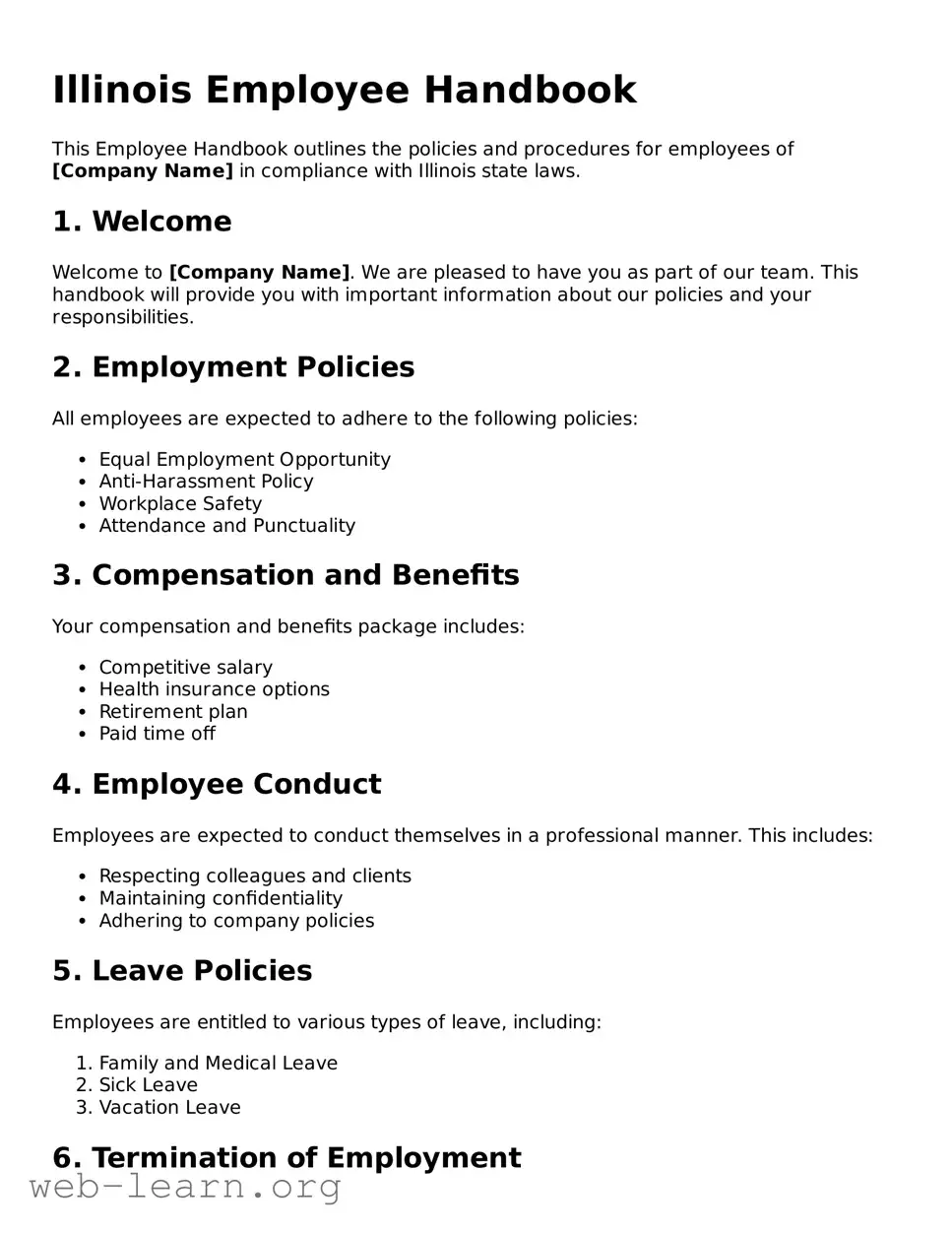
In the realm of employment, clear communication between employers and employees is vital for fostering a positive workplace environment. One essential tool in achieving this clarity is the Illinois Employee Handbook form. This document serves as a comprehensive guide that outlines the rights, responsibilities, and expectations for both parties. It typically includes sections on workplace policies, employee benefits, code of conduct, and procedures for addressing grievances. By providing essential information about company culture, safety protocols, and disciplinary actions, the handbook not only helps employees understand their roles but also protects employers by ensuring compliance with state and federal laws. In Illinois, having a well-crafted employee handbook is not just a best practice; it can also be a crucial element in mitigating potential legal disputes. Understanding the key components of this form will empower both employers and employees to navigate the workplace with confidence and clarity.
Illinois Employee Handbook
This Employee Handbook outlines the policies and procedures for employees of [Company Name] in compliance with Illinois state laws.
1. Welcome
Welcome to [Company Name]. We are pleased to have you as part of our team. This handbook will provide you with important information about our policies and your responsibilities.
2. Employment Policies
All employees are expected to adhere to the following policies:
3. Compensation and Benefits
Your compensation and benefits package includes:
4. Employee Conduct
Employees are expected to conduct themselves in a professional manner. This includes:
5. Leave Policies
Employees are entitled to various types of leave, including:
6. Termination of Employment
Termination of employment may occur for various reasons, including:
7. Acknowledgment of Receipt
By signing below, you acknowledge that you have received and read the Employee Handbook of [Company Name].
Employee Name: ________________________
Date: ________________________
| Fact Name | Details |
|---|---|
| Purpose | The Illinois Employee Handbook serves as a guide for employees regarding company policies, procedures, and expectations. |
| Governing Law | The handbook must comply with Illinois employment laws, including the Illinois Wage Payment and Collection Act. |
| Mandatory Policies | |
| Employee Acknowledgment | Employees should sign an acknowledgment form confirming they have received and understood the handbook. |
| Updates | The handbook should be reviewed and updated regularly to reflect changes in laws or company policies. |
| Accessibility | Handbooks must be made accessible to all employees, including those with disabilities. |
| At-Will Employment | Including a statement on at-will employment is crucial, clarifying that employment can be terminated at any time. |
| Confidentiality Clause | Employers often include a confidentiality clause to protect sensitive company information. |
| Grievance Procedures | Clear grievance procedures should be outlined to guide employees on how to report issues. |
| Legal Compliance | The handbook must comply with federal laws, including the Family and Medical Leave Act (FMLA) and the Americans with Disabilities Act (ADA). |
Completing the Illinois Employee Handbook form is an essential step in ensuring that you have the necessary information and guidelines for your employment. This process involves several straightforward steps to ensure accuracy and compliance.
Following these steps will help ensure that your Employee Handbook form is filled out correctly and submitted in a timely manner.
What is the purpose of the Illinois Employee Handbook form?
The Illinois Employee Handbook form serves as a guide for employers to create a comprehensive employee handbook. This handbook outlines workplace policies, procedures, and expectations, helping to ensure that both employers and employees understand their rights and responsibilities. By providing clear information, the handbook can help reduce misunderstandings and promote a positive work environment.
Who should use the Illinois Employee Handbook form?
This form is intended for use by employers operating in Illinois. It is particularly useful for small to medium-sized businesses that may not have extensive human resources departments. However, larger organizations can also benefit from the structured format provided by the form. All employers looking to establish clear communication regarding workplace policies should consider utilizing this resource.
What key topics should be included in the employee handbook?
While the specific content may vary based on the organization's needs, several key topics are generally recommended for inclusion:
Including these topics can help ensure that employees have a clear understanding of the organization's policies and procedures.
How often should the employee handbook be updated?
It is advisable to review and update the employee handbook regularly, ideally on an annual basis. Changes in laws, company policies, or workplace practices may necessitate updates. Additionally, soliciting feedback from employees can provide valuable insights into areas that may require clarification or revision. Keeping the handbook current helps maintain compliance with legal requirements and supports a transparent workplace culture.
Filling out the Illinois Employee Handbook form can seem straightforward, but there are common mistakes that people often make. One frequent error is not reading the instructions carefully. Each section of the form has specific requirements. Skipping over these details can lead to incomplete submissions.
Another mistake is providing incorrect personal information. It’s crucial to double-check names, addresses, and contact numbers. Even a small typo can cause significant delays in processing. Ensure that all details match official documents to avoid any confusion.
People also often forget to sign and date the form. Without a signature, the form may be considered invalid. This oversight can lead to unnecessary back-and-forth communication. Always remember to sign and date the form before submission.
Lastly, some individuals neglect to keep a copy of the completed form for their records. Having a personal copy is important for future reference. It can be helpful if there are questions or issues that arise later. Always make sure to retain a copy after submitting the form.
The Illinois Employee Handbook serves as a vital resource for both employers and employees, outlining workplace policies, expectations, and rights. Along with this handbook, several other forms and documents are commonly utilized to ensure compliance with state and federal laws, as well as to promote a clear understanding of workplace procedures. Below is a list of these important documents.
Each of these documents plays a significant role in maintaining an organized and compliant workplace. By utilizing these forms, employers can foster a transparent environment while ensuring that employees are well-informed of their rights and responsibilities.
Policy Manual: Similar to the Employee Handbook, a policy manual outlines the rules and guidelines that govern employee behavior and company operations. Both documents serve to inform employees about expectations and procedures.
Onboarding Guide: An onboarding guide provides new employees with essential information about the company culture, policies, and procedures. Like the Employee Handbook, it helps employees acclimate to their new work environment.
Code of Conduct: The Code of Conduct details the ethical standards and professional behavior expected from employees. This document complements the Employee Handbook by emphasizing the importance of integrity and respect in the workplace.
Job Descriptions: Job descriptions outline the roles and responsibilities of specific positions within the company. They are similar to the Employee Handbook in that they clarify expectations and help employees understand their duties.
Training Manuals: Training manuals provide instructions and guidelines for specific tasks or processes. Like the Employee Handbook, they are designed to ensure that employees have the necessary knowledge to perform their jobs effectively.
Safety Guidelines: Safety guidelines outline procedures and protocols to ensure a safe working environment. They are similar to the Employee Handbook in that both documents aim to protect employees and promote well-being in the workplace.
Employee Benefits Guide: An employee benefits guide details the benefits available to employees, such as health insurance and retirement plans. This document works alongside the Employee Handbook to provide a comprehensive overview of employee rights and entitlements.
When filling out the Illinois Employee Handbook form, it is essential to approach the task with care and attention. Here are some important guidelines to follow:
By following these guidelines, you can complete the Illinois Employee Handbook form with confidence and clarity. Remember, accuracy and attention to detail are key to a successful submission.
When it comes to the Illinois Employee Handbook, several misconceptions can cloud understanding and lead to confusion among employers and employees alike. Here are four common misconceptions:
Understanding these misconceptions can help both employers and employees navigate the workplace more effectively and foster a better working environment.
When filling out and using the Illinois Employee Handbook form, consider the following key takeaways: