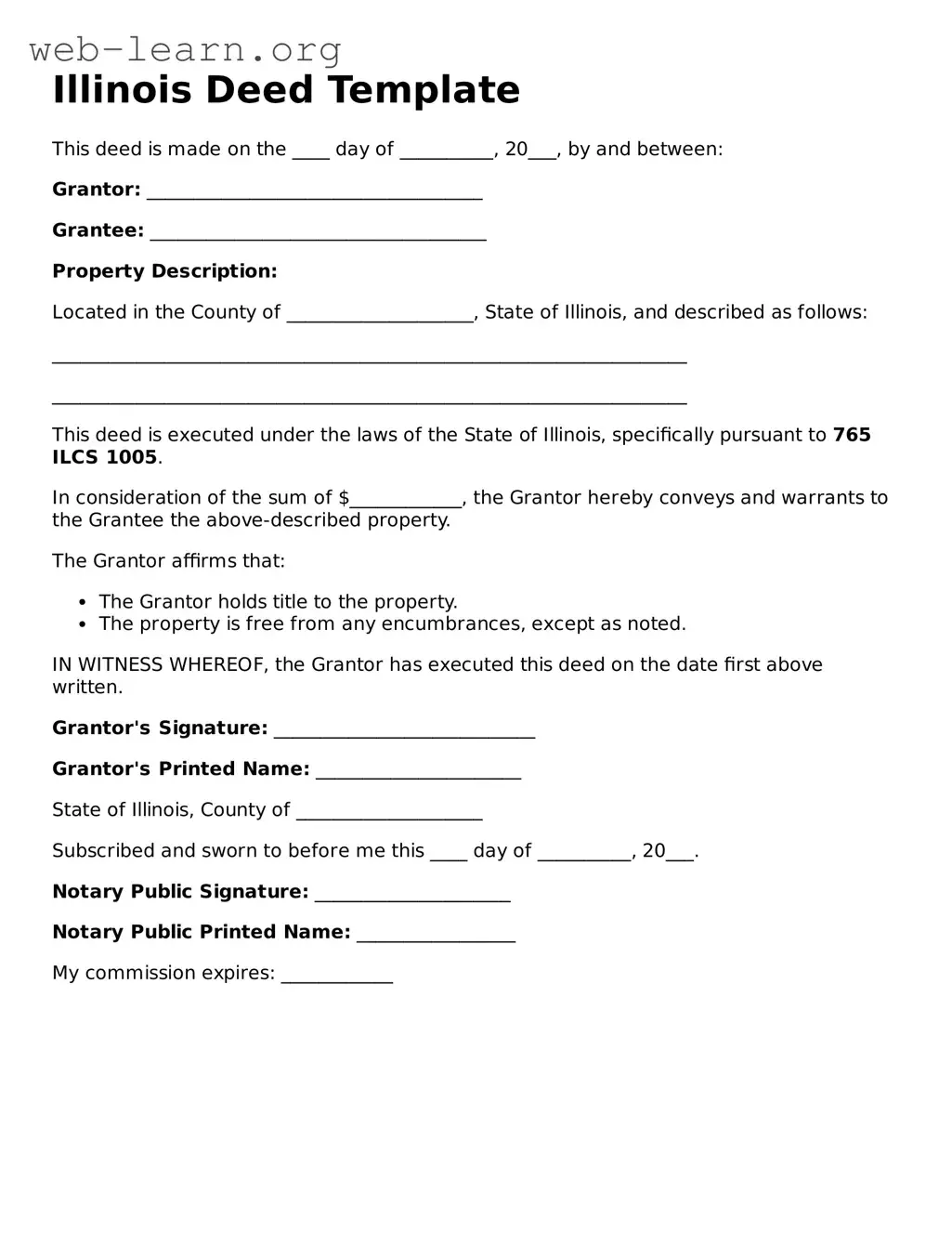
The Illinois Deed form serves as a critical instrument in real estate transactions, facilitating the transfer of property ownership between parties. This legally binding document outlines essential details such as the names of the grantor and grantee, the property description, and the consideration involved in the transaction. It is designed to ensure clarity and prevent disputes by specifying the rights and obligations of both parties. Additionally, the form may include warranties or covenants that provide assurances regarding the property's title. Understanding the nuances of this form is vital for anyone involved in property transactions in Illinois, as inaccuracies or omissions can lead to significant legal complications down the line. Therefore, it is imperative to approach the completion of the Illinois Deed form with diligence and attention to detail.
Illinois Deed Template
This deed is made on the ____ day of __________, 20___, by and between:
Grantor: ____________________________________
Grantee: ____________________________________
Property Description:
Located in the County of ____________________, State of Illinois, and described as follows:
____________________________________________________________________
____________________________________________________________________
This deed is executed under the laws of the State of Illinois, specifically pursuant to 765 ILCS 1005.
In consideration of the sum of $____________, the Grantor hereby conveys and warrants to the Grantee the above-described property.
The Grantor affirms that:
IN WITNESS WHEREOF, the Grantor has executed this deed on the date first above written.
Grantor's Signature: ____________________________
Grantor's Printed Name: ______________________
State of Illinois, County of ____________________
Subscribed and sworn to before me this ____ day of __________, 20___.
Notary Public Signature: _____________________
Notary Public Printed Name: _________________
My commission expires: ____________
| Fact Name | Description |
|---|---|
| Governing Law | The Illinois Deed form is governed by the Illinois Compiled Statutes, specifically 765 ILCS 1005. |
| Types of Deeds | Common types of deeds in Illinois include warranty deeds, quitclaim deeds, and special warranty deeds. |
| Required Signatures | For a deed to be valid, it must be signed by the grantor. The signature should be notarized. |
| Recording | Deeds must be recorded with the county recorder's office to provide public notice of ownership. |
| Legal Description | A precise legal description of the property is required on the deed to avoid confusion. |
| Consideration | The deed should state the consideration, or the value exchanged, although it can be nominal. |
| Transfer Tax | Illinois imposes a transfer tax on the sale of real estate, which must be paid at the time of recording. |
| Validity Period | Once executed and delivered, a deed is generally valid unless revoked or set aside by a court. |
After you have gathered all the necessary information, you are ready to fill out the Illinois Deed form. Completing this form accurately is crucial for ensuring that the transfer of property ownership is legally recognized. Follow these steps carefully to ensure that every detail is correctly entered.
What is an Illinois Deed form?
An Illinois Deed form is a legal document used to transfer ownership of real estate property in the state of Illinois. This form outlines the details of the transaction, including the names of the parties involved, a description of the property, and the terms of the transfer. It is essential for ensuring that the transfer is legally recognized.
What types of Deeds are available in Illinois?
Illinois offers several types of Deeds, including:
How do I fill out an Illinois Deed form?
Filling out an Illinois Deed form requires careful attention to detail. You will need to provide:
Make sure to double-check all information for accuracy before signing.
Do I need to have the Deed notarized?
Yes, in Illinois, the Deed must be signed in the presence of a notary public. This step helps verify the identities of the parties involved and ensures that the document is legally binding.
Where do I file the Illinois Deed?
After completing and notarizing the Deed, it must be filed with the Recorder of Deeds in the county where the property is located. Filing fees may apply, so check with the local office for specific requirements.
What happens if I don’t file the Deed?
If you fail to file the Deed, the transfer of ownership may not be recognized by the state. This could lead to complications, such as difficulties in selling the property in the future or issues with property taxes. It is crucial to complete this step to protect your rights as the new owner.
Can I use a Deed form from another state?
No, you should not use a Deed form from another state. Each state has its own laws and requirements regarding real estate transactions. Using an Illinois-specific Deed form ensures compliance with local regulations and protects your interests.
What if I have more questions about the Deed process?
If you have further questions or need assistance with the Deed process, consider consulting a real estate attorney. They can provide guidance tailored to your specific situation and help ensure that all legal requirements are met.
Completing the Illinois Deed form requires careful attention to detail. One common mistake is failing to include the correct names of the parties involved. The grantor (seller) and grantee (buyer) must be clearly identified. Using nicknames or abbreviations can lead to confusion and potential legal issues.
Another frequent error is neglecting to provide a complete legal description of the property. A vague description can create problems during the transfer of ownership. It is essential to include specific details such as the lot number, block number, and any relevant subdivision information.
Many individuals overlook the importance of signing the deed. A deed without a signature is not valid. Both the grantor and any witnesses required must sign the document. Failing to do so can result in delays or rejection of the deed.
Additionally, people often forget to have the deed notarized. In Illinois, notarization is necessary for the deed to be legally binding. Without a notary’s signature and seal, the document may not hold up in court.
Another mistake is not checking for the correct date on the deed. The date of execution is crucial, as it indicates when the transfer of ownership takes place. An incorrect date can create confusion about the effective date of the transaction.
Some individuals fail to pay the required transfer tax. In Illinois, a transfer tax must be calculated and paid at the time of filing the deed. Not paying this tax can lead to additional penalties and complications in the property transfer process.
Lastly, many people do not keep a copy of the completed deed for their records. It is vital to maintain a copy for future reference. This documentation can be important for tax purposes or in case of disputes regarding property ownership.
When dealing with property transactions in Illinois, several important forms and documents accompany the Illinois Deed form. Each document serves a specific purpose in ensuring the transaction is legally sound and properly recorded. Here are six commonly used forms:
Understanding these documents is crucial for anyone involved in a property transaction in Illinois. Each plays a vital role in ensuring the process is clear, legal, and efficient, ultimately protecting the interests of all parties involved.
The Deed form is a critical document in property transactions. It serves as a formal agreement that transfers ownership of real estate. Several other documents share similarities with the Deed form, each serving a specific purpose in legal and property matters. Below are four such documents:
Each of these documents plays a vital role in the management and transfer of property rights, ensuring clarity and legal protection for all parties involved.
When filling out the Illinois Deed form, it's essential to approach the task with care. Here’s a list of things you should and shouldn't do to ensure the process goes smoothly.
By following these guidelines, you can help ensure that your Illinois Deed form is completed correctly and efficiently.
Understanding the Illinois Deed form can be challenging, especially with various misconceptions surrounding it. Below are some common misunderstandings, along with clarifications to help provide a clearer perspective.
Addressing these misconceptions can help individuals navigate the process of property transfer in Illinois more effectively. Understanding the nuances of the Illinois Deed form is essential for anyone involved in real estate transactions.
When it comes to filling out and using the Illinois Deed form, understanding the essential elements can make the process smoother and more efficient. Here are some key takeaways to consider:
By keeping these points in mind, individuals can navigate the process of filling out and using the Illinois Deed form with greater confidence and clarity.
What Does a House Deed Look Like in Ny - Proper execution of a Deed can prevent future legal complications.
Louisiana Deed Requirements - Some deeds may contain specific conditions that must be met by the grantee.
Indiana Quit Claim Deed Form - They can establish joint ownership between multiple parties.