In Illinois, homeowners facing financial difficulties may find themselves exploring various options to avoid the lengthy and often stressful foreclosure process. One such option is the Deed in Lieu of Foreclosure, a legal arrangement that allows a homeowner to voluntarily transfer the ownership of their property back to the lender. This form serves as a critical tool in facilitating a smoother transition for those unable to keep up with mortgage payments. By executing this document, the homeowner relinquishes their rights to the property, and in return, the lender typically agrees to forgive the remaining mortgage debt. This process not only helps the homeowner avoid the negative repercussions of foreclosure but also allows the lender to recover their investment more efficiently. Understanding the nuances of the Illinois Deed in Lieu of Foreclosure form is essential for anyone considering this route, as it encompasses important details such as the conditions under which it can be executed, potential tax implications, and the impact on credit scores. With the right knowledge and guidance, homeowners can navigate this option with greater confidence and clarity.
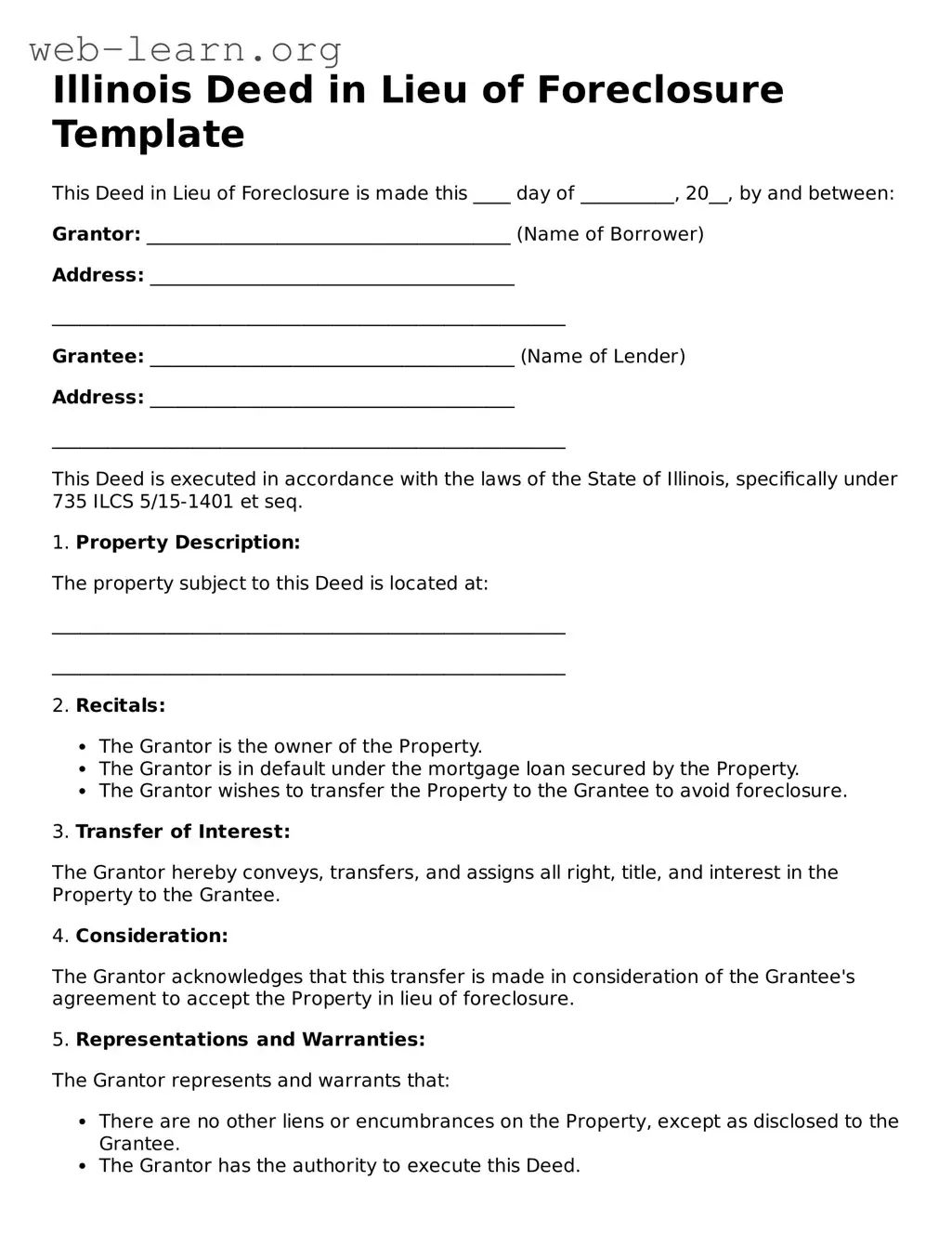
Illinois Deed in Lieu of Foreclosure Template
This Deed in Lieu of Foreclosure is made this ____ day of __________, 20__, by and between:
Grantor: _______________________________________ (Name of Borrower)
Address: _______________________________________
_______________________________________________________
Grantee: _______________________________________ (Name of Lender)
Address: _______________________________________
_______________________________________________________
This Deed is executed in accordance with the laws of the State of Illinois, specifically under 735 ILCS 5/15-1401 et seq.
1. Property Description:
The property subject to this Deed is located at:
_______________________________________________________
_______________________________________________________
2. Recitals:
3. Transfer of Interest:
The Grantor hereby conveys, transfers, and assigns all right, title, and interest in the Property to the Grantee.
4. Consideration:
The Grantor acknowledges that this transfer is made in consideration of the Grantee's agreement to accept the Property in lieu of foreclosure.
5. Representations and Warranties:
The Grantor represents and warrants that:
6. Governing Law:
This Deed shall be governed by and construed in accordance with the laws of the State of Illinois.
IN WITNESS WHEREOF, the Grantor has executed this Deed as of the day and year first above written.
______________________________
Signature of Grantor
______________________________
Signature of Grantee
______________________________
Witness
______________________________
Notary Public
My Commission Expires: _____________
| Fact Name | Description |
|---|---|
| Definition | A deed in lieu of foreclosure is a legal document where a borrower voluntarily transfers property ownership to the lender to avoid foreclosure. |
| Governing Law | The Illinois Deed in Lieu of Foreclosure is governed by Illinois law, specifically under the Illinois Mortgage Foreclosure Law. |
| Eligibility | Typically, the borrower must be in default on their mortgage to qualify for a deed in lieu of foreclosure. |
| Mutual Agreement | Both the borrower and the lender must agree to the deed in lieu arrangement for it to be valid. |
| Debt Relief | This process can help borrowers avoid the negative impact of foreclosure on their credit scores. |
| Property Condition | The property must be in good condition; lenders may refuse the deed if significant repairs are needed. |
| Tax Implications | Borrowers may face tax consequences, as the IRS may consider forgiven debt as taxable income. |
| Process Duration | The deed in lieu process can be quicker than traditional foreclosure, often taking a few months to complete. |
After you have completed the Illinois Deed in Lieu of Foreclosure form, you will need to ensure that it is properly signed and notarized. This will help to make the document legally binding. Once everything is in order, you can submit the form to the appropriate parties, usually the lender or mortgage company.
A Deed in Lieu of Foreclosure is a legal document that allows a homeowner to voluntarily transfer ownership of their property to the lender to avoid the foreclosure process. This option can be beneficial for both parties, as it often allows the homeowner to escape the negative consequences of foreclosure while providing the lender with a quicker resolution.
There are several advantages to choosing a Deed in Lieu of Foreclosure:
Yes, homeowners must meet certain criteria to qualify for a Deed in Lieu of Foreclosure. Generally, lenders will require:
The process typically involves the following steps:
After the transfer, the homeowner will no longer own the property. However, they may be able to negotiate a period to vacate the home, often referred to as a "move-out period." This allows time for the homeowner to find alternative housing. Additionally, the lender may offer assistance during the transition.
Yes, a Deed in Lieu of Foreclosure can impact your credit score, but typically to a lesser extent than a foreclosure. It will still be reported as a negative event, but it may be viewed more favorably by future lenders compared to a full foreclosure.
While it is not strictly required, seeking legal assistance can be beneficial. An attorney can help navigate the process, ensure that all documents are correctly completed, and negotiate terms with the lender. This support can help protect the homeowner's interests and rights throughout the transaction.
Filling out the Illinois Deed in Lieu of Foreclosure form can be a straightforward process, but many people make common mistakes that can complicate matters. One frequent error is not providing complete information. It’s essential to include all required details, such as the property address and the names of all parties involved. Missing information can delay the process or even lead to rejection of the deed.
Another mistake is not understanding the implications of signing the deed. Some individuals may not realize that by signing this document, they are voluntarily giving up their property. This can be a significant decision, and it's important to fully comprehend what it means for your financial future.
Many people also overlook the need for proper signatures. The form must be signed by all parties listed as owners of the property. If one person fails to sign, the deed may not be valid. Ensuring that everyone involved is on board and has signed can save a lot of headaches later.
Additionally, failing to consult with a legal professional can be a critical mistake. While the form may seem simple, having expert guidance can help navigate any complexities. A legal consultant can clarify any questions and ensure that the form is filled out correctly.
Another common error is not properly recording the deed after it has been executed. Once the form is signed, it needs to be submitted to the appropriate county office for recording. Neglecting this step can lead to issues with ownership and future property transactions.
Some individuals also forget to check for any outstanding liens or mortgages on the property. If there are existing debts tied to the property, those may need to be addressed before the deed can be finalized. Ignoring this can lead to complications that could have been avoided.
Finally, many people fail to keep copies of the completed form and any related documents. Keeping thorough records is crucial for your personal files and may be necessary for future reference. If any disputes arise, having documentation can be invaluable.
A Deed in Lieu of Foreclosure is a legal document that allows a borrower to transfer ownership of their property to the lender to avoid foreclosure. When using this form, there are several other documents that may be required to complete the process. Below is a list of common forms and documents that are often used in conjunction with the Illinois Deed in Lieu of Foreclosure.
These documents play an important role in the process of transferring property ownership and ensuring that all parties understand their rights and responsibilities. Having them prepared and organized can help facilitate a smoother transaction.
The Deed in Lieu of Foreclosure is a legal document that allows a homeowner to voluntarily transfer ownership of their property to the lender to avoid foreclosure. This document shares similarities with several other legal documents in real estate and finance. Below are ten documents that are comparable to the Deed in Lieu of Foreclosure, along with explanations of their similarities.
When filling out the Illinois Deed in Lieu of Foreclosure form, it is essential to follow specific guidelines to ensure accuracy and compliance. Below is a list of things you should and shouldn't do.
Things You Should Do:
Things You Shouldn't Do:
When it comes to the Illinois Deed in Lieu of Foreclosure, many people harbor misconceptions that can lead to confusion and misinformed decisions. Understanding the truth behind these myths is crucial for homeowners facing foreclosure. Here’s a look at five common misconceptions:
Understanding these misconceptions can empower homeowners to make informed decisions about their financial futures. Always consider consulting with a professional for personalized advice tailored to your situation.
Filling out and using the Illinois Deed in Lieu of Foreclosure form requires careful attention to detail. Here are ten key takeaways to consider:
By following these key points, homeowners can navigate the Deed in Lieu of Foreclosure process more effectively and make informed decisions regarding their property and financial future.
Sample Deed in Lieu of Foreclosure - It is advisable to keep copies of all documents related to the Deed in Lieu for personal records.
Foreclosure Georgia - This agreement can provide relief from financial burdens.
California Voluntary Property Surrender Document - A Deed in Lieu can be a responsible choice for managing financial challenges.