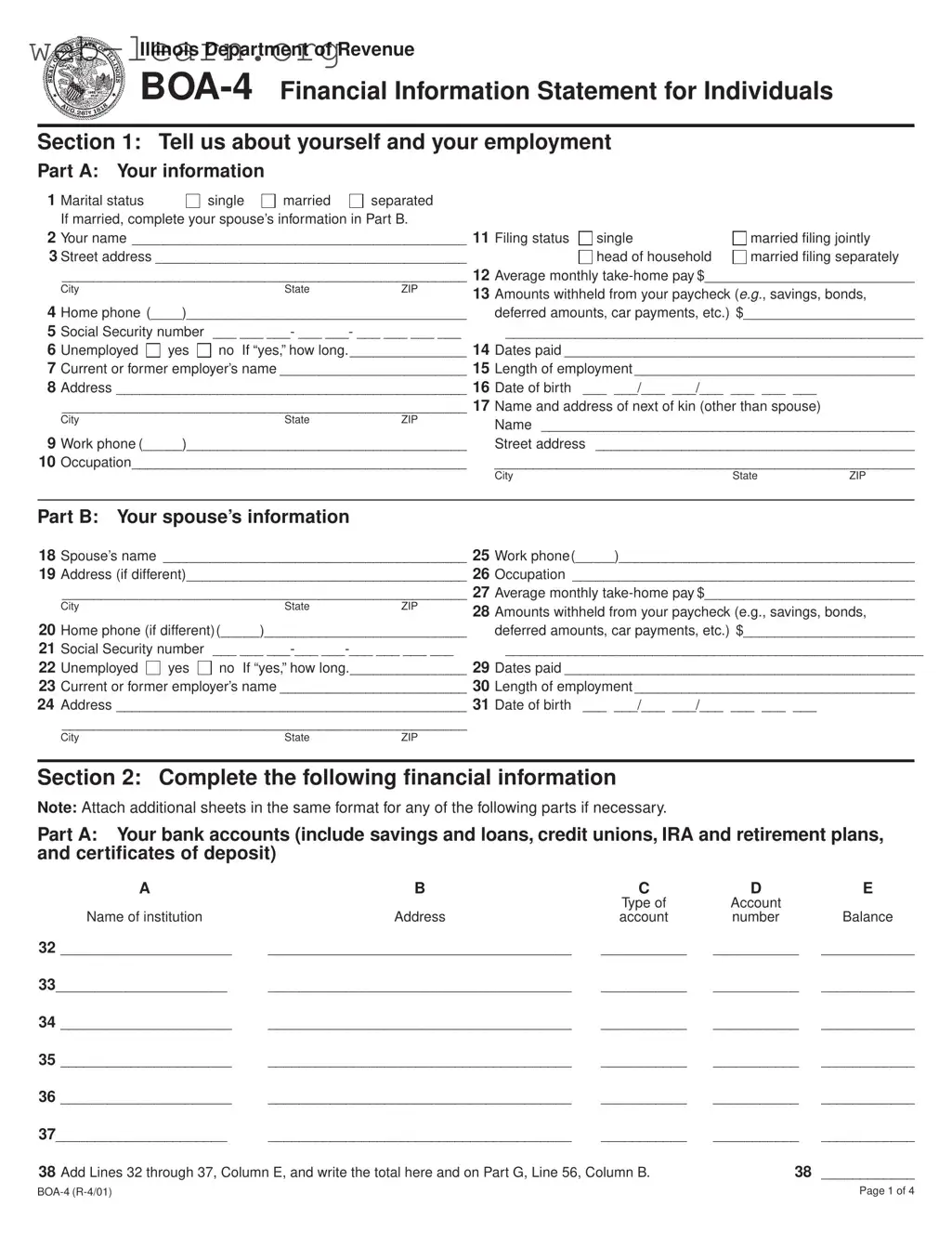
The Illinois BOA-4 form serves as a critical tool for individuals seeking to provide detailed financial information to the Illinois Department of Revenue. This form is divided into several sections, each designed to capture essential personal and financial data. In the first section, individuals disclose personal details such as marital status, employment information, and income specifics. This includes average monthly take-home pay and any amounts withheld from paychecks. The second section focuses on financial assets, requiring individuals to list bank accounts, credit lines, real property, insurance policies, and securities. Detailed information about these assets helps to paint a comprehensive picture of an individual’s financial standing. The form also addresses liabilities, including debts and pending financial proceedings, and concludes with an analysis of monthly income and expenses. By gathering this information, the BOA-4 form facilitates a thorough understanding of an individual's financial situation, which is essential for tax assessments and other financial evaluations.

Illinois Department of Revenue
Section 1: Tell us about yourself and your employment
Part A: Your information
1 |
Marital status |
|
single |
married |
separated |
|
|
|
|
|
|
If married, complete your spouse’s information in Part B. |
|
|
|
|
|
||||
2 |
Your name ___________________________________________ 11 |
Filing status |
single |
married filing jointly |
||||||
3 Street address ________________________________________ |
|
|
head of household |
married filing separately |
||||||
|
____________________________________________________ 12 |
Average monthly |
||||||||
|
City |
|
|
State |
ZIP |
13 |
Amounts withheld from your paycheck (e.g., savings, bonds, |
|||
|
|
|
|
|
|
|||||
4 |
Home phone (____)____________________________________ |
|
deferred amounts, car payments, etc.) $______________________ |
|||||||
5 |
Social Security number |
___ ___ ___- ___ ___- ___ ___ ___ ___ |
|
______________________________________________________ |
||||||
6 |
Unemployed |
yes |
no If “yes,” how long. _______________ 14 |
Dates paid _____________________________________________ |
||||||
7 |
Current or former employer’s name ________________________ 15 |
Length of employment ____________________________________ |
||||||||
8 |
Address _____________________________________________ 16 |
Date of birth |
___ ___/___ ___/___ ___ ___ ___ |
|
||||||
|
____________________________________________________ 17 |
Name and address of next of kin (other than spouse) |
|
|||||||
|
City |
|
|
State |
ZIP |
|
Name ________________________________________________ |
|||
|
|
|
|
|
|
|
||||
9 |
Work phone (_____)____________________________________ |
|
Street address _________________________________________ |
|||||||
10 |
Occupation___________________________________________ |
|
______________________________________________________ |
|||||||
|
|
|
|
|
|
|
City |
|
State |
ZIP |
Part B: Your spouse’s information
18 |
Spouse’s name _______________________________________ 25 |
Work phone(_____)______________________________________ |
||||
19 |
Address (if different)____________________________________ 26 |
Occupation ____________________________________________ |
||||
|
____________________________________________________ 27 |
Average monthly |
||||
|
City |
|
State |
ZIP |
28 |
Amounts withheld from your paycheck (e.g., savings, bonds, |
|
|
|
|
|
||
20 |
Home phone (if different)(_____)__________________________ |
|
deferred amounts, car payments, etc.) $______________________ |
|||
21 |
Social Security number |
___ ___ |
|
______________________________________________________ |
||
22 |
Unemployed |
yes |
no If “yes,” how long._______________ 29 |
Dates paid _____________________________________________ |
||
23 |
Current or former employer’s name ________________________ 30 |
Length of employment ____________________________________ |
||||
24 |
Address _____________________________________________ 31 |
Date of birth ___ ___/___ ___/___ ___ ___ ___ |
||||
|
____________________________________________________ |
|
|
|||
|
City |
|
State |
ZIP |
|
|
Section 2: Complete the following financial information
Note: Attach additional sheets in the same format for any of the following parts if necessary.
Part A: Your bank accounts (include savings and loans, credit unions, IRA and retirement plans, and certificates of deposit)
|
A |
B |
C |
D |
E |
|
|
|
Type of |
Account |
|
|
Name of institution |
Address |
account |
number |
Balance |
32 |
______________________ |
_______________________________________ |
___________ |
___________ |
____________ |
33______________________ |
_______________________________________ |
___________ |
___________ |
____________ |
|
34 |
______________________ |
_______________________________________ |
___________ |
___________ |
____________ |
35 |
______________________ |
_______________________________________ |
___________ |
___________ |
____________ |
36 |
______________________ |
_______________________________________ |
___________ |
___________ |
____________ |
37______________________ |
_______________________________________ |
___________ |
___________ |
____________ |
|
38 |
Add Lines 32 through 37, Column E, and write the total here and on Part G, Line 56, Column B. |
38 |
____________ |
||
Page 1 of 4 |

Part B: Your charge cards or credit lines from your banks, credit unions, and savings and loans
|
A |
B |
C |
|
Type of account |
|
Current |
|
or card |
Name and address of financial institution |
balance |
39 |
_________________ |
_______________________________________________________________________ |
___________ |
40 |
_________________ |
_______________________________________________________________________ |
___________ |
41 |
_________________ |
_______________________________________________________________________ |
___________ |
42 |
_________________ |
_______________________________________________________________________ |
___________ |
43 |
_________________ |
_______________________________________________________________________ |
___________ |
44 |
Add Lines 39 through 43, Column C, and write the total here and on Part G, Line 57, Column C. |
44 ___________ |
|
Part C: Real property you own
|
A |
B |
C |
D |
|
Brief description |
How property |
|
|
|
of property |
is titled |
Physical address |
County |
45 |
_____________________________ |
__________________ |
_______________________________________ |
___________ |
46 |
_____________________________ |
__________________ |
_______________________________________ |
___________ |
47 |
_____________________________ |
__________________ |
_______________________________________ |
___________ |
Part D: Your life and health insurance policies
|
A |
B |
C |
D |
E |
|
|
Policy |
|
Face |
Available |
|
Insurance company |
number |
Type |
amount |
loan value |
48 |
__________________________________________________ |
___________ |
___________ |
___________ |
___________ |
49 |
__________________________________________________ |
___________ |
___________ |
___________ |
___________ |
50 |
Add Lines 48 and 49, Column E, and write the total here and on Part G, Line 60, Column B. |
|
50 ___________ |
||
Part E: Your securities (e.g., stocks, bonds, annuities, mutual funds, money market funds, government securities, notes, personal, etc.)
|
A |
B |
C |
D |
E |
|
Type |
|
|
Quantity or |
|
|
of security |
Location |
Owner of record |
denomination |
Present value |
51 |
_________________ |
______________________________ |
_________________________ |
___________ |
___________ |
52 |
_________________ |
______________________________ |
_________________________ |
___________ |
___________ |
53 |
Add Lines 51 and 52, Column E, and write the total here and on Part G, Line 61, Column B. |
|
53 ___________ |
||
Part F: Miscellaneous information
54a Are foreclosure, bankruptcy, receivership, or assignment for benefit of creditors proceedings pending? b What is the bankruptcy number? ______________________
Yes
No
c What date was the bankruptcy filed? ___ ___/___ ___/___ ___ ___ ___ |
If closed, what was the date? ___ ___/___ ___/___ ___ ___ ___ |
||||
Month |
Day |
Year |
Month |
Day |
Year |
Page 2 of 4 |

Part G: Analyze your assets and liabilities
Note: Write amounts in all unshaded areas that apply
|
A |
B |
|
|
Fair market |
|
Description |
value |
55 |
Cash |
___________ |
56 |
Total bank accounts |
|
|
from Section 2, Part A, |
|
|
Line 38 |
___________ |
57Total charge cards balance from Section 2, Part B,
Line 44 |
___________ |
58Vehicles (model, year)
a ___________________ |
___________ |
|
b ___________________ |
___________ |
|
c ___________________ |
___________ |
|
59 |
Real property listed |
|
|
in Section 2, |
|
|
Part C, (Line 45) |
___________ |
|
(Line 46) |
___________ |
|
(Line 47) |
___________ |
60 |
Total cash or loan value |
|
|
of insurance from |
|
|
Section 2, Part D, |
|
|
Line 50 |
___________ |
61 |
Total securities from |
|
|
Section 2, Part E, |
|
|
Line 53 |
___________ |
62 |
Other assets (specify) |
|
C
Liabilities
balance due
___________
___________
___________
___________
___________
___________
___________
___________
___________
___________
___________
D
Equity
(Column B minus
Column C)
___________
___________
___________
___________
___________
___________
___________
___________
___________
___________
___________
E
Monthly payment amount
___________
___________
___________
___________
___________
___________
___________
___________
___________
___________
___________
F
Pledgee or obligee
___________________
___________________
___________________
___________________
___________________
___________________
___________________
___________________
___________________
___________________
___________________
G
Date of
final
payment
____________
____________
____________
____________
____________
____________
____________
____________
____________
____________
____________
a___________________
b___________________
c___________________
63 Other liabilities not covered above (e.g., judgments, charities, tuition)
a___________________
b___________________
c___________________
64 Federal taxes owed
65 State taxes owed a Illinois individual
income tax
b Illinois business income tax
c Other state taxes
66Total
___________
___________
___________
___________
___________
___________
___________
___________
___________
___________
___________
___________
___________
___________
___________
___________
___________
___________
___________
___________
___________
___________
___________
___________
___________
___________
___________
___________
___________
___________
___________
___________
___________
___________
___________
___________
___________
___________
___________
___________
___________
___________
___________
___________
___________________
___________________
___________________
___________________
___________________
___________________
___________________
___________________
___________________
___________________
___________________
____________
____________
____________
____________
____________
____________
____________
____________
____________
____________
____________
Page 3 of 4 |

Part H: Analyze your monthly income and expenses
Income
|
A |
B |
C |
|
Source |
Gross |
Net |
67 |
Your wages or salary |
___________________ |
___________________ |
68 |
Your spouse’s |
|
|
|
wages or salary |
___________________ |
___________________ |
69 |
Interest or dividends |
___________________ |
___________________ |
70 |
Business income |
___________________ |
___________________ |
71 |
Rental income |
___________________ |
___________________ |
72 |
Your pension |
___________________ |
___________________ |
73 |
Your spouse’s pension |
___________________ |
___________________ |
74 |
Child support |
___________________ |
___________________ |
75 |
Alimony |
___________________ |
___________________ |
76Other (specify)
________________ ___________________ ___________________
________________ ___________________ ___________________
________________ ___________________ ___________________
________________ ___________________ ___________________
________________ ___________________ ___________________
________________ ___________________ ___________________
________________ ___________________ ___________________
________________ |
___________________ |
___________________ |
________________ |
___________________ |
___________________ |
________________ |
___________________ |
___________________ |
________________ |
___________________ |
___________________ |
________________ |
___________________ |
___________________ |
77 Add Lines 67 through 76, Column C. |
|
|
This amount is your total net income. |
____________________ |
|
Necessary monthly living expenses
A |
B |
Expense |
Amount |
78Rent (not included
|
in Part G, Line 59) |
___________________ |
||
79 |
Groceries |
|
|
|
|
(number of people____) |
___________________ |
||
80 |
Installment pmts. from |
|
||
|
Part G, Line 66, Col. E |
___________________ |
||
81 |
Utilities |
a |
gas |
___________________ |
|
|
b |
water |
___________________ |
|
|
c |
electric |
___________________ |
|
|
d |
telephone |
___________________ |
82 |
Transportation |
___________________ |
||
83 |
Insurance |
a |
life |
___________________ |
|
(monthly |
b |
health |
___________________ |
|
premiums) c |
home |
___________________ |
|
|
|
d |
car |
___________________ |
84Medical (not covered
|
in Line 83b above) |
___________________ |
85 |
Estimated tax payments |
___________________ |
86 |
___________________ |
87Other (specify)
__________________ ___________________
__________________ ___________________
__________________ ___________________
88Add Lines 78 through 87. This amount is your
total expenses. |
___________________ |
89 Subtract Line 88 from Line 77. This amount is your net income after expenses. |
89 ___________________ |
Part I: Complete any additional asset or income information
90Write any additional information you have about your assets or income that was not included in any of the preceding parts. Be sure to include a statement regarding the prospect of any increase in the value of your assets or your present income.
_____________________________________________________________________________________________________________
_____________________________________________________________________________________________________________
_____________________________________________________________________________________________________________
_____________________________________________________________________________________________________________
_____________________________________________________________________________________________________________
_____________________________________________________________________________________________________________
Section 3: Sign below
Under penalties of perjury, I state that I have examined this statement of assets, liabilities, and other information and, to the best of my knowledge, it is true, correct, and complete.
______________________________________________/___/_____ ______________________________________________/___/_____
Petitioner’s signature (not representative) |
Date |
Spouse’s signature |
Date |
Page 4 of 4
This form is authorized as outlined by the Illinois Income Tax Act. Disclosure of this information is REQUIRED. Failure to provide information |
|
|
could result in this form not being processed. This form has been approved by the Forms Management Center. |
||
|
|
|
|
|
|
| Fact Name | Details |
|---|---|
| Form Purpose | The Illinois BOA-4 form is a Financial Information Statement for individuals, primarily used to assess financial status for tax purposes. |
| Governing Law | This form is authorized under the Illinois Income Tax Act, which mandates the disclosure of financial information. |
| Sections Included | The form consists of three main sections: personal information, financial details, and a signature section confirming accuracy under penalty of perjury. |
| Marital Status | Individuals must indicate their marital status and provide relevant information about their spouse if applicable. |
| Financial Disclosure | Applicants are required to disclose various financial details, including income, bank accounts, and liabilities. |
| Submission Requirements | Additional sheets may be attached if necessary, ensuring all required financial information is provided for accurate assessment. |
Completing the Illinois BOA-4 form requires careful attention to detail. After filling out the form, you will need to submit it as part of your financial disclosure process. Ensure that all sections are filled out accurately to avoid delays in processing.
What is the Illinois BOA-4 form?
The Illinois BOA-4 form is a Financial Information Statement for Individuals. It is used by the Illinois Department of Revenue to collect financial information from individuals. This information is necessary for various purposes, including tax assessments and eligibility for certain programs.
Who needs to fill out the BOA-4 form?
Individuals who are required to report their financial status to the Illinois Department of Revenue need to complete this form. This may include those applying for tax relief, those involved in bankruptcy proceedings, or anyone whose financial situation needs to be assessed by the state.
What information is required on the BOA-4 form?
The form requires personal details such as your name, marital status, and employment information. Additionally, you must provide financial information, including:
It’s essential to provide accurate and complete information to avoid delays in processing.
How do I submit the BOA-4 form?
You can submit the BOA-4 form by mailing it to the appropriate address provided by the Illinois Department of Revenue. Ensure you keep a copy for your records. If you are unsure where to send it, check the department's website or contact them directly for guidance.
What happens if I do not fill out the BOA-4 form?
If you fail to complete and submit the BOA-4 form when required, it may result in penalties or delays in processing your tax-related matters. The Illinois Department of Revenue may not be able to assess your situation properly, which could lead to unfavorable outcomes.
Can I get help filling out the BOA-4 form?
Yes, assistance is available. You can seek help from tax professionals, financial advisors, or community organizations that provide support with tax forms. Additionally, the Illinois Department of Revenue may offer resources or guidance to help you complete the form accurately.
Filling out the Illinois BOA-4 form can be straightforward, but many people make common mistakes that can lead to delays or complications. One frequent error is not providing complete information in the marital status section. If you are married, it’s essential to fill out your spouse’s information in Part B. Missing this detail can cause the form to be returned or rejected, which can be frustrating.
Another common mistake is neglecting to include accurate financial details. When listing your bank accounts, for instance, be sure to provide the correct account numbers and balances. Incomplete or incorrect entries can lead to discrepancies that may require additional follow-up. It’s important to double-check this information before submitting the form.
People often overlook the importance of their income details as well. When indicating your average monthly take-home pay, make sure to include all sources of income. This includes wages, rental income, and any other earnings. Failing to report all income can misrepresent your financial situation and may lead to issues later.
Lastly, many individuals forget to sign the form. Without a signature, the document is not valid. Remember to sign and date the form at the bottom. This step is crucial to ensure that your submission is processed without any hitches. Taking the time to review each section carefully can save you from these common pitfalls.
The Illinois BOA-4 form is a crucial document for individuals providing detailed financial information. Alongside this form, several other documents are commonly used to support the financial disclosures made. Each of these documents serves a specific purpose and helps create a comprehensive financial picture.
Using these documents in conjunction with the Illinois BOA-4 form helps create a clear and accurate financial representation. This ensures that all relevant information is available for review, aiding in the decision-making process regarding financial matters.
Form 1040 (U.S. Individual Income Tax Return): Like the Illinois BOA-4 form, the Form 1040 requires individuals to provide personal information, including income sources and filing status. Both forms aim to assess an individual's financial situation, although the Form 1040 is primarily for federal tax purposes.
Schedule A (Itemized Deductions): This document is similar in that it requires detailed financial information. Schedule A allows taxpayers to itemize deductions, much like the BOA-4 collects information on various assets and liabilities to provide a comprehensive view of an individual's financial standing.
Form W-2 (Wage and Tax Statement): The W-2 form reports an employee's annual wages and the taxes withheld from their paycheck. Both the W-2 and the BOA-4 require accurate reporting of income, though the W-2 focuses on employment income while the BOA-4 encompasses a broader range of financial information.
Form 1065 (U.S. Return of Partnership Income): This form is used by partnerships to report income, deductions, and other information. Like the BOA-4, it demands detailed financial disclosures, but it focuses on partnership income rather than individual finances.
Bankruptcy Schedules (B and C): In bankruptcy proceedings, these schedules require individuals to list their assets and liabilities, akin to the BOA-4. Both documents serve to provide a complete picture of an individual's financial situation, but the bankruptcy schedules are used in a legal context to assess eligibility for bankruptcy relief.
When filling out the Illinois BOA-4 form, it’s crucial to ensure accuracy and completeness. Here’s a list of dos and don’ts to guide you through the process:
Misconception 1: The BOA-4 form is only for individuals with high incomes.
This is incorrect. The BOA-4 form is designed for all individuals, regardless of income level. It helps to provide a comprehensive view of financial status, which can be necessary for various situations, including tax assessments or financial aid applications.
Misconception 2: You must fill out the entire form in one sitting.
Many people believe they need to complete the BOA-4 form in one go. However, you can take your time. If you need to gather additional information or documentation, it’s perfectly acceptable to pause and return to it later. Just ensure that you complete it before the deadline.
Misconception 3: The form is only for married couples.
This misconception overlooks the fact that the BOA-4 form is applicable to single individuals as well. Whether you are single, married, or separated, you can use this form to report your financial information accurately.
Misconception 4: You don't need to provide information about your spouse if you're separated.
Even if you are separated, the BOA-4 form requires you to include your spouse's information in certain sections. This is crucial for accurately assessing your overall financial situation and obligations. Omitting this information could lead to complications in processing your form.
Filling out the Illinois BOA-4 form can seem daunting, but understanding its key components can simplify the process. Here are some important takeaways to keep in mind:
By keeping these points in mind, individuals can navigate the Illinois BOA-4 form more effectively and ensure that they provide all necessary information for accurate processing.