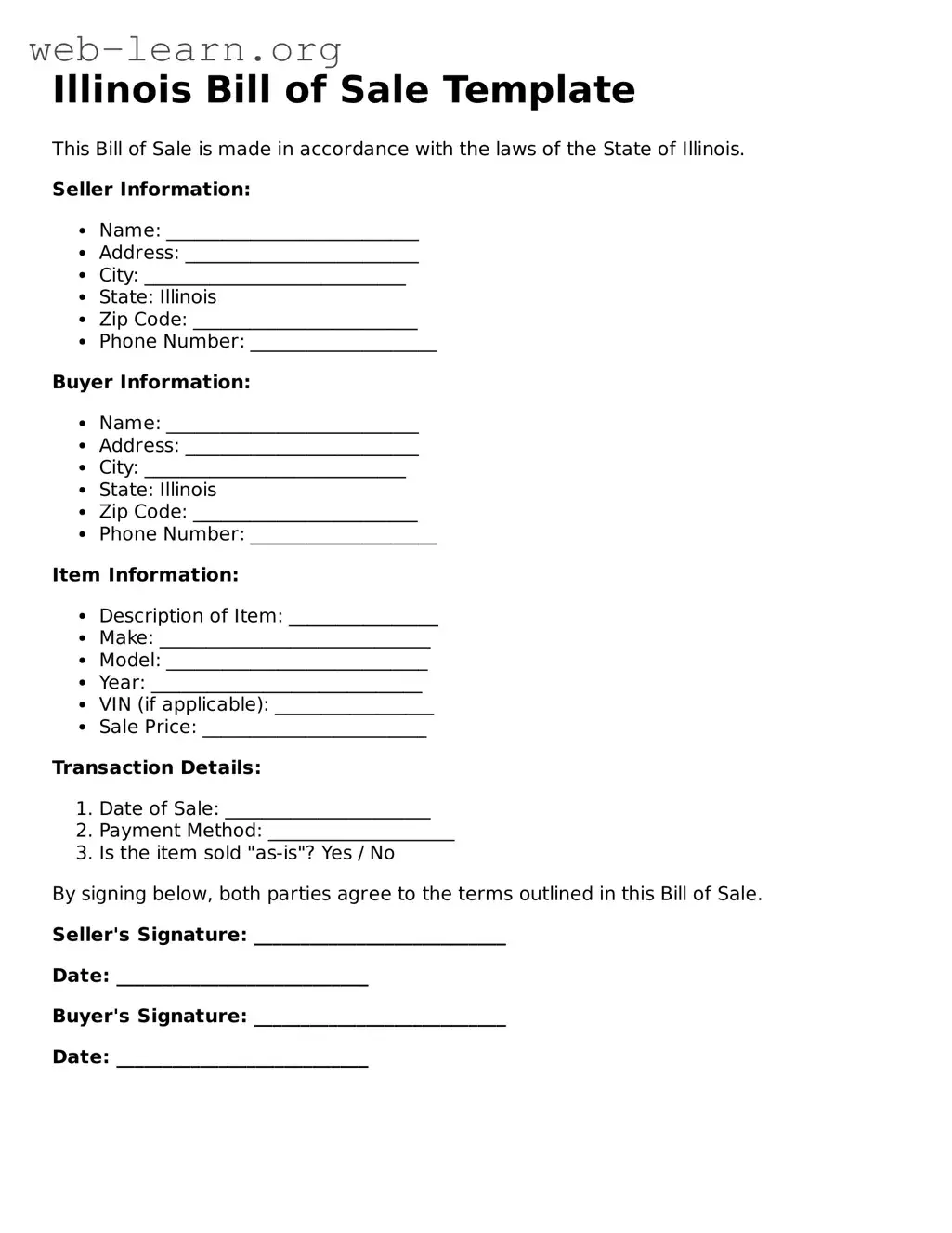
The Illinois Bill of Sale form is an essential document for anyone involved in the sale or transfer of personal property in the state. This form serves as a legal record of the transaction, providing both the buyer and seller with important details about the sale. Key aspects of the form include the names and addresses of both parties, a description of the item being sold, the sale price, and the date of the transaction. It's important to note that this document can be used for various types of property, including vehicles, furniture, and equipment. Additionally, the form may include warranties or disclaimers, which clarify the condition of the item and any responsibilities of the seller. By utilizing the Illinois Bill of Sale form, individuals can ensure that their transaction is documented clearly and legally, helping to protect their rights and interests in the process.
Illinois Bill of Sale Template
This Bill of Sale is made in accordance with the laws of the State of Illinois.
Seller Information:
Buyer Information:
Item Information:
Transaction Details:
By signing below, both parties agree to the terms outlined in this Bill of Sale.
Seller's Signature: ___________________________
Date: ___________________________
Buyer's Signature: ___________________________
Date: ___________________________
| Fact Name | Description |
|---|---|
| Purpose | The Illinois Bill of Sale form is used to document the sale of personal property between a buyer and a seller. |
| Governing Law | The form is governed by the Illinois Uniform Commercial Code (UCC). |
| Property Types | This form can be used for various types of personal property, including vehicles, equipment, and other tangible items. |
| Notarization | While notarization is not always required, it is recommended for added legal protection. |
| Identification | Both parties must provide identification, typically a driver's license or state ID, to validate the transaction. |
| Purchase Price | The form requires the purchase price to be clearly stated to avoid disputes. |
| As-Is Condition | Buyers should be aware that the sale is often made on an "as-is" basis unless otherwise stated. |
| Transfer of Ownership | Ownership of the property is transferred upon the signing of the Bill of Sale by both parties. |
| Record Keeping | It is advisable for both the buyer and seller to keep a copy of the completed Bill of Sale for their records. |
| Legal Recourse | In case of disputes, the Bill of Sale can serve as evidence in legal proceedings. |
Filling out the Illinois Bill of Sale form is an important step in documenting the transfer of ownership for a vehicle or personal property. Once you have completed the form, ensure that both parties retain a copy for their records. This will help protect your interests and provide proof of the transaction.
An Illinois Bill of Sale is a legal document that serves as proof of the transfer of ownership of personal property from one party to another. It is commonly used for transactions involving vehicles, boats, and other tangible goods. The document includes essential details about the item being sold, the buyer, and the seller.
A Bill of Sale is necessary in various situations, particularly when selling or buying items such as vehicles, trailers, or boats. It is also useful for transactions involving high-value personal property, like electronics or furniture, to provide a record of the sale and protect both parties in case of disputes.
The following information is typically included in a Bill of Sale:
Yes, a Bill of Sale is often required when registering a vehicle in Illinois. The document serves as proof of ownership and is necessary for the buyer to obtain a title in their name. It is advisable to keep a copy for personal records as well.
Yes, individuals can create their own Bill of Sale. However, it is important to ensure that all required information is included and that the document is clear and accurate. Templates are also available online, which can simplify the process.
In Illinois, notarization is not typically required for a Bill of Sale. However, having the document notarized can provide an additional layer of authenticity and may be beneficial in case of disputes.
If you lose your Bill of Sale, it is advisable to contact the seller to request a duplicate. If that is not possible, you may need to provide other forms of proof of ownership, such as receipts or photographs of the item.
Absolutely. A Bill of Sale can be used for a wide range of personal property transactions, including but not limited to electronics, furniture, and recreational equipment. It serves as a useful record for any significant purchase or sale.
Filling out the Illinois Bill of Sale form can seem straightforward, but many individuals make common mistakes that can lead to complications later. One frequent error is omitting essential information. Buyers and sellers must include details such as the vehicle identification number (VIN), make, model, and year of the vehicle. Missing any of this information can create confusion and may render the document invalid.
Another common mistake involves incorrect dates. It is crucial to ensure that the date of the sale is accurately recorded. If the date is wrong, it could lead to issues with registration or even disputes regarding the sale. Always double-check the date before finalizing the document.
People often overlook the need for signatures. Both the buyer and the seller must sign the Bill of Sale for it to be legally binding. Failing to obtain one or both signatures can lead to disputes about the transaction. It's advisable to have both parties present when signing to avoid any misunderstandings.
Inaccurate descriptions of the item being sold is another pitfall. A vague or incomplete description can lead to problems later, especially if there are disputes about what was sold. Providing a detailed description helps protect both parties and clarifies the terms of the sale.
Many individuals forget to include the sale price. This is a critical component of the Bill of Sale, as it establishes the value of the transaction. Leaving this blank can create complications when it comes to taxes or title transfers.
Additionally, some people neglect to check for any liens or outstanding debts on the vehicle. If a vehicle has a lien, the seller may not have the legal right to sell it. Buyers should always verify that the title is clear before completing the transaction.
Another mistake involves failing to provide contact information. Both parties should include their names, addresses, and phone numbers on the Bill of Sale. This information is vital for future communication or if any issues arise after the sale.
Relying solely on a verbal agreement is a common error. Even if both parties trust each other, it is essential to have a written record of the transaction. A Bill of Sale serves as proof of the agreement and can protect both parties in case of future disputes.
Lastly, people often forget to make copies of the completed Bill of Sale. After signing, both parties should keep a copy for their records. This document may be needed for future reference, especially during vehicle registration or if any legal issues arise.
When completing a transaction in Illinois, especially when it involves the sale of a vehicle or personal property, several other documents may accompany the Illinois Bill of Sale form. These documents help ensure that the sale is clear, legal, and provides protection for both the buyer and the seller. Below is a list of commonly used forms and documents.
Using these forms alongside the Illinois Bill of Sale can help facilitate a smooth transaction. Each document plays a crucial role in protecting the interests of both parties and ensuring compliance with state laws.
A Bill of Sale is a document that serves as proof of a transaction, typically involving the transfer of ownership of personal property. There are several other documents that share similarities with a Bill of Sale. Each of these documents serves a specific purpose but can often be used in similar contexts. Here are five documents that are comparable to a Bill of Sale:
Understanding these documents can help individuals navigate transactions more effectively, ensuring that their rights and responsibilities are clearly defined and protected.
When filling out the Illinois Bill of Sale form, it’s important to follow certain guidelines to ensure the document is valid and serves its purpose effectively. Here are some dos and don’ts to keep in mind:
By following these guidelines, you can create a clear and effective Bill of Sale that protects both parties involved in the transaction.
Below are seven common misconceptions regarding the Illinois Bill of Sale form, along with clarifications for each.
Many people believe that a Bill of Sale is merely a receipt. In fact, it serves as a legally binding agreement between the buyer and seller, confirming the transfer of ownership of the item.
While often associated with vehicles, a Bill of Sale can be used for various types of transactions, including the sale of personal property, electronics, and even animals.
Some individuals think that notarization is not necessary for a Bill of Sale. Although it is not always required, having the document notarized can provide additional legal protection and credibility.
While a Bill of Sale can be handwritten, it is essential that it includes all required information. Typed forms are often clearer and more professional, which can help prevent disputes.
Some assume that a Bill of Sale is unnecessary for gifts. However, having a Bill of Sale for a gifted item can clarify ownership and prevent future misunderstandings.
A Bill of Sale is not the same as a title. The title serves as proof of ownership, while the Bill of Sale documents the transaction and transfer of ownership.
Some people think a simple agreement is sufficient. However, a detailed description of the item being sold is crucial to avoid ambiguity and ensure both parties understand what is being transferred.
Filling out and using the Illinois Bill of Sale form is straightforward, but it’s essential to understand a few key points to ensure a smooth transaction. Here are some important takeaways:
Connecticut Dmv Bill of Sale - This document outlines the details of the sale, such as the item description and sale price.
Generic Bill of Sale Template - This form can be a key element in estate planning and asset distribution.
Vehicle Bill of Sale Indiana - This form can be used to document the sale of antiques or collectibles.
Bill Sale Vehicle - Having a Bill of Sale can simplify the process of transferring ownership and ensure all details are documented.