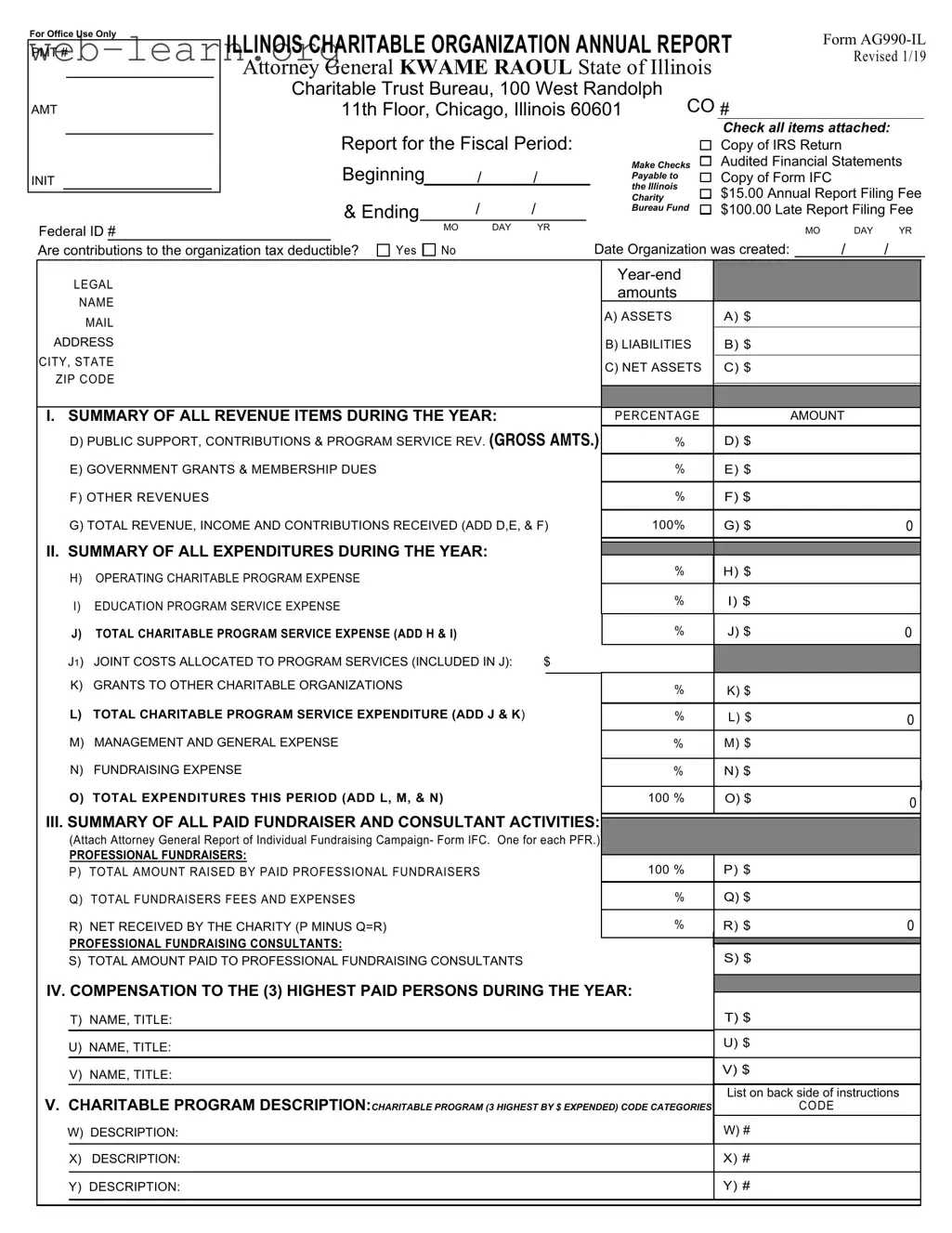
The Illinois AG990 form serves as an essential tool for charitable organizations operating within the state, facilitating transparency and accountability in their financial activities. This annual report is required to be filed with the Illinois Attorney General's Charitable Trust Bureau, providing a comprehensive overview of an organization’s fiscal period. Key components of the AG990 include a summary of revenue and expenditures, detailing various sources of income such as public support, government grants, and other revenues. Additionally, it outlines the organization’s liabilities and net assets, ensuring that stakeholders can assess the financial health of the entity. The form also requires disclosure of compensation for the highest-paid individuals within the organization and details regarding any professional fundraisers or consultants employed. Furthermore, organizations must answer specific questions that probe into their compliance with legal and ethical standards, such as involvement in court actions or financial misconduct. By mandating these disclosures, the AG990 form plays a critical role in safeguarding public trust and ensuring that charitable organizations operate with integrity.

For Office Use Only
PMT #
AMT
INIT
ILLINOIS CHARITABLE ORGANIZATION ANNUAL REPORT |
Form |
|||||||||||||||
|
Revised 1/19 |
|||||||||||||||
Attorney General KWAME RAOUL State of Illinois |
|
|
||||||||||||||
|
|
|
|
|||||||||||||
Charitable Trust Bureau, 100 West Randolph |
|
|
|
|
||||||||||||
11TH Floor, Chicago, Illinois 60601 |
CO # |
|
|
|
||||||||||||
Report for the Fiscal Period: |
|
|
|
|
|
|
Check all items attached: |
|
||||||||
|
|
|
|
|
|
Copy of IRS Return |
|
|
||||||||
|
|
|
|
|
|
|
|
|||||||||
|
|
|
|
|
|
|
|
|||||||||
|
|
|
|
|
|
|
|
|
|
Audited Financial Statements |
||||||
Beginning |
/ |
/ |
|
|
Make Checks |
|
|
|||||||||
|
|
|
||||||||||||||
|
|
Payable to |
|
|
|
Copy of Form IFC |
|
|
||||||||
|
|
|
|
|
|
|
|
|
|
|
|
|
|
|||
|
|
|
|
|
|
|
the Illinois |
|
|
|
$15.00 Annual Report Filing Fee |
|||||
|
|
|
|
|
|
|
|
|
|
|
||||||
& Ending |
/ |
/ |
|
|
Charity |
|
|
|||||||||
|
|
|
||||||||||||||
|
|
Bureau Fund |
|
|
|
|
|
$100.00 Late Report Filing Fee |
||||||||
|
|
|
|
|
|
|
|
|
|
|
|
|
|
|
|
|
|
|
|
|
|
|
|
|
|
|
|
|
|
|
|
|
|
Federal ID # |
|
|
MO |
DAY |
YR |
|
|
MO |
DAY |
YR |
|
||||||
|
|
|
|
|
|
|
|
|
|
||||||||
|
|
|
|
|
|
|
|
|
|
Date Organization was created: |
/ |
/ |
|
||||
Are contributions to the organization tax deductible? |
|
Yes |
|
No |
|
|
|
||||||||||
|
|
|
|
|
|
|
|
|
|
|
|
|
|
|
|
|
|
|
LEGAL |
|
|
|
|
|
|
|
|
|
|
|
|
||||
|
|
|
|
|
|
|
|
amounts |
|
|
|
|
|
||||
|
NAME |
|
|
|
|
|
|
|
|
|
|
|
|
||||
|
|
|
|
|
|
|
|
A) ASSETS |
A) $ |
|
|
|
|||||
|
|
|
|
|
|
|
|
|
|
|
|||||||
|
|
|
|
|
|
|
|
|
|
|
|||||||
|
|
|
|
|
|
|
|
|
|
|
|
|
|
||||
ADDRESS |
|
|
|
|
|
|
|
B) LIABILITIES |
B) $ |
|
|
|
|||||
CITY, STATE |
|
|
|
|
|
|
|
|
|
|
|
|
|
||||
|
|
|
|
|
|
|
C) NET ASSETS |
C) $ |
|
|
|
||||||
ZIP CODE |
|
|
|
|
|
|
|
|
|
|
|||||||
|
|
|
|
|
|
|
|
|
|
|
|
|
|||||
|
|
|
|
|
|
|
|
|
|
|
|
|
|||||
|
|
|
|
|
|
|
|
|
|
|
|
|
|
|
|
|
|
I. SUMMARY OF ALL REVENUE ITEMS DURING THE YEAR: |
|
|
|
PERCENTAGE |
AMOUNT |
|
|
||||||||||
|
D) PUBLIC SUPPORT, CONTRIBUTIONS & PROGRAM SERVICE REV. (GROSS AMTS.) |
% |
D) $ |
|
|
|
|||||||||||
|
|
|
|
|
|
|
|
|
|
|
|
|
|
|
|
|
|
|
E) GOVERNMENT GRANTS & MEMBERSHIP DUES |
|
|
|
|
|
|
|
% |
E) $ |
|
|
|
||||
|
|
|
|
|
|
|
|
|
|
|
|
|
|
|
|
|
|
|
F) OTHER REVENUES |
|
|
|
|
|
|
|
% |
F) $ |
|
|
|
||||
|
|
|
|
|
|
|
|
|
|
|
|
|
|||||
|
G) TOTAL REVENUE, INCOME AND CONTRIBUTIONS RECEIVED (ADD D,E, & F) |
100% |
G) $ |
|
0 |
|
|||||||||||
II. SUMMARY OF ALL EXPENDITURES DURING THE YEAR: |
|
|
|
|
|
|
|
|
|
|
|||||||
|
|
|
|
|
|
|
|
|
|
||||||||
|
H) OPERATING CHARITABLE PROGRAM EXPENSE |
|
|
|
|
|
|
|
% |
H) $ |
|
|
|
||||
|
|
|
|
|
|
|
|
|
|
|
|
|
|
||||
|
I) EDUCATION PROGRAM SERVICE EXPENSE |
|
|
|
|
|
|
|
% |
I) $ |
|
|
|
||||
|
|
|
|
|
|
|
|
|
|
|
|
|
|
||||
|
J) TOTAL CHARITABLE PROGRAM SERVICE EXPENSE (ADD H & I) |
|
|
|
|
% |
J) $ |
|
0 |
|
|||||||
J1) JOINT COSTS ALLOCATED TO PROGRAM SERVICES (INCLUDED IN J): |
$ |
|
|
|
|
|
|
|
|||||||||
|
K) GRANTS TO OTHER CHARITABLE ORGANIZATIONS |
|
|
|
|
% |
K) $ |
|
|
|
|||||||
|
|
|
|
|
|
|
|
|
|
|
|
|
|
|
|||
|
L) TOTAL CHARITABLE PROGRAM SERVICE EXPENDITURE (ADD J & K) |
|
|
|
|
|
|
|
|
|
|||||||
|
|
|
|
% |
L) $ |
|
0 |
|
|||||||||
|
|
|
|
|
|
|
|
|
|
|
|
|
|
||||
|
M) MANAGEMENT AND GENERAL EXPENSE |
|
|
|
|
|
|
|
% |
M) $ |
|
|
|
||||
|
N) FUNDRAISING EXPENSE |
|
|
|
|
|
|
|
|
|
|
|
|
||||
|
|
|
|
|
|
|
|
% |
N) $ |
|
|
|
|||||
|
|
|
|
|
|
|
|
|
|
|
|
|
|
||||
|
|
|
|
|
|
|
|
|
|
|
|
|
|
|
|
|
|
|
O) TOTAL EXPENDITURES THIS PERIOD (ADD L, M, & N) |
|
|
|
|
100 % |
O) $ |
|
0 |
|
|||||||
|
|
|
|
|
|
|
|
|
|
|
|
|
|
|
|
|
|
III. SUMMARY OF ALL PAID FUNDRAISER AND CONSULTANT ACTIVITIES: |
|
|
|
|
|
|
|||||||||||
|
|
|
|
|
|
||||||||||||
|
(Attach Attorney General Report of Individual Fundraising Campaign- Form IFC. One for each PFR.) |
|
|
|
|
|
|
||||||||||
|
PROFESSIONAL FUNDRAISERS: |
|
|
|
|
|
|
|
|
|
|
|
|
|
|||
|
P) TOTAL AMOUNT RAISED BY PAID PROFESSIONAL FUNDRAISERS |
|
|
|
|
100 % |
P) $ |
|
|
|
|||||||
|
|
|
|
|
|
|
|
|
|
|
|
|
|
|
|
|
|
|
Q) TOTAL FUNDRAISERS FEES AND EXPENSES |
|
|
|
|
|
|
|
% |
Q) $ |
|
|
|
||||
|
|
|
|
|
|
|
|
|
|
|
|
|
|
|
|
|
|
|
R) NET RECEIVED BY THE CHARITY (P MINUS Q=R) |
|
|
|
|
|
|
|
% |
R) $ |
|
0 |
|
||||
|
PROFESSIONAL FUNDRAISING CONSULTANTS: |
|
|
|
|
|
|
|
|
|
|
|
|
|
|||
|
|
|
|
|
|
|
|
|
S) $ |
|
|
|
|||||
|
S) TOTAL AMOUNT PAID TO PROFESSIONAL FUNDRAISING CONSULTANTS |
|
|
|
|
|
|
|
|||||||||
IV. COMPENSATION TO THE (3) HIGHEST PAID PERSONS DURING THE YEAR: |
|
|
|
|
|
||||||||||||
|
|
|
|
|
|||||||||||||
T) $ |
|
|
|
||||||||||||||
|
T) NAME, TITLE: |
|
|
|
|
|
|
|
|
|
|
|
|||||
|
|
|
|
|
|
|
|
|
|
|
|
|
|
|
|
|
|
|
U) NAME, TITLE: |
|
|
|
|
|
|
|
|
U) $ |
|
|
|
||||
|
|
|
|
|
|
|
|
|
|
|
|
|
|
||||
|
|
|
|
|
|
|
|
|
|
|
|
|
|
|
|
|
|
|
V) NAME, TITLE: |
|
|
|
|
|
|
|
|
V) $ |
|
|
|
||||
|
|
|
|
|
|
|
|
|
|
|
|
|
|
||||
|
|
|
|
|
|
|
|
|
|
|
|
|
|
|
|
||
V. CHARITABLE PROGRAM DESCRIPTION:CHARITABLE PROGRAM (3 HIGHEST BY $ EXPENDED) CODE CATEGORIES |
List on back side of instructions |
|
|||||||||||||||
|
CODE |
|
|
|
|||||||||||||
W) DESCRIPTION: |
|
|
|
|
|
|
|
|
W) # |
|
|
|
|||||
|
|
|
|
|
|
|
|
|
|
|
|
|
|
|
|
|
|
|
X) DESCRIPTION: |
|
|
|
|
|
|
|
|
X) # |
|
|
|
||||
|
|
|
|
|
|
|
|
|
|
|
|
||||||
|
|
|
|
|
|
|
|
|
|
|
|
|
|
|
|
|
|
|
Y) DESCRIPTION: |
|
|
|
|
|
|
|
|
Y) # |
|
|
|
||||
|
|
|
|
|
|
|
|
|
|
|
|
||||||
|
|
|
|
|
|
|
|
|
|
|
|
|
|
|
|
|
|
|
|
|
|
|
|
|
|
|
|
|
|
|
|
|
|
|
|

IF THE ANSWER TO ANY OF THE FOLLOWING IS YES, ATTACH A DETAILED EXPLANATION: |
YES NO |
1. WAS THE ORGANIZATION THE SUBJECT OF ANY COURT ACTION, FINE, PENALTY OR JUDGMENT? |
1. |
2.HAS THE ORGANIZATION OR A CURRENT DIRECTOR, TRUSTEE, OFFICER OR EMPLOYEE THEREOF, EVER BEEN CONVICTED BY ANY COURT OF ANY MISDEMEANOR INVOLVING THE MISUSE OR
MISAPPROPRIATION OF FUNDS OR ANY FELONY? |
2 |
3.DID THE ORGANIZATION MAKE A GRANT AWARD OR CONTRIBTION TO ANY ORGANIZATION IN WHICH ANY OF ITS OFFICERS, DIRECTORS OR TRUSTEES OWNS AN INTEREST; OR WAS IT A PARTY TO ANY TRANSACTION IN WHICH ANY OF ITS OFFICERS, DIRECTORS OR TRUSTEES HAS A MATERIAL FINANCIAL INTEREST; OR DID
ANY OFFICER, DIRECTOR OR TRUSTEE RECEIVE ANYTHING OF VALUE NOT REPORTED AS COMPENSATION? |
3. |
4. HAS THE ORGANIZATION INVESTED IN ANY CORPORATE STOCK IN WHICH ANY OFFICER, DIRECTOR OR |
|
TRUSTEE OWNS MORE THAN 10% OF THE OUTSTANDING SHARES? |
4. |
5.IS ANY PROPERTY OF THE ORGANIZATION HELD IN THE NAME OF OR COMMINGLED WITH THE
PROPERTY OF ANY OTHER PERSON OR ORGANIZATION? |
|
5. |
|
6. DID THE ORGANIZATION USE THE SERVICES OF A PROFESSIONAL FUNDRAISER? |
( ATTACH FORM IFC ) |
6. |
|
7a. DID THE ORGANIZATION ALLOCATE THE COST OF ANY SOLICITATION, MAILING, ADVERTISEMENT OR |
|
||
LITERATURE COSTS BETWEEN PROGRAM SERVICE AND FUNDRAISING EXPENSES? |
|
7. |
|
|
|
||
7b. IF "YES", ENTER (i) THE AGGREGATE AMOUNT OF THESE JOINT COSTS $ |
;(ii) THE AMOUNT |
||
ALLOCATED TO PROGRAM SERVICES $ |
; (iii) THE AMOUNT ALLOCATED TO MANAGEMENT |
||
AND GENERAL $ |
;AND (iv) THE AMOUNT ALLOCATED TO FUNDRAISING $ |
|
|
8. DID THE ORGANIZATION EXPEND ITS RESTRICTED FUNDS FOR PURPOSES OTHER THAN RESTRICTED |
|
||
PURPOSES? |
|
|
8. |
|
|
|
|
9. HAS THE ORGANIZATION EVER BEEN REFUSED REGISTRATION OR HAD ITS REGISTRATION OR TAX EXEMPTION |
|
||
SUSPENDED OR REVOKED BY ANY GOVERNMENTAL AGENCY? |
|
9. |
|
10. WAS THERE OR DO YOU HAVE ANY KNOWLEDGE OF ANY KICKBACK, BRIBE, OR ANY THEFT, DEFALCATION, |
|
||
MISAPPROPRIATION, COMMINGLING OR MISUSE OF ORGANIZATIONAL FUNDS? |
|
10. |
|
11.LIST THE NAME AND ADDRESS OF THE FINANCIAL INSTITUTIONS WHERE THE ORGANIZATION MAINTAINS ITS THREE LARGEST ACCOUNTS:
12.NAME AND TELEPHONE NUMBER OF CONTACT PERSON:
ALL ATTACHMENTS MUST ACCOMPANY THIS REPORT - SEE INSTRUCTIONS
UNDER PENALTY OF PERJURY, I (WE) THE UNDERSIGNED DECLARE AND CERTIFY THAT I (WE) HAVE EXAMINED THIS ANNUAL REPORT AND THE ATTACHED DOCUMENTS, INCLUDING ALL THE SCHEDULES AND STATEMENTS, AND THE FACTS THEREIN STATED ARE TRUE AND COMPLETE AND FILED WITH THE ILLINOIS ATTORNEY GENERAL FOR THE PURPOSE OF HAVING THE PEOPLE OF THE STATE OF ILLINOIS RELY THEREUPON. I HEREBY FURTHER AUTHORIZE AND AGREE TO SUBMIT MYSELF AND THE REGISTRANT HEREBY TO THE JURISDICTION OF THE STATE OF ILLINOIS.
BE SURE TO INCLUDE ALL FEES DUE:
1.)REPORTS ARE DUE WITHIN SIX MONTHS OF YOUR FISCAL YEAR END.
2.)FOR FEES DUE SEE INSTRUCTIONS.
3.)REPORTS THAT ARE LATE OR INCOMPLETE ARE SUBJECT TO A $100.00 PENALTY.
PRESIDENT or TRUSTEE (PRINT NAME) |
SIGNATURE |
DATE |
|
|
|
TREASURER or TRUSTEE (PRINT NAME) |
SIGNATURE |
DATE |
PREPARER (PRINT NAME) |
SIGNATURE |
DATE |
| Fact Name | Details |
|---|---|
| Form Title | Illinois Charitable Organization Annual Report (Form AG990-IL) |
| Governing Authority | Illinois Attorney General's Office |
| Filing Fee | $15.00 for timely submissions; $100.00 for late submissions |
| Submission Deadline | Reports are due within six months of the organization’s fiscal year-end |
| Tax Deductibility | The form inquires if contributions to the organization are tax-deductible |
| Financial Reporting | Requires summary of revenue, expenditures, and net assets |
| Professional Fundraisers | Organizations must report activities and fees related to paid professional fundraisers |
| Compensation Disclosure | Requires disclosure of compensation for the three highest-paid individuals |
| Legal Compliance | Organizations must disclose any legal issues or financial misconduct |
| Contact Information | Organizations must provide the name and contact details of a responsible individual |
Filling out the Illinois Ag990 form requires attention to detail and accurate financial reporting. This form is essential for charitable organizations operating in Illinois and must be completed annually. Below are the steps to guide you through the process of filling out the form.
After completing the form, review it for accuracy and ensure that all required documents are attached. Submit the form and any necessary fees to the Illinois Attorney General's office within the specified time frame to avoid penalties.
What is the Illinois Ag990 form?
The Illinois Ag990 form is an annual report that charitable organizations in Illinois are required to file with the Attorney General's office. This form provides a comprehensive overview of the organization’s financial activities, including revenue, expenditures, and details about fundraising efforts.
Who needs to file the Ag990 form?
Any charitable organization operating in Illinois that is registered with the Attorney General must file the Ag990 form. This includes nonprofits that receive tax-deductible contributions and those that engage in fundraising activities.
When is the Ag990 form due?
The Ag990 form must be submitted within six months of the end of the organization’s fiscal year. Organizations should be mindful of this deadline to avoid penalties.
What are the fees associated with filing the Ag990 form?
There is a $15.00 annual report filing fee. If the report is filed late, an additional $100.00 late report filing fee will be incurred. Organizations should ensure that all fees are paid to avoid complications.
What information is required on the Ag990 form?
The form requires various financial details, including:
Are contributions to the organization tax-deductible?
The form asks organizations to indicate whether contributions are tax-deductible. This is an important detail for donors and should be accurately reported.
What happens if the Ag990 form is filed late?
Late submissions are subject to a $100.00 penalty. Additionally, failure to file on time can affect the organization’s standing with the Attorney General’s office and may lead to further complications.
What should organizations do if they have specific legal issues?
If an organization has faced court actions, fines, or any legal issues, they must provide detailed explanations in the form. Transparency is crucial for maintaining trust and compliance.
How can organizations ensure compliance with the Ag990 form requirements?
Organizations should maintain accurate financial records throughout the year. It is advisable to review the form carefully before submission and consult with a legal or financial advisor if there are uncertainties about any part of the filing process.
Filling out the Illinois AG990 form can be a straightforward task, but many people make common mistakes that can lead to delays or penalties. One frequent error is failing to check all items attached to the report. The form requires specific documents, such as the IRS return and financial statements. If these are not included, the submission may be considered incomplete.
Another mistake occurs when organizations do not accurately report their fiscal period. It is essential to provide the correct beginning and ending dates. If these dates are incorrect, it can create confusion about the organization’s financial status. Additionally, some people forget to indicate whether contributions to the organization are tax-deductible. This simple yes or no question is crucial for transparency.
Many individuals overlook the importance of correctly calculating revenue and expenditures. For instance, failing to include all sources of revenue can lead to discrepancies. Each category, such as public support or government grants, should be filled out accurately. Similarly, when detailing expenditures, it is vital to ensure that all expenses are accounted for, including management and fundraising costs.
Another common oversight is neglecting to provide the required information about paid fundraisers and consultants. This section is critical, as it outlines the financial relationship between the charity and any hired professionals. Missing this information can raise red flags during the review process.
Organizations sometimes forget to attach the necessary additional explanations for any "yes" answers in the designated section. If there are any legal issues or financial irregularities, the form requires a detailed explanation. Omitting this can lead to further inquiries from the Attorney General’s office.
Some filers also misinterpret the section on joint costs allocated to program services. If the organization has shared costs between different categories, it must provide accurate figures. Failure to do so can misrepresent the organization’s financial health.
Another frequent error is not providing the names and titles of the three highest-paid individuals. This section is essential for transparency and accountability. Missing this information can lead to questions about compensation practices within the organization.
Additionally, organizations often forget to list their financial institutions. This information is necessary for the Attorney General’s office to verify the organization’s financial activities. Not including it can create unnecessary complications.
Finally, some individuals do not read the instructions thoroughly. Each section of the AG990 form has specific requirements and guidelines. Ignoring these can result in missing information or incorrect submissions, leading to penalties. Careful attention to detail is crucial when completing this important document.
The Illinois AG990 form serves as an essential document for charitable organizations operating within the state. It provides a comprehensive overview of the organization's financial activities over the fiscal year, including revenue, expenditures, and program descriptions. Alongside this form, several other documents may be required to ensure compliance with state regulations. Below is a list of commonly used forms and documents associated with the AG990 form.
These documents collectively support the Illinois AG990 form by providing a clearer picture of the organization’s financial health and governance practices. Properly completing and submitting these forms helps maintain compliance with state regulations and fosters trust with stakeholders.
When filling out the Illinois Ag990 form, it is crucial to adhere to specific guidelines to ensure accuracy and compliance. Here are five important dos and don'ts:
Understanding the Illinois Ag990 form is essential for charitable organizations operating in the state. However, several misconceptions can lead to confusion. Here are four common misconceptions:
This is not true. All charitable organizations, regardless of size, are required to file the Ag990 form if they meet specific criteria set by the Illinois Attorney General's office.
In reality, filing this form is mandatory for organizations that solicit donations in Illinois. Failure to file can result in penalties, including fines and potential loss of charitable status.
While financial information is a significant part of the form, it also requires organizations to disclose operational details, governance, and compliance with legal requirements.
Organizations must file the Ag990 form annually. Any changes in financial status, governance, or operational activities must be reported in the subsequent filings to ensure compliance.
Filling out the Illinois AG990 form is essential for charitable organizations operating in the state. Here are some key takeaways to keep in mind: