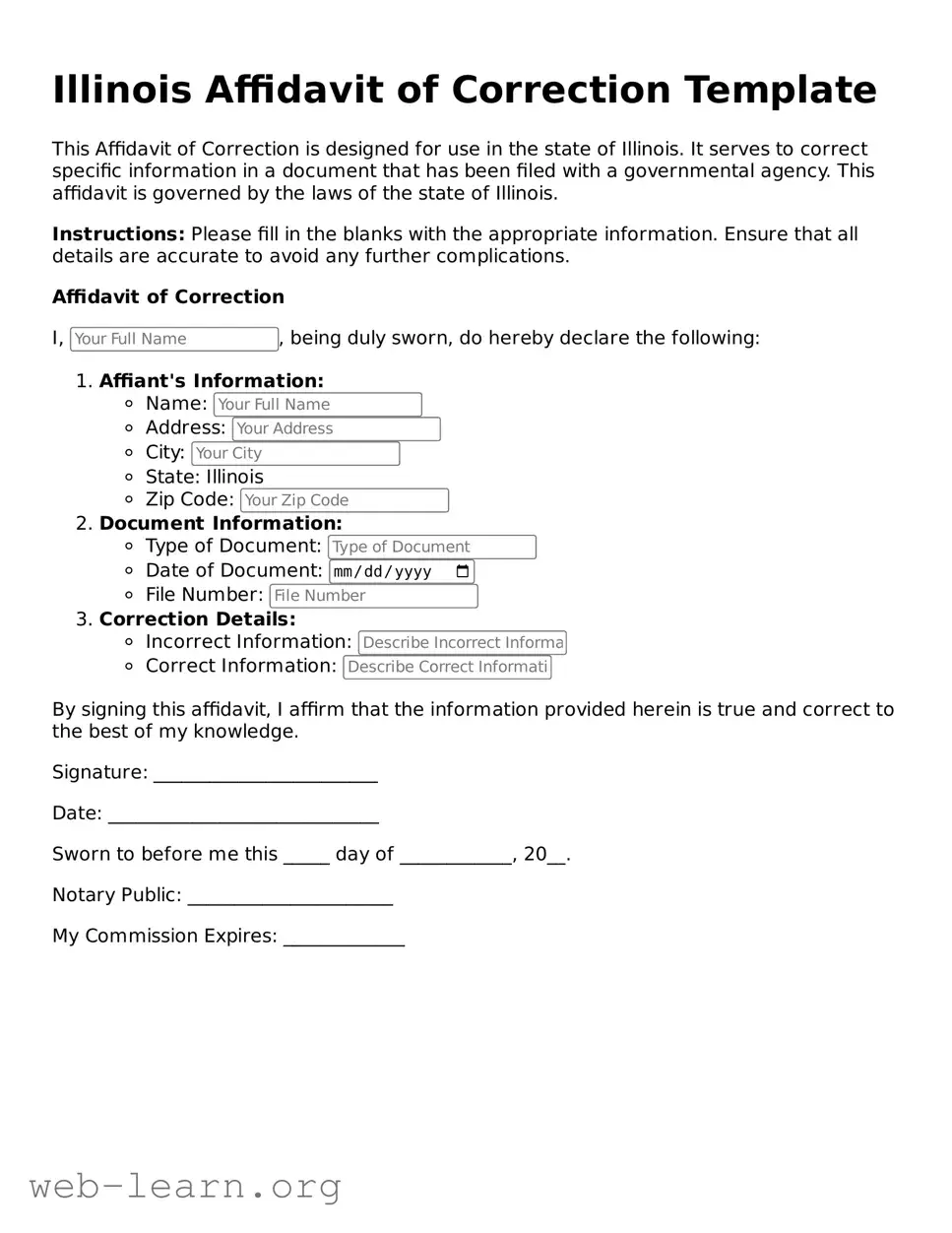
The Illinois Affidavit of Correction form serves a crucial role in addressing and rectifying errors in official documents. This form allows individuals to amend inaccuracies in various types of records, ensuring that the information reflects the true intent of the parties involved. Commonly used for correcting mistakes in property deeds, vital records, and other legal documents, the affidavit must be executed with precision. It requires the signature of the person making the correction, along with necessary details about the original document and the specific errors being corrected. Proper completion of this form is essential to uphold the integrity of public records and to avoid potential legal complications. Understanding the requirements and implications of the Illinois Affidavit of Correction is vital for anyone needing to amend their official documents efficiently and effectively.
Illinois Affidavit of Correction Template
This Affidavit of Correction is designed for use in the state of Illinois. It serves to correct specific information in a document that has been filed with a governmental agency. This affidavit is governed by the laws of the state of Illinois.
Instructions: Please fill in the blanks with the appropriate information. Ensure that all details are accurate to avoid any further complications.
Affidavit of Correction
I, , being duly sworn, do hereby declare the following:
By signing this affidavit, I affirm that the information provided herein is true and correct to the best of my knowledge.
Signature: ________________________
Date: _____________________________
Sworn to before me this _____ day of ____________, 20__.
Notary Public: ______________________
My Commission Expires: _____________
| Fact Name | Description |
|---|---|
| Purpose | The Illinois Affidavit of Correction is used to correct errors in recorded documents, such as deeds or mortgages. |
| Governing Law | This form is governed by the Illinois Compiled Statutes, specifically 765 ILCS 1005. |
| Who Can File | Any party involved in the original document can file the affidavit, including property owners and their representatives. |
| Filing Location | The affidavit must be filed with the county recorder's office where the original document was recorded. |
Once you have your Illinois Affidavit of Correction form ready, it’s important to fill it out accurately. This ensures that any necessary corrections can be processed smoothly. Follow the steps below to complete the form correctly.
What is an Illinois Affidavit of Correction?
An Illinois Affidavit of Correction is a legal document used to correct errors or mistakes in public records. This form is typically utilized when there are inaccuracies in documents such as property deeds, marriage certificates, or other official records. By filing this affidavit, individuals can ensure that the public record reflects the correct information.
Who can file an Affidavit of Correction?
Any individual who is directly affected by the error can file an Affidavit of Correction. This includes property owners, parties to a marriage, or anyone whose name or details are incorrectly recorded in public documents. It is important that the person filing has a legitimate interest in the correction.
What information is required on the form?
The Affidavit of Correction form generally requires the following information:
Where do I file the Affidavit of Correction?
The completed Affidavit of Correction should be filed with the same office that holds the original document. For example, if you are correcting a property deed, you would file it with the county recorder's office. Make sure to check with the specific office for any additional requirements or fees.
Is there a fee to file the Affidavit of Correction?
Yes, there may be a fee associated with filing the Affidavit of Correction. The amount can vary by county and the type of document being corrected. It is advisable to contact the relevant office beforehand to confirm the exact fee and payment methods accepted.
How long does it take for the correction to be processed?
The processing time for an Affidavit of Correction can vary. Typically, it may take a few days to a few weeks, depending on the office's workload and procedures. After submission, it is recommended to follow up with the office to ensure the correction has been made.
Can I make multiple corrections on one affidavit?
Generally, an Affidavit of Correction is intended for a single error or correction. If there are multiple errors, it is advisable to file separate affidavits for each correction to ensure clarity and proper processing.
What happens if the correction is not made?
If the correction is not made, the erroneous information will remain in the public record. This could potentially lead to complications in legal matters, property transactions, or personal identification. It is important to ensure that corrections are filed promptly to avoid any issues.
When completing the Illinois Affidavit of Correction form, individuals often make several common mistakes that can lead to delays or complications. One frequent error is failing to provide all required information. Each section of the form must be filled out completely. Leaving any fields blank can result in the form being rejected or returned for additional information.
Another mistake is not signing the form. A signature is crucial, as it verifies the authenticity of the information provided. Without a signature, the affidavit is incomplete and cannot be processed. Additionally, individuals sometimes forget to date the form. A date is necessary to establish when the correction was made, which can be important for legal purposes.
People also often overlook the importance of accuracy in the details they provide. Misstating names, addresses, or other vital information can create further issues down the line. It is essential to double-check all entries for typos or inaccuracies before submission. In some cases, individuals may use the wrong version of the form. Always ensure that the most current version of the Affidavit of Correction is being used, as outdated forms may not be accepted.
Another common error is neglecting to include supporting documentation. If the correction requires additional proof or context, failing to attach these documents can hinder the process. Furthermore, individuals may not be aware of the filing fee associated with the form. Not including payment, when required, can result in delays or rejection of the affidavit.
Finally, individuals sometimes submit the form without checking the submission guidelines. Each jurisdiction may have specific requirements regarding where and how to file the affidavit. Not adhering to these guidelines can lead to unnecessary complications. By being mindful of these common mistakes, individuals can ensure a smoother process when filing the Illinois Affidavit of Correction.
When dealing with legal documents, it's essential to understand the various forms that may accompany the Illinois Affidavit of Correction. Each of these documents serves a specific purpose and can help clarify or rectify information in official records. Here is a list of other forms that are often used alongside the Affidavit of Correction:
Understanding these forms can significantly ease the process of correcting errors in legal documents. Each form plays a vital role in ensuring that the correction is recognized and accepted by the appropriate authorities. When navigating these processes, it is always wise to seek guidance to ensure accuracy and compliance.
The Affidavit of Correction form is a useful legal document that helps individuals amend or correct errors in official records. Several other documents serve similar purposes, each with its own unique application. Below is a list of nine documents that share similarities with the Affidavit of Correction:
Each of these documents plays a vital role in maintaining accuracy and clarity in legal and official matters. Understanding their functions can help individuals navigate the complexities of correcting records or agreements effectively.
When filling out the Illinois Affidavit of Correction form, it is important to follow specific guidelines to ensure accuracy and compliance. Below is a list of things to do and avoid during this process.
By following these guidelines, individuals can help ensure that their Affidavit of Correction is processed smoothly and efficiently.
The Illinois Affidavit of Correction form is often misunderstood. Here are eight common misconceptions about this document:
Understanding these misconceptions can help ensure that the Illinois Affidavit of Correction is used correctly and effectively.
When using the Illinois Affidavit of Correction form, keep these key points in mind: