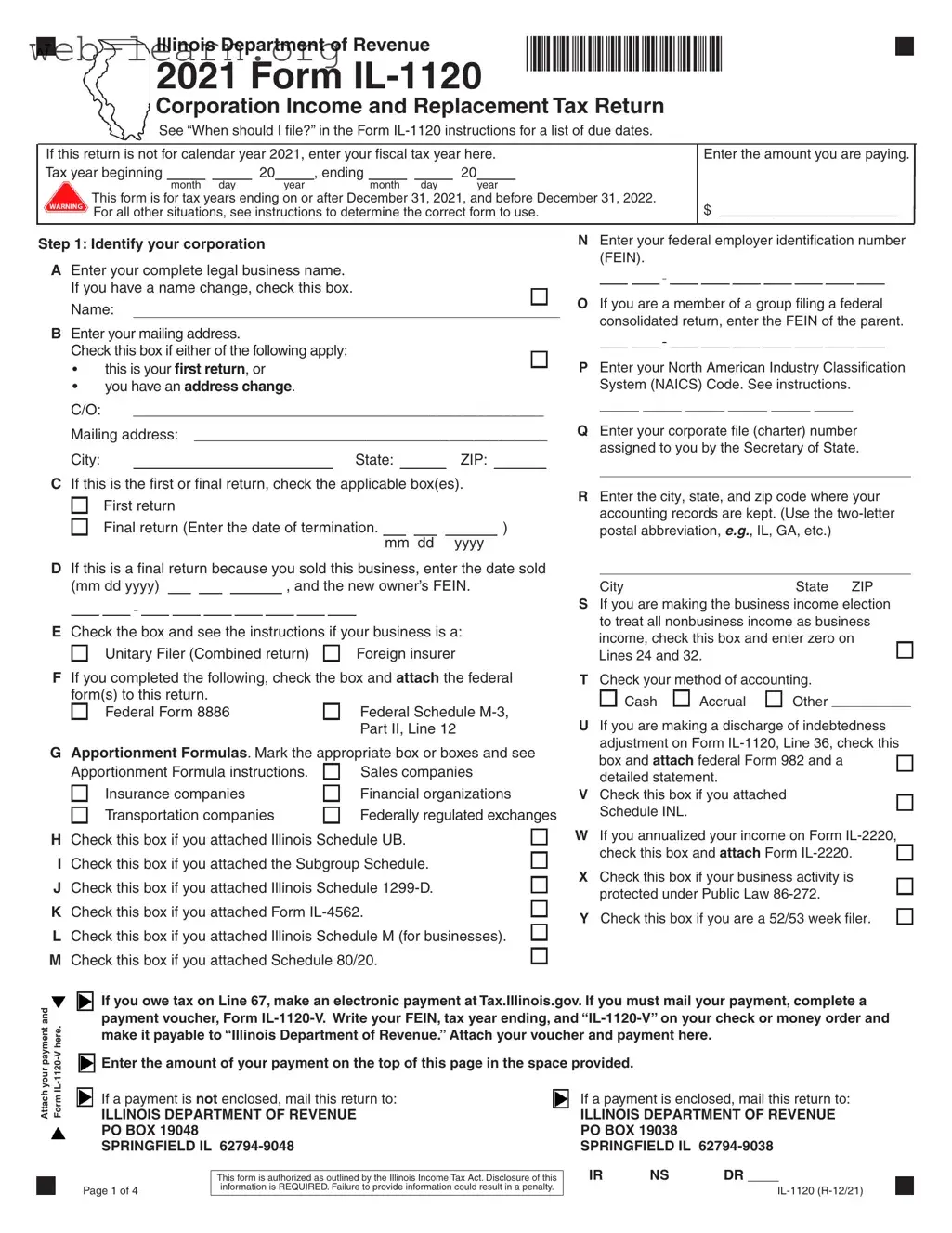
The Illinois 1120 form is a crucial document for corporations operating within the state, serving as the Corporation Income and Replacement Tax Return. This form is specifically designed for tax years ending on or after December 31, 2020, and before December 31, 2021. It requires businesses to report their income, deductions, and tax obligations accurately. Key sections of the form include identifying the corporation, detailing income or loss, and calculating the net income tax and replacement tax after credits. Additionally, corporations must provide information such as their legal business name, federal employer identification number, and accounting records location. The form also addresses various scenarios, like if it’s the first or final return, and includes sections for apportionment formulas and additional schedules that may need to be attached. Understanding the structure and requirements of the Illinois 1120 form is essential for compliance and ensuring that all necessary information is provided to avoid penalties.

Illinois Department of Revenue |
*63512211W* |
|
2021 Form |
|
|
Corporation Income and Replacement Tax Return
See “When should I file?” in the Form
If this return is not for calendar year 2021, enter your fiscal tax year here.
Tax year beginning |
|
|
|
20 |
, ending |
|
|
|
20 |
|
|
|
|
|
|
|
|
|
|
|
|
|
|
|
month day |
|
year |
month day |
|
year |
|||||
This form is for tax years ending on or after December 31, 2021, and before December 31, 2022. For all other situations, see instructions to determine the correct form to use.
Enter the amount you are paying.
$ _______________________
Step 1: Identify your corporation
AEnter your complete legal business name. If you have a name change, check this box.
Name:
BEnter your mailing address.
Check this box if either of the following apply:
•this is your first return, or
•you have an address change.
C/O: |
__________________________________________________ |
|||||
Mailing address: |
___________________________________________ |
|||||
City: |
|
|
State: |
|
ZIP: |
|
CIf this is the first or final return, check the applicable box(es).
First return |
|
|
|
|||
Final return (Enter the date of termination. |
|
|
|
|
|
) |
|
mm dd |
|
yyyy |
|||
DIf this is a final return because you sold this business, enter the date sold
(mm dd yyyy) |
|
|
|
|
|
, and the new owner’s FEIN. |
ECheck the box and see the instructions if your business is a:
Unitary Filer (Combined return) |
Foreign insurer |
FIf you completed the following, check the box and attach the federal
form(s) to this return.
Federal Form 8886 Federal Schedule
GApportionment Formulas. Mark the appropriate box or boxes and see
Apportionment Formula instructions. |
Sales companies |
Insurance companies |
Financial organizations |
Transportation companies |
Federally regulated exchanges |
H Check this box if you attached Illinois Schedule UB.
I Check this box if you attached the Subgroup Schedule.
J Check this box if you attached Illinois Schedule
K Check this box if you attached Form
L Check this box if you attached Illinois Schedule M (for businesses). M Check this box if you attached Schedule 80/20.
NEnter your federal employer identification number (FEIN).
OIf you are a member of a group filing a federal consolidated return, enter the FEIN of the parent.
PEnter your North American Industry Classification System (NAICS) Code. See instructions.
QEnter your corporate file (charter) number assigned to you by the Secretary of State.
REnter the city, state, and zip code where your accounting records are kept. (Use the
City |
State |
ZIP |
SIf you are making the business income election to treat all nonbusiness income as business income, check this box and enter zero on Lines 24 and 32.
TCheck your method of accounting.
Cash Accrual Other
UIf you are making a discharge of indebtedness adjustment on Form
box and attach federal Form 982 and a detailed statement.
VCheck this box if you attached Schedule INL.
WIf you annualized your income on Form
check this box and attach Form
XCheck this box if your business activity is protected under Public Law
Y Check this box if you are a 52/53 week filer.
Attach your payment and Form
If you owe tax on Line 67, make an electronic payment at Tax.Illinois.gov. If you must mail your payment, complete a payment voucher, Form
Enter the amount of your payment on the top of this page in the space provided.
If a payment is not enclosed, mail this return to: |
If a payment is enclosed, mail this return to: |
ILLINOIS DEPARTMENT OF REVENUE |
ILLINOIS DEPARTMENT OF REVENUE |
PO BOX 19048 |
PO BOX 19038 |
SPRINGFIELD IL |
SPRINGFIELD IL |
|
This form is authorized as outlined by the Illinois Income Tax Act. Disclosure of this |
IR |
NS |
DR ____ |
Page 1 of 4 |
information is REQUIRED. Failure to provide information could result in a penalty. |
|
|
|
|
|
|
*63512212W*
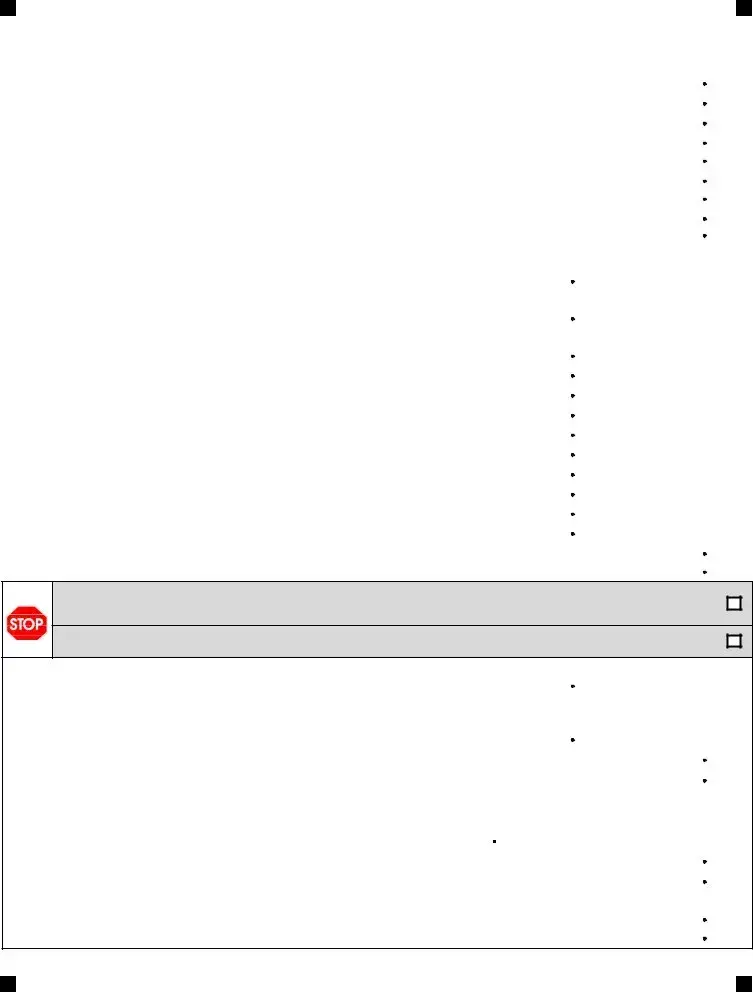
Step 2: Figure your income or loss |
(Whole dollars only) |
1Federal taxable income from U.S. Form 1120, Line 30.
|
Attach a copy of your federal return. |
|
|
1 |
|
00 |
2 |
Net operating loss deduction from U.S. Form 1120, Line 29a. This amount cannot be negative. |
2 |
|
00 |
||
3 |
State, municipal, and other interest income excluded from Line 1. |
|
|
3 |
|
00 |
4 |
Illinois income and replacement tax and surcharge deducted in arriving at Line 1. |
4 |
|
00 |
||
5 |
Illinois Special Depreciation addition. Attach Form |
|
|
5 |
|
00 |
6 |
|
|
6 |
|
00 |
|
7 |
Distributive share of additions. Attach Schedule(s) |
|
|
7 |
|
00 |
8 |
Other additions. Attach Schedule M (for businesses). |
|
|
8 |
|
00 |
9 |
Add Lines 1 through 8. This amount is your income or loss. |
|
|
9 |
|
00 |
|
|
|
|
|
|
|
Step 3: Figure your base income or loss |
|
|
|
|
|
|
10 |
Interest income from U.S. Treasury and other exempt federal obligations. |
10 |
|
00 |
|
|
11River Edge Redevelopment Zone Dividend subtraction.
Attach Schedule |
11 |
|
00 |
12River Edge Redevelopment Zone Interest subtraction.
|
Attach Schedule |
12 |
|
00 |
|
|
13 |
High Impact Business Dividend subtraction. Attach Schedule |
13 |
|
00 |
|
|
14 |
High Impact Business Interest subtraction. Attach Schedule |
14 |
|
00 |
|
|
15 |
Contribution subtraction. Attach Schedule |
15 |
|
00 |
|
|
16 |
Contributions to certain job training projects. See instructions. |
16 |
|
00 |
|
|
17 |
Foreign Dividend subtraction. Attach Schedule J. See instructions. |
17 |
|
00 |
|
|
18 |
Illinois Special Depreciation subtraction. Attach Form |
18 |
|
00 |
|
|
19 |
19 |
|
00 |
|
|
|
20 |
Distributive share of subtractions. Attach Schedule(s) |
20 |
|
00 |
|
|
21 |
Other subtractions. Attach Schedule M (for businesses). |
21 |
|
00 |
|
00 |
22 |
Total subtractions. Add Lines 10 through 21. |
|
22 |
|
||
23 |
Base income or loss. Subtract Line 22 from Line 9. |
|
23 |
|
00 |
|
4
AIf the amount on Line 23 is derived inside Illinois only, check this box and enter the amount from Step 3, Line 23 on Step 5, Line 35. You may not complete Step 4. (You must leave Step 4, Lines 24 through 34 blank.)
If you are a unitary filer, do not check this box. Check the box on Line B and complete Step 4.
B If any portion of the amount on Line 23 is derived outside Illinois, or you are a unitary filer, check this box and complete all lines of Step 4. (Do not leave Lines 28 through 30 blank.) See instructions.
Step 4: Figure your income allocable to Illinois |
(Complete only if you checked the box on Line B, above.) |
||
24 Nonbusiness income or loss. Attach Schedule NB. |
24 |
|
00 |
25Business income or loss included in Line 23 from
|
or estates. See instructions. |
25 |
|
00 |
|
|
|
||
26 |
Add Lines 24 and 25. |
|
26 |
|
|
00 |
|||
27 |
Business income or loss. Subtract Line 26 from Line 23. |
|
27 |
|
00 |
||||
28 |
Total sales everywhere. This amount cannot be negative. |
28 |
|
|
|
|
|
|
|
29 |
Total sales inside Illinois. This amount cannot be negative. |
29 |
|
|
|
|
|
|
|
30 |
Apportionment Factor. Divide Line 29 by Line 28. Round to six decimal places. |
30 |
|
|
|
|
|
|
|
31 |
Business income or loss apportionable to Illinois. Multiply Line 27 by Line 30. |
|
31 |
|
|
00 |
|||
32 |
Nonbusiness income or loss allocable to Illinois. Attach Schedule NB. |
|
32 |
|
|
00 |
|||
33Business income or loss apportionable to Illinois from
included on a Schedule UB, S corporations, trusts, or estates. See instructions. |
33 |
|
00 |
34 Base income or loss allocable to Illinois. Add Lines 31 through 33. |
34 |
|
00 |
Page 2 of 4 |
Printed by the authority of the state of Illinois. Web only, one copy. |

Step 5: Figure your net income
*63512213W*
35Base income or net loss from Step 3, Line 23, or Step 4, Line 34.
36Discharge of indebtedness adjustment. Attach federal Form 982. See instructions.
37Adjusted base income or net loss. Add Lines 35 and 36. See instructions.
38Illinois net loss deduction. If Line 37 is zero or a negative amount, enter zero. Check this box and attach a detailed statement if you have merged losses.
39Net income. Subtract Line 38 from Line 37.
3500
3600
3700
3800
3900
Step 6: Figure your replacement tax after credits
40 |
Replacement tax. Multiply Line 39 by 2.5% (.025). |
40 |
|
00 |
41 |
Recapture of investment credits. Attach Schedule 4255. |
41 |
|
00 |
42 |
Replacement tax before credits. Add Lines 40 and 41. |
42 |
|
00 |
43 |
Investment credits. Attach Form |
43 |
|
00 |
44 |
Replacement tax after credits. Subtract Line 43 from Line 42. If the amount is negative, enter zero. |
44 |
|
00 |
Step 7: Figure your income tax after credits
45 |
Income tax. Multiply Line 39 by 7.0% (.07). |
45 |
|
00 |
|
46 |
Recapture of investment credits. Attach Schedule 4255. |
46 |
|
00 |
|
47 |
Income tax before credits. Add Lines |
45 and 46. |
47 |
|
00 |
48 |
Income tax credits. Attach Schedule |
48 |
|
00 |
|
49 |
Income tax after credits. Subtract Line 48 from Line 47. If the amount is negative, enter zero. |
49 |
|
00 |
|
|
|
|
|
|
|
Step 8: Figure your refund or balance due
50Replacement tax before reductions. Enter the amount from Line 44.
51Foreign Insurer replacement tax reduction. Attach Schedule INS or UB/INS. See instructions.
52Subtract Line 51 from Line 50. This is your net replacement tax.
53Income tax before reductions. Enter the amount from Line 49.
54Foreign Insurer income tax reduction. Attach Schedule INS or UB/INS. See instructions.
55Subtract Line 54 from Line 53. This is your net income tax.
56Compassionate Use of Medical Cannabis Program Act surcharge. See instructions.
57Sale of assets by gaming licensee surcharge. See instructions.
58Total net income and replacement taxes and surcharges. Add Lines 52, 55, 56, and 57.
59Underpayment of estimated tax penalty from Form
60Total taxes, surcharges, and penalty. Add Lines 58 and 59.
61Payments. See instructions.
a |
Credits from previous overpayments. |
61a |
b |
Total payments made before the date this return is filed. |
61b |
c
|
Attach Schedule(s) |
61c |
d |
|
|
|
Attach Schedule(s) |
61d |
e |
Illinois income tax withholding. Attach Form(s) |
61e |
62Total payments. Add Lines 61a through 61e.
63Overpayment. If Line 62 is greater than Line 60, subtract Line 60 from Line 62.
64Amount to be credited forward. See instructions.
Check this box and attach a detailed statement if this carryforward is going to a different FEIN.
65Refund. Subtract Line 64 from Line 63. This is the amount to be refunded.
66Complete to direct deposit your refund.
Routing Number |
|
|
|
|
|
|
|
|
|
|
|
|
Checking or |
|
Savings |
||||
|
|
|
|
|
|
|
|
|
|
|
|||||||||
Account Number |
|
|
|
|
|
|
|
|
|
|
|
|
|
|
|
|
|
|
|
|
|
|
|
|
|
|
|
|
|
|
|
|
|
|
|
|
|
|
|
|
|
|
|
|
|
|
|
|
|
|
|
|
|
|
|
|
|
|
|
5000
5100
5200
5300
5400
5500
5600
5700
5800
5900
6000
00
00
00
00
00
6200
63 00
64 00
6500
67 Tax due. If Line 60 is greater than Line 62, subtract Line 62 from Line 60. This is the amount you owe. |
67 |
|
00 |
|
|
|
|
|
|
Step 9: Sign below - Under penalties of perjury, I state that I have examined this return and, to the best of my knowledge, it is true, correct and complete.
Sign |
|
( |
) |
|
|
Check if the Department |
||
Here |
|
|
may discuss this return with the |
|||||
Signature of authorized officer |
Date (mm/dd/yyyy) Title |
Phone |
paid preparer shown in this step. |
|||||
|
||||||||
Paid |
|
|
|
Check if |
|
||
Print/Type paid preparer’s name |
Paid preparer’s signature |
Date (mm/dd/yyyy) |
Paid Preparer’s PTIN |
||||
Preparer |
|||||||
Firm’s name |
|
Firm’s FEIN |
|
|
|||
Use Only |
|
|
|
||||
|
|
|
|
|
|
||
|
Firm’s address |
|
Firm’s phone |
( |
) |
||
Page 3 of 4 |
Enter the amount of your payment in the space provided on the top of page 1. |

|
|
Attach supporting documents to your Form |
*ZZZZZZZZZ* |
|
|||||||||||||||||||||||||||||
|
|
|
|||||||||||||||||||||||||||||||
|
|
|
|
||||||||||||||||||||||||||||||
If you completed: |
Attach: |
|
|||||||||||||||||||||||||||||||
|
|
|
|
|
Form |
|
|
U.S. 1120, Pages 1 through 6, or equivalent |
|
||||||||||||||||||||||||
|
|
|
|
|
|||||||||||||||||||||||||||||
|
|
|
|
|
Step 1, Line E (unitary) only |
|
|
|
|
|
|
|
|
|
|
|
|
|
Schedule UB/Subgroup Schedule |
|
|||||||||||||
|
|
|
|
|
|
|
|
|
|
|
|
|
|
|
|
|
|||||||||||||||||
|
|
|
|
|
|
|
|
|
|
|
|
|
|
|
|
|
|
|
|
|
|
|
|
|
|
|
|
|
|
|
|
Check the box on Form |
|
|
|
|
|
|
Step 1, Line E (foreign insurer) only |
|
|
|
|
|
|
|
|
|
|
Schedule INS |
|
||||||||||||||||
|
|
|
|
|
|
|
|
|
|
|
|
|
|||||||||||||||||||||
|
|
|
|
|
Step 1, Line E (unitary) and (foreign insurer) |
|
|
|
|
Schedule UB/Subgroup Schedule and Schedule UB/INS |
|
||||||||||||||||||||||
|
|
|
|
|
|||||||||||||||||||||||||||||
|
|
|
|
|
|
|
|
|
|
|
|
|
|
|
|
|
|
|
|
|
|
|
|
|
|
|
|
|
|
|
|
Check the box on Form |
|
|
|
|
|
|
Step 1, Line F |
|
|
|
|
|
|
|
|
|
|
|
|
|
|
|
|
|
|
Federal Form 8886 or Federal Schedule |
|
||||||||
|
|
|
|
|
Step 1, Line U |
|
|
|
|
|
|
|
|
|
|
|
|
|
|
|
|
|
|
Federal Form 982 |
|
||||||||
|
|
|
|
|
|||||||||||||||||||||||||||||
|
|
|
|
|
Step 1, Line V |
|
|
|
|
|
|
|
|
|
|
|
|
|
|
|
|
|
|
Schedule INL |
|
||||||||
|
|
|
|
|
|||||||||||||||||||||||||||||
|
|
|
|
|
Step 1, Line W |
|
|
|
|
|
|
|
|
|
|
|
|
|
|
|
|
|
|
Form |
|
||||||||
|
|
|
|
|
|||||||||||||||||||||||||||||
|
|
|
|
|
Lines 5 and 18 |
|
|
|
|
|
|
|
|
|
|
|
|
|
|
|
|
Form |
|
||||||||||
|
|
|
|
|
|
|
|
|
|
|
|
|
|
|
|
|
|
|
|
|
|||||||||||||
|
|
|
|
|
Special Depreciation addition |
Check the box on Form |
|
||||||||||||||||||||||||||
|
|
|
|
|
Special Depreciation subtraction |
|
|
||||||||||||||||||||||||||
|
|
|
|
|
Lines 6 and 19 |
|
|
|
|
|
|
|
|
|
|
|
|
|
|
|
Schedule 80/20 |
|
|||||||||||
|
|
|
|
|
Check the box on Form |
|
|||||||||||||||||||||||||||
|
|
|
|
|
|
|
|||||||||||||||||||||||||||
|
|
|
|
|
Lines 7 and 20 |
|
|
|
|
|
|
|
|
|
|
|
|
|
|
|
Schedule(s) |
|
|||||||||||
|
|
|
|
|
|
|
|
|
|
|
|
|
|
|
|
|
|
|
|
||||||||||||||
|
|
|
|
|
Distributive share of additions |
|
|
||||||||||||||||||||||||||
|
|
|
|
|
Distributive share of subtractions |
|
|
||||||||||||||||||||||||||
|
|
|
|
|
Lines 8 and 21 |
|
|
|
|
|
|
|
|
|
|
|
|
|
|
|
Schedule M and any required support listed on Schedule M |
|
|||||||||||
|
|
|
|
|
|||||||||||||||||||||||||||||
|
|
|
|
|
Other additions |
Check the box on Form |
|
||||||||||||||||||||||||||
|
|
|
|
|
Other subtractions |
|
|
||||||||||||||||||||||||||
|
|
|
|
|
Lines 11 through 15 |
|
|
|
|
|
|
|
|
|
|
|
|
Schedule |
|
||||||||||||||
|
|
|
|
|
|
|
|
|
|
|
|
|
|
|
|
|
|||||||||||||||||
|
|
|
|
|
River Edge Redevelopment Zone |
|
|||||||||||||||||||||||||||
|
|
|
|
|
Dividend subtraction |
|
|
||||||||||||||||||||||||||
|
|
|
|
|
River Edge Redevelopment Zone |
|
|
||||||||||||||||||||||||||
|
|
|
|
|
Interest subtraction |
|
|
||||||||||||||||||||||||||
|
|
|
|
|
High Impact Business Dividend subtraction |
|
|
||||||||||||||||||||||||||
|
|
|
|
|
High Impact Business Interest subtractions |
|
|
||||||||||||||||||||||||||
|
|
|
|
|
Contributions subtraction |
|
|
||||||||||||||||||||||||||
|
|
|
|
|
Line 17 |
Foreign Dividend Subtraction |
|
|
|
|
|
|
|
|
Illinois Schedule J, and U.S. 1120, Schedule C or equivalent |
|
|||||||||||||||||
|
|
|
|
|
|
|
|
|
|
|
|
|
|||||||||||||||||||||
|
|
|
|
|
Lines 24 and 32 |
|
|
|
|
|
|
|
|
|
|
|
Schedule NB |
|
|||||||||||||||
|
|
|
|
|
|
|
|
|
|
|
|
|
|
|
|
||||||||||||||||||
|
|
|
|
|
Nonbusiness income or loss |
|
|
||||||||||||||||||||||||||
|
|
|
|
|
Nonbusiness income or loss allocable to Illinois |
|
|
||||||||||||||||||||||||||
|
|
|
|
|
Lines 25 and 33 |
|
|
|
|
|
|
|
|
|
|
Schedule(s) |
|
||||||||||||||||
|
|
|
|
|
|
|
|
|
|
|
|
|
|
||||||||||||||||||||
|
|
|
|
|
Business income or loss from |
|
|
||||||||||||||||||||||||||
|
|
|
|
|
partnerships, partnerships included on a Schedule UB, |
|
|
||||||||||||||||||||||||||
|
|
|
|
|
S corporations, trusts, or estates |
|
|
||||||||||||||||||||||||||
|
|
|
|
|
Business income or loss apportionable to Illinois from |
|
|
||||||||||||||||||||||||||
|
|
|
|
|
|
|
|||||||||||||||||||||||||||
|
|
|
|
|
Schedule UB, S corporations, trusts, or estates |
|
|
||||||||||||||||||||||||||
|
|
|
|
|
Line 36 Discharge of indebtedness adjustment |
|
|
|
Federal Form 982 |
|
|||||||||||||||||||||||
|
|
|
|
|
|
|
|
||||||||||||||||||||||||||
|
|
|
|
|
|
|
|
|
|
|
|
|
|
|
|
|
|
|
|
|
|
|
|
|
|
|
|
|
|
|
|
Check the box on Form |
|
|
|
|
|
|
Lines 41 and 46 Recapture of investment credit |
|
|
|
Schedule 4255 |
|
|||||||||||||||||||||||
|
|
|
|
|
|||||||||||||||||||||||||||||
|
|
|
|
|
|
|
|
||||||||||||||||||||||||||
|
|
|
|
|
Line 43 |
Investment credits |
|
|
|
|
|
|
Form |
|
|||||||||||||||||||
|
|
|
|
|
|||||||||||||||||||||||||||||
|
|
|
|
|
|
|
|
|
|
|
|||||||||||||||||||||||
|
|
|
|
|
Line 48 |
Income tax credits |
|
|
|
|
|
|
Schedule |
|
|||||||||||||||||||
|
|
|
|
|
|||||||||||||||||||||||||||||
|
|
|
|
|
|
|
|
|
|
|
|||||||||||||||||||||||
|
|
|
|
|
|
|
|
|
|
|
|
|
|
|
|
|
|
|
|
|
|
|
|
|
|
|
|
|
|
|
|
|
|
|
|
|
|
|
|
|
|
|
|
|
|
|
|
|
|
|
|
|
|
|
|
|
|
|
|
|
|
|
|
|
|
Check the box on Form |
|
|
|
|
|
|
Lines 51 and 54 Foreign Insurer tax reduction |
|
|
|
Schedule INS or Schedule UB/INS (for unitary filers) |
|
|||||||||||||||||||||||
|
|
|
|
|
|
|
|
||||||||||||||||||||||||||
|
|
|
|
|
|
|
|
|
|
|
|
|
|
|
|
|
|
|
|
|
|
|
|
|
|
|
|
|
|
|
|
Check the box on Form |
|
|
|
|
|
|
Line 59 |
Underpayment of estimated tax penalty |
|
|
Form |
|
|||||||||||||||||||||||
|
|
|
|
|
|||||||||||||||||||||||||||||
|
|
|
|
|
|
|
|||||||||||||||||||||||||||
|
|
|
|
|
|
|
|
|
|
|
|
|
|
|
|
|
|
|
|
|
|
|
|
|
|
|
|
|
|
|
|
If you annualized your income on Form |
|
|
|
|
|
|
|
|
|
|
|
|
|
|
|
|
|
|
|
|
|
|
|
|
|
|
|
|
|
|
|
|
|
check the box on Form |
|
|
|
|
|
|
Line 61c |
|
|
All Schedules |
|
||||||||||||||||||||||||
|
|
|
|
|
|
|
|||||||||||||||||||||||||||
|
|
|
|
|
|
to you |
|
||||||||||||||||||||||||||
|
|
|
|
|
Line 61d |
|
|
All Schedules |
|
||||||||||||||||||||||||
|
|
|
|
|
|
|
|||||||||||||||||||||||||||
|
|
|
|
|
|
reported to you |
|
||||||||||||||||||||||||||
|
|
|
|
|
Line 61e Illinois income tax withholding |
|
|
|
|
|
|
|
|
|
|
|
Copies of all Forms |
|
|||||||||||||||
|
|
|
|
|
|
|
|
|
|||||||||||||||||||||||||
**Failure to attach the required documents may result in the disallowance of the corresponding line item.**
Page 4 of 4 |
| Fact Name | Description |
|---|---|
| Purpose of the Form | The Illinois 1120 form is used by corporations to report income and calculate the replacement tax for the state of Illinois. |
| Filing Period | This form is specifically for tax years ending on or after December 31, 2020, and before December 31, 2021. |
| Governing Law | The form is authorized under the Illinois Income Tax Act, which outlines the requirements for corporate income tax in the state. |
| Filing Requirements | Corporations must file the IL-1120 by the due date specified in the instructions, which varies based on the corporation's fiscal year. |
| Payment Instructions | If tax is owed, payments can be made electronically or via mail using Form IL-1120-V, which must accompany the payment. |
Completing the Illinois 1120 form is an important task for corporations operating in the state. This process involves several steps that require attention to detail. It is essential to gather all necessary information and documentation before starting, as this will help ensure a smooth completion of the form.
Once the form is completed, ensure all necessary documentation is attached. Review the instructions for mailing details and payment options if taxes are owed. This careful approach will help avoid potential issues with the Illinois Department of Revenue.
What is the Illinois 1120 Form?
The Illinois 1120 Form is a tax return used by corporations to report income and calculate the replacement tax owed to the state of Illinois. It is specifically for tax years ending on or after December 31, 2020, and before December 31, 2021. Corporations must complete this form to comply with Illinois tax regulations.
Who needs to file the Illinois 1120 Form?
Any corporation operating in Illinois, including those that are unitary filers or foreign insurers, must file the Illinois 1120 Form. Additionally, if a corporation is making a business income election to treat all nonbusiness income as business income, it also needs to complete this form.
When is the Illinois 1120 Form due?
The due date for filing the Illinois 1120 Form typically aligns with the federal tax return due date for corporations. If the corporation operates on a fiscal year, the due date will be the 15th day of the 5th month after the end of the fiscal year. For specific due dates, refer to the instructions provided with the form.
What information is required to complete the Illinois 1120 Form?
To complete the Illinois 1120 Form, corporations must provide:
What happens if I fail to file the Illinois 1120 Form on time?
Failure to file the Illinois 1120 Form by the due date may result in penalties and interest on any unpaid taxes. The Illinois Department of Revenue can impose additional fees for late submissions. It is important to file on time to avoid these financial consequences.
How can I make a payment for the taxes owed on the Illinois 1120 Form?
If there is a tax liability, payments can be made electronically at Tax.Illinois.gov. Alternatively, corporations may mail their payment along with Form IL-1120-V, a payment voucher. The check or money order should be made payable to the "Illinois Department of Revenue" and include the FEIN and tax year ending on the memo line.
Filling out the Illinois 1120 form can be a daunting task, and many make mistakes that could lead to delays or penalties. One common mistake is failing to check the appropriate boxes in Step 1. This section requires you to indicate whether this is your first return or if there have been any changes to your business name or address. Neglecting to do this can cause confusion and may result in processing issues.
Another frequent error occurs when entering financial figures. Some individuals mistakenly enter negative numbers where only positive amounts are allowed. For example, the net operating loss deduction cannot be negative. This error can lead to incorrect calculations and ultimately affect your tax liability. Always double-check your entries to ensure they align with the instructions provided.
In addition, many overlook the importance of attaching necessary documents. If you are required to include federal forms or schedules, failing to attach them can result in the disallowance of deductions or credits. It is crucial to read through the instructions carefully and ensure all required documents are submitted with your return.
Finally, one of the most significant mistakes is not signing the form. Under penalties of perjury, you must declare that the information provided is true and complete. A missing signature can delay the processing of your return and may lead to penalties. Make sure to review your form thoroughly and sign it before submission.
The Illinois 1120 form is a crucial document for corporations operating in the state, but it often requires additional forms and documents to be filed alongside it. Each of these documents serves a specific purpose and ensures that all relevant financial information is accurately reported to the Illinois Department of Revenue. Below is a list of commonly used forms that complement the Illinois 1120.
Filing the Illinois 1120 form accurately requires careful attention to detail, including the proper completion of accompanying documents. Each form plays a vital role in ensuring compliance and avoiding potential penalties. It is essential for corporations to understand the requirements and gather all necessary paperwork before submission.
When filling out the Illinois 1120 form, it is crucial to follow specific guidelines to ensure accuracy and compliance. Here are four essential dos and don'ts to keep in mind:
Filling out the Illinois 1120 form is an essential task for corporations operating in the state. Understanding the key aspects of this form can help ensure compliance and accuracy. Here are ten important takeaways: