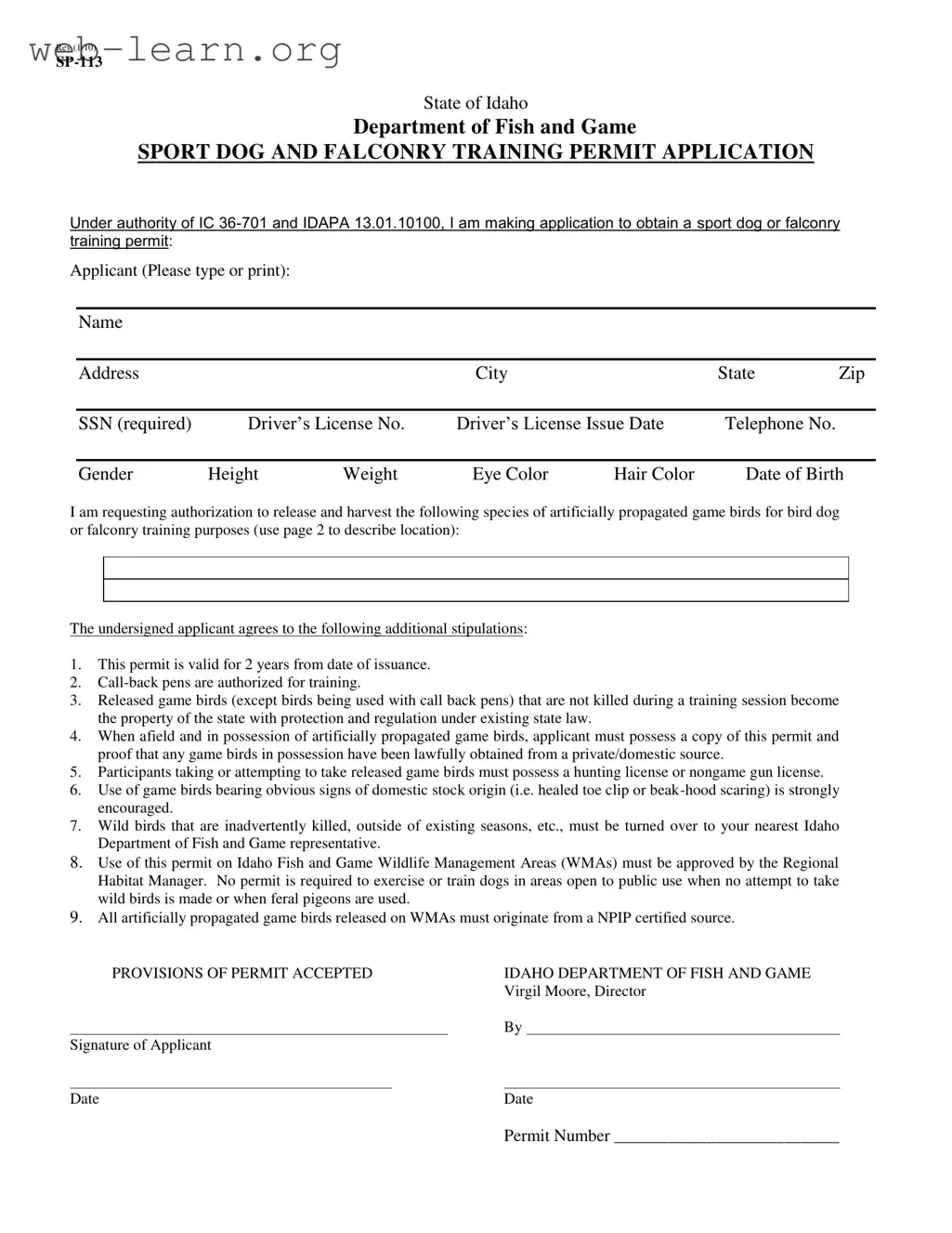
The Idaho SP 113 form is essential for individuals seeking to engage in sport dog or falconry training within the state. This application serves as a permit that allows for the release and harvesting of artificially propagated game birds specifically for training purposes. Applicants must provide personal information, including name, address, and identification details, ensuring compliance with state regulations. The form outlines several stipulations, such as the validity of the permit for two years and the requirement to possess a copy of the permit while in the field. It emphasizes the importance of using game birds from certified sources and includes specific guidelines regarding the handling of released birds and the necessity of holding a hunting license for participants. Additionally, the form requires applicants to describe their intended training locations and periods, allowing for proper management and oversight by the Idaho Department of Fish and Game. This structure aims to promote responsible training practices while safeguarding wildlife resources.
Rev (1/10)
State of Idaho
Department of Fish and Game
SPORT DOG AND FALCONRY TRAINING PERMIT APPLICATION
Under authority of IC
Applicant (Please type or print):
Name
Address |
|
|
City |
|
State |
Zip |
|
|
|
|
|
||
SSN (required) |
Driver’s License No. |
Driver’s License Issue Date |
Telephone No. |
|
||
|
|
|
|
|
|
|
Gender |
Height |
Weight |
Eye Color |
Hair Color |
Date of Birth |
|
I am requesting authorization to release and harvest the following species of artificially propagated game birds for bird dog or falconry training purposes (use page 2 to describe location):
The undersigned applicant agrees to the following additional stipulations:
1.This permit is valid for 2 years from date of issuance.
2.
3.Released game birds (except birds being used with call back pens) that are not killed during a training session become the property of the state with protection and regulation under existing state law.
4.When afield and in possession of artificially propagated game birds, applicant must possess a copy of this permit and proof that any game birds in possession have been lawfully obtained from a private/domestic source.
5.Participants taking or attempting to take released game birds must possess a hunting license or nongame gun license.
6.Use of game birds bearing obvious signs of domestic stock origin (i.e. healed toe clip or
7.Wild birds that are inadvertently killed, outside of existing seasons, etc., must be turned over to your nearest Idaho Department of Fish and Game representative.
8.Use of this permit on Idaho Fish and Game Wildlife Management Areas (WMAs) must be approved by the Regional Habitat Manager. No permit is required to exercise or train dogs in areas open to public use when no attempt to take wild birds is made or when feral pigeons are used.
9.All artificially propagated game birds released on WMAs must originate from a NPIP certified source.
PROVISIONS OF PERMIT ACCEPTED
Signature of Applicant
IDAHO DEPARTMENT OF FISH AND GAME Virgil Moore, Director
By
Date |
Date |
|
Permit Number _____________________________ |
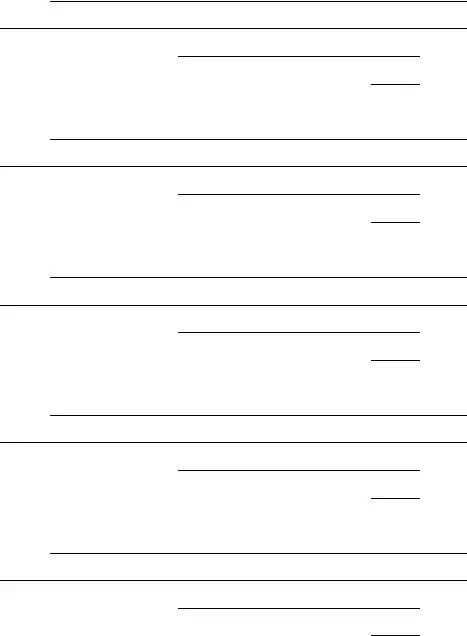
Use this page to describe when and where dog or falconry training will occur. Please list all areas you expect to conduct training. This page may be amended and changes should be sent to the region where the permit was originally issued.
Training Periods:
Location:
Type and # of birds used for training:
Approved by: |
|
Date: |
Training Periods:
Location:
Type and # of birds used for training:
Approved by: |
|
Date: |
Training Periods:
Location:
Type and # of birds used for training:
Approved by: |
|
Date: |
Training Periods:
Location:
Type and # of birds used for training:
Approved by: |
|
Date: |
Training Periods:
Location:
Type and # of birds used for training:
Approved by: |
|
Date: |
2
| Fact Name | Description |
|---|---|
| Purpose | The Idaho SP-113 form is used to apply for a sport dog or falconry training permit. |
| Validity | This permit is valid for two years from the date of issuance. |
| Governing Laws | The form operates under Idaho Code (IC) 36-701 and IDAPA 13.01.10100. |
| Ownership of Released Birds | Released game birds that are not killed during training become property of the state. |
| Training Authorization | Call-back pens are authorized for training under this permit. |
| WMA Approval | Using this permit on Wildlife Management Areas (WMAs) requires approval from the Regional Habitat Manager. |
To apply for a sport dog or falconry training permit in Idaho, you will need to complete the SP 113 form accurately. Once you have filled out the form, submit it to the Idaho Department of Fish and Game for processing. Ensure that you have all necessary information and documentation ready for a smooth application process.
After completing the form, keep a copy for your records and submit it as instructed. Be prepared to provide any additional information if requested by the department.
What is the purpose of the Idaho SP 113 form?
The Idaho SP 113 form is an application for a sport dog or falconry training permit. It allows individuals to legally release and harvest artificially propagated game birds for training purposes. This form is essential for ensuring that training activities comply with state regulations and wildlife management practices.
How long is the permit valid?
The permit is valid for two years from the date of issuance. It is important for applicants to keep track of the expiration date and renew the permit as necessary to continue training activities legally.
What are the requirements for possessing game birds during training?
When in possession of artificially propagated game birds, applicants must carry a copy of the SP 113 permit and proof that the birds were lawfully obtained from a private or domestic source. This ensures compliance with state laws and helps maintain proper wildlife management practices.
Are there any restrictions on the use of the permit in Wildlife Management Areas (WMAs)?
Yes, the use of this permit on Idaho Fish and Game WMAs requires approval from the Regional Habitat Manager. Additionally, all artificially propagated game birds released on WMAs must come from a NPIP certified source.
What should I do if I inadvertently kill a wild bird during training?
If a wild bird is accidentally killed, it must be turned over to the nearest Idaho Department of Fish and Game representative. This measure helps protect wildlife and ensures compliance with existing regulations.
Can I train my dog or falcon without a permit?
A permit is not required to exercise or train dogs in areas open to public use, provided that no attempts are made to take wild birds or feral pigeons. This allows for some flexibility in training while still adhering to legal requirements.
Filling out the Idaho SP 113 form for a sport dog or falconry training permit can be straightforward, yet many applicants make common mistakes that can delay the approval process. Awareness of these pitfalls can help ensure a smoother application experience.
One frequent error is failing to provide complete personal information. The form requires details such as name, address, and Social Security Number. Omitting any of these can lead to immediate rejection. Applicants should double-check that all fields are filled out accurately. It is essential to ensure that the information matches official documents, as discrepancies can cause complications.
Another mistake involves misunderstanding the requirements regarding the species of game birds. Applicants often neglect to specify the types of birds they intend to use for training. This section is crucial, as it informs the authorities about what species will be released and harvested. Providing vague or incomplete descriptions can result in delays or denials.
Many individuals also overlook the importance of the stipulations listed on the form. Ignoring these can lead to non-compliance with state regulations. For instance, failing to acknowledge that released game birds become state property if not killed during training can have serious legal implications. Understanding and agreeing to these stipulations is vital for maintaining compliance.
Another common oversight is neglecting to include proof of lawful acquisition of game birds. The form specifies that applicants must have documentation showing that any birds in their possession have been obtained from a private or domestic source. Without this proof, applicants risk facing penalties or having their permits revoked.
Some applicants mistakenly believe that a hunting license is not necessary when training with released game birds. However, the form clearly states that participants must possess either a hunting license or a nongame gun license. This requirement is crucial for legality and should not be overlooked.
Lastly, applicants often forget to sign and date the form before submission. This simple step is essential, as an unsigned application cannot be processed. Ensuring that all necessary signatures are in place can prevent unnecessary delays in obtaining the permit.
By being mindful of these common mistakes, applicants can improve their chances of successfully obtaining the Idaho SP 113 permit. Taking the time to carefully review each section of the form can lead to a smoother application process and ultimately enhance the experience of training with sport dogs or falconry.
The Idaho Sp 113 form is essential for obtaining a sport dog or falconry training permit. When applying for this permit, several other forms and documents may also be necessary to ensure compliance with state regulations. Below is a list of commonly used documents that complement the Idaho Sp 113 form.
Having these documents ready can streamline the application process and help ensure that all regulations are met. Always check with the Idaho Department of Fish and Game for any updates or additional requirements related to your permit application.
The Idaho SP 113 form serves as a permit application for individuals seeking to train sport dogs or engage in falconry. Several other documents share similarities with this form in terms of purpose, structure, and regulatory requirements. Below is a list of ten documents that are comparable to the Idaho SP 113 form:
Each of these documents plays a crucial role in regulating activities related to wildlife and natural resources, ensuring that individuals comply with state laws while promoting responsible practices.
Filling out the Idaho SP 113 form can seem daunting, but following a few simple guidelines can make the process smoother. Here are five things you should and shouldn't do when completing the application.
By following these guidelines, you can navigate the application process more effectively and ensure that your training activities comply with state regulations.
Here are ten common misconceptions about the Idaho SP 113 form, which is used for obtaining a sport dog and falconry training permit:
Filling out the Idaho SP 113 form for a sport dog or falconry training permit is an important step for enthusiasts in the state. Here are some key takeaways to help you navigate the process effectively:
By keeping these points in mind, you can ensure a smoother application process and a successful training experience. Time is of the essence, so don’t delay in preparing your application!