Homepage Attorney-Approved Real Estate Purchase Agreement Template Attorney-Approved Real Estate Purchase Agreement Document for the State of Idaho
Outline

The Idaho Real Estate Purchase Agreement form serves as a crucial document in the process of buying or selling property in Idaho. This form outlines the terms and conditions agreed upon by the buyer and seller, ensuring clarity and mutual understanding. Key components include the purchase price, earnest money deposit, and the timeline for closing the transaction. Additionally, the agreement addresses contingencies, such as inspections and financing, which protect both parties' interests. It also specifies the legal description of the property, along with any included fixtures or personal property. By detailing responsibilities and obligations, this form plays an essential role in facilitating a smooth real estate transaction, helping to minimize disputes and misunderstandings.

Sample - Idaho Real Estate Purchase Agreement Form

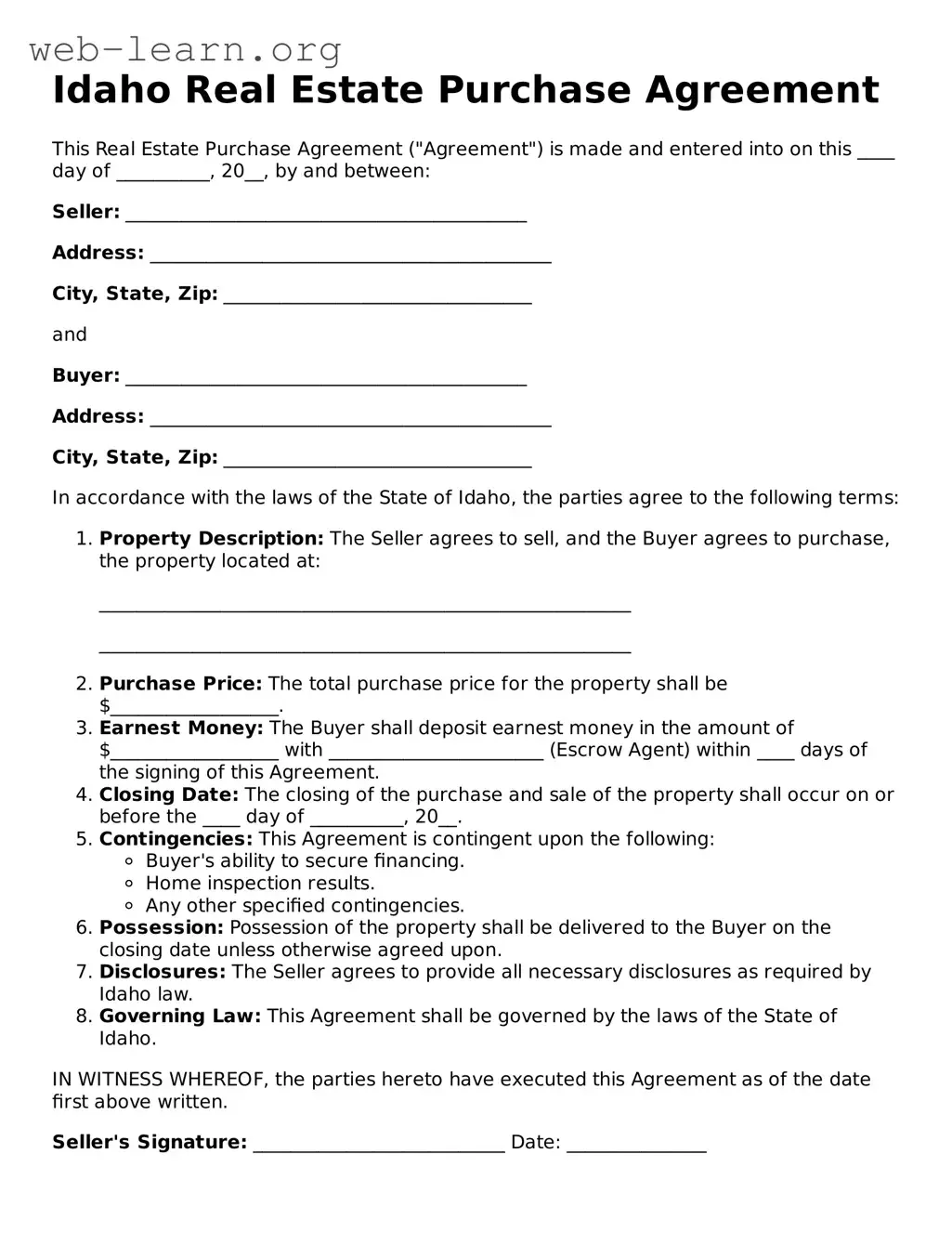
Idaho Real Estate Purchase Agreement

This Real Estate Purchase Agreement ("Agreement") is made and entered into on this ____ day of __________, 20__, by and between:

Seller: ___________________________________________

Address: ___________________________________________

City, State, Zip: _________________________________

and

Buyer: ___________________________________________

Address: ___________________________________________

City, State, Zip: _________________________________

In accordance with the laws of the State of Idaho, the parties agree to the following terms:

  1. Property Description: The Seller agrees to sell, and the Buyer agrees to purchase, the property located at:
  2. _________________________________________________________

    _________________________________________________________

  3. Purchase Price: The total purchase price for the property shall be $__________________.
  4. Earnest Money: The Buyer shall deposit earnest money in the amount of $__________________ with _______________________ (Escrow Agent) within ____ days of the signing of this Agreement.
  5. Closing Date: The closing of the purchase and sale of the property shall occur on or before the ____ day of __________, 20__.
  6. Contingencies: This Agreement is contingent upon the following:
    • Buyer's ability to secure financing.
    • Home inspection results.
    • Any other specified contingencies.
  7. Possession: Possession of the property shall be delivered to the Buyer on the closing date unless otherwise agreed upon.
  8. Disclosures: The Seller agrees to provide all necessary disclosures as required by Idaho law.
  9. Governing Law: This Agreement shall be governed by the laws of the State of Idaho.

IN WITNESS WHEREOF, the parties hereto have executed this Agreement as of the date first above written.

Seller's Signature: ___________________________ Date: _______________

Buyer's Signature: ___________________________ Date: _______________

Witnessed by:

Name: _________________________________________

Signature: _____________________________________ Date: _______________

File Characteristics

Fact Name Description
Governing Law The Idaho Real Estate Purchase Agreement is governed by the laws of the State of Idaho.
Purpose This form is used to outline the terms and conditions under which real estate is bought and sold in Idaho.
Parties Involved The agreement typically involves a buyer and a seller, each of whom must sign the document to make it binding.
Property Description A detailed description of the property being sold, including its address and legal description, is required.
Purchase Price The form specifies the agreed-upon purchase price for the property, which is a critical element of the agreement.
Contingencies Buyers can include contingencies, such as financing or inspection, that must be met for the sale to proceed.
Closing Date The agreement sets a closing date, which is when the ownership of the property is officially transferred.

Detailed Guide for Filling Out Idaho Real Estate Purchase Agreement

Filling out the Idaho Real Estate Purchase Agreement form is a crucial step in the home buying process. This document outlines the terms of the sale, ensuring that both the buyer and seller are on the same page. Once completed, the form will guide you through the next steps of the transaction, including negotiations, inspections, and financing.

  1. Obtain the Form: Start by downloading the Idaho Real Estate Purchase Agreement form from a reliable source or obtaining a hard copy from a real estate office.
  2. Fill in Buyer Information: Enter the full names and contact information of all buyers. Make sure to include any co-buyers.
  3. Fill in Seller Information: Provide the names and contact details of the sellers. This should include all individuals or entities selling the property.
  4. Property Description: Clearly describe the property being sold. Include the address, legal description, and any relevant details that define the property.
  5. Purchase Price: State the agreed-upon purchase price for the property. Be clear and precise to avoid any misunderstandings.
  6. Earnest Money: Specify the amount of earnest money the buyer will provide. This shows good faith and commitment to the purchase.
  7. Closing Date: Indicate the proposed closing date. This is when the transaction will be finalized, and ownership will transfer.
  8. Contingencies: List any contingencies that must be met for the sale to proceed, such as inspections or financing approvals.
  9. Signatures: Ensure that all parties involved sign and date the agreement. This includes both buyers and sellers.
  10. Review the Agreement: Before submitting, review the entire document for accuracy. Ensure that all details are correct and clearly stated.

Obtain Answers on Idaho Real Estate Purchase Agreement

  1. What is the Idaho Real Estate Purchase Agreement form?

    The Idaho Real Estate Purchase Agreement is a legal document that outlines the terms and conditions under which a buyer agrees to purchase real estate from a seller. This form includes essential details such as the purchase price, property description, closing date, and any contingencies that must be met before the sale is finalized.

  2. Who should use the Idaho Real Estate Purchase Agreement?

    This agreement should be used by anyone involved in a real estate transaction in Idaho, including individual buyers and sellers, real estate agents, and brokers. It serves as a formal record of the agreement between parties and helps to protect their interests throughout the transaction process.

  3. What are the key components of the agreement?

    The key components of the Idaho Real Estate Purchase Agreement include:

    • Property description: A detailed description of the property being sold.
    • Purchase price: The agreed-upon price for the property.
    • Earnest money: A deposit made by the buyer to show commitment to the purchase.
    • Contingencies: Conditions that must be met for the sale to proceed, such as financing or inspections.
    • Closing date: The date when the sale will be finalized and ownership transferred.
  4. Can the agreement be modified after it is signed?

    Yes, the Idaho Real Estate Purchase Agreement can be modified after it is signed, but both parties must agree to any changes. Modifications should be documented in writing and signed by both the buyer and seller to ensure that all parties are aware of and agree to the new terms.

  5. What happens if one party does not fulfill their obligations?

    If one party fails to fulfill their obligations under the agreement, the other party may have several options. They can seek to enforce the contract, which may involve legal action. Alternatively, they may negotiate a resolution or seek damages for any losses incurred due to the breach. It is important for both parties to understand their rights and responsibilities to avoid disputes.

Common mistakes

Filling out the Idaho Real Estate Purchase Agreement form can be daunting. Many individuals make mistakes that could have serious consequences. One common error is failing to include all necessary parties in the agreement. If both spouses are buying a property, both names must be on the contract. Omitting a co-buyer can lead to complications down the line.

Another frequent mistake is neglecting to specify the purchase price clearly. This may seem straightforward, but vague language can create confusion. Ensure that the total purchase price is explicitly stated, along with any deposit amounts. Incomplete information can lead to disputes later on.

Additionally, many people overlook the importance of including contingencies. These are conditions that must be met for the sale to proceed. Without proper contingencies, buyers may find themselves locked into a deal that doesn’t work for them. For instance, a buyer might want to include a financing contingency to protect themselves if they cannot secure a mortgage.

Lastly, failing to review the agreement thoroughly before signing is a significant mistake. Rushing through the document can lead to overlooked details, which may have legal implications. It’s crucial to read every section carefully and ensure that all terms are understood. If something seems unclear, seek clarification before proceeding.

Documents used along the form

When engaging in real estate transactions in Idaho, several forms and documents accompany the Real Estate Purchase Agreement. These documents help clarify the terms of the sale, protect the interests of both parties, and ensure compliance with state laws. Below is a list of commonly used forms in conjunction with the purchase agreement.

  • Seller's Disclosure Statement: This document requires the seller to disclose known issues with the property, such as structural problems or pest infestations. It helps buyers make informed decisions.
  • Lead-Based Paint Disclosure: For homes built before 1978, this form informs buyers about the potential risks of lead-based paint. Federal law mandates this disclosure to protect health and safety.
  • Purchase Agreement Addendum: This document modifies or adds specific terms to the original purchase agreement. It can address issues like repairs or contingencies that arise during negotiations.
  • Title Commitment: This report outlines the current status of the property's title, including any liens or encumbrances. It assures the buyer that the title is clear for transfer.
  • Closing Statement: Also known as a HUD-1, this document details all financial aspects of the transaction, including costs, fees, and the final amount due at closing.
  • Home Inspection Report: After a buyer conducts an inspection, this report summarizes the property's condition. It can reveal issues that may need to be addressed before the sale is finalized.
  • Financing Addendum: If the buyer is obtaining a mortgage, this document outlines the terms of the financing. It includes details about interest rates, loan amounts, and any contingencies related to financing.
  • Property Management Agreement: If the buyer intends to rent the property, this agreement outlines the terms under which a property manager will operate on their behalf.

These documents play a vital role in ensuring a smooth transaction process. Each one serves a specific purpose, protecting both the buyer and seller while facilitating a clear understanding of the agreement. Familiarity with these forms can significantly enhance the buying or selling experience in Idaho's real estate market.

Similar forms

The Real Estate Purchase Agreement (REPA) is a crucial document in property transactions. It outlines the terms and conditions of the sale. There are several other documents that share similarities with the REPA, each serving specific purposes in real estate transactions. Here’s a list of nine documents that are comparable to the REPA:

  • Lease Agreement: This document details the terms under which one party agrees to rent property from another. Like the REPA, it includes terms such as duration, payment, and responsibilities of both parties.
  • Option Agreement: This agreement grants a buyer the right to purchase a property at a predetermined price within a specified timeframe. Similar to the REPA, it outlines the purchase terms but focuses on the option to buy rather than an immediate sale.
  • Purchase and Sale Agreement: Often used interchangeably with the REPA, this document also outlines the terms of a property sale. It covers price, contingencies, and closing details, similar to the REPA.
  • Escrow Agreement: This document establishes a neutral third party to hold funds and documents until the transaction is complete. It shares the REPA's goal of ensuring a smooth transaction process.
  • Disclosure Statement: Sellers are often required to provide this document, revealing any known issues with the property. It complements the REPA by ensuring buyers are informed about potential problems before purchase.
  • Title Report: This document provides information about the property’s ownership and any liens or claims against it. It is essential for confirming that the seller has the right to sell, much like the REPA confirms the terms of sale.
  • Deed: The deed transfers ownership from the seller to the buyer. While the REPA outlines the sale terms, the deed finalizes the transfer of property ownership.
  • Financing Agreement: This document outlines the terms of any loans taken out to purchase the property. Like the REPA, it includes details about payments and obligations of the buyer.
  • Home Inspection Agreement: This document allows a buyer to have the property inspected before finalizing the purchase. It ensures that the buyer is aware of the property’s condition, similar to the disclosures made in the REPA.

Each of these documents plays a vital role in the real estate transaction process, ensuring that both buyers and sellers are protected and informed.

Dos and Don'ts

When filling out the Idaho Real Estate Purchase Agreement form, it is essential to approach the task with care and attention to detail. Here are ten important do's and don'ts to consider:

  • Do read the entire agreement thoroughly before starting to fill it out.
  • Don't leave any sections blank; ensure every relevant part is completed.
  • Do use clear and legible handwriting or type the information if possible.
  • Don't use abbreviations or shorthand that may lead to confusion.
  • Do double-check all figures, such as purchase price and deposit amounts.
  • Don't overlook the importance of including all necessary dates, including the closing date.
  • Do consult with a real estate agent or attorney if you have questions.
  • Don't sign the document until you fully understand all terms and conditions.
  • Do keep a copy of the completed agreement for your records.
  • Don't rush the process; take your time to ensure accuracy.

Misconceptions

Understanding the Idaho Real Estate Purchase Agreement (REPA) is crucial for anyone involved in real estate transactions in the state. However, several misconceptions can lead to confusion. Here are nine common misconceptions about the Idaho REPA:

  1. It is a legally binding contract from the moment it is signed. Many believe that signing the REPA immediately creates a binding agreement. In reality, it may depend on additional conditions, such as acceptance by both parties or the fulfillment of contingencies.
  2. All terms are negotiable. While many terms can be negotiated, some aspects of the REPA are standard and may not be easily changed, such as certain legal requirements or state regulations.
  3. The seller must disclose every defect in the property. Sellers are required to disclose known defects, but they are not obligated to disclose issues they are unaware of. This can lead to misunderstandings about the condition of the property.
  4. Once an offer is made, the seller cannot change their mind. A seller can change their mind about accepting an offer until they have formally accepted it and the contract is fully executed.
  5. The REPA covers all aspects of the transaction. The REPA primarily addresses the sale of the property but does not include every detail, such as financing terms or inspection processes, which may require separate agreements.
  6. Real estate agents are responsible for ensuring the contract is fair. While agents can provide guidance, it is ultimately the buyer and seller's responsibility to understand and agree to the terms of the REPA.
  7. It is only necessary for residential transactions. The REPA can be used for various types of real estate transactions, including commercial properties, not just residential ones.
  8. All contingencies must be included in the initial offer. Buyers can add contingencies after the initial offer is made, but this may require further negotiation and agreement from the seller.
  9. The REPA is the same for every transaction. Each REPA can be tailored to fit the specific needs of the buyer and seller, meaning no two agreements are identical.

Understanding these misconceptions can help buyers and sellers navigate the complexities of real estate transactions in Idaho more effectively.

Key takeaways

When filling out and using the Idaho Real Estate Purchase Agreement form, consider the following key takeaways:

  • Understand the Purpose: This agreement outlines the terms of the sale between the buyer and seller. It is essential for protecting both parties' interests.
  • Complete All Sections: Ensure that every section of the form is filled out accurately. Missing information can lead to misunderstandings or legal issues.
  • Include Contingencies: Specify any contingencies, such as financing or inspection requirements. This protects buyers if certain conditions are not met.
  • Consult Professionals: It's wise to consult with a real estate agent or attorney. They can provide valuable guidance and help prevent errors.
  • Signatures Are Essential: Both parties must sign the agreement for it to be legally binding. Ensure that all signatures are dated and clearly written.
  • Keep Copies: After the agreement is signed, make copies for both the buyer and seller. This ensures that everyone has access to the same information.

Following these guidelines will help facilitate a smoother transaction and reduce potential conflicts.