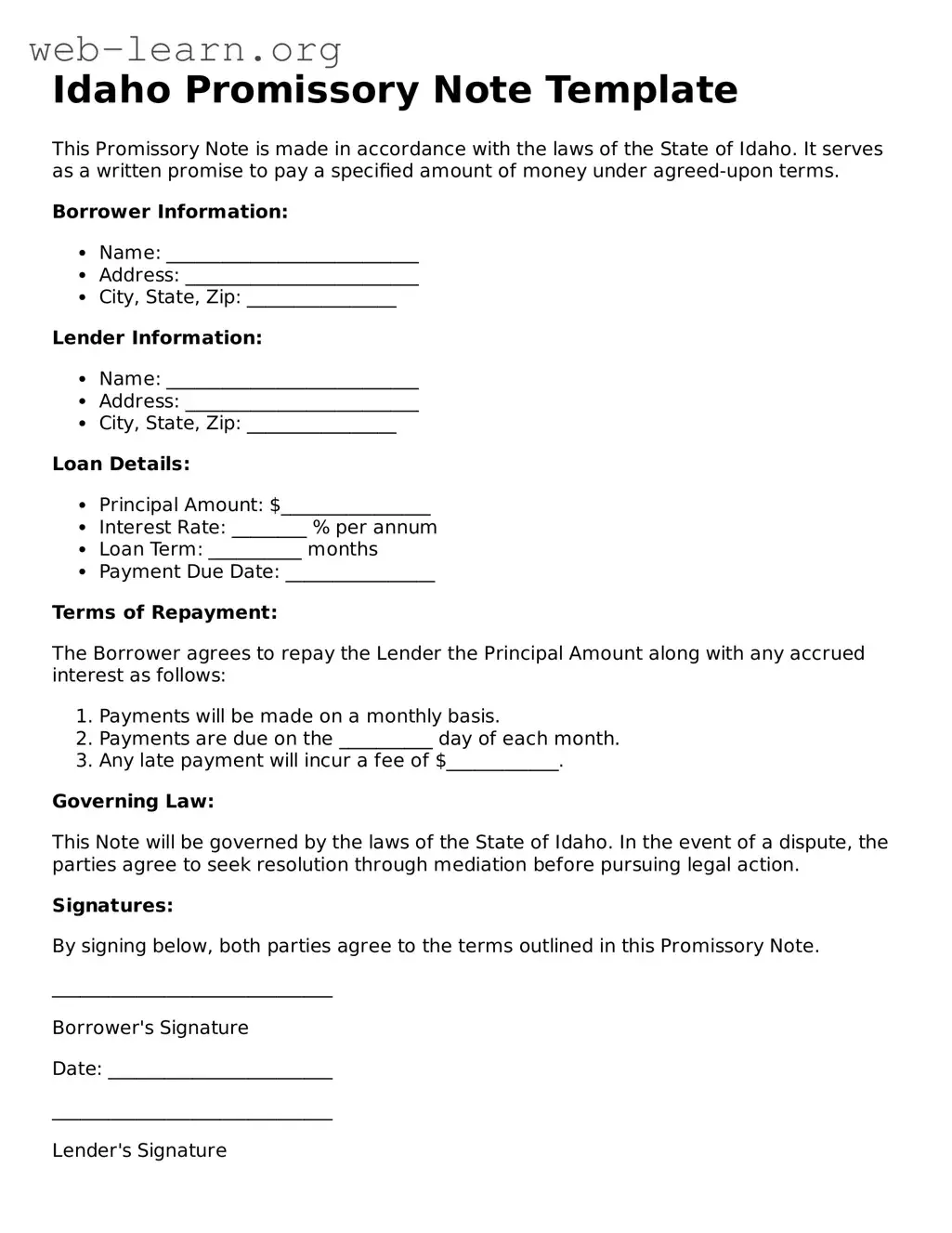
When it comes to borrowing or lending money in Idaho, a Promissory Note serves as a vital tool for both parties involved. This written agreement outlines the borrower's promise to repay the borrowed amount, along with any applicable interest, by a specified date. It includes essential details such as the principal amount, interest rate, payment schedule, and any penalties for late payments. Additionally, the Promissory Note can specify whether the loan is secured or unsecured, providing clarity on what happens in case of default. By clearly laying out these terms, the form helps protect the interests of both the lender and the borrower, fostering a sense of trust and accountability. Understanding the components and importance of the Idaho Promissory Note can help individuals navigate their financial agreements with confidence.
Idaho Promissory Note Template
This Promissory Note is made in accordance with the laws of the State of Idaho. It serves as a written promise to pay a specified amount of money under agreed-upon terms.
Borrower Information:
Lender Information:
Loan Details:
Terms of Repayment:
The Borrower agrees to repay the Lender the Principal Amount along with any accrued interest as follows:
Governing Law:
This Note will be governed by the laws of the State of Idaho. In the event of a dispute, the parties agree to seek resolution through mediation before pursuing legal action.
Signatures:
By signing below, both parties agree to the terms outlined in this Promissory Note.
______________________________
Borrower's Signature
Date: ________________________
______________________________
Lender's Signature
Date: ________________________
| Fact Name | Details |
|---|---|
| Definition | A promissory note is a written promise to pay a specified amount of money to a designated party at a specified time. |
| Governing Law | The Idaho Uniform Commercial Code governs promissory notes in Idaho. |
| Parties Involved | Typically, there are two parties: the maker (borrower) and the payee (lender). |
| Interest Rate | The interest rate can be fixed or variable, and it should be clearly stated in the note. |
| Payment Terms | Payment terms must be clearly defined, including the due date and any installment details. |
| Legal Enforcement | If the borrower defaults, the lender can take legal action to enforce the terms of the note. |
| Notarization | While notarization is not mandatory, it can provide additional legal protection for the parties involved. |
Once you have the Idaho Promissory Note form in front of you, the next step is to fill it out carefully. This document outlines the terms of a loan agreement between the lender and the borrower. By completing this form, both parties can clearly understand their rights and obligations. Follow these steps to ensure you fill out the form correctly.
After completing the form, make copies for both parties. It’s important to keep a record of the signed document for future reference. This ensures that both the borrower and lender have a clear understanding of the agreement made.
What is a Promissory Note?
A promissory note is a written agreement in which one party promises to pay a specified sum of money to another party at a designated time or on demand. This document outlines the terms of the loan, including the amount borrowed, interest rate, payment schedule, and any penalties for late payments.
What is the purpose of the Idaho Promissory Note form?
The Idaho Promissory Note form serves to formalize a loan agreement between a borrower and a lender within the state of Idaho. It provides a clear record of the terms agreed upon by both parties, which can help prevent misunderstandings and disputes in the future.
Who can use the Idaho Promissory Note form?
Any individual or business in Idaho can use the Promissory Note form. This includes personal loans between friends or family members, as well as business loans between companies. Both parties must be legally capable of entering into a contract.
What information is required on the Idaho Promissory Note form?
The form typically requires the following information:
Is notarization required for the Idaho Promissory Note?
No, notarization is not required for a promissory note to be legally binding in Idaho. However, having the document notarized can provide additional legal protection and may be beneficial in case of a dispute.
What happens if the borrower defaults on the loan?
If the borrower fails to make payments as outlined in the promissory note, the lender may take legal action to recover the owed amount. The specific consequences should be clearly stated in the note, including any late fees or penalties.
Can the terms of the Promissory Note be modified?
Yes, the terms of the promissory note can be modified, but any changes must be agreed upon by both the borrower and the lender. It is advisable to document any modifications in writing to avoid potential disputes.
Is there a statute of limitations for enforcing a Promissory Note in Idaho?
Yes, Idaho has a statute of limitations for enforcing a promissory note. Generally, the lender has five years from the date of default to file a lawsuit to recover the debt. It is important for both parties to be aware of this time frame.
Where can I obtain an Idaho Promissory Note form?
The Idaho Promissory Note form can be obtained from various sources, including legal stationery stores, online legal document providers, or through an attorney. Ensure that the form complies with Idaho state laws.
Completing the Idaho Promissory Note form requires careful attention to detail. One common mistake individuals make is failing to include all necessary information. Each section of the form must be filled out completely, including the names of both the borrower and the lender, the loan amount, and the terms of repayment. Omitting any of this information can lead to confusion and potential legal issues.
Another frequent error is not clearly defining the repayment terms. Borrowers should specify the interest rate, payment schedule, and any penalties for late payments. Without these details, the agreement may lack clarity, which could result in disputes down the line.
People often overlook the importance of signatures. Both parties must sign the Promissory Note for it to be legally binding. Failing to secure a signature from either the borrower or the lender can invalidate the agreement, leaving one party vulnerable.
Inaccurate dates can also pose a problem. It is essential to include the correct date on which the note is executed. If the date is missing or incorrect, it may lead to misunderstandings about when the repayment period begins.
Additionally, some individuals forget to include a provision for default. This section should outline what happens if the borrower fails to make payments. Without this clause, the lender may have limited options if the borrower defaults on the loan.
Another mistake involves not keeping copies of the completed form. After signing the Promissory Note, both parties should retain a copy for their records. This ensures that both sides have access to the same information and can refer back to the agreement if needed.
Lastly, individuals may neglect to seek legal advice before finalizing the document. Consulting with a legal professional can provide valuable insights and help avoid potential pitfalls. Having an expert review the Promissory Note can ensure that it meets all legal requirements and adequately protects the interests of both parties.
When dealing with a promissory note in Idaho, several other forms and documents may be used to support the transaction. Each of these documents serves a specific purpose and can help clarify the terms of the agreement between the parties involved. Below is a list of commonly used documents that often accompany the Idaho Promissory Note form.
Each of these documents plays a vital role in ensuring clarity and security in financial transactions. Properly preparing and understanding these forms can help both lenders and borrowers navigate their agreements effectively.
When filling out the Idaho Promissory Note form, there are several important considerations to keep in mind. Below is a list of things you should and shouldn't do to ensure your document is completed correctly.
Things You Should Do:
Things You Shouldn't Do:
By following these guidelines, you can create a clear and effective Promissory Note that serves its intended purpose.
Misconceptions about the Idaho Promissory Note form can lead to confusion for those looking to use it effectively. Here are some common misunderstandings:
Understanding these misconceptions can help individuals navigate the use of promissory notes in Idaho more effectively.
Filling out and using the Idaho Promissory Note form can be straightforward if you keep a few important points in mind. Here are some key takeaways to help you navigate the process:
By following these guidelines, you can effectively fill out and utilize the Idaho Promissory Note form, ensuring a smoother borrowing or lending experience.
New York Promissory Note Requirements - Interest rates on the note can be fixed or variable, depending on the agreement.
Promissory Note Template Florida - The Promissory Note should include the names of both the borrower and the lender for clarity.