The Idaho Lease Agreement form serves as a crucial document in the rental process, establishing the terms and conditions between landlords and tenants. This legally binding contract outlines essential elements such as the duration of the lease, the amount of rent due, and the responsibilities of both parties. It typically includes details about security deposits, maintenance obligations, and the procedures for terminating the lease. Additionally, the form may address specific regulations unique to Idaho, ensuring compliance with state laws. By clearly defining the rights and duties of each party, the Idaho Lease Agreement helps to prevent misunderstandings and disputes, fostering a harmonious landlord-tenant relationship. Whether you are a property owner seeking to rent out your space or a tenant looking for a new home, understanding this form is vital for a smooth leasing experience.
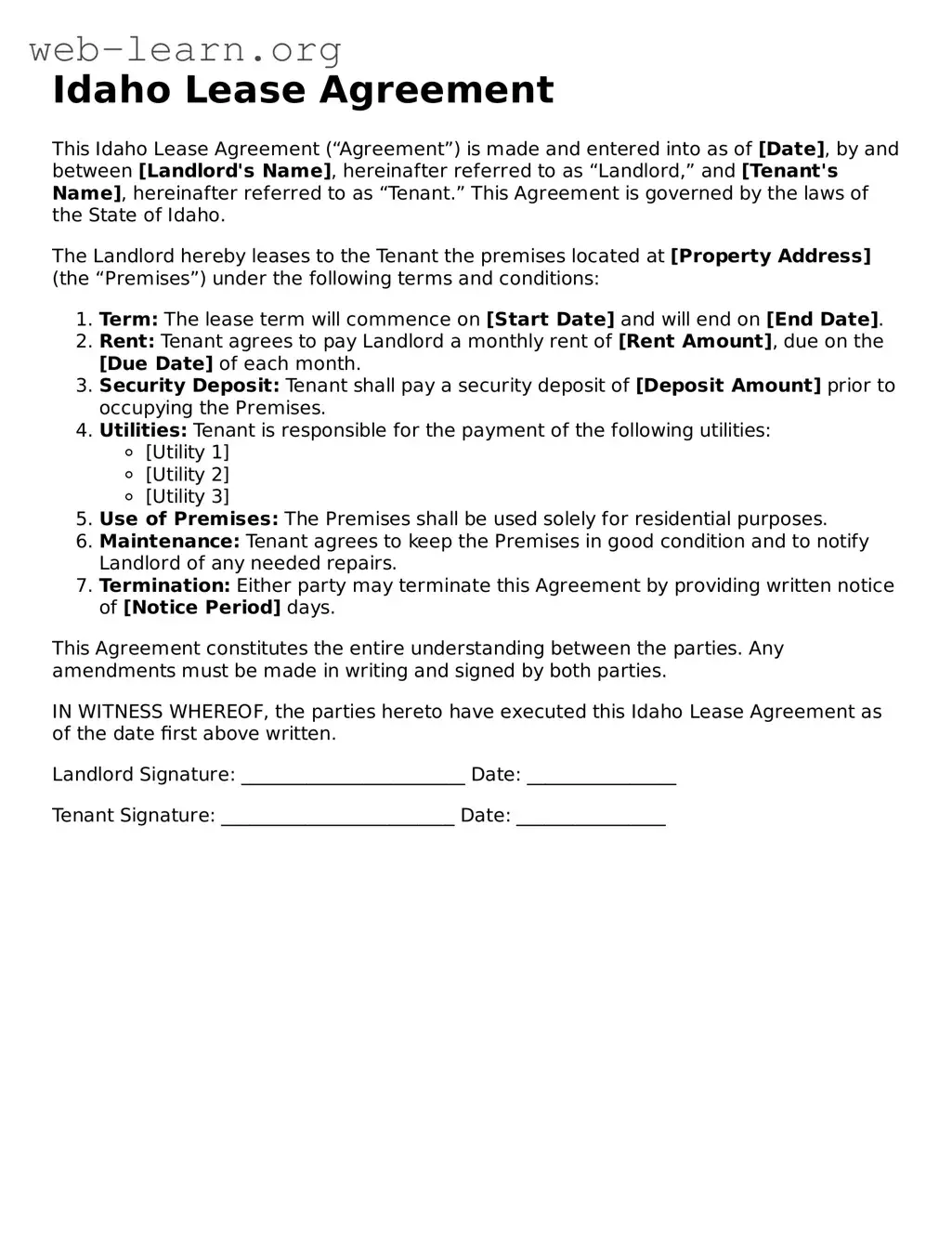
Idaho Lease Agreement
This Idaho Lease Agreement (“Agreement”) is made and entered into as of [Date], by and between [Landlord's Name], hereinafter referred to as “Landlord,” and [Tenant's Name], hereinafter referred to as “Tenant.” This Agreement is governed by the laws of the State of Idaho.
The Landlord hereby leases to the Tenant the premises located at [Property Address] (the “Premises”) under the following terms and conditions:
This Agreement constitutes the entire understanding between the parties. Any amendments must be made in writing and signed by both parties.
IN WITNESS WHEREOF, the parties hereto have executed this Idaho Lease Agreement as of the date first above written.
Landlord Signature: ________________________ Date: ________________
Tenant Signature: _________________________ Date: ________________
| Fact Name | Description |
|---|---|
| Governing Law | The Idaho Lease Agreement is governed by the Idaho Code, Title 55, Chapter 2. |
| Parties Involved | The agreement typically involves a landlord (lessor) and a tenant (lessee). |
| Property Description | The form requires a detailed description of the rental property. |
| Lease Duration | The lease agreement specifies the start and end dates of the tenancy. |
| Rent Amount | The document must clearly state the rental amount and payment due dates. |
| Security Deposit | Idaho law allows landlords to collect a security deposit, which must be outlined in the agreement. |
| Termination Conditions | The lease should include conditions under which either party can terminate the agreement. |
Filling out the Idaho Lease Agreement form is a straightforward process. You will need to provide specific information about the rental property, the landlord, and the tenant. Ensure all details are accurate to avoid any issues later on.
What is an Idaho Lease Agreement?
An Idaho Lease Agreement is a legal document that outlines the terms and conditions under which a property owner (landlord) allows a tenant to occupy a property. This agreement specifies the rights and responsibilities of both parties, including rent payment, duration of the lease, and maintenance obligations.
What should be included in an Idaho Lease Agreement?
Essential elements of an Idaho Lease Agreement typically include:
How long is a typical lease term in Idaho?
Lease terms in Idaho can vary widely. They can be as short as a month-to-month agreement or as long as a year or more. The duration should be clearly stated in the lease agreement to avoid any confusion.
Can a landlord increase rent during the lease term?
Generally, a landlord cannot increase rent during the lease term unless the lease agreement specifically allows for it. If the lease is month-to-month, the landlord must provide proper notice, usually 30 days, before increasing the rent.
What happens if a tenant wants to break the lease early?
If a tenant needs to break the lease early, they may be subject to penalties as outlined in the lease agreement. Common consequences include losing the security deposit or paying rent until a new tenant is found. It is advisable to communicate with the landlord to discuss options.
Is it necessary to have a written lease agreement in Idaho?
While verbal agreements can be legally binding, having a written lease agreement is highly recommended. A written document provides clear terms and protects both the landlord and tenant in case of disputes. It serves as a reference for the agreed-upon conditions.
When filling out the Idaho Lease Agreement form, many individuals overlook critical details that can lead to complications later on. One common mistake is failing to include the full names of all tenants. This omission can create confusion regarding who is legally bound by the lease. It's essential to list every adult who will reside in the rental property, as this establishes clear responsibilities and rights for all parties involved.
Another frequent error is neglecting to specify the lease term. A lease agreement should clearly state the duration of the tenancy, whether it is month-to-month or for a fixed term, such as one year. Without this information, both landlords and tenants may face uncertainty about when the lease begins and ends, potentially leading to disputes.
Many people also forget to outline the rental payment details. This includes the amount due, the due date, and acceptable payment methods. If these terms are not clearly defined, misunderstandings can arise, resulting in late payments or disputes over amounts owed. Clarity in financial obligations is vital for maintaining a positive landlord-tenant relationship.
Another mistake involves not addressing maintenance responsibilities. Tenants and landlords should understand who is responsible for repairs and maintenance of the property. If these responsibilities are left vague or unaddressed, it can lead to frustration and conflict when issues arise. Clearly defining these duties in the lease agreement helps set expectations for both parties.
Finally, many individuals fail to read the lease agreement thoroughly before signing. Rushing through the document can lead to overlooking important clauses that may affect rights and obligations. Taking the time to read and understand every section of the lease is crucial. This practice can prevent future legal complications and ensure that all parties are on the same page.
When entering into a lease agreement in Idaho, various forms and documents may be necessary to ensure a smooth process for both landlords and tenants. These documents help clarify responsibilities, outline terms, and protect the rights of all parties involved. Below is a list of commonly used forms that complement the Idaho Lease Agreement.
Utilizing these documents alongside the Idaho Lease Agreement can help create a transparent and organized rental experience. By clearly defining expectations and responsibilities, both landlords and tenants can foster a positive relationship throughout the lease term.
The Lease Agreement form shares similarities with several other documents commonly used in property management and rental situations. Here’s a list of eight documents that are comparable to a Lease Agreement:
When filling out the Idaho Lease Agreement form, it’s important to follow certain guidelines to ensure accuracy and clarity. Here are five things you should and shouldn't do:
Understanding the Idaho Lease Agreement form is essential for both landlords and tenants. However, several misconceptions can lead to confusion. Here are eight common misunderstandings:
Many people believe that lease agreements are interchangeable. In reality, each lease can vary significantly based on the property, the terms negotiated, and state laws.
Some assume that a verbal agreement is enough to establish a lease. However, having a written lease agreement protects both parties and provides clear terms.
Tenants often think they have no say in the lease terms. In fact, both parties can negotiate and agree to modifications before signing the lease.
While many security deposits are refundable, landlords may retain part or all of the deposit for damages or unpaid rent. Understanding the specific terms in the lease is crucial.
Some individuals believe that lease agreements can lack specific start and end dates. This is not true; clear dates are essential for defining the rental period.
Notarization is not a requirement for lease agreements in Idaho. However, having a notarized lease can provide additional legal protection.
Many assume that termination clauses can be omitted. In fact, having a clear termination clause is important for outlining the process for ending the lease.
People often think that signed lease agreements are set in stone. In reality, both parties can agree to amendments at any time, as long as they are documented in writing.
Addressing these misconceptions can lead to a better understanding of the Idaho Lease Agreement form and promote smoother landlord-tenant relationships.
When filling out and using the Idaho Lease Agreement form, several key considerations can help ensure a smooth rental experience. Here are some essential takeaways:
By keeping these points in mind, both landlords and tenants can navigate the leasing process more effectively and with greater confidence.
How to Write Up a Rental Agreement - Includes a section for any additional terms agreed upon verbally.
Lease Agreement Kansas - The agreement often includes information about utilities and services.