The Idaho Hold Harmless Agreement form serves as a crucial legal tool for individuals and organizations looking to protect themselves from liability in various situations. This agreement is often utilized in contexts such as property rentals, events, and activities where there may be risks involved. By signing this form, one party agrees to assume responsibility for any injuries or damages that may occur, thereby releasing the other party from liability. Key elements of the form include the identification of the parties involved, a clear description of the activities or events covered, and the specific liabilities being waived. Additionally, it often includes provisions for indemnification, ensuring that the party assuming risk will cover any legal costs arising from claims. Understanding the implications of this agreement is essential for anyone engaging in activities that could lead to potential legal disputes.
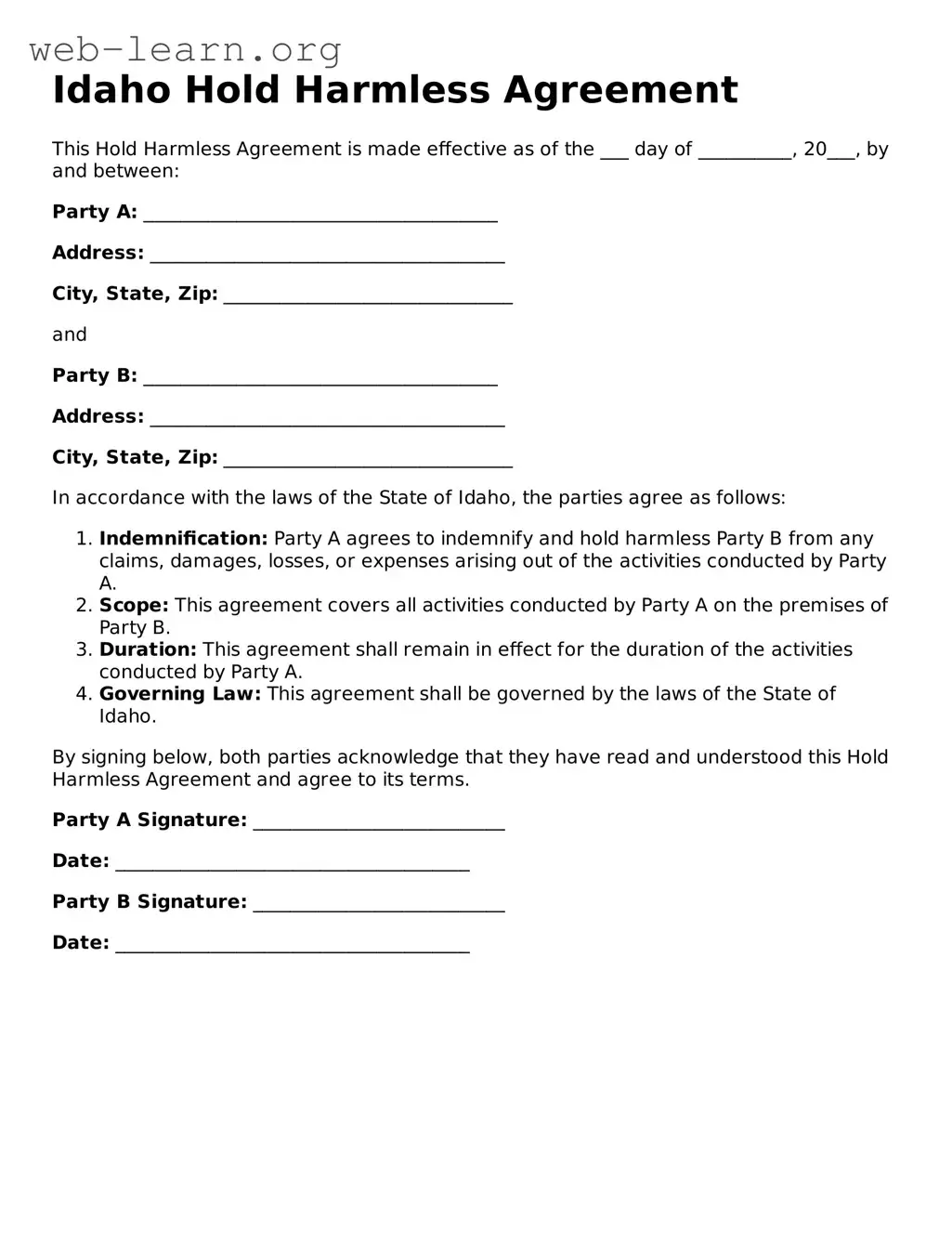
Idaho Hold Harmless Agreement
This Hold Harmless Agreement is made effective as of the ___ day of __________, 20___, by and between:
Party A: ______________________________________
Address: ______________________________________
City, State, Zip: _______________________________
and
Party B: ______________________________________
Address: ______________________________________
City, State, Zip: _______________________________
In accordance with the laws of the State of Idaho, the parties agree as follows:
By signing below, both parties acknowledge that they have read and understood this Hold Harmless Agreement and agree to its terms.
Party A Signature: ___________________________
Date: ______________________________________
Party B Signature: ___________________________
Date: ______________________________________
| Fact Name | Description |
|---|---|
| Definition | The Idaho Hold Harmless Agreement is a legal document that protects one party from liability for certain actions or damages. |
| Purpose | This agreement is commonly used in various transactions, including real estate and event planning, to limit legal liability. |
| Parties Involved | Typically, two parties are involved: the indemnitor (the party agreeing to hold harmless) and the indemnitee (the party being protected). |
| Governing Law | The agreement is governed by Idaho state law, specifically Idaho Code § 29-120. |
| Legal Validity | For the agreement to be enforceable, it must be clear, specific, and voluntarily signed by both parties. |
| Scope of Protection | The agreement can cover various liabilities, including negligence, property damage, and personal injury. |
| Duration | The duration of the agreement can vary; it may be for a specific event or an ongoing relationship. |
| Consideration | Consideration, or something of value exchanged, is often necessary for the agreement to be legally binding. |
| Limitations | Idaho law may not allow hold harmless agreements for gross negligence or willful misconduct. |
| Use in Contracts | Hold harmless clauses are frequently included in contracts to clarify liability responsibilities between parties. |
Completing the Idaho Hold Harmless Agreement form is a straightforward process. By following these steps, you can ensure that all necessary information is accurately provided, allowing the agreement to be effective and legally sound.
Once the form is completed and signed, it will serve as a protective measure for both parties involved. Keeping a copy is essential for future reference, ensuring that everyone is aware of their rights and responsibilities under the agreement.
What is an Idaho Hold Harmless Agreement?
An Idaho Hold Harmless Agreement is a legal document that protects one party from liability for any injuries or damages that may occur during a specific activity or event. This agreement essentially shifts the responsibility from one party to another, ensuring that the party being held harmless does not face legal repercussions for incidents that may arise.
When should I use a Hold Harmless Agreement?
You should consider using a Hold Harmless Agreement when organizing events, activities, or services where there is a risk of injury or property damage. Common scenarios include sports events, construction projects, or any situation where one party is providing a service that could potentially lead to an accident. Having this agreement in place can help protect you from legal claims.
Who should sign the Hold Harmless Agreement?
Typically, the parties involved in the activity should sign the agreement. This includes the individual or organization providing the service and the participant or client. It’s important that both parties understand the terms and conditions outlined in the agreement before signing.
Is a Hold Harmless Agreement legally binding?
Yes, a properly drafted Hold Harmless Agreement is generally considered legally binding in Idaho. However, it must meet certain legal requirements, such as being clear and specific about the liabilities being waived. It’s advisable to have the agreement reviewed by a legal professional to ensure its enforceability.
Can a Hold Harmless Agreement be challenged in court?
Yes, while Hold Harmless Agreements are typically enforceable, they can be challenged in court under certain circumstances. For example, if the agreement is found to be ambiguous, unfair, or if it violates public policy, a court may not uphold it. Always ensure that the agreement is clear and fair to minimize the risk of challenges.
Filling out the Idaho Hold Harmless Agreement form can be a straightforward process, but many people make common mistakes that can lead to complications later on. One frequent error is failing to read the entire document carefully. Skimming through the terms can result in misunderstandings about the rights and responsibilities outlined in the agreement. Take your time to ensure you understand each section fully.
Another mistake is not providing complete and accurate information. Omitting details, such as names, addresses, or dates, can render the agreement invalid. Each piece of information is crucial for establishing the parties involved and the terms of the agreement. Always double-check that everything is filled in correctly.
People often neglect to specify the scope of the hold harmless clause. This clause should clearly define what activities or situations it covers. If the language is vague or ambiguous, it may lead to disputes later on. Clearly outlining the terms helps protect all parties involved.
Many individuals also forget to include signatures. An unsigned agreement is not legally binding. Ensure that all parties involved sign the document, and consider having it witnessed or notarized for added security. This step reinforces the validity of the agreement.
Some people fail to keep a copy of the signed agreement. After the form is completed, make sure to retain a copy for your records. Having a copy on hand can be invaluable if any disputes arise in the future. It serves as a reference point for what was agreed upon.
In addition, it is essential to overlook the importance of consulting with a legal professional. While the form may seem simple, having legal guidance can help clarify any uncertainties. A lawyer can provide insight into how the agreement may affect your rights and obligations.
Another common error is not considering the implications of the agreement. Many individuals sign without fully understanding how it affects their liability. It’s crucial to recognize that a hold harmless agreement can limit your ability to seek compensation in certain situations. Be fully aware of what you are agreeing to.
People sometimes make the mistake of using outdated forms. Laws and regulations can change, so it’s important to ensure you are using the most current version of the Idaho Hold Harmless Agreement. Check for updates or consult with a legal expert if you're unsure.
Lastly, individuals may overlook the need for clarity in language. Using overly complex or technical language can lead to confusion. It is best to use clear and straightforward language that all parties can understand. This practice helps prevent misinterpretations and ensures everyone is on the same page.
The Idaho Hold Harmless Agreement is a crucial document for protecting parties from liability in various situations. When using this agreement, you may also need to consider several other forms and documents that complement it. Below is a list of commonly used documents that can help provide clarity and protection in your agreements.
Using these documents in conjunction with the Idaho Hold Harmless Agreement can help create a comprehensive legal framework. Each document serves a specific purpose, enhancing the protection and clarity for all parties involved.
When filling out the Idaho Hold Harmless Agreement form, it's important to follow certain guidelines to ensure that the document is completed accurately and effectively. Here are six things to keep in mind:
By following these guidelines, you can help ensure that your Idaho Hold Harmless Agreement is valid and effective.
Understanding the Idaho Hold Harmless Agreement form can be challenging. Here are some common misconceptions that people often have about this important document:
Many believe that a Hold Harmless Agreement only benefits one side. In reality, these agreements can be structured to protect both parties involved in a transaction or activity.
Some think that only businesses need a Hold Harmless Agreement. However, individuals engaging in various activities, such as renting property or participating in events, may also require this protection.
While Hold Harmless Agreements are generally enforceable, they may not hold up in court if they are deemed unreasonable or if they violate public policy.
People often assume that signing this agreement waives all rights to legal action. In fact, it typically limits liability for specific situations but does not eliminate the right to sue for negligence or misconduct.
Many think that one version of the Hold Harmless Agreement works for every situation. In truth, these agreements should be tailored to fit the specific circumstances and risks involved.
Some believe that a verbal agreement suffices. However, for a Hold Harmless Agreement to be enforceable, it should be in writing and signed by all parties.
While insurance is important, it does not replace the need for a Hold Harmless Agreement. These agreements provide an additional layer of protection that insurance alone may not cover.
Clarifying these misconceptions can help individuals and businesses better understand the purpose and importance of the Idaho Hold Harmless Agreement. It’s always wise to consult a professional if you have specific questions or concerns about your situation.
The Idaho Hold Harmless Agreement is a crucial document for individuals and organizations seeking to protect themselves from liability. Here are some key takeaways to consider when filling out and using this form:
By keeping these takeaways in mind, individuals and organizations can effectively utilize the Idaho Hold Harmless Agreement to safeguard their interests.
Hold Harmless Waiver - A Hold Harmless Agreement can provide peace of mind when engaging in new ventures.
Release and Hold Harmless Agreement - Signing this agreement signifies acceptance of the associated risks involved.
Are Hold Harmless Agreements Enforceable - This form can help facilitate smoother business transactions by addressing potential risks upfront.