When navigating the emotional and legal complexities of divorce, having the right tools can make a significant difference. One essential document in this process is the Idaho Divorce Settlement Agreement form. This form serves as a roadmap for couples to outline the terms of their divorce, covering critical aspects such as property division, child custody, and spousal support. It provides a structured way to address financial responsibilities and parenting arrangements, ensuring that both parties have a clear understanding of their rights and obligations. By carefully detailing these agreements, the form helps to minimize conflict and pave the way for a smoother transition into post-divorce life. Understanding how to fill out this form accurately is crucial for both parties, as it can impact their future stability and well-being.
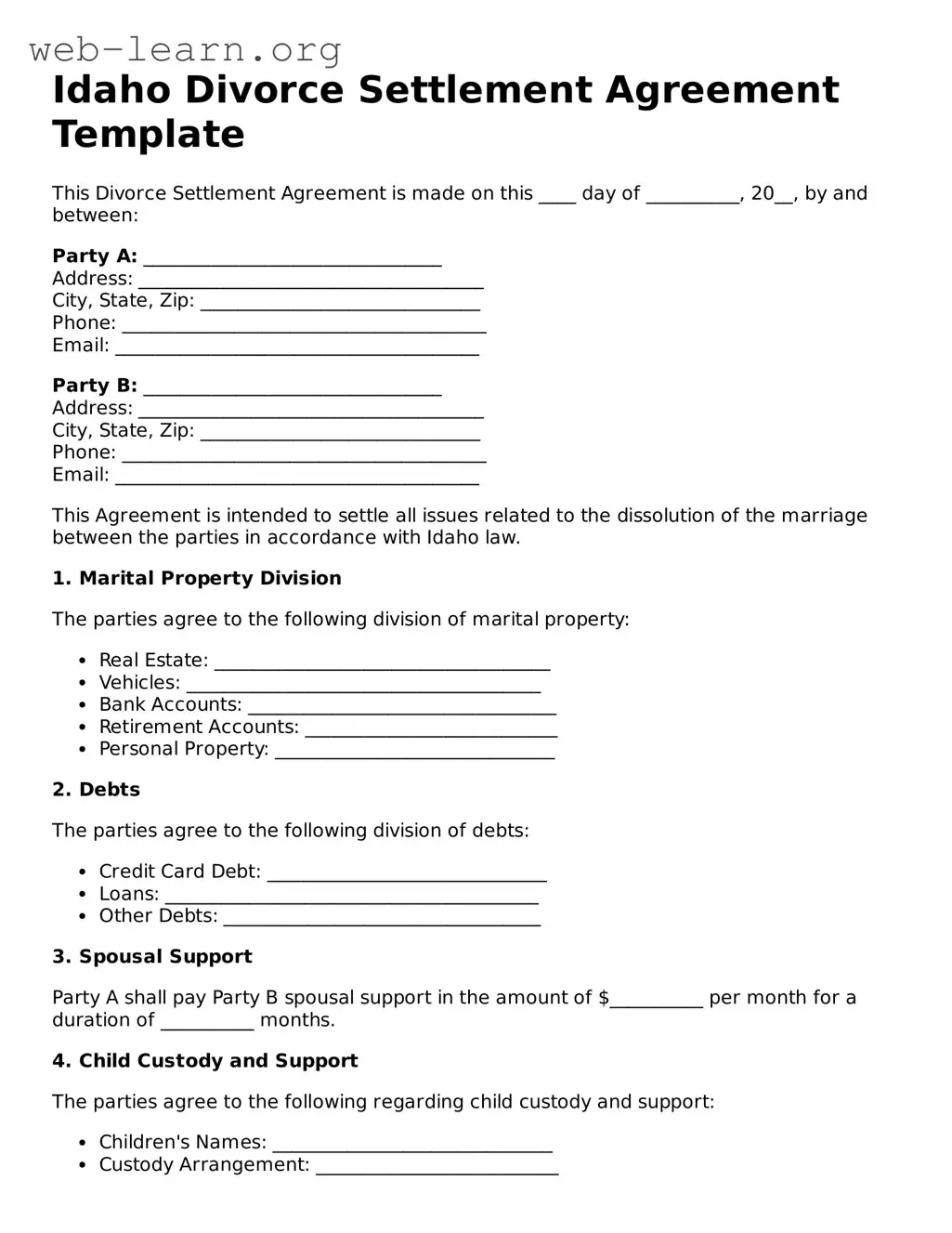
Idaho Divorce Settlement Agreement Template
This Divorce Settlement Agreement is made on this ____ day of __________, 20__, by and between:
Party A: ________________________________
Address: _____________________________________
City, State, Zip: ______________________________
Phone: _______________________________________
Email: _______________________________________
Party B: ________________________________
Address: _____________________________________
City, State, Zip: ______________________________
Phone: _______________________________________
Email: _______________________________________
This Agreement is intended to settle all issues related to the dissolution of the marriage between the parties in accordance with Idaho law.
1. Marital Property Division
The parties agree to the following division of marital property:
2. Debts
The parties agree to the following division of debts:
3. Spousal Support
Party A shall pay Party B spousal support in the amount of $__________ per month for a duration of __________ months.
4. Child Custody and Support
The parties agree to the following regarding child custody and support:
5. Miscellaneous
This Agreement constitutes the entire understanding between the parties. Any amendments must be made in writing and signed by both parties. This Agreement shall be governed by the laws of the State of Idaho.
IN WITNESS WHEREOF, the parties hereto have executed this Divorce Settlement Agreement on the day and year first above written.
Party A Signature: ________________________________
Date: _______________________________________________
Party B Signature: ________________________________
Date: _______________________________________________
| Fact Name | Description |
|---|---|
| Governing Law | The Idaho Divorce Settlement Agreement is governed by Idaho Code Title 32, Chapter 7. |
| Purpose | This form is used to outline the terms of the divorce settlement between spouses. |
| Content Requirements | The agreement typically includes provisions for property division, child custody, and support obligations. |
| Filing Process | After completion, the agreement must be submitted to the court for approval as part of the divorce proceedings. |
| Mutual Consent | Both parties must agree to the terms outlined in the settlement for it to be valid. |
| Modification | The agreement can be modified in the future if both parties consent and the court approves the changes. |
| Legal Representation | While not required, it is advisable for each party to seek legal counsel to ensure their rights are protected. |
After completing the Idaho Divorce Settlement Agreement form, you will need to review it carefully before submitting it to the court. This ensures that all information is accurate and complete. Follow these steps to fill out the form correctly.
What is a Divorce Settlement Agreement in Idaho?
A Divorce Settlement Agreement is a legally binding document that outlines the terms agreed upon by both parties during a divorce. This agreement typically covers key aspects such as the division of assets and debts, child custody arrangements, visitation rights, and spousal support. It serves to ensure that both parties have a clear understanding of their rights and responsibilities following the divorce.
Who needs to complete the Divorce Settlement Agreement form?
Both spouses involved in the divorce process must complete the Divorce Settlement Agreement form. It is essential for couples who have reached an amicable resolution regarding their divorce terms. If there are contested issues, it may be beneficial to seek legal advice before finalizing the agreement.
What should be included in the Divorce Settlement Agreement?
When drafting the Divorce Settlement Agreement, several critical elements should be included:
Including these components helps prevent future disputes and ensures clarity for both parties.
How do I file the Divorce Settlement Agreement?
Once both parties have agreed to the terms and signed the Divorce Settlement Agreement, it must be filed with the appropriate court in Idaho. This typically involves submitting the agreement along with any other required divorce documents. It is advisable to check with the local court for specific filing procedures and any associated fees.
Can the Divorce Settlement Agreement be modified after it is filed?
Yes, the Divorce Settlement Agreement can be modified after it has been filed, but both parties must agree to the changes. Modifications may be necessary due to changes in circumstances, such as income fluctuations or changes in child custody needs. To make modifications legally binding, it is recommended to submit a formal request to the court.
What happens if one party does not comply with the Divorce Settlement Agreement?
If one party fails to comply with the terms outlined in the Divorce Settlement Agreement, the other party has the right to seek enforcement through the court. This may involve filing a motion for enforcement, which can lead to legal consequences for the non-compliant party. Courts take these agreements seriously, and non-compliance can result in penalties.
Filling out the Idaho Divorce Settlement Agreement form can be a daunting task. Many individuals make common mistakes that can lead to complications in the divorce process. One prevalent error is failing to provide complete and accurate information. Each section of the form requires specific details about assets, debts, and personal information. Omitting or misrepresenting any data can cause delays or even lead to legal disputes later on.
Another frequent mistake is not understanding the implications of the agreements being made. Couples often rush through the process without fully considering how decisions regarding child custody, support, and property division will affect their future. It is essential to think through these choices carefully, as they can have long-lasting consequences.
In addition, individuals sometimes neglect to include all relevant assets and liabilities. It is crucial to account for everything, including hidden assets or debts that may not be immediately obvious. Failing to disclose these can lead to serious legal repercussions and may result in one party feeling cheated or unfairly treated.
Moreover, many people overlook the importance of having the agreement reviewed by a professional. Even if both parties agree on the terms, a legal expert can provide valuable insights and ensure that the document complies with Idaho law. Ignoring this step can lead to misunderstandings and issues that could have been easily avoided.
Lastly, some individuals fail to keep copies of the signed agreement. After the divorce is finalized, having a record of the settlement is crucial for future reference. Losing this document can complicate matters if disputes arise later on. It is always wise to maintain organized records of all legal documents related to the divorce.
The Idaho Divorce Settlement Agreement form is an essential document that outlines the terms of a divorce between spouses. It is often accompanied by several other forms and documents that help facilitate the divorce process. Below is a list of commonly used documents in conjunction with the Divorce Settlement Agreement.
Understanding these documents can simplify the divorce process and ensure that all necessary steps are taken. Each form serves a specific purpose and contributes to the overall resolution of the divorce case.
Filling out the Idaho Divorce Settlement Agreement form requires careful attention to detail. Here are some essential dos and don'ts to keep in mind:
Many individuals have misunderstandings about the Idaho Divorce Settlement Agreement form. These misconceptions can lead to confusion during the divorce process. Below are seven common misconceptions along with clarifications.
This is not true. The Idaho Divorce Settlement Agreement form can be used by couples with or without children. It addresses the division of assets and debts, regardless of whether children are involved.
This misconception is incorrect. While the agreement is binding once signed, it can be modified if both parties agree to the changes and submit a new agreement to the court.
Although it is possible to complete the form without an attorney, having legal representation can help ensure that all aspects of the agreement are fair and compliant with Idaho law.
The form can facilitate the divorce process, but it does not guarantee a quick resolution. The overall timeline depends on various factors, including court schedules and any disputes between the parties.
This is a common assumption, but not all assets are necessarily divided equally. The division of property depends on various factors, including the duration of the marriage and individual contributions.
Filing the Divorce Settlement Agreement is an important step, but it is not the final one. The court must approve the agreement before it becomes enforceable.
Effective communication between both parties is crucial. Completing the form without discussing terms can lead to misunderstandings and potential disputes later on.
When filling out and using the Idaho Divorce Settlement Agreement form, keep the following key takeaways in mind:
How Long Do You Have to Be Married to Get Half of Everything in Illinois - The agreement can help avoid misunderstandings in the future.
Divorce Templates - The Divorce Settlement Agreement can be used as evidence in court if needed.