In the realm of real estate transactions, understanding the nuances of various legal documents is essential for both buyers and sellers. One such critical document is the Idaho Deed form, which serves as a vital instrument in the transfer of property ownership within the state. This form outlines the specific details of the transaction, including the names of the parties involved, a precise description of the property, and the terms under which the transfer occurs. It is important to note that there are different types of deeds—such as warranty deeds and quitclaim deeds—each serving distinct purposes and offering varying levels of protection to the parties involved. The Idaho Deed form also requires the inclusion of signatures, often necessitating notarization to ensure its validity and enforceability. Moreover, understanding the implications of this document can significantly impact future property rights and responsibilities, making it imperative for individuals to approach the deed process with care and attention. Whether you are a first-time homebuyer or a seasoned investor, familiarizing yourself with the Idaho Deed form is a crucial step in navigating the complexities of property ownership in the Gem State.
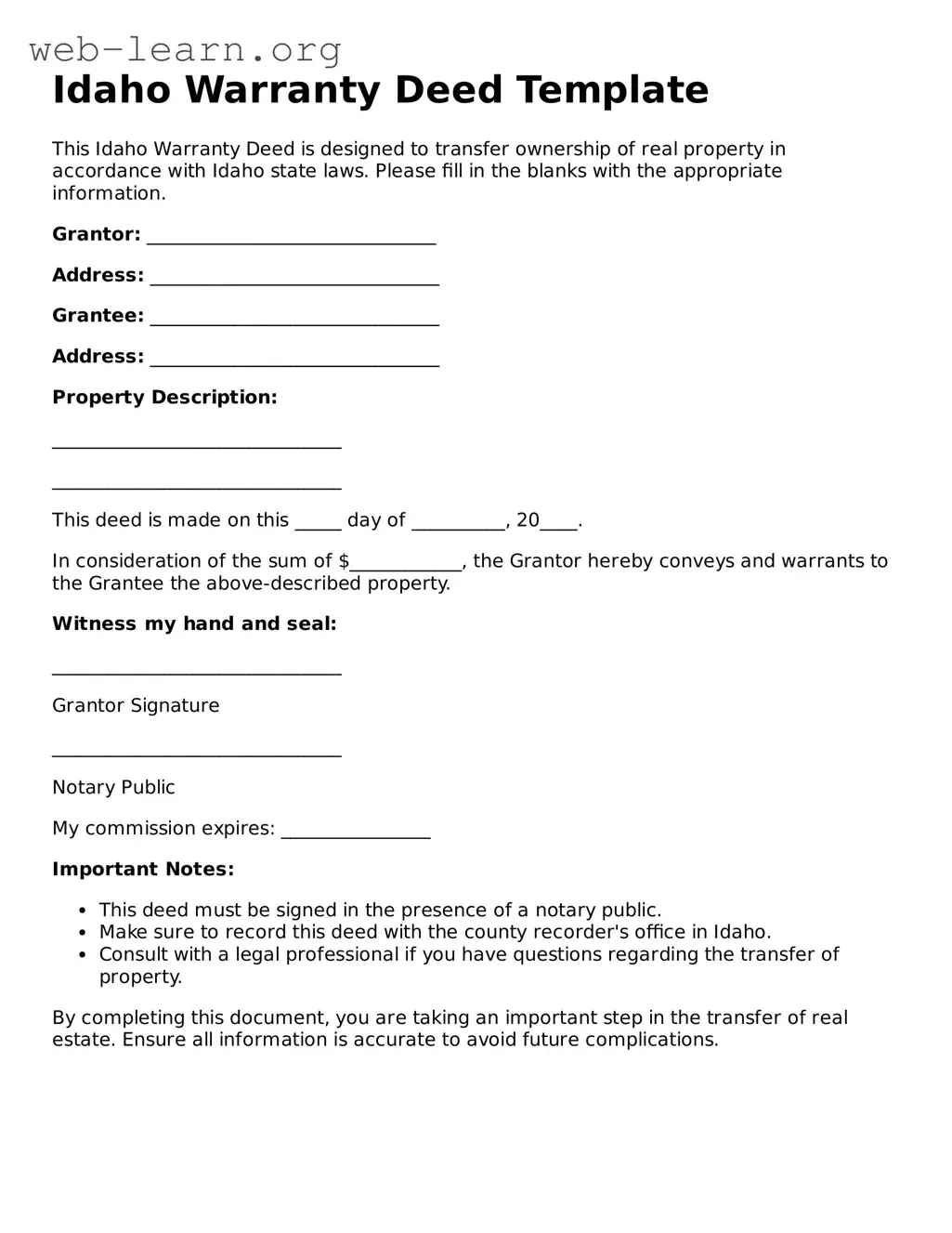
Idaho Warranty Deed Template
This Idaho Warranty Deed is designed to transfer ownership of real property in accordance with Idaho state laws. Please fill in the blanks with the appropriate information.
Grantor: _______________________________
Address: _______________________________
Grantee: _______________________________
Address: _______________________________
Property Description:
_______________________________
_______________________________
This deed is made on this _____ day of __________, 20____.
In consideration of the sum of $____________, the Grantor hereby conveys and warrants to the Grantee the above-described property.
Witness my hand and seal:
_______________________________
Grantor Signature
_______________________________
Notary Public
My commission expires: ________________
Important Notes:
By completing this document, you are taking an important step in the transfer of real estate. Ensure all information is accurate to avoid future complications.
| Fact Name | Description |
|---|---|
| Type of Deed | The Idaho Deed form can be a warranty deed or a quitclaim deed, depending on the nature of the property transfer. |
| Governing Law | The Idaho Deed form is governed by Idaho Code Title 55, Chapter 4, which outlines property transfer regulations. |
| Signature Requirement | All parties involved in the transaction must sign the deed for it to be valid and enforceable. |
| Recording | To provide public notice of the property transfer, the deed must be recorded with the county recorder's office in the appropriate county. |
Filling out the Idaho Deed form is an important step in transferring property ownership. Once you have completed the form, you will need to file it with the appropriate county office to make the transfer official. Below are the steps to guide you through the process of filling out the form.
What is an Idaho Deed form?
An Idaho Deed form is a legal document used to transfer ownership of real property in the state of Idaho. It outlines the details of the property being transferred, the parties involved in the transaction, and any conditions of the transfer.
What types of Deeds are available in Idaho?
Idaho recognizes several types of deeds, including:
How do I complete an Idaho Deed form?
To complete an Idaho Deed form, follow these steps:
Do I need a lawyer to prepare an Idaho Deed form?
While it's not legally required to have a lawyer, consulting one can be beneficial. A lawyer can help ensure that the deed is properly completed and meets all legal requirements, reducing the risk of future disputes.
Where do I file an Idaho Deed form?
After completing the deed, you must file it with the county recorder's office in the county where the property is located. This step is crucial for making the transfer official and ensuring public notice of the change in ownership.
Are there any fees associated with filing a Deed in Idaho?
Yes, there are typically filing fees that vary by county. It's best to check with your local county recorder's office for the exact fee schedule. Additionally, there may be transfer taxes or other costs associated with the transaction.
What happens if I don’t file the Deed?
If you fail to file the deed, the transfer of ownership may not be recognized legally. This can lead to complications, such as disputes over property rights or difficulties in selling the property in the future.
Can I revoke a Deed in Idaho?
In general, once a deed is executed and filed, it cannot be revoked. However, certain conditions may allow for a deed to be challenged or set aside, such as fraud or lack of capacity. Consulting with a legal professional can provide guidance specific to your situation.
What should I do if I lose my Deed?
If you lose your deed, you can obtain a copy from the county recorder's office where it was filed. It's a good idea to keep multiple copies in a safe place to avoid future issues.
Completing the Idaho Deed form can be a straightforward process, but several common mistakes can lead to complications. One frequent error occurs when individuals fail to accurately identify the grantor and grantee. The grantor is the person transferring the property, while the grantee is the person receiving it. Omitting or incorrectly spelling names can create legal issues and may even invalidate the deed.
Another mistake involves the description of the property being transferred. A precise legal description is crucial. It should include details such as the parcel number or a metes and bounds description. Vague descriptions can lead to disputes over what property is actually being conveyed, causing confusion and potential legal challenges.
People often overlook the requirement for signatures. Both the grantor and any witnesses must sign the deed for it to be legally binding. Failing to secure the necessary signatures can render the deed ineffective, meaning that the transfer of ownership may not be recognized by the state.
In addition to signatures, individuals may neglect to have the deed notarized. Notarization serves as a verification of the identities of the signers and adds an extra layer of authenticity. Without this step, the deed might face challenges in court or during property transfers.
Another common error is not including the date of the transaction. The date is important for establishing the timeline of ownership and can affect the rights of the parties involved. Leaving this field blank can lead to confusion regarding when the transfer took place.
Finally, individuals may fail to properly record the deed with the county recorder’s office. Recording the deed is essential for providing public notice of the property transfer. If the deed is not recorded, subsequent purchasers or creditors may not be aware of the change in ownership, potentially leading to disputes.
When completing a property transaction in Idaho, several documents often accompany the Idaho Deed form. Each of these documents plays a crucial role in ensuring the transfer of property is clear and legally binding. Below is a list of commonly used forms and documents.
These documents work together to facilitate a smooth property transfer in Idaho. Having them prepared and organized can help avoid potential issues during the closing process.
When filling out the Idaho Deed form, it is important to follow specific guidelines to ensure the document is completed correctly. Here are some recommendations on what to do and what to avoid:
When dealing with real estate transactions in Idaho, misunderstandings about the Idaho Deed form can lead to complications. Here are four common misconceptions:
Understanding these misconceptions can help individuals navigate the complexities of property ownership and transfer in Idaho more effectively.
Filling out and using the Idaho Deed form requires careful attention to detail. Here are some key takeaways to ensure a smooth process:
Taking these steps seriously will help avoid complications and ensure that the deed is legally binding.
Quit Claim Deed Broward County - May involve disclosures about property conditions or history.
Quick Claim Deeds Kansas - Using the correct Deed form is crucial for legal protection.
How to Get a Deed for a House - Helps in establishing a legal record of property ownership.
What Does a House Deed Look Like in Illinois - Deeds must be signed by the grantor, the person transferring the property.