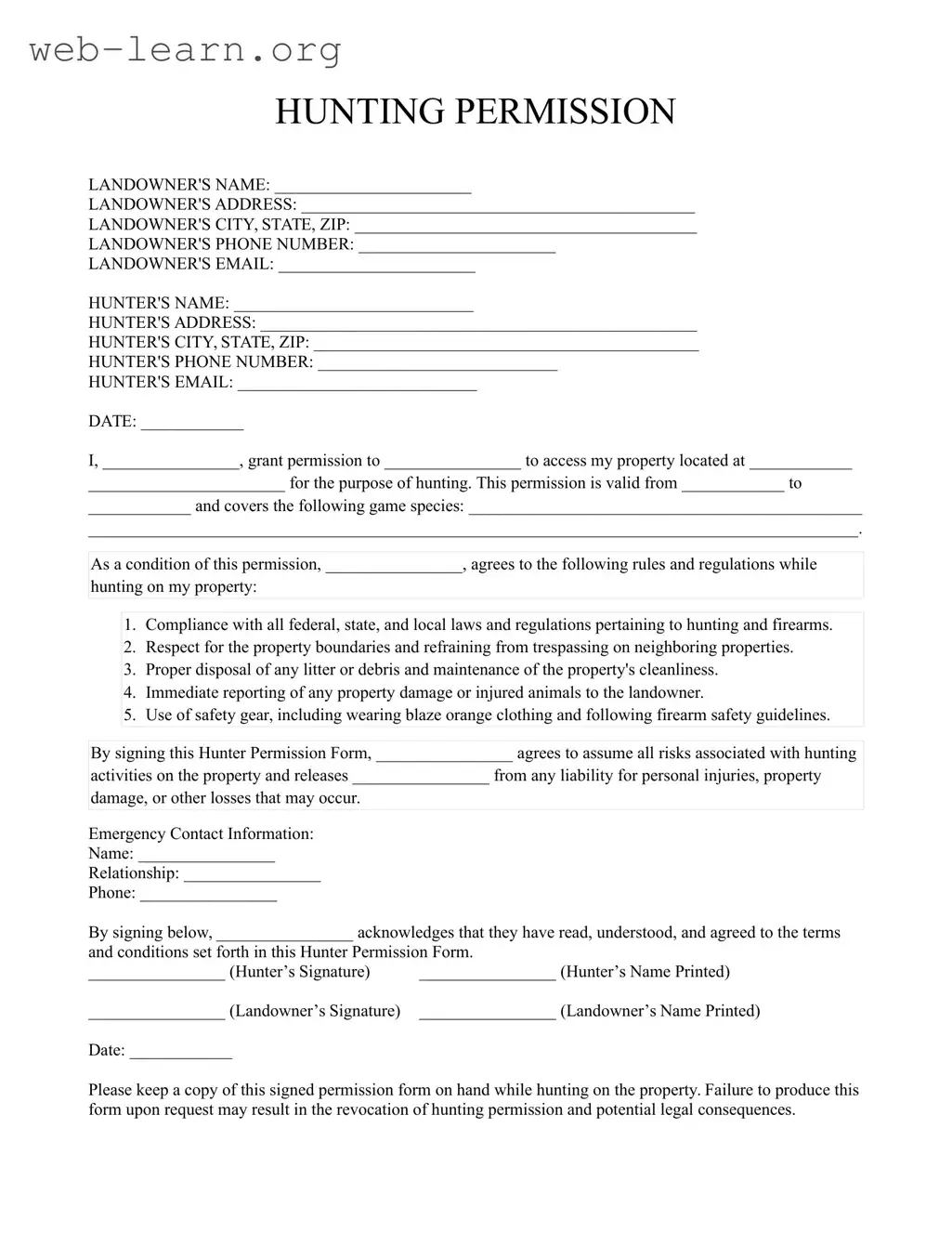
The Hunter Permission Form serves as a vital document for both landowners and hunters, establishing clear guidelines for hunting activities on private property. It begins by capturing essential information about the landowner, including their name, address, and contact details, ensuring that hunters can easily reach them if necessary. The form then transitions to the hunter’s information, providing a means to identify who is granted access to the property. Key elements of the form include the specific dates during which hunting is permitted and the types of game species that may be hunted, thereby clarifying the scope of the permission granted. Furthermore, the form outlines a set of rules and regulations that hunters must adhere to while on the land, promoting safety and respect for both the environment and neighboring properties. These guidelines cover compliance with laws, proper waste disposal, and the necessity of using safety gear. Importantly, the document also addresses liability, requiring hunters to acknowledge the risks associated with hunting and to release the landowner from any potential claims. By signing the form, both parties affirm their understanding and agreement to the terms, fostering a responsible and respectful hunting experience.

HUNTING PERMISSION
LANDOWNER'S NAME: _______________________
LANDOWNER'S ADDRESS: ______________________________________________
LANDOWNER'S CITY, STATE, ZIP: ________________________________________
LANDOWNER'S PHONE NUMBER: _______________________
LANDOWNER'S EMAIL: _______________________
HUNTER'S NAME: ____________________________
HUNTER'S ADDRESS: ___________________________________________________
HUNTER'S CITY, STATE, ZIP: _____________________________________________
HUNTER'S PHONE NUMBER: ____________________________
HUNTER'S EMAIL: ____________________________
DATE: ____________
I, ________________, grant permission to ________________ to access my property located at ____________
_______________________ for the purpose of hunting. This permission is valid from ____________ to
____________ and covers the following game species: ______________________________________________
__________________________________________________________________________________________.
As a condition of this permission, ________________, agrees to the following rules and regulations while
hunting on my property:
1.Compliance with all federal, state, and local laws and regulations pertaining to hunting and firearms.
2.Respect for the property boundaries and refraining from trespassing on neighboring properties.
3.Proper disposal of any litter or debris and maintenance of the property's cleanliness.
4.Immediate reporting of any property damage or injured animals to the landowner.
5.Use of safety gear, including wearing blaze orange clothing and following firearm safety guidelines.
By signing this Hunter Permission Form, ________________ agrees to assume all risks associated with hunting
activities on the property and releases ________________ from any liability for personal injuries, property
damage, or other losses that may occur.
Emergency Contact Information:
Name: ________________
Relationship: ________________
Phone: ________________
By signing below, ________________ acknowledges that they have read, understood, and agreed to the terms
and conditions set forth in this Hunter Permission Form.
________________ (Hunter’s Signature) |
________________ (Hunter’s Name Printed) |
________________ (Landowner’s Signature) |
________________ (Landowner’s Name Printed) |
Date: ____________ |
|
Please keep a copy of this signed permission form on hand while hunting on the property. Failure to produce this form upon request may result in the revocation of hunting permission and potential legal consequences.
| Fact Name | Details |
|---|---|
| Landowner's Information | The form requires the landowner's name, address, city, state, ZIP code, phone number, and email. |
| Hunter's Information | Similar to the landowner, the hunter must provide their name, address, city, state, ZIP code, phone number, and email. |
| Permission Grant | The landowner grants permission to the hunter to access their property for hunting purposes. |
| Validity Period | The permission is valid for a specified time frame, which must be filled in on the form. |
| Game Species | The form allows the landowner to specify which game species the hunter is permitted to hunt. |
| Rules and Regulations | The hunter agrees to comply with several rules, including respecting property boundaries and disposing of litter properly. |
| Liability Release | By signing the form, the hunter assumes all risks associated with hunting and releases the landowner from liability. |
| Emergency Contact | The form includes a section for the hunter to provide emergency contact information. |
| Legal Consequences | Failure to produce the signed form upon request may lead to revocation of permission and potential legal consequences. |
Filling out the Hunter Permission form is an important step for both landowners and hunters. This form ensures that all parties are clear about the permissions granted, the rules to follow, and the responsibilities involved. Once completed, the form should be kept on hand during hunting activities to avoid any misunderstandings.
After completing these steps, it's essential to keep a copy of the signed form readily available while hunting. This ensures that all parties are protected and aware of the permissions granted.
What is the purpose of the Hunter Permission form?
The Hunter Permission form serves as a legal agreement between a landowner and a hunter. It grants the hunter permission to access the landowner's property for hunting purposes. This form outlines the terms and conditions under which hunting is permitted, ensuring that both parties understand their rights and responsibilities.
What information is required on the form?
The form requires detailed information from both the landowner and the hunter. This includes:
What rules and regulations must hunters follow?
Hunters must adhere to several important rules while on the property. These include:
What happens if a hunter does not follow the rules?
If a hunter violates the established rules and regulations, the landowner has the right to revoke hunting permission. Additionally, the hunter may face legal consequences, which could include fines or other penalties, depending on the nature of the violation.
Is the Hunter Permission form legally binding?
Yes, the Hunter Permission form is a legally binding document. By signing it, both the landowner and the hunter agree to the terms outlined in the form. This includes the acknowledgment of risks associated with hunting and the release of liability for the landowner.
What should a hunter do if they lose the permission form?
It is crucial for hunters to keep a copy of the signed permission form while hunting. If the form is lost, the hunter should contact the landowner to obtain a duplicate. Failing to produce the form upon request may lead to the revocation of hunting permission.
What is the significance of the emergency contact information?
Including emergency contact information on the form is vital for safety. In case of an accident or emergency while hunting, this information allows for quick communication with someone who can assist or provide necessary support. It ensures that help can be reached promptly if needed.
How can hunters ensure they are compliant with the form?
To ensure compliance, hunters should carefully read and understand all terms and conditions outlined in the Hunter Permission form. It is advisable to maintain open communication with the landowner and ask questions if any part of the agreement is unclear. Adhering to the rules and maintaining respect for the property will foster a positive hunting experience.
Filling out the Hunter Permission form can seem straightforward, but there are common mistakes that people often make. Avoiding these errors can help ensure a smooth hunting experience for both landowners and hunters.
One frequent mistake is leaving the landowner's name section blank. This information is crucial as it identifies the property owner granting permission. Without it, the form lacks validity. Similarly, not providing a complete landowner's address can lead to confusion about the location of the property.
Another common error is failing to specify the game species that the hunter is allowed to pursue. This detail is important for legal compliance and helps prevent misunderstandings about what hunting activities are permitted on the property. Hunters and landowners should communicate clearly about which species are included.
People often overlook the dates for which permission is granted. Leaving this section incomplete can create issues if a dispute arises about when hunting is allowed. Always include specific start and end dates to avoid any ambiguity.
In addition, some individuals forget to include their emergency contact information. This is essential for safety reasons. Should an accident occur, having a designated contact can facilitate quicker responses and ensure that help is on the way.
Another mistake involves not reading the rules and regulations carefully. Each hunter must understand the conditions under which they are allowed to hunt. This includes compliance with laws and proper conduct while on the property. Ignoring these rules can lead to serious consequences.
Lastly, many people neglect to keep a copy of the signed form on hand while hunting. This document serves as proof of permission. If asked by authorities, failing to present this form could result in the revocation of hunting rights and potential legal issues.
By being mindful of these common mistakes, both landowners and hunters can help ensure a positive and safe hunting experience. Clear communication and attention to detail are key.
The Hunter Permission Form is essential for landowners and hunters to establish clear guidelines and permissions for hunting on private property. Along with this form, there are several other documents that can enhance the hunting experience and ensure compliance with laws and regulations. Below is a list of related forms and documents that are often used in conjunction with the Hunter Permission Form.
Using these documents together with the Hunter Permission Form can create a safer and more organized hunting experience. It is important for both hunters and landowners to understand their rights and responsibilities to promote a positive relationship and ensure compliance with hunting laws.
When filling out the Hunter Permission form, it's essential to follow specific guidelines to ensure clarity and compliance. Here are nine things you should and shouldn't do:
Following these guidelines will help protect both the landowner and the hunter during hunting activities.
Understanding the Hunter Permission Form is essential for both landowners and hunters. However, several misconceptions can lead to confusion. Here are seven common misunderstandings:
By addressing these misconceptions, both landowners and hunters can ensure a smoother and safer hunting experience.
When filling out and using the Hunter Permission form, it is essential to pay attention to the details. Here are key takeaways to ensure clarity and compliance:
These points will help ensure a smooth experience for both the landowner and the hunter. Clear communication and adherence to the rules are vital for a safe and respectful hunting environment.