Homepage Attorney-Approved Bill of Sale Template Attorney-Approved Horse Bill of Sale Template
Outline

The Horse Bill of Sale form is an essential document for anyone involved in the buying or selling of horses. This form serves as a legal record of the transaction, providing important details that protect both the buyer and the seller. Typically, it includes information such as the names and addresses of the parties involved, a description of the horse being sold, and the agreed-upon purchase price. Additionally, it often outlines any warranties or guarantees regarding the horse’s health and soundness, which can be crucial for the buyer’s peace of mind. By documenting the sale, this form helps prevent misunderstandings and disputes that may arise after the transaction is completed. It is important for both parties to carefully review the terms outlined in the form to ensure clarity and mutual agreement before finalizing the sale.

State-specific Guides for Horse Bill of Sale Documents

Sample - Horse Bill of Sale Form

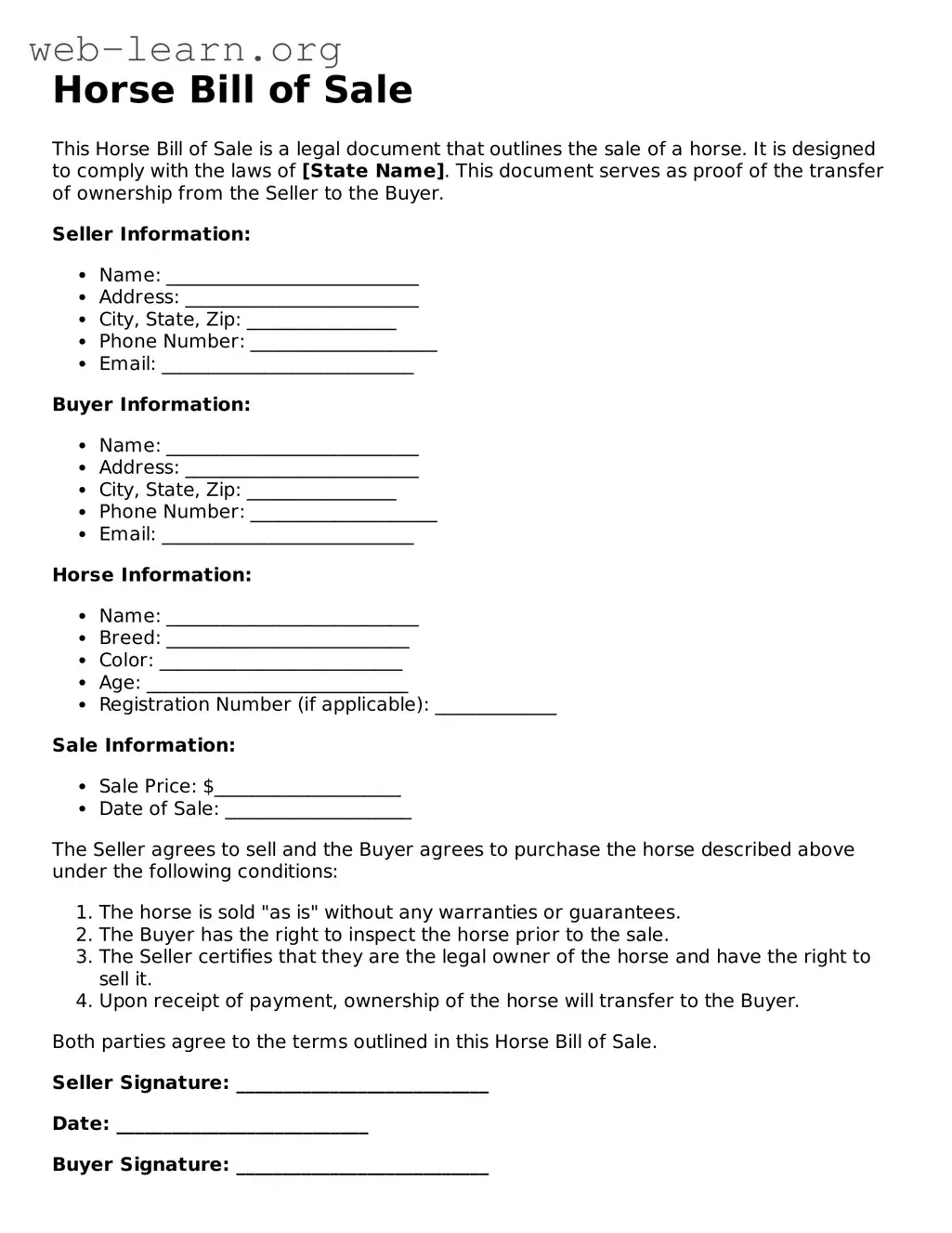
Horse Bill of Sale

This Horse Bill of Sale is a legal document that outlines the sale of a horse. It is designed to comply with the laws of [State Name]. This document serves as proof of the transfer of ownership from the Seller to the Buyer.

Seller Information:

  • Name: ___________________________
  • Address: _________________________
  • City, State, Zip: ________________
  • Phone Number: ____________________
  • Email: ___________________________

Buyer Information:

  • Name: ___________________________
  • Address: _________________________
  • City, State, Zip: ________________
  • Phone Number: ____________________
  • Email: ___________________________

Horse Information:

  • Name: ___________________________
  • Breed: __________________________
  • Color: __________________________
  • Age: ____________________________
  • Registration Number (if applicable): _____________

Sale Information:

  • Sale Price: $____________________
  • Date of Sale: ____________________

The Seller agrees to sell and the Buyer agrees to purchase the horse described above under the following conditions:

  1. The horse is sold "as is" without any warranties or guarantees.
  2. The Buyer has the right to inspect the horse prior to the sale.
  3. The Seller certifies that they are the legal owner of the horse and have the right to sell it.
  4. Upon receipt of payment, ownership of the horse will transfer to the Buyer.

Both parties agree to the terms outlined in this Horse Bill of Sale.

Seller Signature: ___________________________

Date: ___________________________

Buyer Signature: ___________________________

Date: ___________________________

File Characteristics

Fact Name Details
Definition A Horse Bill of Sale is a legal document that transfers ownership of a horse from one party to another.
Purpose This document serves to protect both the buyer and seller by providing a record of the transaction.
Essential Elements Key elements include the names of the buyer and seller, a description of the horse, the sale price, and the date of the transaction.
Governing Law Each state may have specific laws governing the sale of horses. For example, in California, the Uniform Commercial Code applies.
Condition of Sale The form may include clauses regarding the horse's health, training, and any warranties or guarantees.
Notarization Some states may require the Bill of Sale to be notarized to ensure its validity.
Record Keeping It is advisable for both parties to keep a copy of the signed Bill of Sale for their records.
Transfer of Liability The Bill of Sale can also outline the transfer of liability for the horse after the sale is completed.
State-Specific Forms Many states provide their own specific Horse Bill of Sale forms, which may include additional requirements.

Detailed Guide for Filling Out Horse Bill of Sale

Completing the Horse Bill of Sale form is an important step in the process of transferring ownership of a horse. This document serves as a formal record of the sale and includes essential details about the transaction. After filling out the form, both the buyer and seller should retain a copy for their records.

  1. Obtain the form: Access the Horse Bill of Sale form, which can be found online or at a local legal document office.
  2. Enter seller's information: Fill in the seller's full name, address, and contact information at the designated section.
  3. Provide buyer's information: Enter the buyer's full name, address, and contact information in the appropriate fields.
  4. Describe the horse: Include specific details about the horse, such as its name, breed, age, color, and any identifying marks or registration numbers.
  5. Indicate sale price: Clearly state the agreed-upon sale price for the horse in the specified area.
  6. Specify payment terms: Outline the payment method and any terms related to the transaction, such as deposits or financing arrangements.
  7. Include date of sale: Write the date on which the sale is taking place.
  8. Signatures: Both the seller and buyer should sign and date the document to validate the agreement.
  9. Make copies: After completing the form, make copies for both the buyer and seller to keep for their records.

Obtain Answers on Horse Bill of Sale

  1. What is a Horse Bill of Sale?

    A Horse Bill of Sale is a legal document that serves as a receipt for the sale of a horse. It outlines the details of the transaction, including the identities of the buyer and seller, a description of the horse, the sale price, and any conditions or warranties associated with the sale. This document is important for both parties as it provides proof of ownership and can help prevent disputes in the future.

  2. Why is a Horse Bill of Sale important?

    The Horse Bill of Sale is crucial for several reasons:

    • It establishes legal ownership of the horse.
    • It can protect the seller from future claims regarding the horse.
    • It provides a record of the sale for tax purposes.
    • In case of disputes, it serves as evidence of the agreed-upon terms.

    Having this document can provide peace of mind to both the buyer and the seller, ensuring that the transaction is clear and binding.

  3. What information should be included in a Horse Bill of Sale?

    A comprehensive Horse Bill of Sale should include the following information:

    • The full names and addresses of both the buyer and seller.
    • A detailed description of the horse, including breed, age, color, and any identifying marks.
    • The sale price and payment method.
    • The date of the sale.
    • Any warranties or guarantees provided by the seller.
    • Signatures of both parties to confirm the agreement.

    Including all of this information helps ensure that both parties have a clear understanding of the transaction and its terms.

  4. Can a Horse Bill of Sale be modified after signing?

    Once a Horse Bill of Sale is signed by both parties, it generally becomes a binding contract. Modifying the document after it has been signed can be complicated. Both parties must agree to any changes and should ideally document these modifications in writing. This helps maintain clarity and prevents misunderstandings. If modifications are necessary, it is advisable to consult with a legal professional to ensure that the changes are valid and enforceable.

Common mistakes

Filling out a Horse Bill of Sale form is a critical step in the buying and selling process of a horse. However, many individuals make common mistakes that can lead to complications down the line. One frequent error is failing to provide complete and accurate information about the horse. Details such as the horse's breed, age, color, and registration number are essential for identification purposes. Omitting any of these details can cause confusion and disputes later on.

Another mistake often encountered is neglecting to include both the buyer's and seller's contact information. This information is crucial for future communication regarding the horse. If either party needs to reach out after the sale, having the correct contact details ensures that they can do so without unnecessary delays. Incomplete information can lead to frustration and misunderstandings.

Additionally, many people overlook the importance of including a clear description of the terms of the sale. This includes the purchase price, payment method, and any conditions of sale. Without these terms clearly outlined, either party may have different expectations, leading to potential disputes. It’s essential to ensure that both parties understand and agree to the terms before finalizing the transaction.

Finally, failing to sign and date the form is a common oversight. Both the buyer and seller must sign the Horse Bill of Sale to validate the transaction. Without signatures, the document may not hold up in the event of a dispute. Taking the time to ensure that the form is properly signed and dated can save both parties from future complications.

Documents used along the form

When buying or selling a horse, several important documents often accompany the Horse Bill of Sale. These documents help ensure a smooth transaction and provide necessary information for both parties involved. Below is a list of commonly used forms and documents.

  • Equine Health Certificate: This document confirms the horse's health status and is usually issued by a veterinarian. It may include vaccination records and any recent medical treatments.
  • Registration Papers: If the horse is registered with a breed association, these papers prove its pedigree and eligibility for competitions. They are essential for buyers interested in showing or breeding.
  • Transfer of Ownership Form: This form officially transfers the horse's ownership from the seller to the buyer. It may be required by breed associations or local authorities.
  • Pre-Purchase Exam Report: A veterinarian conducts this exam to assess the horse's overall health and soundness. Buyers often request this report to make informed decisions.
  • Bill of Sale for Equipment: If any tack or equipment is included in the sale, a separate bill of sale for these items may be necessary. This document outlines the specifics of the equipment being sold.
  • Liability Waiver: This document protects the seller from potential claims related to the horse after the sale. It typically states that the buyer assumes all risks associated with ownership.
  • Sales Agreement: This comprehensive document outlines the terms of the sale, including payment details, delivery conditions, and any warranties. It serves as a binding contract between the parties.
  • Transportation Agreement: If the horse needs to be transported to a new location, this agreement details the terms of transportation, including responsibilities and costs.
  • Identification Records: These records may include microchip information or physical descriptions of the horse. They help ensure that the horse's identity is clear and verifiable.

Having these documents in order can make the buying or selling process much easier and more transparent. It is always wise to consult with professionals when navigating these transactions to ensure all legal requirements are met.

Similar forms

  • Vehicle Bill of Sale: Similar to a Horse Bill of Sale, this document transfers ownership of a vehicle from one party to another. It includes details such as the vehicle's make, model, and VIN.
  • Boat Bill of Sale: This document serves a similar purpose for boats. It outlines the transfer of ownership and includes information about the boat's specifications and registration details.
  • Real Estate Purchase Agreement: Like the Horse Bill of Sale, this agreement details the transfer of property ownership. It includes terms of sale, property description, and buyer and seller information.
  • Equipment Bill of Sale: This document is used for the sale of equipment, such as machinery or tools. It specifies the items sold and the terms of the sale, ensuring both parties understand the transaction.
  • Art Sales Agreement: Similar in function, this agreement transfers ownership of artwork. It includes details about the artwork, such as title, artist, and sale price.
  • Pet Bill of Sale: This document is used for transferring ownership of pets. It includes information about the pet, such as breed and age, along with the terms of the sale.
  • Business Asset Purchase Agreement: This agreement outlines the sale of business assets, including equipment and inventory. It details the assets being sold and the conditions of the sale.

Dos and Don'ts

When filling out the Horse Bill of Sale form, attention to detail is crucial. Here are five important dos and don'ts to consider:

  • Do ensure all information is accurate and complete.
  • Do include the horse's registration number, if applicable.
  • Do have both parties sign and date the document.
  • Don't leave any sections blank; fill in every required field.
  • Don't use vague descriptions; be specific about the horse's condition and any included equipment.

Misconceptions

Understanding the Horse Bill of Sale form is crucial for anyone involved in buying or selling a horse. However, several misconceptions can lead to confusion. Here are eight common misconceptions explained:

  • A Horse Bill of Sale is not necessary. Many believe that a verbal agreement is sufficient. In reality, having a written bill of sale protects both the buyer and seller.
  • The Horse Bill of Sale is only for high-value transactions. This form is important for any sale, regardless of the horse's price. It provides a clear record of the transaction.
  • All states have the same requirements for a Horse Bill of Sale. Each state may have different laws regarding the sale of horses. It’s essential to check local regulations.
  • Only the seller needs to sign the form. Both the buyer and seller should sign the bill of sale to ensure mutual agreement and acknowledgment of the transaction.
  • The Horse Bill of Sale is just a receipt. While it serves as a receipt, it also includes important details like the horse's description, health records, and any warranties.
  • Once the bill of sale is signed, it cannot be changed. Amendments can be made if both parties agree, but it's best to finalize all terms before signing.
  • A Horse Bill of Sale is only for private sales. Even transactions through dealerships or auctions should include a bill of sale for clarity and legal protection.
  • It’s fine to use a generic bill of sale template. Customizing the bill of sale to include specific details about the horse and the sale is vital for ensuring all relevant information is captured.

Being aware of these misconceptions can help facilitate a smoother transaction and protect your interests. Always take the time to understand the details involved in the sale of a horse.

Key takeaways

When it comes to buying or selling a horse, a Horse Bill of Sale is an essential document. Here are some key takeaways to keep in mind:

  • Ensure that all parties involved are clearly identified. This includes the seller, buyer, and any witnesses.
  • Include detailed information about the horse. This should cover the horse's name, breed, age, color, and any identifying marks.
  • State the purchase price clearly. This helps prevent any misunderstandings regarding the financial transaction.
  • Specify the payment method. Whether it’s cash, check, or another form, clarity is key.
  • Consider adding a health guarantee. This can protect the buyer and ensure the horse is in good condition at the time of sale.
  • Both parties should sign and date the form. This makes the agreement legally binding and official.
  • Keep a copy of the completed form for your records. This can be useful for future reference or if any disputes arise.
  • Consult a professional if you have questions. A knowledgeable expert can provide guidance tailored to your specific situation.

Using a Horse Bill of Sale form not only formalizes the transaction but also provides peace of mind for both the buyer and seller. Taking the time to complete it accurately can save you from potential issues down the road.