For families considering homeschooling, understanding the necessary steps to initiate the process is crucial. One of the first and most important documents in this journey is the Homeschool Letter of Intent form. This form serves as a formal declaration to the local school district that a parent or guardian intends to educate their child at home. It typically includes key information such as the child's name, age, and the educational curriculum planned for the upcoming school year. Additionally, some states may require parents to provide details about their educational philosophy or teaching methods. Submitting this letter not only fulfills legal obligations but also sets the stage for a successful homeschooling experience. By clearly outlining the family's commitment to providing a quality education, the Homeschool Letter of Intent helps establish a positive relationship with local education authorities while ensuring compliance with state regulations.
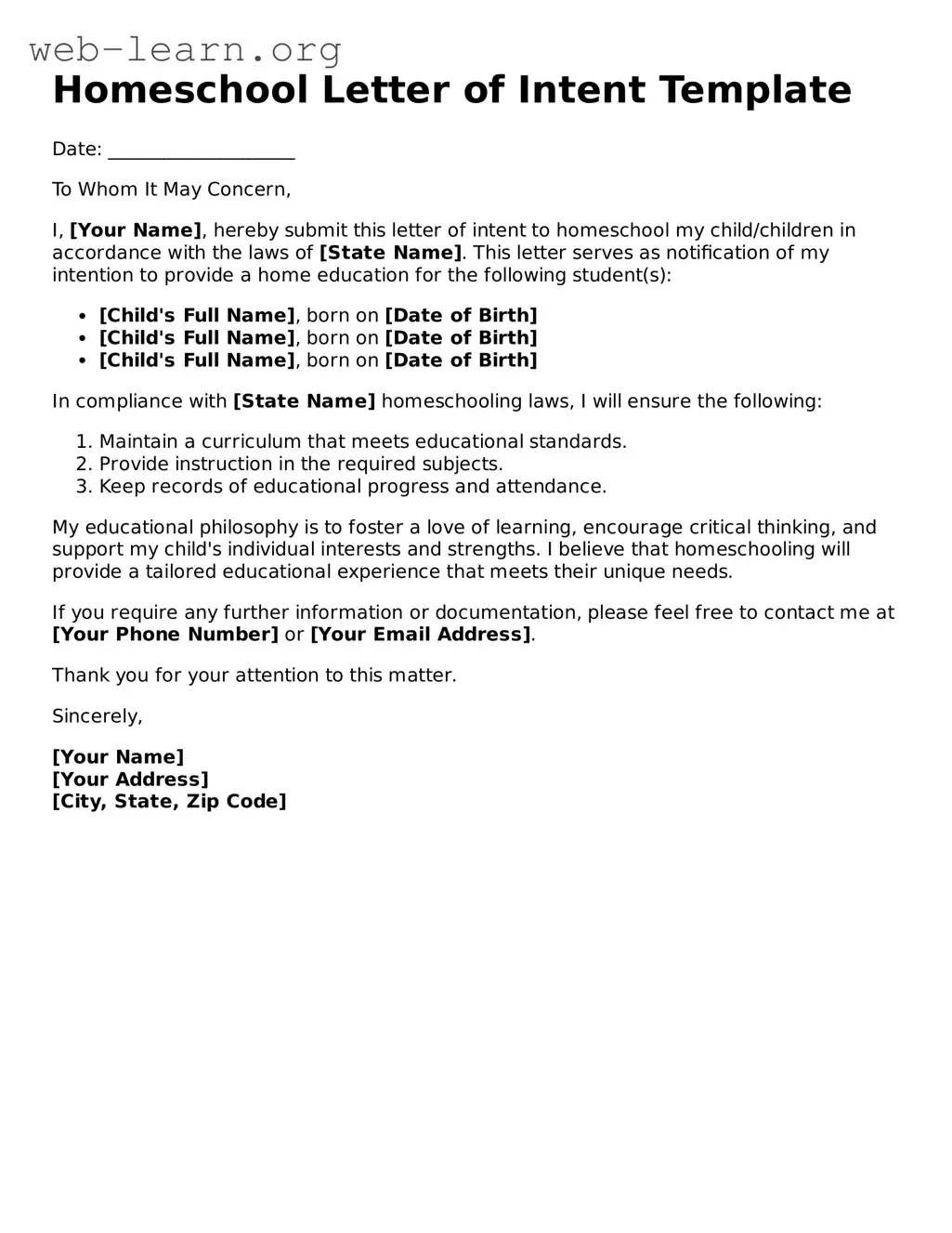
Homeschool Letter of Intent Template
Date: ____________________
To Whom It May Concern,
I, [Your Name], hereby submit this letter of intent to homeschool my child/children in accordance with the laws of [State Name]. This letter serves as notification of my intention to provide a home education for the following student(s):
In compliance with [State Name] homeschooling laws, I will ensure the following:
My educational philosophy is to foster a love of learning, encourage critical thinking, and support my child's individual interests and strengths. I believe that homeschooling will provide a tailored educational experience that meets their unique needs.
If you require any further information or documentation, please feel free to contact me at [Your Phone Number] or [Your Email Address].
Thank you for your attention to this matter.
Sincerely,
[Your Name]
[Your Address]
[City, State, Zip Code]
| Fact Name | Description |
|---|---|
| Purpose | The Homeschool Letter of Intent form notifies the state education department of a parent's decision to homeschool their child. |
| State-Specific Requirements | Each state has its own requirements for the content and submission of the Letter of Intent, which may include specific information about the child and educational plans. |
| Governing Laws | The laws governing homeschooling and the use of the Letter of Intent vary by state. For example, in California, it is governed by California Education Code § 33190. |
| Submission Timeline | Most states require the Letter of Intent to be submitted within a certain timeframe, often before the school year begins or shortly after homeschooling starts. |
| Record Keeping | While the Letter of Intent serves as a formal notification, parents are also encouraged to keep records of their homeschooling activities and curriculum for future reference. |
After obtaining the Homeschool Letter of Intent form, you will need to provide specific information about your child and your educational plans. Completing this form is an important step in notifying your local education authority of your intent to homeschool.
A Homeschool Letter of Intent is a formal document that notifies your local school district of your intention to educate your child at home. This letter is typically required in many states as a part of the homeschooling process. It serves as an official declaration that you are choosing to take on the responsibility of your child's education outside of the traditional school system.
If you are a parent or guardian planning to homeschool your child, you will likely need to submit a Homeschool Letter of Intent. This applies to children who are of compulsory school age, which varies by state. It’s essential to check your specific state’s requirements to ensure compliance.
The timing for submitting the Letter of Intent can vary. Generally, it should be submitted before you begin homeschooling. Some states require it to be submitted at the beginning of the school year, while others allow you to submit it at any time during the year. Always consult your state’s homeschooling laws for precise deadlines.
Your Letter of Intent should include:
Some states may have additional requirements, so it’s important to verify what your local district expects.
Most states do not require the Homeschool Letter of Intent to be notarized. However, some may have specific regulations regarding documentation. It’s always best to check with your local school district to understand their requirements fully.
Once you submit your Letter of Intent, your local school district will typically acknowledge receipt. They may provide you with further instructions or requirements, such as submitting an educational plan or progress reports. Stay proactive and maintain communication with your district to ensure you meet all obligations.
Yes, you can withdraw your child from public school after submitting the Letter of Intent. However, it’s advisable to formally notify the school of your decision to withdraw. This helps to avoid any confusion regarding your child’s enrollment status and ensures a smooth transition to homeschooling.
If you decide that homeschooling is not the right fit for your family, you can return your child to public school. It’s important to inform the school district of your decision to re-enroll your child. Depending on your state’s regulations, you may need to provide documentation or meet specific requirements for re-enrollment.
Filling out the Homeschool Letter of Intent form can feel overwhelming, especially for those new to homeschooling. One common mistake is failing to provide all required information. Each state has specific requirements, and omitting details such as the child's name, age, or address can lead to delays or rejection of the application. It’s crucial to double-check that every section is complete before submission.
Another frequent error is not adhering to the state’s deadlines. Each state has its own timeline for when the letter must be submitted. Missing these deadlines can result in legal complications or the inability to homeschool for that academic year. Keeping a calendar with important dates can help ensure compliance.
Some parents mistakenly assume that the form is a one-time requirement. In reality, many states require annual submissions or updates. Failing to keep up with these requirements can lead to misunderstandings about your homeschooling status. Staying informed about your state’s regulations will help you remain compliant.
Inaccurate information can also be a significant pitfall. Providing incorrect details about your educational plans or misrepresenting your qualifications can have serious consequences. It’s essential to be honest and precise when filling out the form. If you're unsure about any aspect, seeking guidance from experienced homeschoolers or local homeschooling organizations can be beneficial.
Another mistake is neglecting to include a signature. Many people forget this simple yet critical step. A signature validates the document, and without it, the form may be considered incomplete. Always remember to sign and date the form before sending it off.
Some parents overlook the importance of keeping a copy of the submitted form. Having a personal record is invaluable for future reference, especially if questions arise later. This practice can help you track your submissions and any changes made over the years.
Lastly, failing to research local homeschooling laws can lead to confusion. Each state has unique requirements and guidelines, and being unaware of them can result in mistakes on the form. Taking the time to familiarize yourself with local regulations can save you from potential issues down the line. Engaging with local homeschooling groups or online forums can provide valuable insights and support.
When submitting a Homeschool Letter of Intent, several other forms and documents may be required or beneficial for a smooth homeschooling experience. These documents help clarify your educational plans and ensure compliance with local regulations. Below is a list of commonly used forms and documents that can accompany your Letter of Intent.
Gathering these documents can streamline your homeschooling process and help fulfill any requirements set by local education authorities. Being prepared will not only support your child's education but also provide peace of mind as you embark on this journey.
The Homeschool Letter of Intent form serves as a formal notification to the local education authority regarding a family's choice to homeschool their children. Several other documents share similar purposes or functions. Below is a list of those documents and how they relate to the Homeschool Letter of Intent:
When filling out the Homeschool Letter of Intent form, it's important to approach the task thoughtfully. Here’s a list of ten things you should and shouldn't do to ensure a smooth process.
By following these guidelines, you can ensure that your Homeschool Letter of Intent is completed correctly and submitted on time.
Homeschooling has gained popularity in recent years, but with that popularity comes a variety of misconceptions, particularly about the Homeschool Letter of Intent form. This document is essential for families choosing to educate their children at home. Let’s clarify some common misunderstandings surrounding this form.
Understanding these misconceptions can help families navigate the homeschooling process with greater confidence. It’s important to stay informed and consult local regulations to ensure compliance and a smooth homeschooling experience.
Filling out and using the Homeschool Letter of Intent form is an important step for families choosing to educate their children at home. Here are some key takeaways to keep in mind:
Taking these steps will help ensure a smooth start to your homeschooling experience.
Letter of Intent Template Medical School - A way to express your enthusiasm for collaborative learning in medical education.
Sue Letter of Intent to Take Legal Action Template - This document can help ensure that all parties are on the same page.