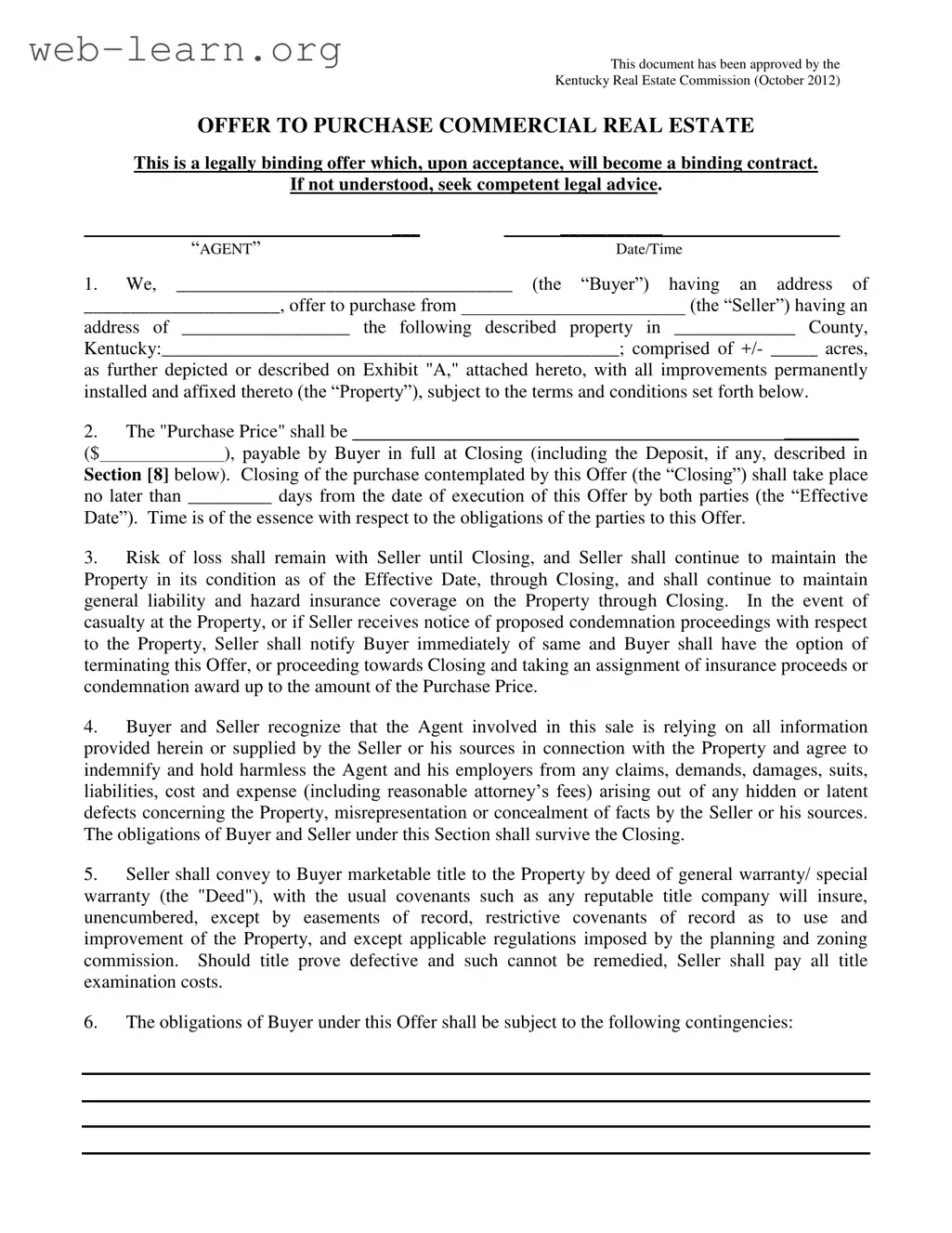
The Home Sale Contract in Kentucky is an essential document for anyone looking to buy or sell property in the state. This legally binding offer outlines the terms and conditions of the sale, ensuring that both buyers and sellers understand their rights and responsibilities. It begins with the identification of the buyer and seller, along with the specific property details, including its location and size. The contract sets a clear purchase price, which is to be paid in full at closing. Time is emphasized as a critical factor, with a specified closing date that both parties must adhere to. Risk of loss remains with the seller until the closing occurs, and the seller is responsible for maintaining the property’s condition during this period. The contract also addresses title transfer, ensuring that the buyer receives a marketable title, and outlines the responsibilities regarding any existing leases or taxes. Additionally, a deposit is required to show good faith, which is held in escrow and applied to the purchase price. Both parties are encouraged to seek legal advice if they have questions, as understanding this contract is vital for a smooth transaction. With provisions for indemnification and confidentiality, the Home Sale Contract aims to protect the interests of both parties throughout the sale process.
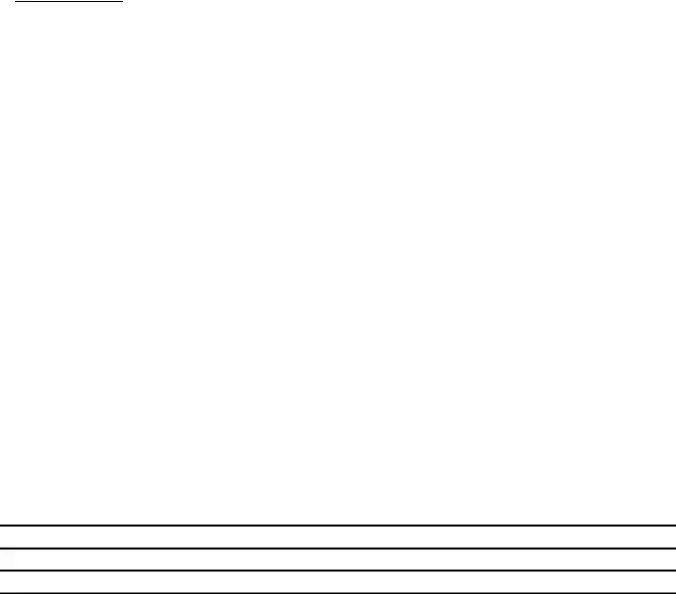
This document has been approved by the
Kentucky Real Estate Commission (October 2012)
OFFER TO PURCHASE COMMERCIAL REAL ESTATE
This is a legally binding offer which, upon acceptance, will become a binding contract.
If not understood, seek competent legal advice.
|
___ |
|
|
___________ |
|
|
“AGENT” |
|
|
Date/Time |
|
1. |
We, ____________________________________ |
(the “Buyer”) having an address of |
|||
_____________________, offer to purchase from ________________________ (the “Seller”) having an
address of __________________ the following described property in _____________ County,
Kentucky:_________________________________________________; comprised of +/- _____ acres,
as further depicted or described on Exhibit "A," attached hereto, with all improvements permanently installed and affixed thereto (the “Property”), subject to the terms and conditions set forth below.
2. |
The "Purchase |
Price" shall be |
________ |
|
($ |
), |
payable by Buyer in full at Closing (including the Deposit, if any, described in |
||
Section [8] below). Closing of the purchase contemplated by this Offer (the “Closing”) shall take place no later than _________ days from the date of execution of this Offer by both parties (the “Effective
Date”). Time is of the essence with respect to the obligations of the parties to this Offer.
3.Risk of loss shall remain with Seller until Closing, and Seller shall continue to maintain the Property in its condition as of the Effective Date, through Closing, and shall continue to maintain general liability and hazard insurance coverage on the Property through Closing. In the event of casualty at the Property, or if Seller receives notice of proposed condemnation proceedings with respect to the Property, Seller shall notify Buyer immediately of same and Buyer shall have the option of terminating this Offer, or proceeding towards Closing and taking an assignment of insurance proceeds or condemnation award up to the amount of the Purchase Price.
4.Buyer and Seller recognize that the Agent involved in this sale is relying on all information provided herein or supplied by the Seller or his sources in connection with the Property and agree to
indemnify and hold harmless the Agent and his employers from any claims, demands, damages, suits, liabilities, cost and expense (including reasonable attorney’s fees) arising out of any hidden or latent
defects concerning the Property, misrepresentation or concealment of facts by the Seller or his sources. The obligations of Buyer and Seller under this Section shall survive the Closing.
5.Seller shall convey to Buyer marketable title to the Property by deed of general warranty/ special warranty (the "Deed"), with the usual covenants such as any reputable title company will insure, unencumbered, except by easements of record, restrictive covenants of record as to use and improvement of the Property, and except applicable regulations imposed by the planning and zoning commission. Should title prove defective and such cannot be remedied, Seller shall pay all title examination costs.
6.The obligations of Buyer under this Offer shall be subject to the following contingencies:

7.At Closing, all leases, if any, affecting the Property shall be assigned to Buyer, all advance rental collections, if any, and taxes due and payable in the calendar/fiscal year of Closing shall be prorated, and all security deposits shall be transferred to Buyer. Seller shall be responsible for execution and delivery of the Deed, and payment of Seller's attorney's fees, any transfer tax, preparation and recording costs of the Deed. Buyer shall be responsible for Buyer's attorney's fees, any costs and fees associated with Buyer's financing, and any costs associated with Buyer's due diligence relating to the Property.
8.As evidence of good faith securing this Offer, a "Deposit" of $____________ shall be made by Buyer upon Seller’s acceptance of this Offer, to be held in escrow by the Agent and to be applied to the Purchase Price at Closing, or refunded to Buyer if Buyer terminates this Offer as a result of Buyer's
failure to satisfy the contingencies set forth in Section 6 above. The Deposit shall only be removed from the Agent’s escrow account, by written agreement of the parties, by court order, or as provided by law, in accordance with KRS 324.111(4). If Buyer fails to perform Buyer’s obligations hereunder, Seller
may/shall accept the Deposit as liquidated damages, and both parties shall sign a document releasing each other from all obligations and liabilities under this Offer. If the Seller fails to perform Seller's obligations hereunder, Buyer may pursue any available remedy at law or in equity.
9.Possession of the Property shall be delivered to the Buyer at Closing.
10.In the event either Seller or Purchaser is participating in a like kind exchange of real property under Section 1031 of the Internal Revenue Code, the other party shall, at no cost to such party, reasonably cooperate in connection with the exchange.
11.Seller agrees to indemnify Buyer against and hold Buyer harmless from any loss, damage or liability incurred by Buyer and arising hereunder, as a result of Seller's negligence or willful misconduct. Buyer agrees to indemnify Seller against and hold Seller harmless from any loss, damage or liability incurred by Seller and arising hereunder, as a result of Buyer's negligence or willful misconduct.
12.Seller shall pay to the above Agent a real estate fee outlined in a separate agreement. All parties
herein acknowledge thatrepresents the interest of the Seller only. The
commission is earned upon acceptance of this Offer, but subject to any contingencies specified herein. If transfer of title is not completed because of failure of Buyer or Seller to perform their respective
Buyer’s Initials: ________________ |
Seller’s Initials:_________________ |
Date/Time: ____________________ |
Date/Time: ____________________ |
|
2 |
obligations hereunder, the defaulting party, in addition to all other remedies provided herein or by law, shall pay the commission provided above and reasonable attorney's fees incurred by the
13.Any notice required hereunder, excluding the notice in paragraph 17 below, shall be hand delivered or delivered by certified mail or by nationally recognized overnight delivery service, to the respective addresses for Buyer and/or Seller (as applicable) set forth in Section 1 above.
14.All terms and provisions of this Offer shall be held in confidence by the Seller and Buyer, and neither Seller nor Buyer shall disclose the terms hereof to any third party except for the officers, agents and employees of Seller and Buyer.
15.We have read the entire contents of this Offer and acknowledge receipt of same. We are not relying on verbal statements not contained herein. The Buyer further certifies that Buyer has examined the Property and that Buyer is thoroughly acquainted with its condition and accepts it as such.
16.This clause is optional. It is effective if both parties initial below it.
The parties agree to resolve any disputes arising under this agreement first through mediation and, if unsuccessful, through arbitration taking place in the state of Kentucky. Any disputes within the jurisdiction of the Small Claims Court ($1,500 or lower) will be handled by that court.
Submitted ata.m./p.m. EST, on ___________, 20___. Unless accepted and delivered to
Buyer by ______ a.m./p.m. EST, on the _____ day of ____________, 20___, this Offer shall be null and
void.
Buyer:
By:
Its:
The above Offer is accepted this __________ day of _________, 20___ at ______a.m./p.m. EST.
Seller:
By:_________________________________
Its:_________________________________
3
Exhibit A
Description of Property
[include deed reference, legal description, drawing or plat]
4
| Fact Name | Fact Description |
|---|---|
| Governing Law | The Home Sale Contract in Kentucky is governed by Kentucky state law. |
| Binding Nature | This document is a legally binding offer that becomes a contract upon acceptance. |
| Deposit Requirement | A good faith deposit is required from the Buyer upon acceptance of the offer. |
| Risk of Loss | The Seller retains the risk of loss until the Closing occurs. |
| Title Conveyance | The Seller must convey marketable title to the Buyer via a general warranty deed. |
Filling out the Home Sale Contract in Kentucky is an important step in the process of purchasing or selling real estate. This document outlines the terms and conditions of the sale, ensuring that both parties understand their rights and obligations. Once completed and signed, the contract will serve as a legally binding agreement between the buyer and seller.
The Home Sale Contract Kentucky form is a legally binding document that outlines the terms of a real estate transaction between a buyer and a seller in Kentucky. It becomes a binding contract upon acceptance by both parties.
The contract includes several important sections, such as:
At Closing, the buyer will receive possession of the property, and the seller will convey marketable title through a deed. Any leases, rental collections, and taxes due will be prorated, and security deposits will be transferred to the buyer.
The Deposit serves as a good faith measure to secure the buyer's offer. It is held in escrow and applied to the purchase price at Closing. If the buyer fails to fulfill their obligations, the seller may retain the Deposit as liquidated damages.
The obligations of the buyer are subject to specific contingencies, which may include financing, inspections, or other conditions that must be met before the sale can proceed. These contingencies protect the buyer's interests.
The seller retains the risk of loss until Closing. They must maintain the property in its current condition and keep insurance coverage active. If any damage occurs, the seller must notify the buyer immediately, who can then decide to terminate the offer or proceed with the Closing.
If the title is found to be defective and cannot be remedied, the seller is responsible for paying all title examination costs. The seller must convey a marketable title to the buyer at Closing.
Yes, both parties must keep the terms of the contract confidential. Disclosure is only allowed to the respective officers, agents, and employees of the buyer and seller.
If a dispute arises, the parties agree to first attempt mediation. If that fails, arbitration will be pursued in Kentucky. Small claims disputes under $1,500 will be handled in Small Claims Court.
Filling out the Home Sale Contract in Kentucky can be a straightforward process, but many people make common mistakes that can lead to complications down the line. One frequent error is leaving out crucial information. Buyers and sellers must ensure that all sections of the form are fully completed. Omitting details like the property address, purchase price, or the names of the parties involved can render the contract invalid.
Another mistake often made is failing to understand the terms of the contract. It's vital for both parties to read and comprehend each section. If any part of the contract is unclear, seeking legal advice can prevent misunderstandings. Ignoring this step may lead to disputes later, which could have been avoided with proper guidance.
Many people also overlook the importance of dates. The contract specifies a closing date, and both parties need to agree on this timeline. If the date is left blank or incorrectly filled out, it can create confusion regarding when the sale should be finalized. Additionally, the "Effective Date" should be clearly stated to avoid any potential delays.
Buyers sometimes underestimate the significance of the deposit. This amount should be specified in the contract and reflects the buyer's commitment to the purchase. Failing to include a deposit or not understanding its implications can lead to financial issues or disputes over the earnest money.
Another common oversight is not addressing contingencies adequately. Buyers and sellers should clearly outline any conditions that must be met for the sale to proceed. This includes financing, inspections, or other requirements. If contingencies are vague or missing, it may lead to complications if issues arise later in the process.
People often forget to include the necessary signatures. The contract must be signed by both the buyer and the seller to be legally binding. Missing signatures can invalidate the agreement, leaving both parties without legal recourse.
Misunderstanding the responsibilities of each party can also lead to problems. The contract outlines who is responsible for what, including costs related to closing, repairs, and other obligations. If these responsibilities are not clearly understood or agreed upon, disputes can arise.
Another frequent mistake is failing to attach any required exhibits or additional documentation. If the property description or other important information is not included, it can lead to confusion and potential legal issues. Always ensure that all relevant documents are attached to the contract.
Lastly, many individuals do not keep copies of the signed contract. It is essential for both parties to retain a copy for their records. Without documentation, it can be challenging to resolve disputes or misunderstandings later on.
By being aware of these common mistakes, buyers and sellers can navigate the Home Sale Contract process more smoothly. Attention to detail and a clear understanding of the terms can help ensure a successful transaction.
When engaging in a real estate transaction in Kentucky, several important documents accompany the Home Sale Contract. Each document plays a crucial role in ensuring that both buyers and sellers are protected and informed throughout the process. Below is a list of commonly used forms that you should be aware of.
Understanding these documents will help facilitate a smoother transaction and protect your interests. Always consider seeking professional guidance if you have questions about any of these forms or the overall process.
The Home Sale Contract in Kentucky shares similarities with several other real estate documents. Each document serves a specific purpose in the real estate transaction process, ensuring that both buyers and sellers are protected and informed. Here are four documents that are similar to the Home Sale Contract:
When filling out the Home Sale Contract Kentucky form, it’s essential to approach the task carefully to ensure that all details are accurate and compliant with legal standards. Here are seven important dos and don’ts to keep in mind:
Taking these steps can help ensure a smoother transaction and protect your interests throughout the home sale process.
This form is designed for both residential and commercial real estate transactions. Buyers and sellers can use it for various types of properties, ensuring flexibility in real estate dealings.
While the contract is binding once both parties sign, amendments can be made. Both parties must agree to any changes in writing, allowing for adjustments as needed.
The deposit serves as good faith but can be refunded under certain conditions. If the buyer terminates due to unmet contingencies, they can recover their deposit.
The seller must maintain the property in its current condition, but the risk of loss remains with them until closing. This means they must keep the property insured and notify the buyer of any damage.
Both parties have the right to terminate the contract under specific circumstances. If the seller fails to meet their obligations, the buyer can pursue legal remedies.
While it is not mandatory, seeking legal advice is highly recommended. Understanding the terms and implications of the contract can prevent future disputes and ensure informed decision-making.
Understanding the Home Sale Contract in Kentucky is crucial for both buyers and sellers. Here are some key takeaways to keep in mind:
By keeping these points in mind, you can navigate the Home Sale Contract process more effectively and with greater confidence.