When engaging in various activities, whether personal or professional, individuals often face potential risks and liabilities. To navigate these uncertainties, many turn to the Hold Harmless Agreement form. This important document serves as a protective measure, ensuring that one party agrees not to hold the other responsible for any injuries or damages that may arise during a specified event or activity. Typically, the form outlines the responsibilities of each party involved, detailing the scope of the agreement and the specific risks being addressed. By signing this agreement, participants can foster a sense of security, knowing that they have taken steps to mitigate potential legal repercussions. It is essential for anyone considering this form to understand its implications, as it can significantly influence liability and accountability in various situations. Moreover, the Hold Harmless Agreement can vary in complexity depending on the nature of the activity, making it crucial to tailor the document to meet specific needs and circumstances.
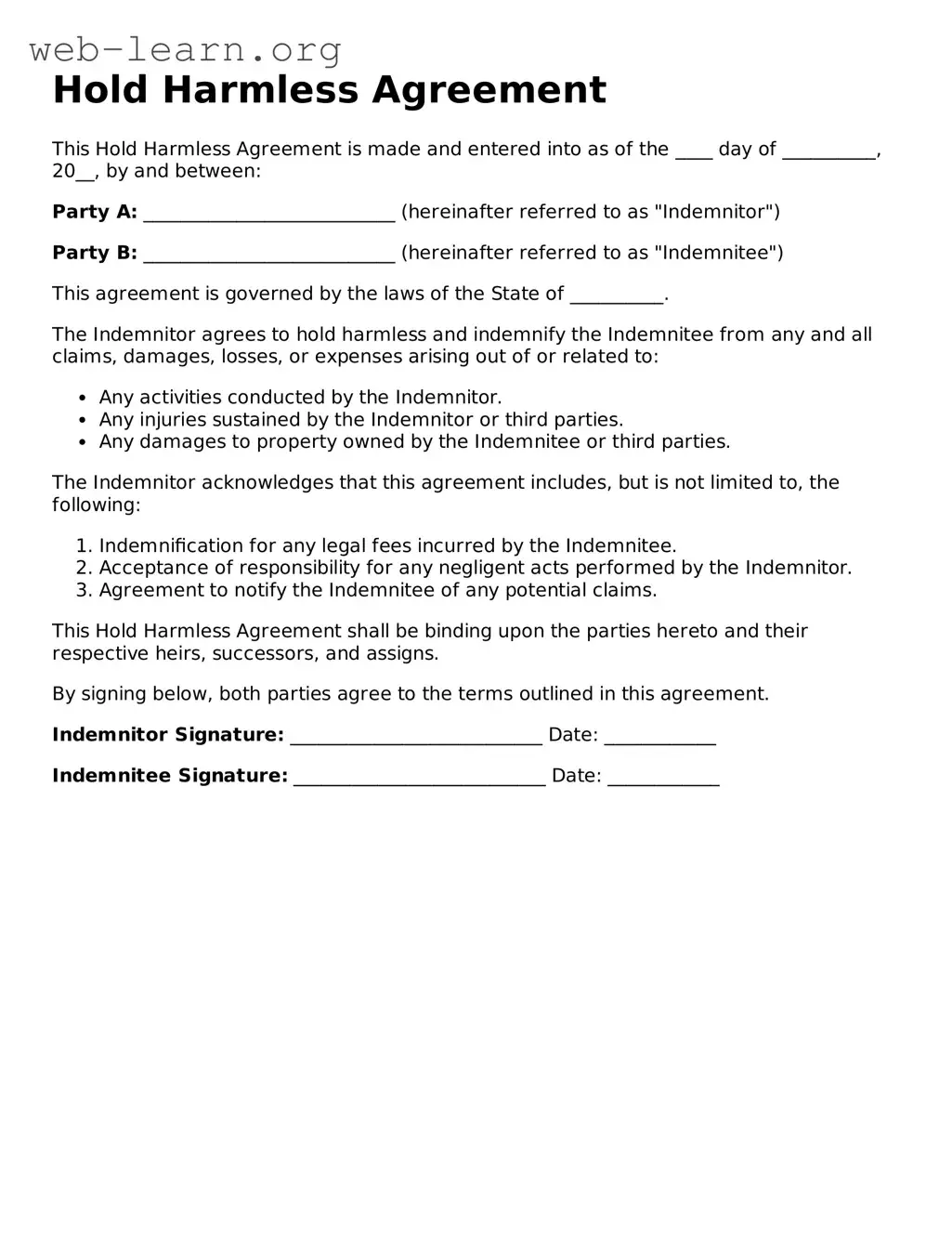
Hold Harmless Agreement
This Hold Harmless Agreement is made and entered into as of the ____ day of __________, 20__, by and between:
Party A: ___________________________ (hereinafter referred to as "Indemnitor")
Party B: ___________________________ (hereinafter referred to as "Indemnitee")
This agreement is governed by the laws of the State of __________.
The Indemnitor agrees to hold harmless and indemnify the Indemnitee from any and all claims, damages, losses, or expenses arising out of or related to:
The Indemnitor acknowledges that this agreement includes, but is not limited to, the following:
This Hold Harmless Agreement shall be binding upon the parties hereto and their respective heirs, successors, and assigns.
By signing below, both parties agree to the terms outlined in this agreement.
Indemnitor Signature: ___________________________ Date: ____________
Indemnitee Signature: ___________________________ Date: ____________
| Fact Name | Description |
|---|---|
| Definition | A Hold Harmless Agreement is a contract where one party agrees to protect another from legal liability. |
| Purpose | This agreement is often used to limit liability in various situations, such as events, construction projects, or services. |
| Common Uses | Commonly used in real estate transactions, rental agreements, and service contracts. |
| State-Specific Forms | Some states require specific language or forms for Hold Harmless Agreements. Always check local laws. |
| Governing Law - California | In California, the agreement must comply with Civil Code Section 2782 regarding construction contracts. |
| Governing Law - Texas | In Texas, the agreement must adhere to Chapter 151 of the Texas Civil Practice and Remedies Code. |
| Enforceability | These agreements are generally enforceable unless deemed unconscionable or against public policy. |
| Legal Advice | It is advisable to seek legal counsel before signing a Hold Harmless Agreement to understand its implications. |
Once you have your Hold Harmless Agreement form ready, the next step involves carefully filling it out to ensure clarity and accuracy. This document is essential for defining responsibilities and liabilities between parties involved in a specific activity or event. Follow these steps to complete the form effectively.
By following these steps, you will have a properly filled-out Hold Harmless Agreement form, ready for use in your specific context. Ensure that all parties retain a copy for their records.
What is a Hold Harmless Agreement?
A Hold Harmless Agreement is a legal document in which one party agrees to take responsibility for any potential losses, damages, or liabilities that may arise from a specific activity or event. Essentially, it protects one party from being held liable for certain risks associated with the actions of another party. These agreements are commonly used in various situations, such as rental agreements, construction contracts, and event planning.
Why would someone use a Hold Harmless Agreement?
People often use Hold Harmless Agreements to mitigate risk. For example, if you are hosting an event and invite guests to participate in activities, you might want to ensure that if someone gets injured, they cannot hold you liable. By having attendees sign a Hold Harmless Agreement, you create a legal understanding that they accept the risks involved. This can provide peace of mind and protect your financial interests.
Are there any limitations to a Hold Harmless Agreement?
Yes, there are limitations. While these agreements can provide significant protection, they cannot shield a party from all forms of liability. For instance, if gross negligence or intentional misconduct occurs, a court may not enforce the agreement. Additionally, the language used in the agreement must be clear and specific. Vague terms can lead to disputes about what is covered, so careful drafting is essential.
How do I create a Hold Harmless Agreement?
Creating a Hold Harmless Agreement typically involves several steps:
While you can find templates online, it may be wise to consult with a legal professional to ensure that your agreement meets all necessary legal requirements and adequately protects your interests.
Filling out a Hold Harmless Agreement can be straightforward, but many people make common mistakes that can lead to misunderstandings or legal issues later. One frequent error is failing to read the entire document before signing. It’s essential to understand all the terms and conditions outlined in the agreement. Skimming through the text might cause someone to miss critical clauses that could affect their rights.
Another mistake is not providing complete information. When filling out the form, it’s vital to include all relevant details, such as names, dates, and specific activities covered by the agreement. Incomplete information can render the agreement ineffective, leaving parties unprotected.
Some individuals neglect to include the necessary signatures. A Hold Harmless Agreement is not valid without the signatures of all parties involved. This simple oversight can lead to disputes later on, as one party might claim they are not bound by the terms of the agreement.
Additionally, many people fail to specify the scope of the agreement. It is crucial to clearly define what activities or situations the Hold Harmless Agreement covers. Without this clarity, the agreement may not hold up in court, and parties may find themselves exposed to liability.
Another common mistake is not considering the duration of the agreement. People often overlook how long the Hold Harmless Agreement will remain in effect. It’s important to specify whether the agreement is for a single event or an ongoing relationship to avoid confusion in the future.
Some individuals also forget to consult with a legal professional. While it may seem unnecessary, getting advice from someone knowledgeable about these agreements can prevent costly mistakes. Legal jargon can be confusing, but a professional can help clarify any concerns.
Another pitfall is assuming that a Hold Harmless Agreement is a one-size-fits-all document. Each situation is unique, and it’s essential to tailor the agreement to fit specific needs. Using a generic template without modifications can lead to gaps in protection.
People sometimes underestimate the importance of reviewing the agreement periodically. Situations change, and so do laws. Regularly reviewing the Hold Harmless Agreement ensures that it remains relevant and effective in protecting all parties involved.
Finally, some individuals forget to keep a copy of the signed agreement. It’s crucial to retain a copy for personal records. Without it, proving the terms of the agreement can become challenging if disputes arise.
A Hold Harmless Agreement is a critical document used to protect one party from liability for certain actions or events. When preparing this agreement, several other forms and documents may also be needed to ensure comprehensive coverage and clarity. Below is a list of commonly used documents that complement the Hold Harmless Agreement.
Utilizing these documents alongside the Hold Harmless Agreement can help clarify responsibilities and protect all parties involved in a transaction or event. Proper documentation is essential for minimizing risks and ensuring a clear understanding of each party's obligations.
A Hold Harmless Agreement is a useful legal document designed to protect one party from liability for certain actions or events. Several other documents serve similar purposes in various contexts. Here’s a look at four documents that share similarities with a Hold Harmless Agreement:
Understanding these documents can help individuals and businesses navigate their legal responsibilities effectively. Each serves a unique purpose, yet they all emphasize the importance of protecting oneself from potential risks.
When completing a Hold Harmless Agreement form, it is important to follow certain guidelines to ensure clarity and legality. Below is a list of things you should and shouldn't do.
Things You Should Do:
Things You Shouldn't Do:
Many individuals have misunderstandings about the Hold Harmless Agreement form. Below are six common misconceptions along with clarifications.
Some people believe that signing a Hold Harmless Agreement means they cannot be held liable for any actions. In reality, these agreements typically protect one party from claims arising from the actions of another party, but they do not eliminate all forms of liability.
Many assume that only businesses use Hold Harmless Agreements. However, individuals can also use these agreements in various personal situations, such as renting property or participating in recreational activities.
While Hold Harmless Agreements can be legally binding, their enforceability may depend on specific circumstances. Courts may not enforce them if they are deemed unreasonable or if they violate public policy.
Another misconception is that these agreements protect against claims of negligence. In many cases, they do not protect against gross negligence or willful misconduct.
Some believe that a standard Hold Harmless Agreement can be used for any situation. Each agreement should be tailored to the specific circumstances and needs of the parties involved.
Many think that signing a Hold Harmless Agreement means they accept all risks associated with an activity. In truth, it limits liability for specific risks outlined in the agreement, but it does not mean that all risks are accepted.
When it comes to filling out and using a Hold Harmless Agreement, there are several important points to keep in mind. This agreement serves to protect one party from legal liability for actions or events that may occur during a specified activity. Here are key takeaways to consider:
By paying attention to these key aspects, individuals and organizations can effectively navigate the complexities of Hold Harmless Agreements, ensuring they serve their intended purpose while minimizing potential risks.