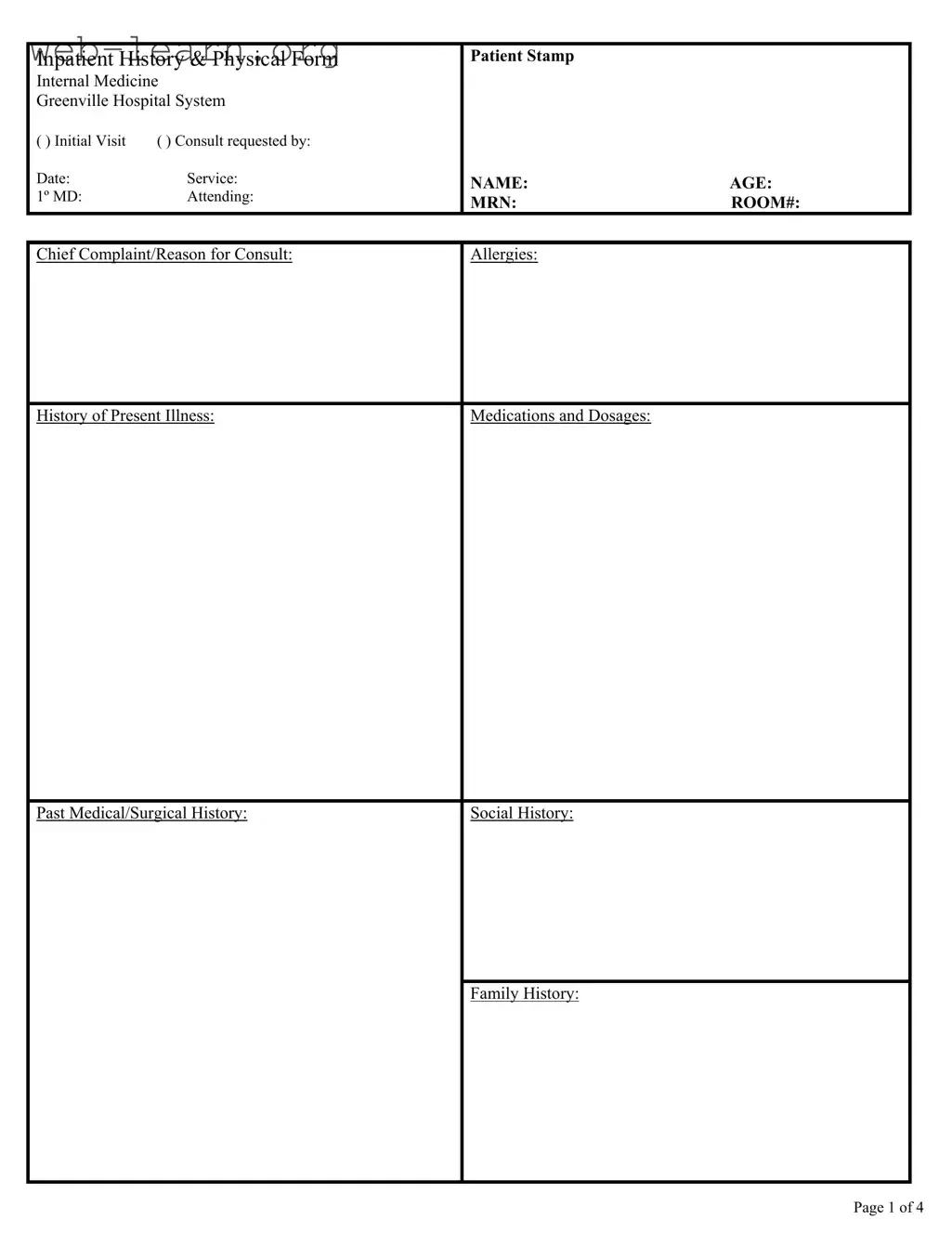
The History and Physical (H&P) form serves as a vital tool in the medical field, capturing essential information about a patient's health status during their initial visit or consultation. This comprehensive document begins with identifying details such as the patient's name, age, and medical record number, which are crucial for accurate record-keeping and continuity of care. It includes a section for the chief complaint, allowing healthcare providers to understand the primary reason for the patient's visit. Allergies, medications, and the history of present illness provide context for the current health issue, while past medical and surgical history sheds light on any underlying conditions that may influence treatment decisions. Additionally, the social and family histories help clinicians assess risk factors that could impact the patient's health. A thorough review of systems follows, addressing various body systems to ensure no significant symptoms are overlooked. The physical examination section details the findings from the clinician's assessment, including vital signs and specific examinations of the head, neck, cardiovascular, respiratory, gastrointestinal, musculoskeletal, and neurological systems. Finally, the assessment and plan section allows the healthcare provider to summarize their findings and outline the next steps in the patient's care. This structured approach not only enhances communication among healthcare professionals but also ensures that patients receive comprehensive and personalized care.

Inpatient History & Physical Form |
Patient Stamp |
|
||
Internal Medicine |
|
|
||
Greenville Hospital System |
|
|
||
( ) Initial Visit |
( ) Consult requested by: |
|
|
|
Date: |
Service: |
NAME: |
AGE: |
|
1º MD: |
Attending: |
|||
MRN: |
ROOM#: |
|||
|
|
|||
Chief Complaint/Reason for Consult:
Allergies:
History of Present Illness:
Medications and Dosages:
Past Medical/Surgical History:
Social History:
Family History:
Page 1 of 4

Comprehensive Review of Systems
ROS NOT OBTAINABLE BECAUSE
Patient Stamp
Constitutional: |
|
Genitourinary: |
|
|
YES NO |
DESCRIBE |
YES NO |
DESCRIBE |
|
Fever, sweats or chills |
|
Dysuria, frequency or urgency |
||
|
Menstrual irregularities |
|
||
Fatigue, anorexia, weight loss or gain |
|
|||
LMP ___________________ |
||||
Weakness |
|
|||
|
Frequent UTI’s |
|
||
|
|
|
||
|
|
Pain/Hematuria |
|
|
Skin: |
|
Musculoskelatal: |
Rashes, no skin breakdown |
|
Muscle aches, arthralgias or arthritis |
|
|
|
|
|
Neurologic: |
|
|
Mental status changes |
Head: |
|
|
|
Headaches |
|
Headache |
|
|
|
Dizziness |
|
Visual changes |
|
|
|
Weakness or numbness |
|
Earache, sinus problems, sore throat |
|
|
|
Seizures |
|
Cough, snoring or mouth ulcers |
|
|
|
Ataxia |
|
|
|
|
|
|
Hematopoietic: |
|
|
Lymphadenopathy |
|
|
Bleeding tendencies |
|
|
|
Cardiovascular: |
|
Psychiatric: |
Chest pain or palpitations |
|
History of anxiety or depression |
Syncope |
|
Hallucinations/Delusions |
Edema |
|
|
|
|
|
|
|
Endocrine: |
|
|
History of diabetes |
|
|
History of thyroid problems |
|
|
|
|
|
Other Symptoms: |
Respiratory: |
|
|
Shortness of breath |
|
|
Cough or sputum production |
|
|
Dyspnea on exertion orthopnea |
|
|
Pleuritic chest pain |
|
|
|
|
|
Gastrointestinal: |
|
|
Heartburn, dysphagia |
|
|
Nausea or vomiting |
|
|
Diarrhea or constipation |
|
|
Melena or BRBPR |
|
|
Hematemesis |
|
|
Abdominal pain |
|
|
Page 2 of 4

Patient Stamp
Physical Exam |
|
|
Labs and Studies |
||
Vitals: |
|
|
|
CBC: |
|
Wt: |
Temp: |
BP: |
P: |
|
|
HT: |
Resp: |
Sat: |
|
|
|
Constitutional: |
nl general appearance |
|
|
|
|
|
|
|
|
|
|
Head: |
|
|
BMP: |
|
|
|
|
PERRLA |
|
|
|
|
|
EOMI |
|
|
|
|
|
nl sclera |
|
|
|
|
|
Vision |
|
|
|
Ears, Nose, Mouth & Throat: |
|
CXR: |
|
||
|
|
nl inspection of nasal |
|
|
|
|
|
mucosa, septum, turbinates, |
|
|
|
|
|
teeth, gums & oropharynx |
|
|
|
|
|
nl ear canal and T |
|
|
|
|
|
|
|
|
|
Neck: |
|
nl neck appearance & |
|
EKG: |
|
|
|
jugular veins |
|
|
|
|
|
Thyroid not palpable, |
|
|
|
|
|
|
|
|
|
Lymph Nodes |
|
nl neck, supraclavicular |
|
|
|
|
|
or axillary adenopathy |
|
|
|
|
|
|
|
|
|
Skin/Extremities: |
Rashes, lesions or ulcers |
|
|
|
|
|
|
Digits & nails |
|
|
|
|
|
Edema |
|
|
|
Breast Evaluation: |
No skin changes |
|
|
|
|
|
|
No nipple discharge |
|
|
|
|
|
No lumps/masses |
|
|
|
|
|
Fibrocystic changes |
|
|
|
Respiratory: |
|
Chest symmetric, nl chest |
|
|
|
|
|
Expansion & respiratory effort |
|
|
|
|
|
nl auscultation |
|
|
|
|
|
nl chest percussion & |
|
|
|
|
|
palpation |
|
|
|
Cardiovascular: |
Reg rhythm |
|
|
|
|
|
|
No murmur, gallop or rub |
|
|
|
|
|
Periph vasc no by ovserv & |
|
|
|
|
|
palpation |
|
|
|
Gastrointestinal: |
No tenderness or masses |
|
|
|
|
|
|
Liver & spleen not felt |
|
|
|
|
|
nl bowel sounds |
|
|
|
|
|
Heme negative stool |
|
|
|
Musculoskeletal: |
nl muscle strength, movement & |
Neurologic: |
Alert and oriented |
||
|
|
tone, no focal atrophy |
|
|
nl reflexes upper and lower |
|
|
nl gait & station |
|
|
extremities |
|
|
|
|
|
Cranial nerves intact |
no pelvic exam |
|
Psychiatric: |
|
||
|
|
nl testes |
|
|
nl mood/affect |
Page 3of 4

Patient Stamp
Assessment:
Plan:
Attending HPI:
Attending PE:
Attending Assessment and Plan:
Resident signature: |
MD |
PGY1, PGY2, PGY3 Date: |
Pager: |
/1439 |
|
Resident name printed: |
Dictated by: |
Intern Pager: |
/1872 |
||
Attending signature: |
|
Date: |
|
. |
|
Attending: Ansari Atkisson Bowers Bruch Call Chang Cochrane Curran Ferraro Fuller Gilroy Hayes Kelly Knight Latham McCraw McFarland Meyer
Page 4 of 4
| Fact Name | Description |
|---|---|
| Purpose of the Form | The History and Physical (H&P) form is used to document a patient's medical history and physical examination findings. This information is crucial for guiding treatment decisions and ensuring continuity of care. |
| Content Overview | This form typically includes sections for patient identification, chief complaint, medical history, social history, family history, review of systems, physical exam findings, and an assessment and plan. |
| Legal Requirements | In many states, healthcare providers are required by law to complete a History and Physical form for all patients admitted to a hospital. This ensures compliance with health regulations and standards of care. |
| State-Specific Forms | Different states may have specific requirements regarding the H&P form. For example, California mandates that the form must be completed within 24 hours of admission, as outlined in the California Code of Regulations. |
| Importance of Accuracy | Accurate and thorough documentation on the H&P form is vital. It helps prevent medical errors and ensures that all healthcare providers involved in a patient's care have access to the same information. |
| Review and Updates | The H&P form should be reviewed and updated regularly, especially if a patient's condition changes or new information becomes available. This practice promotes effective communication among the healthcare team. |
Filling out the History and Physical form is a crucial step in documenting a patient's medical information. This form captures essential details that will inform the healthcare provider's assessment and treatment plan. Follow these steps to ensure accurate and complete information is provided.
Next, move on to the comprehensive review of systems. This section requires careful attention to detail to ensure all relevant symptoms are captured. Complete the physical exam section by noting vital signs and findings from the examination. Finally, summarize the assessment and plan, including signatures from both the attending physician and the resident.
What is the purpose of the History and Physical (H&P) form?
The History and Physical form serves as a comprehensive document that captures essential information about a patient’s medical history and current health status. It is used to guide medical professionals in diagnosing and treating patients effectively. This form includes details such as the patient's chief complaint, allergies, medications, and past medical history, all of which are crucial for informed clinical decision-making.
Who fills out the H&P form?
The H&P form is typically completed by a healthcare provider, such as a physician or a resident, during the initial visit or consultation. They gather information from the patient through direct questioning and physical examination. This process ensures that the information recorded is accurate and reflects the patient's current health condition.
What information is included in the H&P form?
The H&P form includes various sections that cover:
Why is a comprehensive review of systems important?
The comprehensive review of systems is a critical component of the H&P form. It allows healthcare providers to identify any additional symptoms that may not have been initially reported by the patient. This thorough assessment helps in forming a complete picture of the patient's health and can uncover underlying conditions that require attention.
How does the H&P form contribute to patient care?
The H&P form contributes significantly to patient care by providing a structured way to document and communicate a patient's health information. It allows for continuity of care, as subsequent providers can refer to the form to understand the patient's medical history and current treatment plan. This reduces the likelihood of errors and enhances the overall quality of care.
What happens to the H&P form after it is completed?
Once the H&P form is completed, it becomes part of the patient's medical record. This record is stored securely and is accessible to authorized healthcare providers involved in the patient's care. The information may be updated as necessary, particularly if the patient's condition changes or if new treatments are initiated.
Can patients access their H&P form?
Yes, patients have the right to access their medical records, including the H&P form. They can request copies through the healthcare facility's medical records department. It is important for patients to review their records to ensure accuracy and to stay informed about their health status and treatment plans.
Filling out the History and Physical form can be a straightforward process, but many people make common mistakes that can lead to incomplete or inaccurate information. Here are nine mistakes to avoid when completing this important document.
One frequent error is leaving out key personal information. This includes the patient's name, age, and contact details. Without this information, healthcare providers may struggle to identify the patient or contact them for follow-up. Always double-check that these details are filled out correctly at the top of the form.
Another common mistake is not providing a clear chief complaint. This section should summarize the main reason for the visit. Vague descriptions can lead to misunderstandings. Instead of saying "not feeling well," specify symptoms like "persistent cough" or "chest pain." Clarity is essential for effective treatment.
People often forget to list allergies. This section is crucial for ensuring patient safety. Even minor allergies can affect treatment decisions. Make sure to include any known allergies, along with the type of reaction experienced. This information is vital for avoiding adverse reactions to medications.
In the section for medications and dosages, individuals frequently omit current medications. This can lead to dangerous drug interactions. It's important to list all medications, including over-the-counter drugs and supplements. If unsure, consult with a healthcare provider to ensure a complete list.
Another mistake is providing an incomplete medical history. This includes past medical and surgical history, which can significantly impact current treatment. Be thorough and honest about previous health issues, surgeries, and any chronic conditions. Omissions can lead to misdiagnosis or ineffective treatment plans.
When discussing social history, some people fail to mention lifestyle factors that could affect health. This includes smoking, alcohol use, and exercise habits. These details help healthcare providers understand risk factors and tailor advice accordingly.
In the review of systems section, individuals often check "no" without elaborating. While it’s important to indicate negative findings, providing additional context can be helpful. For example, if there are no neurological symptoms, stating that there are no headaches or dizziness can clarify the patient's condition further.
Another area of concern is the physical exam section. Some people skip this entirely or fill it out inaccurately. It’s essential to report findings accurately, as this information is critical for diagnosis and treatment. If unsure about any physical exam details, consult with a healthcare professional.
Lastly, many forget to sign the form or provide the date. An unsigned form may be considered incomplete, delaying care. Always review the entire document before submitting it to ensure all sections are filled out, signed, and dated.
The History and Physical (H&P) form is a crucial document in patient care, providing a comprehensive overview of a patient's medical history and current condition. Alongside the H&P form, several other documents play a vital role in ensuring thorough patient evaluation and treatment planning. Here are five important forms often used in conjunction with the H&P:
Each of these forms complements the History and Physical form, contributing to a holistic approach to patient care. Together, they ensure that healthcare providers have the information needed to make informed decisions and deliver safe, effective treatment.
When filling out the History and Physical form, attention to detail is crucial. Here are seven things to keep in mind, both what to do and what to avoid.
By following these guidelines, individuals can help ensure that their medical history is accurately represented, facilitating better healthcare outcomes.
Understanding the History and Physical (H&P) form is crucial for both patients and healthcare providers. However, several misconceptions can lead to confusion. Here are four common misunderstandings:
By addressing these misconceptions, patients can feel more empowered and engaged in their healthcare journey. Understanding the purpose and importance of the H&P form is a step towards better health outcomes.
Accurate completion of the History and Physical (H&P) form is crucial for effective patient care.
Always begin with the patient's basic information, including name, age, and medical record number (MRN).
Document the chief complaint clearly, as this guides the focus of the evaluation.
Include a thorough history of present illness to provide context for the patient’s current condition.
List all medications and dosages the patient is currently taking to avoid potential drug interactions.
Gather information on the patient's past medical and surgical history to identify any relevant health issues.
Incorporate social and family histories to understand factors that may influence the patient’s health.
Perform a comprehensive review of systems to identify any additional symptoms that may not be immediately apparent.
Ensure that the physical exam findings are recorded accurately, as they are essential for diagnosis and treatment planning.
Finally, the assessment and plan section should clearly outline the diagnosis and proposed next steps for treatment.