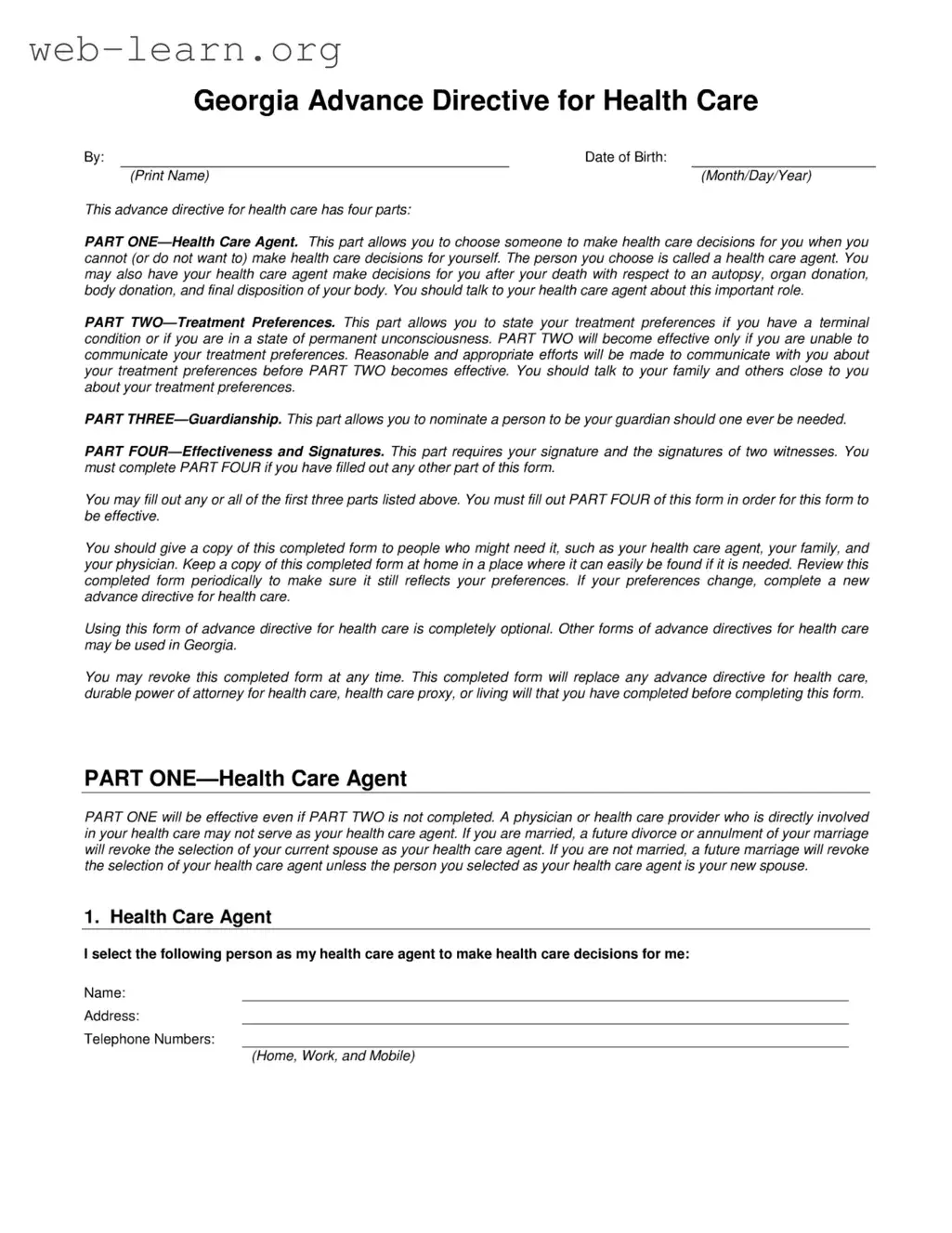
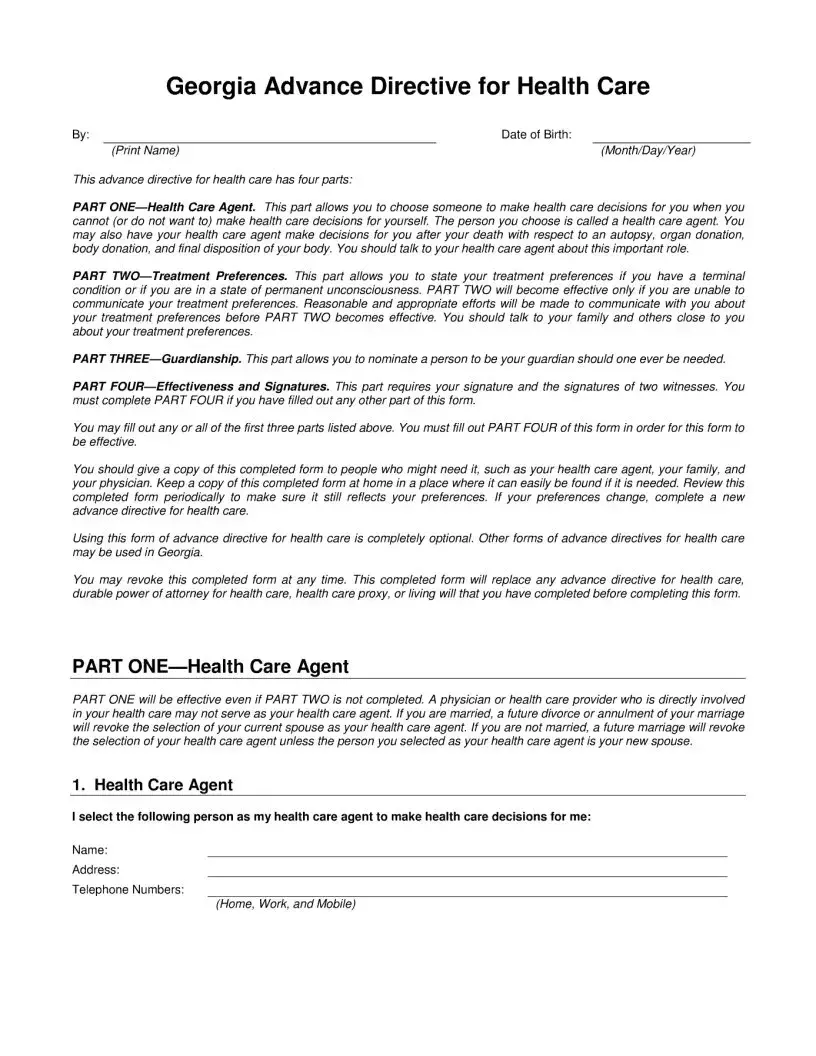
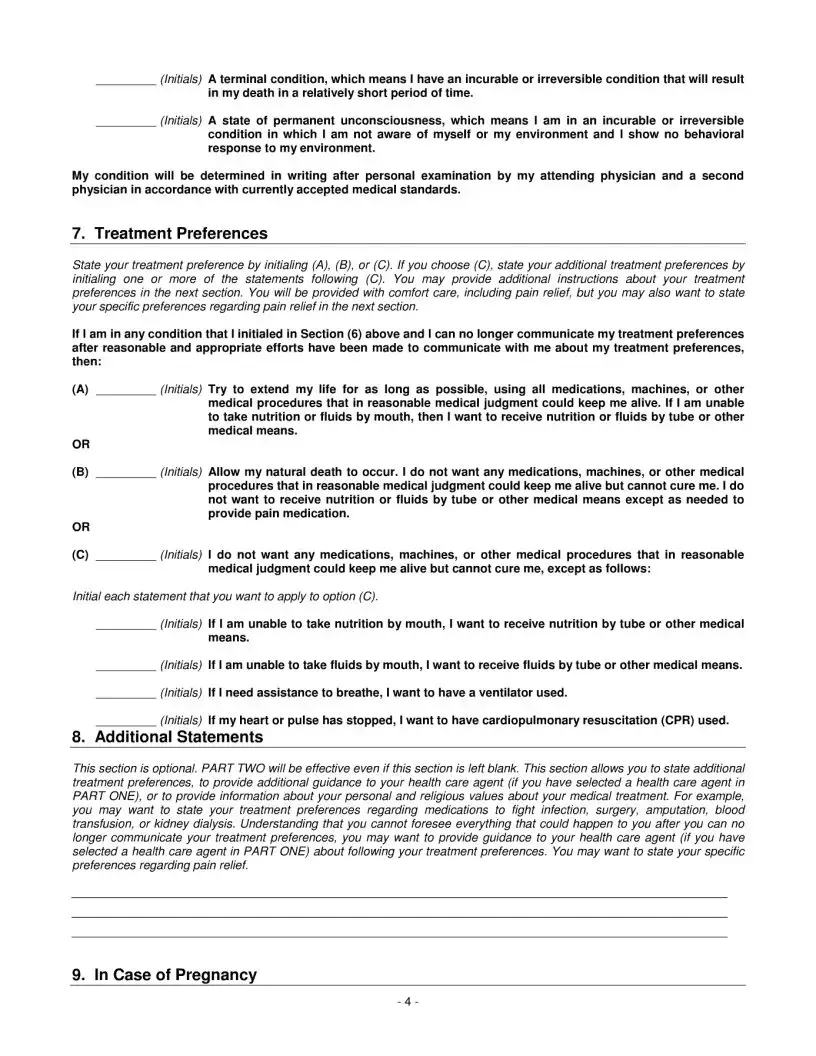
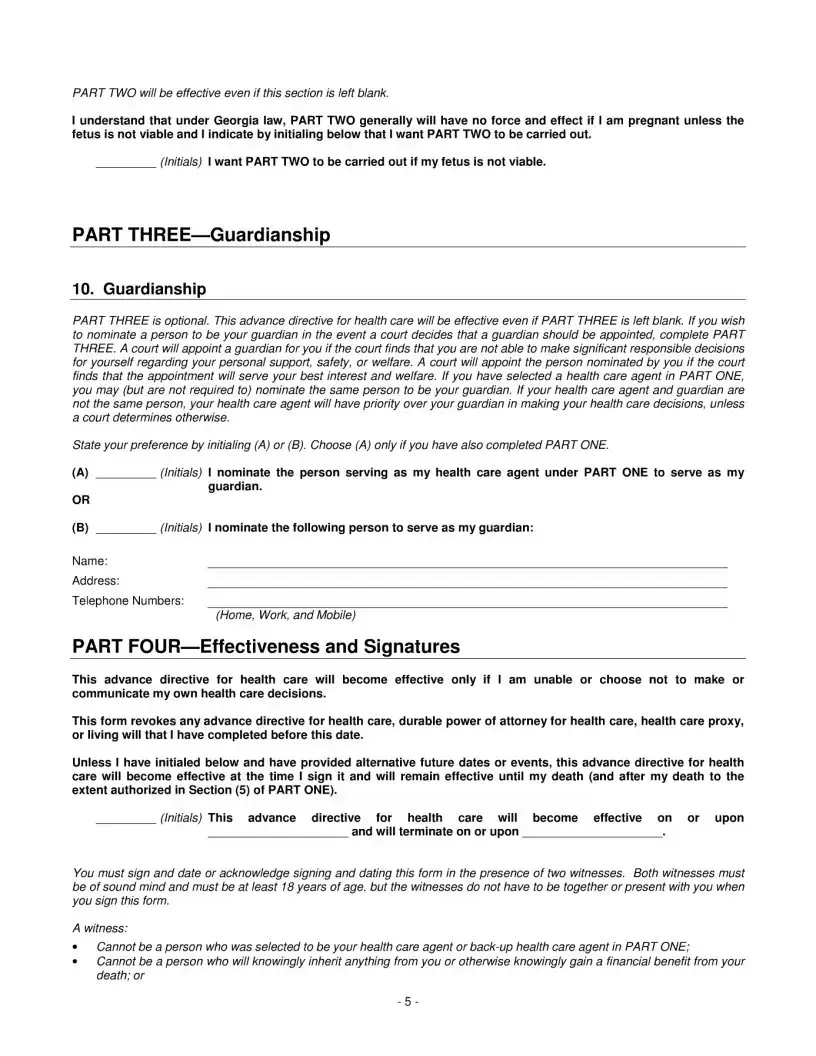
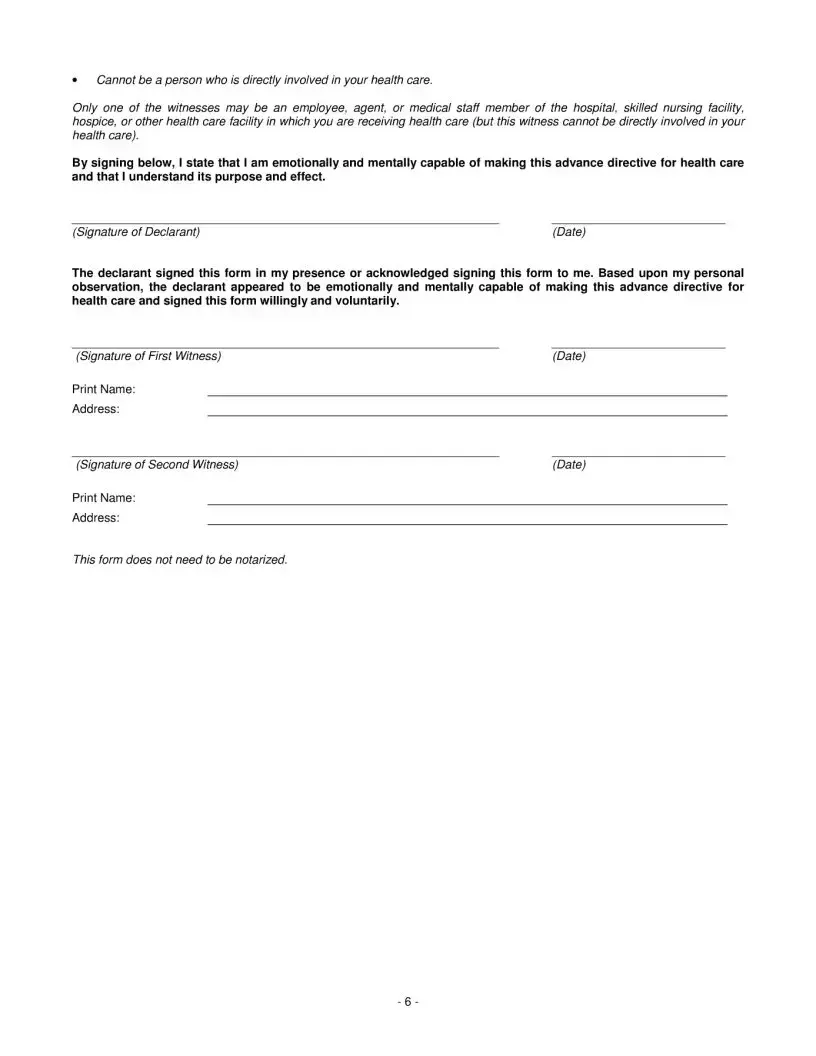
In Georgia, the Advance Directive for Health Care serves as a vital tool for individuals wishing to outline their medical preferences and designate a trusted person to make decisions on their behalf when they are unable to do so. This comprehensive form is divided into four distinct parts, each addressing different aspects of health care decision-making. The first section allows you to appoint a health care agent, someone who will step in to make critical health care choices if you are incapacitated. This agent can also address matters related to your body after death, such as organ donation and final arrangements. The second part focuses on your treatment preferences, enabling you to express your wishes regarding medical interventions in the event of a terminal condition or permanent unconsciousness. It is essential to discuss these preferences with your loved ones to ensure clarity and understanding. The third section allows for the nomination of a guardian, should one be needed in the future. Finally, the fourth part requires your signature and that of two witnesses, making the directive legally binding. It is crucial to keep a copy of this completed form accessible and to review it periodically, ensuring it aligns with your current wishes. The flexibility of the Georgia Advance Directive for Health Care allows you to customize it according to your needs, and it can be revoked or replaced at any time, offering peace of mind in navigating health care decisions.
| Fact Name | Details |
|---|---|
| Governing Law | The Georgia Advance Directive for Health Care is governed by Georgia Code § 31-32-1 to § 31-32-7. |
| Parts of the Form | The form consists of four parts: Health Care Agent, Treatment Preferences, Guardianship, and Effectiveness and Signatures. |
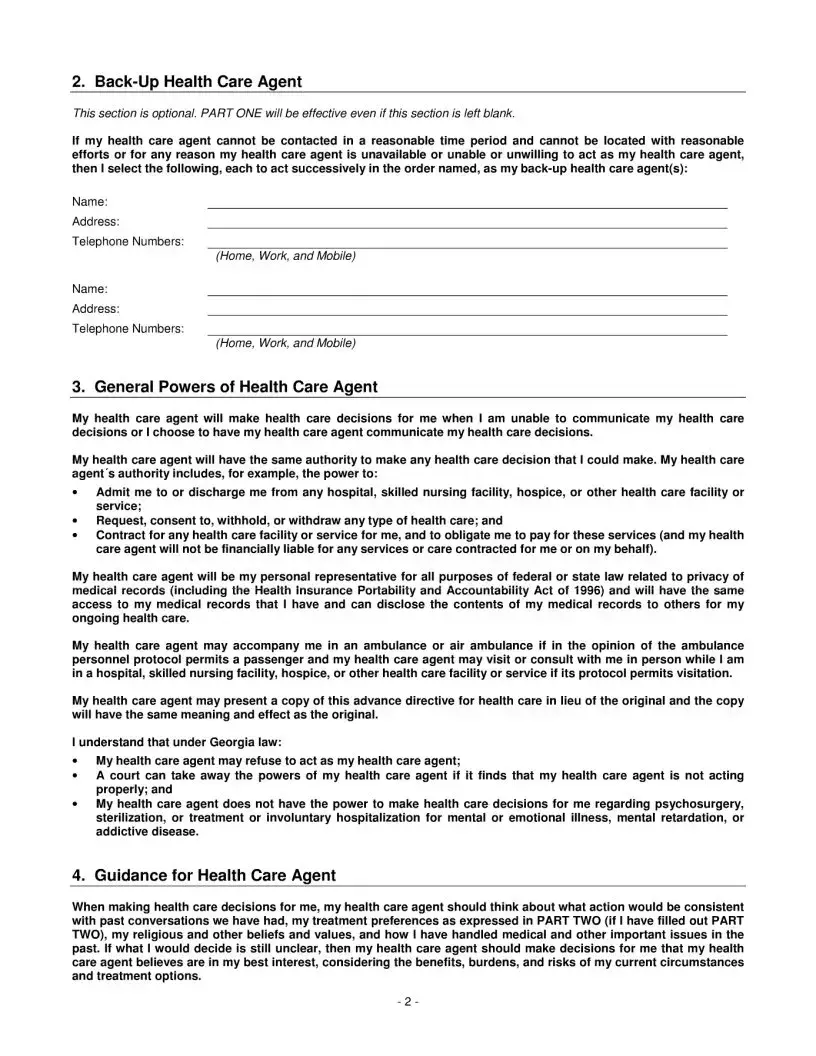
| Health Care Agent | You can appoint a health care agent to make decisions on your behalf when you are unable to do so. |
| Optional Sections | Sections for a back-up health care agent and treatment preferences are optional but recommended for clarity. |
| Revocation | You may revoke the directive at any time, and it will replace any previous directives you have made. |
Filling out the Health Care Directive Georgia form is a straightforward process. It involves making important decisions about your health care preferences and appointing someone to act on your behalf if you are unable to do so. Follow the steps below to complete the form accurately.
The Georgia Advance Directive for Health Care is a legal document that allows individuals to outline their health care preferences and appoint someone to make health care decisions on their behalf if they are unable to do so. This directive ensures that your wishes regarding medical treatment are respected, even when you cannot communicate them yourself.
The directive is divided into four main parts:
You can choose anyone you trust to be your health care agent, as long as they are at least 18 years old and are not your health care provider. It is essential to discuss this role with the person you choose to ensure they are willing to accept the responsibility.
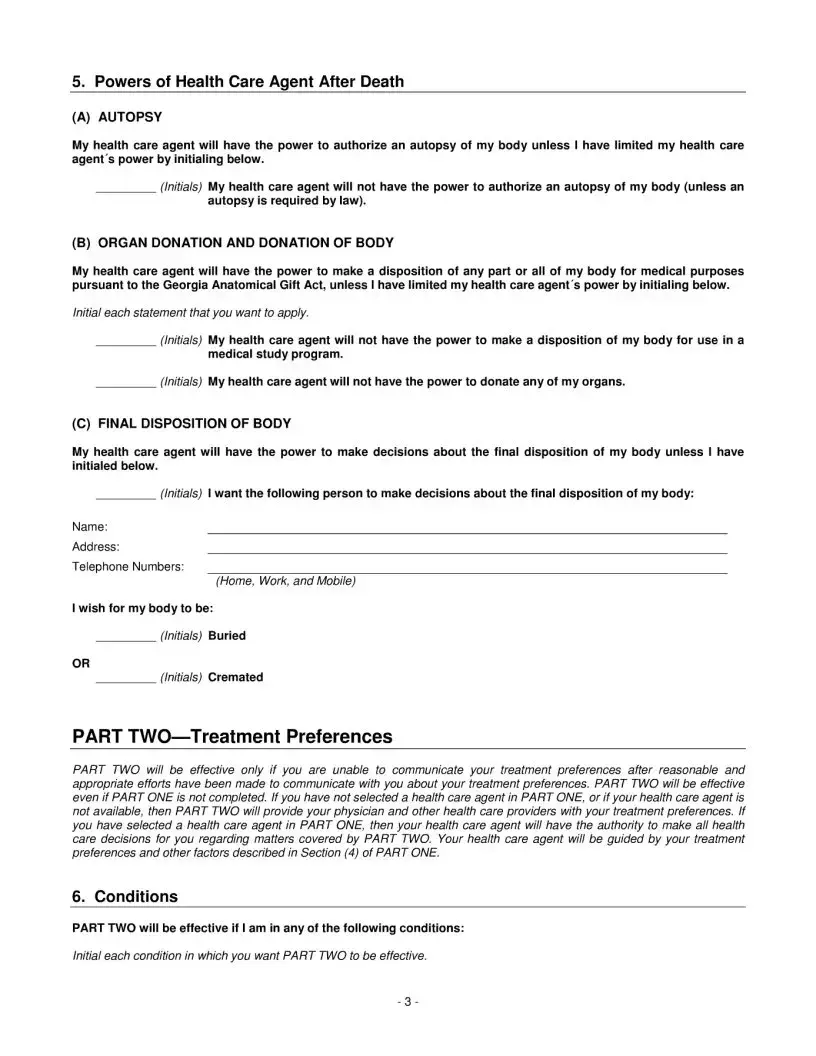
Part Two is optional. If you do not fill it out, your health care agent will still have the authority to make decisions on your behalf, but they will not have specific guidance regarding your treatment preferences in critical situations.
Yes, you can change or revoke your advance directive at any time. If your preferences change, you should complete a new directive to ensure that your current wishes are documented. It is also advisable to inform your health care agent and family about any changes you make.
After completing the form, you should provide copies to your health care agent, family members, and your physician. It is also wise to keep a copy at home in a location where it can be easily accessed if needed. Regularly review the document to ensure it still reflects your preferences.
If you get married, your previous choice of health care agent will be revoked unless your agent is your new spouse. Similarly, if you divorce, your ex-spouse will no longer be your health care agent. It is important to update your directive accordingly after such life changes.
No, using this form is completely optional. You may choose to use other forms of advance directives for health care that are recognized in Georgia. However, if you decide to use this form, it will replace any previous advance directives you may have completed.
Completing the Health Care Directive in Georgia is an important step for anyone wanting to ensure their health care preferences are honored. However, there are common mistakes that individuals often make when filling out this form. Awareness of these errors can help avoid complications in critical situations.
One frequent mistake is failing to designate a health care agent. Many individuals underestimate the importance of having someone specific to make decisions on their behalf. Without a designated agent, medical providers may be forced to make decisions without knowing the patient’s wishes, leading to unwanted outcomes. It is crucial to choose someone trustworthy and to discuss the responsibilities involved in this role.
Another common error involves neglecting to complete all necessary sections. While it is possible to leave some parts blank, doing so may create ambiguity about one’s wishes. For example, if PART TWO—Treatment Preferences is not filled out, health care providers might not have clear guidance on what treatments the individual would want in a terminal condition. It is advisable to provide as much information as possible to avoid confusion during critical moments.
People also often forget to sign the document or have it witnessed properly. PART FOUR requires not only the individual’s signature but also the signatures of two witnesses. If this step is overlooked, the directive may not be considered valid, rendering all prior decisions moot. Ensuring that this part is completed correctly is essential for the document to be effective.
Additionally, individuals sometimes fail to communicate their health care preferences with family members or their chosen health care agent. Open discussions about treatment preferences can prevent misunderstandings and conflicts later. It is vital to ensure that everyone involved is aware of the individual’s wishes to facilitate a smoother decision-making process when the time comes.
Lastly, many neglect to review and update their health care directive regularly. Life changes, such as marriage, divorce, or shifts in personal beliefs, can affect one’s health care preferences. Keeping the directive current is crucial to ensure that it reflects the individual’s current wishes. Regular reviews can help avoid situations where outdated preferences are followed.
By being mindful of these common mistakes, individuals can better prepare themselves and their families for health care decisions in the future. Taking the time to fill out the Health Care Directive correctly and thoughtfully can provide peace of mind during uncertain times.
The Health Care Directive in Georgia is an important document that allows individuals to express their medical preferences and appoint a trusted person to make health care decisions on their behalf. However, there are several other forms and documents that can complement this directive, ensuring that your wishes are respected and clearly communicated. Below is a list of commonly used documents that may be beneficial in conjunction with the Health Care Directive.
Each of these documents serves a unique purpose and can work together to create a comprehensive plan for your health care preferences. It is crucial to discuss your choices with your appointed health care agent, family members, and health care providers to ensure everyone understands your wishes. Regularly reviewing and updating these documents can help ensure they reflect your current desires and circumstances.
The Health Care Directive Georgia form shares similarities with several other legal documents that serve to guide health care decisions. Below are four such documents, each with a brief explanation of how they relate to the Health Care Directive:
When filling out the Health Care Directive Georgia form, consider the following guidelines to ensure clarity and effectiveness.
Misconception 1: The Health Care Directive is mandatory.
This form is completely optional. You are not required to complete it to receive medical care in Georgia.
Misconception 2: Only one person can be designated as a health care agent.
You can select a primary health care agent and also name back-up agents. This ensures someone is available to make decisions if your primary agent cannot.
Misconception 3: The Health Care Directive is only effective after death.
The directive is active while you are alive and unable to make decisions. It provides guidance for your care during critical times.
Misconception 4: A spouse automatically becomes the health care agent.
While a spouse can be chosen as a health care agent, a divorce or annulment will revoke that designation unless you specify otherwise.
Misconception 5: A health care provider can be your health care agent.
A physician or health care provider involved in your care cannot serve as your health care agent to avoid conflicts of interest.
Misconception 6: The Health Care Directive does not need to be signed by witnesses.
To be effective, this form must be signed by you and two witnesses. This requirement ensures its validity.
Misconception 7: Once completed, the Health Care Directive cannot be changed.
You can revoke or update the directive at any time. If your preferences change, simply complete a new directive to reflect your current wishes.
Here are some key takeaways about filling out and using the Health Care Directive Georgia form:
Using this advance directive is optional, and other forms are available in Georgia. Remember, your health care agent cannot be a physician or health care provider directly involved in your care.