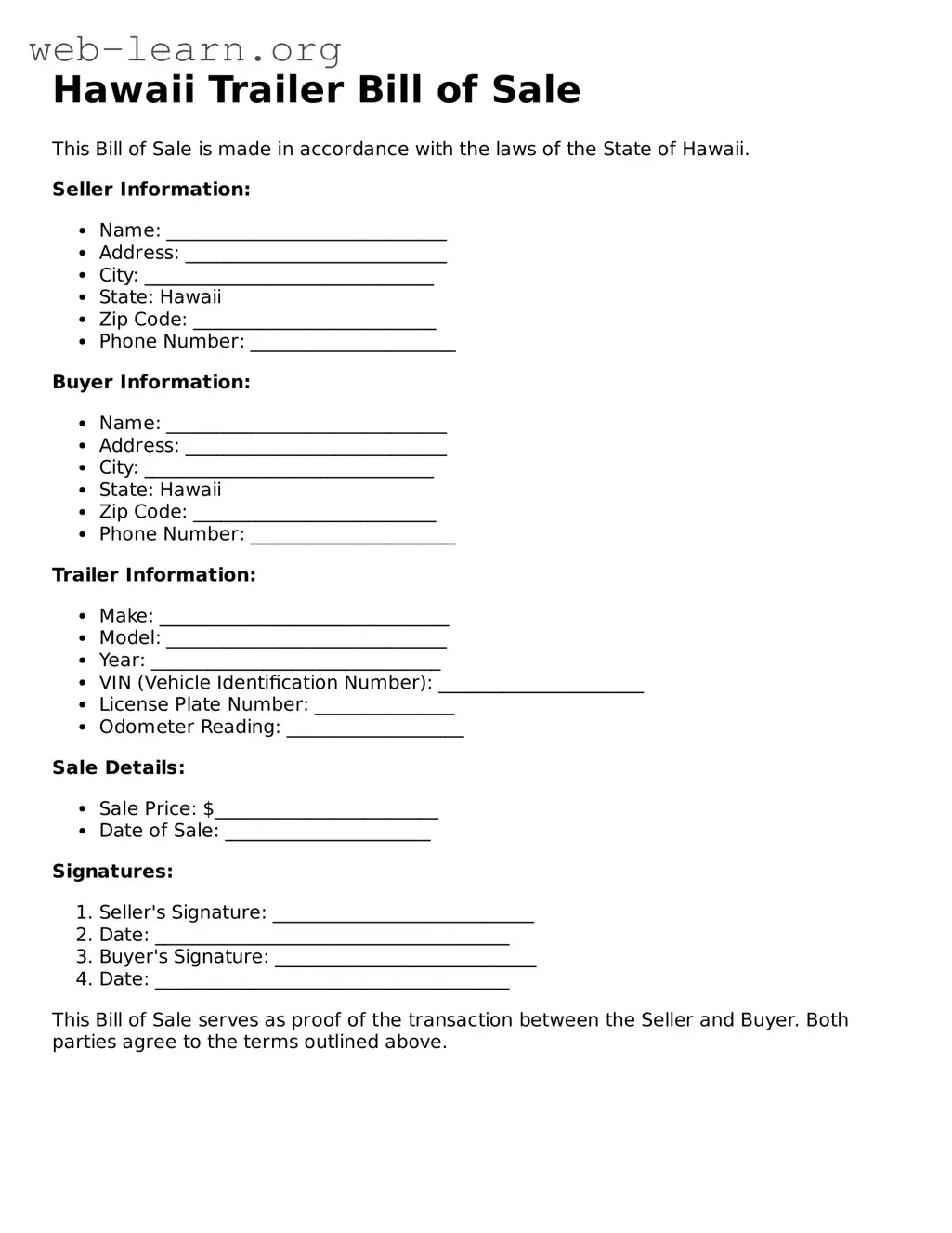
When it comes to buying or selling a trailer in Hawaii, having the right documentation is crucial. The Hawaii Trailer Bill of Sale form serves as an essential tool for both buyers and sellers, ensuring a smooth transaction. This form outlines key details such as the names and addresses of both parties, a description of the trailer, and the sale price. It also includes space for signatures, which solidifies the agreement and provides proof of ownership transfer. Additionally, the form may contain information about any liens on the trailer, which is important for protecting the buyer from unexpected claims. Understanding the components of this form can help streamline the process and prevent potential disputes down the line. Whether you're a first-time buyer or a seasoned seller, knowing how to properly complete and use the Trailer Bill of Sale can make all the difference in your transaction.
Hawaii Trailer Bill of Sale
This Bill of Sale is made in accordance with the laws of the State of Hawaii.
Seller Information:
Buyer Information:
Trailer Information:
Sale Details:
Signatures:
This Bill of Sale serves as proof of the transaction between the Seller and Buyer. Both parties agree to the terms outlined above.
| Fact Name | Description |
|---|---|
| Purpose | The Hawaii Trailer Bill of Sale form is used to document the sale of a trailer between a seller and a buyer. |
| Governing Law | This form is governed by the Hawaii Revised Statutes, specifically Chapter 286. |
| Required Information | The form requires details such as the trailer's make, model, year, VIN, and sale price. |
| Seller's Information | The seller must provide their name, address, and signature to validate the transaction. |
| Buyer's Information | The buyer must also provide their name, address, and signature on the form. |
| Notarization | Notarization is not typically required for the bill of sale in Hawaii, but it can add an extra layer of authenticity. |
| Use for Registration | This form can be used to register the trailer with the Hawaii Department of Transportation. |
| Tax Implications | Sales tax may apply to the sale of the trailer, depending on the purchase price. |
| Record Keeping | Both the buyer and seller should keep a copy of the bill of sale for their records. |
| Transfer of Ownership | Completion of the bill of sale signifies the transfer of ownership from the seller to the buyer. |
Filling out the Hawaii Trailer Bill of Sale form is an important step in transferring ownership of a trailer. After completing the form, it will be necessary to provide it to the appropriate authorities or keep it for personal records. This ensures that both the seller and buyer have a clear understanding of the transaction and can refer back to it if needed.
What is a Trailer Bill of Sale form in Hawaii?
A Trailer Bill of Sale form is a legal document that records the sale of a trailer between a seller and a buyer in Hawaii. This form serves as proof of the transaction and includes essential details about the trailer, such as its make, model, year, and Vehicle Identification Number (VIN).
Why do I need a Bill of Sale for my trailer?
A Bill of Sale is important for several reasons. It provides legal protection for both the buyer and the seller. For the buyer, it serves as proof of ownership, which is necessary for registration and title transfer. For the seller, it protects against future claims regarding the trailer.
What information is required on the Trailer Bill of Sale form?
The form typically requires the following information:
Do I need to have the Bill of Sale notarized?
In Hawaii, notarization is not required for a Trailer Bill of Sale. However, having the document notarized can add an extra layer of security and authenticity, especially if there are any disputes in the future.
How do I complete the Trailer Bill of Sale form?
To complete the form, fill in all required fields accurately. Ensure that the information matches the trailer's registration documents. Both parties should review the form before signing. After signing, keep a copy for your records.
Is there a fee for using the Trailer Bill of Sale form?
There is no fee specifically for using the Trailer Bill of Sale form itself. However, there may be fees associated with registering the trailer or transferring the title with the Hawaii Department of Transportation.
Where can I obtain a Trailer Bill of Sale form?
You can obtain a Trailer Bill of Sale form from various sources. Many websites offer free templates that you can download and print. Additionally, local DMV offices may provide official forms or guidance on how to create one.
When filling out the Hawaii Trailer Bill of Sale form, individuals often encounter several common pitfalls that can lead to complications down the road. Understanding these mistakes can save time and prevent legal issues. One frequent error is the omission of essential information. Buyers and sellers must ensure that all required fields are completed, including the trailer's make, model, year, and Vehicle Identification Number (VIN). Missing even a single detail can render the document ineffective.
Another common mistake is failing to accurately describe the condition of the trailer. It is crucial to provide a truthful account of any damages or modifications. Misrepresenting the condition can lead to disputes between the buyer and seller, potentially resulting in legal action. Transparency is key in these transactions.
People often neglect to include the purchase price. This is a critical component of the Bill of Sale. The absence of a stated price can create confusion about the transaction's terms and may complicate future dealings, especially when it comes to tax assessments or registration.
Additionally, individuals sometimes forget to date the form. The date is vital as it marks the official transfer of ownership. Without it, there may be ambiguity about when the sale occurred, which could affect liability and responsibility for the trailer.
Another mistake is not obtaining the necessary signatures. Both the buyer and seller must sign the document for it to be legally binding. Failing to secure both signatures can invalidate the sale and lead to disputes over ownership.
Moreover, individuals may overlook the importance of keeping copies of the completed Bill of Sale. After the form is filled out and signed, both parties should retain a copy for their records. This documentation serves as proof of the transaction and can be crucial in case of future disputes.
Lastly, individuals might not verify the form's compliance with local laws. Each state has its own requirements regarding the sale of vehicles and trailers. Ensuring that the Bill of Sale meets Hawaii's legal standards is essential for a smooth transaction. Ignoring this step could result in complications when registering the trailer or transferring ownership.
When buying or selling a trailer in Hawaii, the Trailer Bill of Sale form is essential. However, there are several other documents that you may need to complete the transaction properly. Each of these forms serves a specific purpose and helps ensure that both parties are protected during the sale.
Having these documents prepared and organized can streamline the buying or selling process. Each form plays a vital role in ensuring that both the buyer and seller are protected and that the transaction goes smoothly. Being informed about these additional forms can save time and prevent potential issues down the line.
When filling out the Hawaii Trailer Bill of Sale form, it's important to get it right. Here are some key dos and don'ts to keep in mind:
When it comes to the Hawaii Trailer Bill of Sale form, several misconceptions can lead to confusion. Understanding the truth behind these common beliefs can help ensure a smoother transaction process. Here are ten misconceptions explained:
Understanding these misconceptions can help buyers and sellers navigate the process more effectively. A well-prepared bill of sale is an important step in ensuring a smooth transaction.
When dealing with the Hawaii Trailer Bill of Sale form, there are several important points to keep in mind. This document serves as proof of the sale and transfer of ownership for a trailer. Here are some key takeaways:
By following these guidelines, you can ensure a smooth transaction and protect both parties involved in the sale of the trailer.
Ky Trailer Laws - Having a Trailer Bill of Sale can simplify future resale of the trailer.
How to Write a Bill of Sale for a Car in Idaho - Both the seller and buyer should keep a copy of the completed Trailer Bill of Sale for their records.