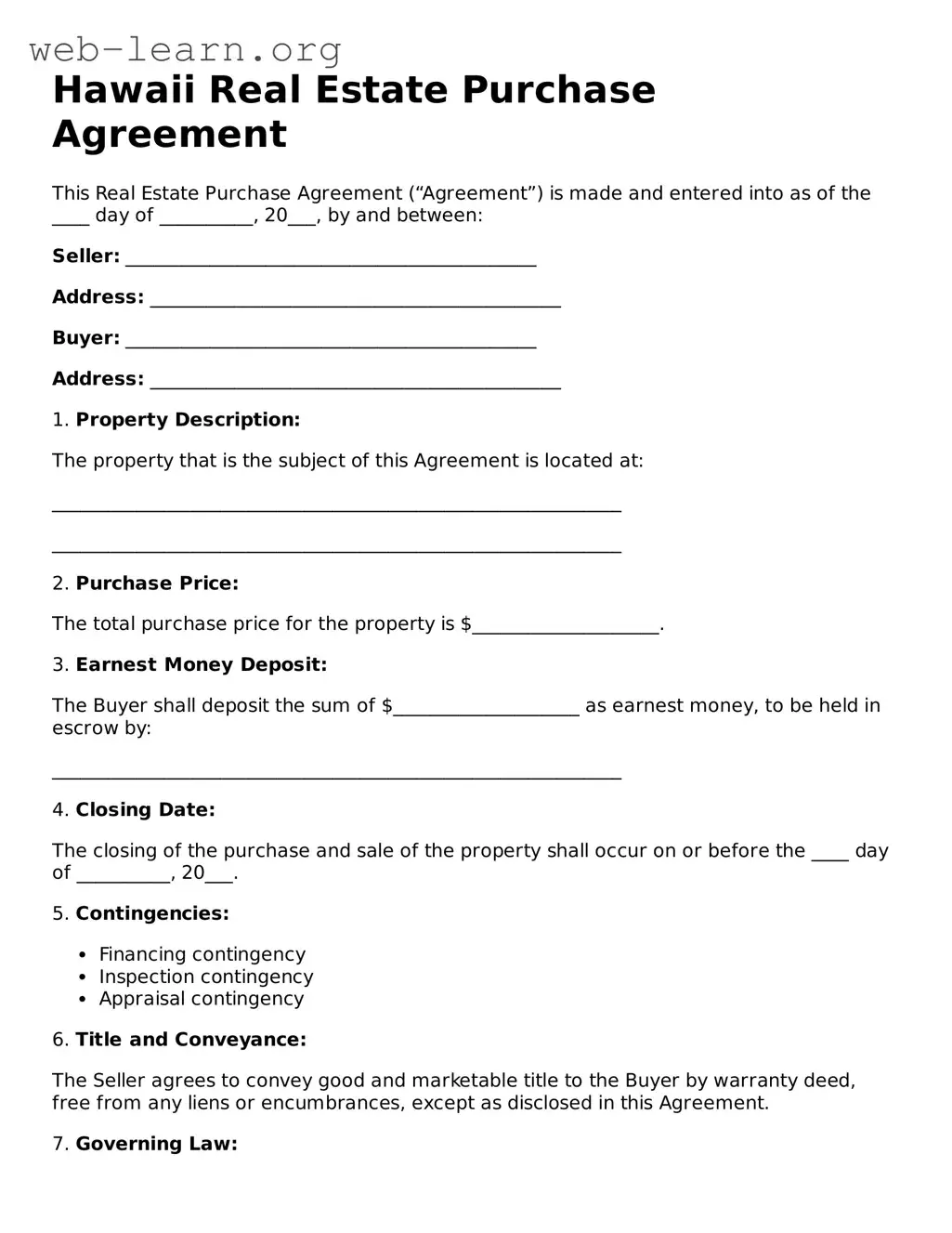
When navigating the vibrant real estate market of Hawaii, understanding the Real Estate Purchase Agreement form is essential for both buyers and sellers. This document serves as the cornerstone of any property transaction, outlining the terms and conditions under which a property will be bought or sold. Key aspects of the form include the identification of the parties involved, a detailed description of the property, the agreed-upon purchase price, and the timeline for closing the sale. Additionally, it addresses contingencies that may affect the transaction, such as financing, inspections, and disclosures. By clearly defining responsibilities and expectations, the Real Estate Purchase Agreement helps to protect the interests of all parties involved, ensuring a smoother process from initial offer to final closing. Understanding these elements can empower individuals to make informed decisions and foster a successful real estate experience in the beautiful islands of Hawaii.
Hawaii Real Estate Purchase Agreement
This Real Estate Purchase Agreement (“Agreement”) is made and entered into as of the ____ day of __________, 20___, by and between:
Seller: ____________________________________________
Address: ____________________________________________
Buyer: ____________________________________________
Address: ____________________________________________
1. Property Description:
The property that is the subject of this Agreement is located at:
_____________________________________________________________
_____________________________________________________________
2. Purchase Price:
The total purchase price for the property is $____________________.
3. Earnest Money Deposit:
The Buyer shall deposit the sum of $____________________ as earnest money, to be held in escrow by:
_____________________________________________________________
4. Closing Date:
The closing of the purchase and sale of the property shall occur on or before the ____ day of __________, 20___.
5. Contingencies:
6. Title and Conveyance:
The Seller agrees to convey good and marketable title to the Buyer by warranty deed, free from any liens or encumbrances, except as disclosed in this Agreement.
7. Governing Law:
This Agreement shall be governed by the laws of the State of Hawaii.
8. Signatures:
IN WITNESS WHEREOF, the parties have executed this Agreement as of the date first above written.
______________________________
Seller's Signature
______________________________
Buyer's Signature
______________________________
Date
______________________________
Date
| Fact Name | Description |
|---|---|
| Governing Law | The Hawaii Real Estate Purchase Agreement is governed by the laws of the State of Hawaii. |
| Purpose | This form outlines the terms and conditions for the sale of real property in Hawaii. |
| Parties Involved | The agreement identifies the buyer and seller, clearly stating their roles in the transaction. |
| Property Description | A detailed description of the property being sold is required, including address and parcel number. |
| Purchase Price | The total purchase price must be specified, along with any deposit amounts and payment terms. |
| Contingencies | Buyers can include contingencies, such as financing or inspection, which must be met for the sale to proceed. |
| Closing Date | The agreement should specify a closing date when the transfer of ownership will occur. |
After obtaining the Hawaii Real Estate Purchase Agreement form, it is essential to complete it accurately to ensure a smooth transaction. Follow these steps to fill out the form correctly.
Once the form is completed, it should be reviewed by both parties and any necessary legal professionals before submitting it as part of the transaction process.
The Hawaii Real Estate Purchase Agreement is a legal document that outlines the terms and conditions under which a buyer agrees to purchase a property from a seller in Hawaii. This agreement includes details such as the purchase price, financing terms, contingencies, and closing date.
The agreement typically includes:
Yes, once both parties sign the Hawaii Real Estate Purchase Agreement, it becomes a legally binding contract. Each party must adhere to the terms outlined in the agreement. Failure to do so may result in legal consequences.
Yes, the agreement can be modified, but both parties must agree to any changes. Modifications should be documented in writing and signed by both the buyer and seller to ensure clarity and enforceability.
If a contingency is not met, the buyer or seller may have the option to terminate the agreement without penalty. For instance, if a buyer is unable to secure financing, they can withdraw from the agreement if the financing contingency is included.
While it is not mandatory to have a real estate agent when completing the Hawaii Real Estate Purchase Agreement, it is highly recommended. An agent can provide valuable guidance, help navigate the complexities of the transaction, and ensure that the agreement is properly completed.
Filling out the Hawaii Real Estate Purchase Agreement can be a daunting task, and mistakes are common. One frequent error is not providing accurate property details. Buyers often overlook essential information such as the correct legal description of the property. This can lead to confusion and complications later on.
Another common mistake is failing to include all necessary parties in the agreement. It’s crucial to ensure that all individuals involved in the transaction are named. If someone is left out, it may result in legal disputes down the line.
Many buyers also forget to specify the purchase price clearly. While it may seem straightforward, an ambiguous price can lead to misunderstandings. Make sure to write the price in both numerical and written form to avoid any potential issues.
One significant error is neglecting to include contingencies. Contingencies protect buyers by allowing them to back out of the deal under certain conditions, such as financing or inspection issues. Without these clauses, buyers may find themselves locked into a contract that doesn’t suit their needs.
Buyers sometimes overlook the importance of timelines. Failing to set clear deadlines for inspections, financing, and closing can create unnecessary stress. It’s essential to establish a timeline that works for everyone involved to ensure a smooth transaction.
Another mistake is not understanding the implications of earnest money. Buyers should be aware of how much they are putting down and what it means for their commitment to the purchase. A lack of clarity here can lead to misunderstandings regarding the buyer's intentions.
Some individuals also fail to read the entire agreement carefully. Skimming through the document can lead to missing critical clauses or terms that could impact the transaction. Taking the time to review every section is vital for a successful purchase.
Lastly, buyers may forget to consult with professionals. Relying solely on personal knowledge or online resources can lead to mistakes. Engaging a real estate agent or attorney can provide valuable insights and help navigate the complexities of the agreement.
When engaging in a real estate transaction in Hawaii, several important documents accompany the Real Estate Purchase Agreement. Each of these forms serves a specific purpose, ensuring that both buyers and sellers understand their rights and responsibilities. Here’s a list of commonly used documents in conjunction with the purchase agreement.
Understanding these documents is essential for a smooth real estate transaction. Each plays a role in protecting the interests of both buyers and sellers, ensuring that everyone involved is informed and prepared for the process ahead.
The Real Estate Purchase Agreement is a crucial document in property transactions. It serves as a foundation for the sale and outlines the terms agreed upon by both the buyer and the seller. Here are four documents that share similarities with the Real Estate Purchase Agreement:
When filling out the Hawaii Real Estate Purchase Agreement form, it’s important to approach the task with care. Here’s a list of things to do and avoid:
Following these guidelines can help ensure a smoother transaction and protect your interests throughout the process.
The Hawaii Real Estate Purchase Agreement (REPA) is an essential document in real estate transactions, but many misconceptions surround it. Understanding these misconceptions can help buyers and sellers navigate the process more effectively.
In reality, while the REPA provides a framework, parties can negotiate and modify terms to suit their specific needs. Customization is often necessary to reflect unique circumstances.
This is not true. Parties can amend the agreement if both agree to the changes. It’s essential to document any modifications in writing.
Both parties have protections built into the REPA. It outlines obligations and rights for buyers and sellers, ensuring fairness in the transaction.
While it is not mandatory, having an attorney review the agreement is advisable. An attorney can help clarify terms and ensure that your interests are protected.
The REPA does not guarantee that a buyer will secure financing. Buyers must still go through the mortgage approval process, which is separate from the purchase agreement.
Contingencies can be added to the REPA, but they do not need to be fulfilled before signing. They can be addressed during the escrow period.
The REPA can be used for various types of real estate transactions, including commercial properties. It is versatile and adaptable to different situations.
While the REPA becomes binding once signed by both parties, certain conditions may affect its enforceability. Understanding these conditions is crucial for both buyers and sellers.
When filling out and using the Hawaii Real Estate Purchase Agreement form, consider the following key takeaways:
How to Make a Purchase Agreement - Includes information on property zoning and land use regulations.
How to Write a Purchase Agreement - It often details the procedure for notifying each party of any changes or updates to the agreement.
House Contract Agreement - Dispute resolution methods can also be included in the agreement.