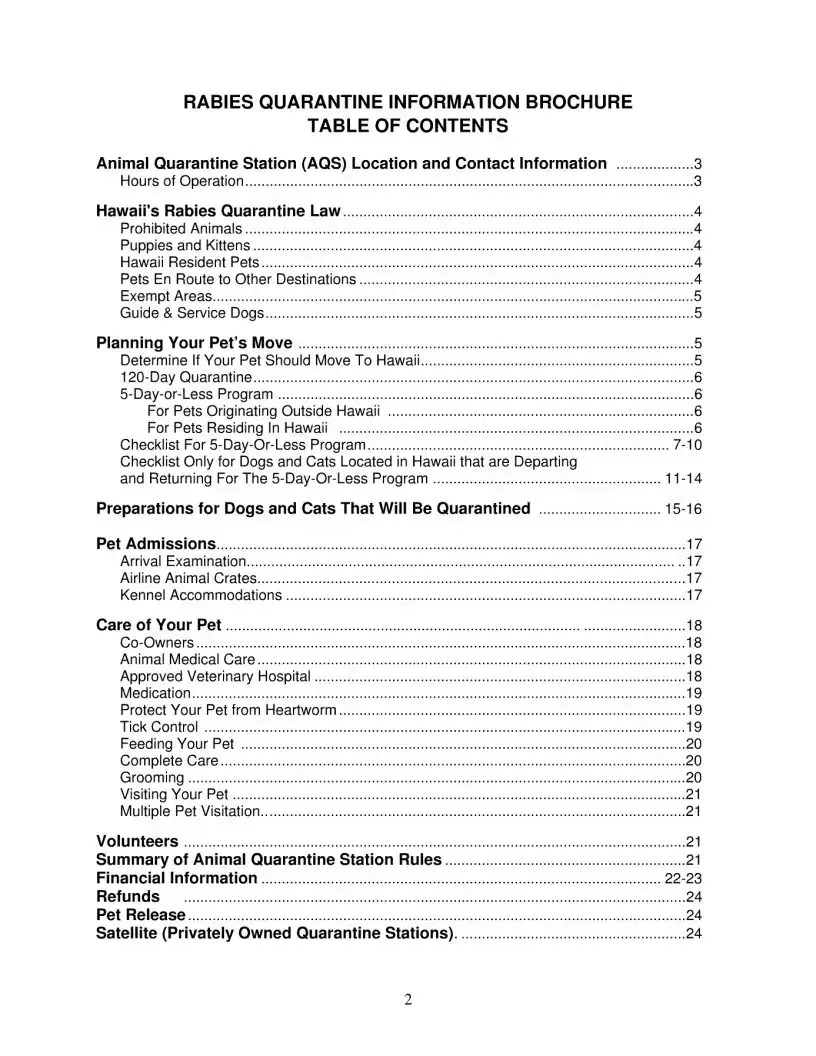
Traveling to Hawaii with pets requires careful planning, especially due to the state's strict rabies quarantine laws. The Hawaii Quarantine form is an essential document for pet owners, outlining the requirements for bringing dogs and cats into the state. This form includes details about the Animal Quarantine Station's location, contact information, and hours of operation. It also explains the two main quarantine programs: the 5-Day-or-Less program and the 120-Day quarantine, each with specific requirements that must be met. Understanding what animals are prohibited, such as certain hybrids, is crucial for compliance. Additionally, the form provides checklists for both pets arriving from outside Hawaii and those already residing in the state. Owners will find guidance on preparing their pets for travel, including necessary vaccinations and health checks. There are also important details about fees, pet care during quarantine, and how to visit or groom pets at the station. Reading and retaining this information will help ensure a smooth transition for both pets and their owners.
| Fact Name | Fact Details |
|---|---|
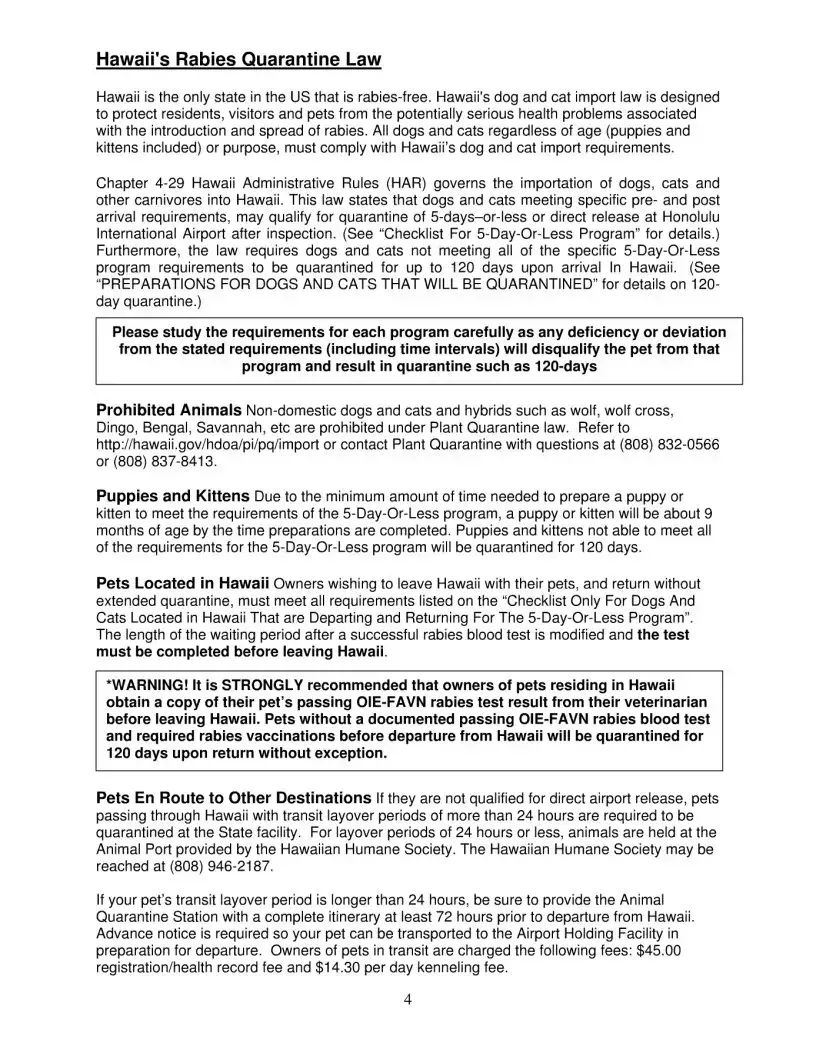
| Hawaii's Rabies-Free Status | Hawaii is the only state in the U.S. that is rabies-free, which influences its strict pet import laws. |
| Governing Law | Chapter 4-29 of the Hawaii Administrative Rules governs the importation of dogs, cats, and other carnivores into Hawaii. |
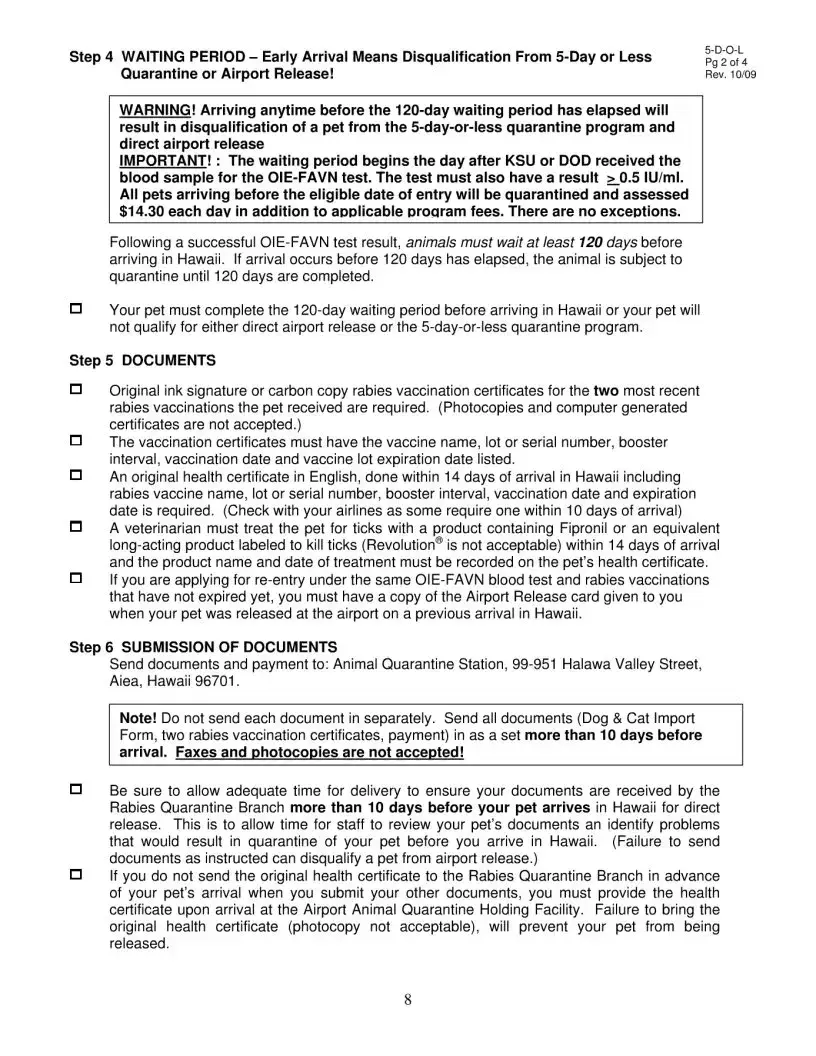
| Quarantine Duration | Pets not meeting the 5-Day-or-Less program requirements may face a quarantine period of up to 120 days upon arrival. |
| Prohibited Animals | Non-domestic dogs and cats, including hybrids like wolves and Bengal cats, are prohibited under state law. |
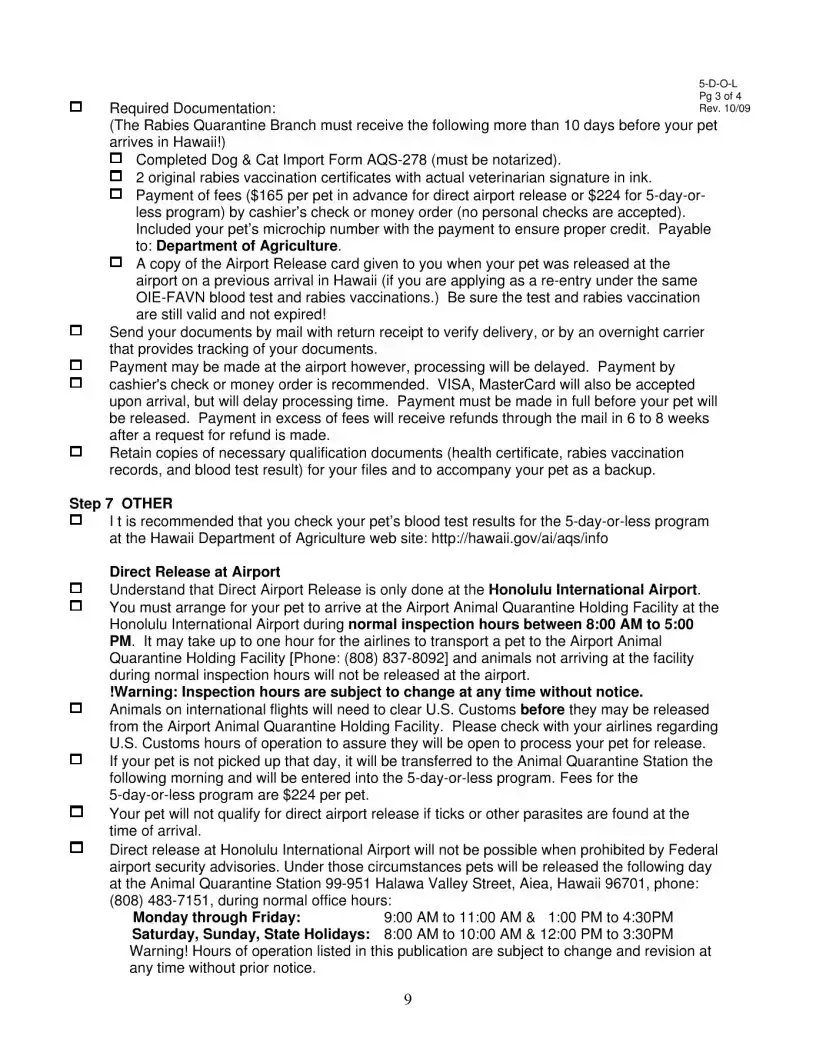
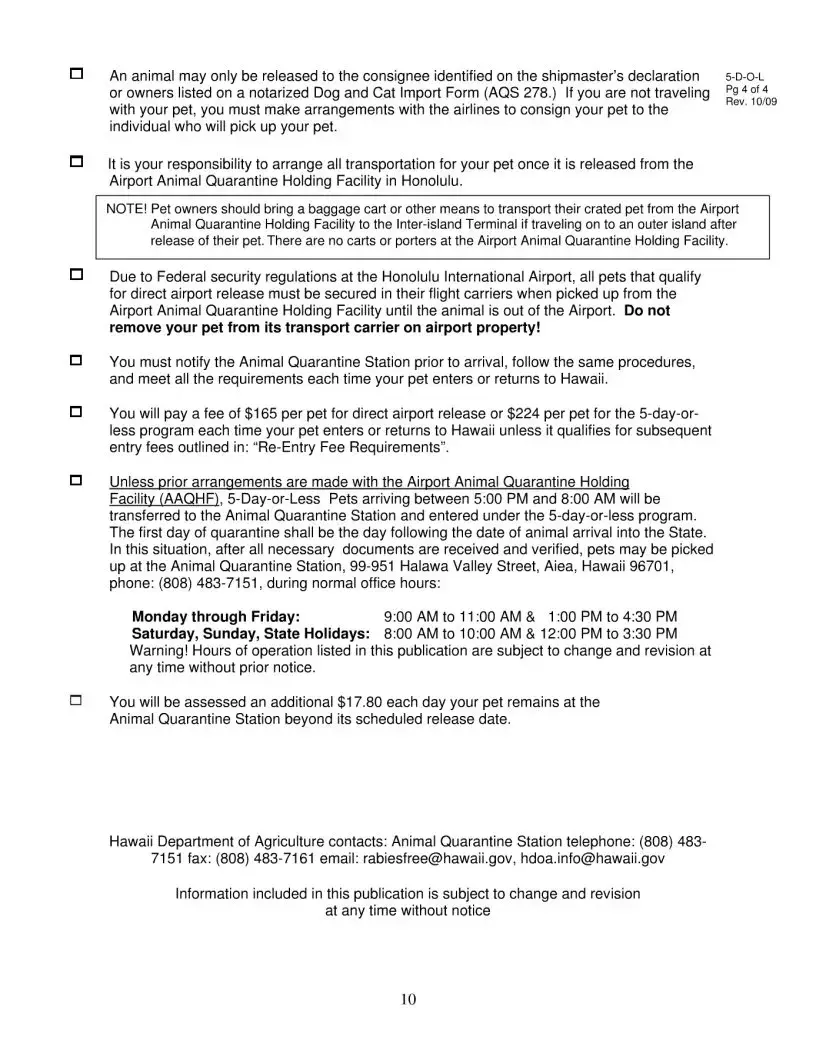
| Pet Release Procedures | Pets may qualify for direct release at Honolulu International Airport if they meet specific pre- and post-arrival requirements. |
| Contact Information | The Animal Quarantine Station can be reached at (808) 483-7151 or via email at [email protected]. |
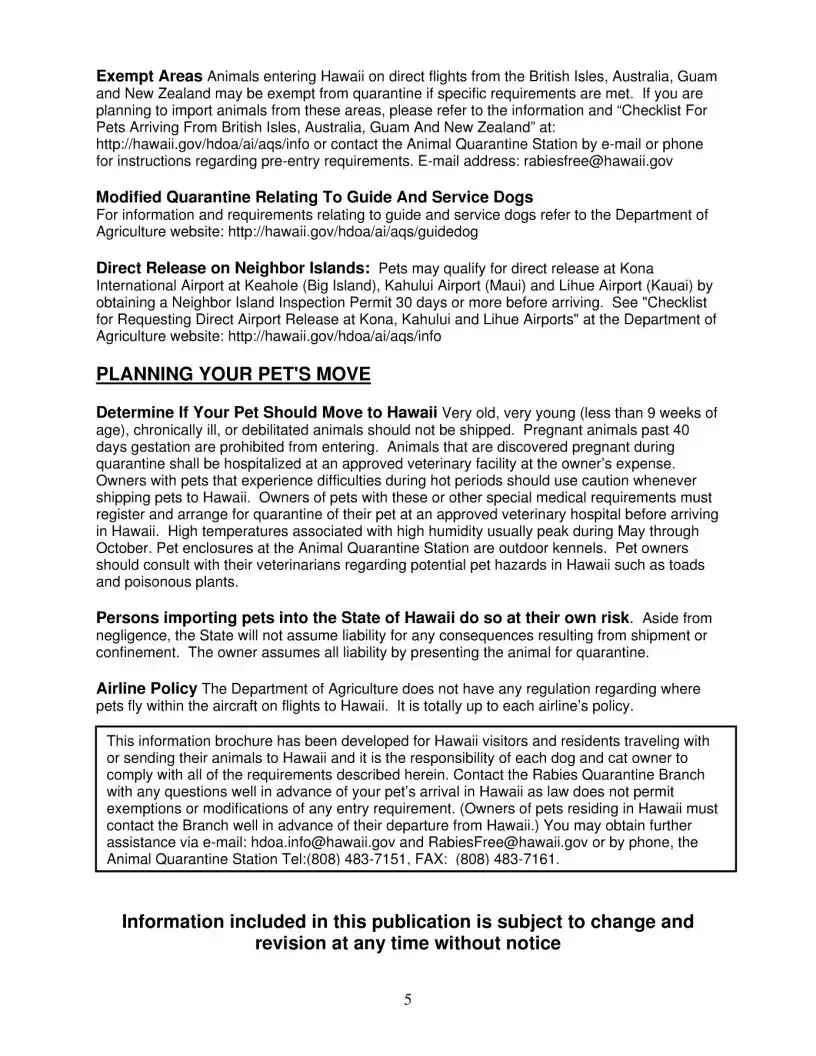
| Transit Layover Rules | Pets with layovers over 24 hours in Hawaii must be quarantined, while those with shorter layovers can stay at the Animal Port. |
Completing the Hawaii Quarantine form is an essential step for pet owners planning to bring their animals to Hawaii. The form gathers necessary information to ensure compliance with state regulations regarding animal health and safety. After submitting the form, pet owners will receive further instructions regarding quarantine procedures, if applicable.
What is the purpose of the Hawaii Quarantine form?
The Hawaii Quarantine form is designed to ensure that pets entering Hawaii comply with the state's strict rabies prevention laws. Hawaii is rabies-free, and the form helps manage the importation of animals to protect both residents and pets from potential health risks associated with rabies.
Who needs to fill out the Hawaii Quarantine form?
All dogs and cats, regardless of age or purpose, must have the Hawaii Quarantine form completed. This includes puppies and kittens. If you are bringing a pet into Hawaii, you are responsible for ensuring that the form is filled out correctly and submitted as required.
What are the quarantine options for pets arriving in Hawaii?
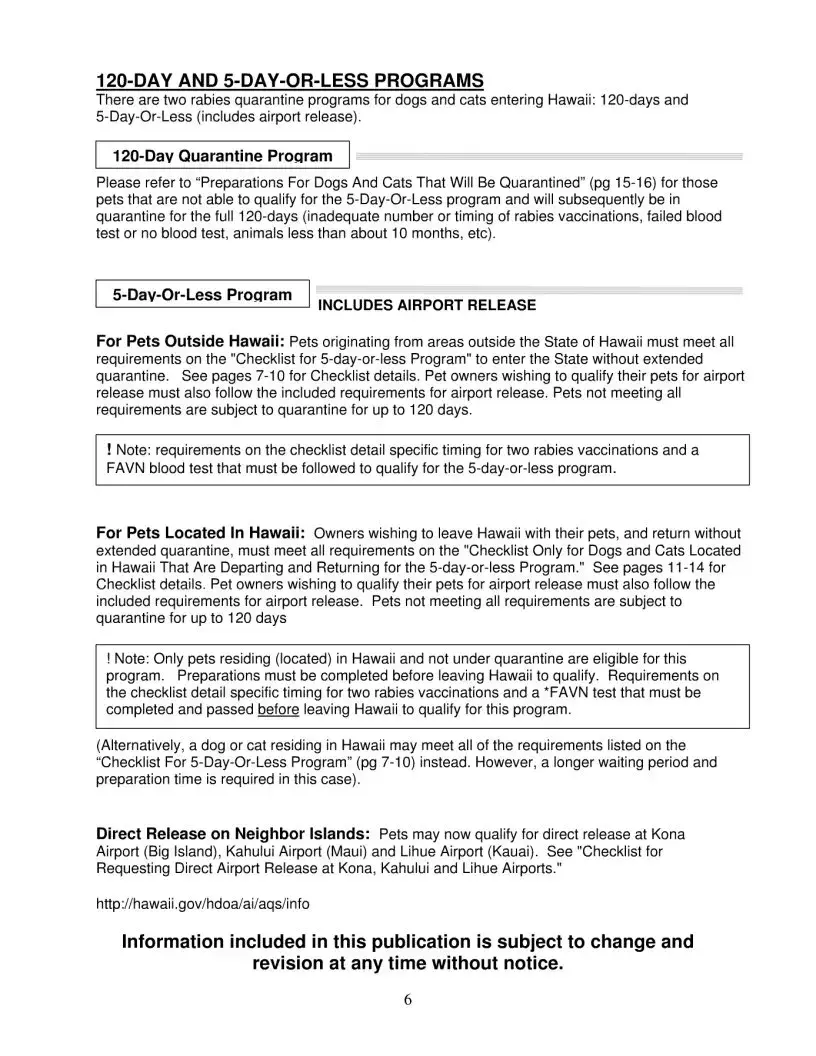
Pets arriving in Hawaii can qualify for one of two quarantine options:
What are the requirements for the 5-Day-or-Less Program?
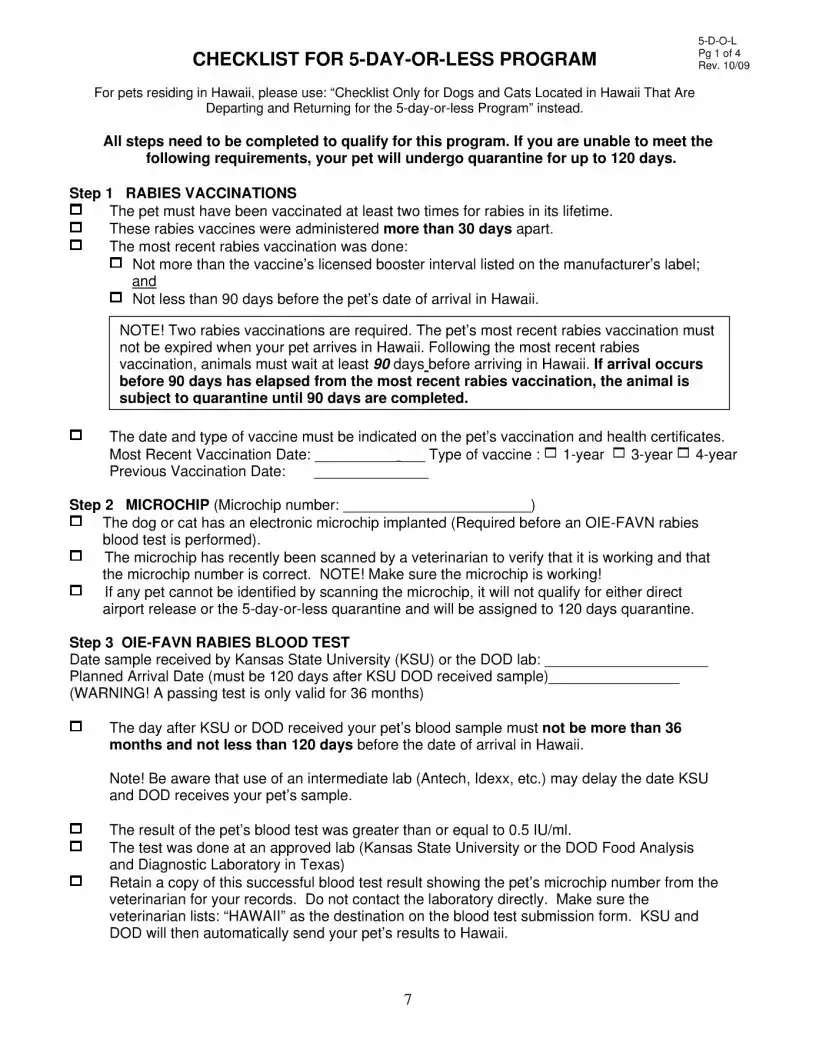
To qualify for the 5-Day-or-Less Program, pets must meet specific health and vaccination requirements. These include having a passing rabies blood test, being vaccinated against rabies, and completing necessary paperwork. A detailed checklist is available to ensure compliance with all requirements.
Are there any animals that are prohibited from entering Hawaii?
Yes, certain animals are prohibited under Hawaii's Plant Quarantine law. This includes non-domestic dogs and cats, as well as hybrids like wolves and certain exotic breeds such as Bengal and Savannah cats. Always check the latest regulations before traveling.
What should I do if my pet is in transit through Hawaii?
If your pet is passing through Hawaii and has a layover longer than 24 hours, it must be quarantined at the State facility. For layovers of 24 hours or less, pets can be held at the Animal Port. Owners must provide a complete itinerary at least 72 hours prior to departure to arrange for proper care and transport.
How can I contact the Animal Quarantine Station?
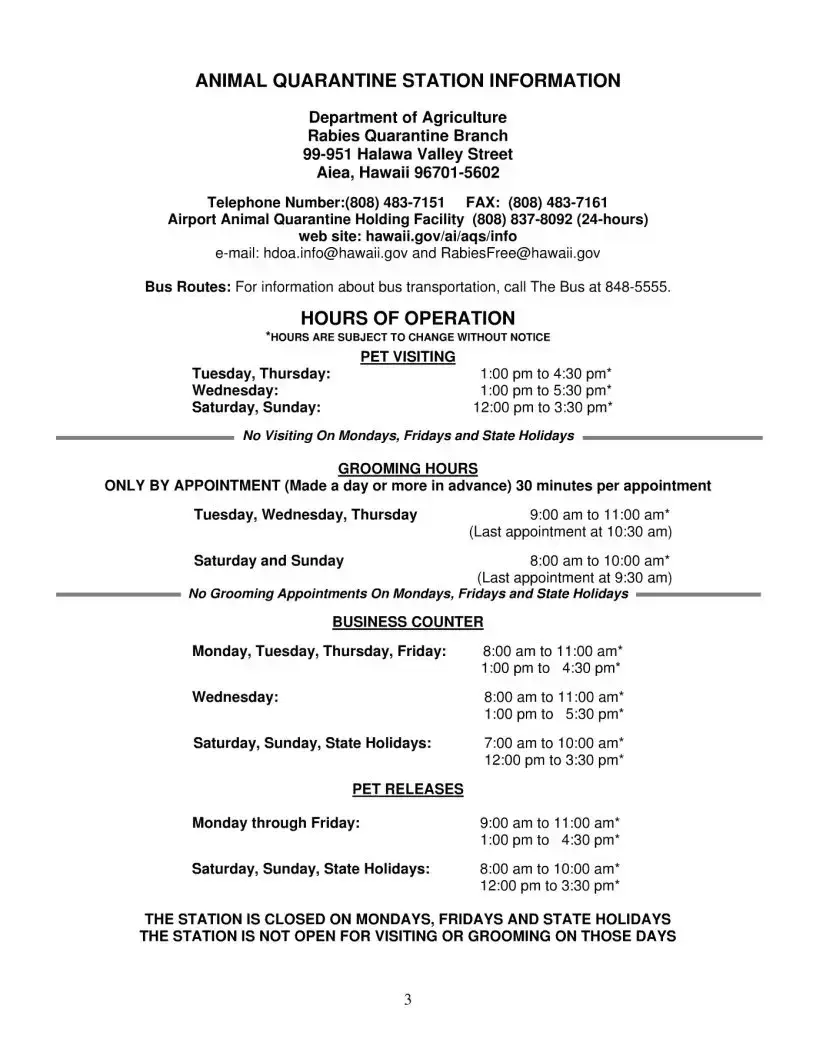
The Animal Quarantine Station can be reached at (808) 483-7151. For urgent inquiries, the Airport Animal Quarantine Holding Facility is available 24/7 at (808) 837-8092. Email inquiries can be sent to [email protected].
What are the fees associated with the quarantine process?
There are several fees involved, including:
These fees help cover the costs of care and management of the animals during their stay.
Can I visit my pet while it is in quarantine?
Yes, you can visit your pet during designated visiting hours. However, the Animal Quarantine Station is closed on Mondays, Fridays, and state holidays, so plan your visits accordingly. It’s important to check the specific visiting hours to ensure you can see your pet.
What happens if I do not comply with the quarantine requirements?
If you do not meet the requirements for the 5-Day-or-Less Program, your pet will automatically be placed in the 120-day quarantine. Additionally, failure to provide the necessary documentation can lead to delays and additional fees. Always ensure you understand and follow the guidelines to avoid complications.
Filling out the Hawaii Quarantine form is a critical step for pet owners planning to travel with their animals to Hawaii. However, many individuals make mistakes that can lead to complications. One common error is not providing accurate or complete information about the pet's vaccination history. The form requires specific details regarding rabies vaccinations, including dates and the type of vaccine used. Inaccurate information may result in delays or even quarantine for up to 120 days, which can be stressful for both the pet and the owner.
Another mistake often made is failing to understand the different quarantine programs available. The Hawaii Quarantine system offers a 5-Day-or-Less program for pets that meet certain criteria. Many pet owners do not thoroughly review these requirements and mistakenly assume their pets qualify. This oversight can lead to unexpected quarantine periods, which can be both costly and inconvenient.
Additionally, people sometimes neglect to check the specific requirements for their type of pet. For instance, the rules differ for dogs, cats, and other animals. Some owners may not realize that certain breeds or hybrids are prohibited from entering Hawaii altogether. This lack of awareness can result in having to leave the pet behind or face legal consequences upon arrival.
Timing is another crucial factor that is often overlooked. Pet owners must ensure that all vaccinations and tests are completed within the specified time frames outlined in the form. Delays in obtaining necessary medical records or vaccinations can lead to disqualification from the 5-Day-or-Less program, forcing pets into longer quarantine periods. To avoid this, it is essential to plan ahead and allow ample time for all preparations.
Finally, a frequent error is not retaining copies of important documents. After filling out the Hawaii Quarantine form, owners should keep copies of all related paperwork, including vaccination records and test results. This documentation is vital if any questions arise during the inspection process at the airport. Without proper records, pet owners may face additional scrutiny or delays, which can complicate their travel plans.
The Hawaii Quarantine form is an essential document for pet owners wishing to bring their animals into the state. However, several other forms and documents are often required or recommended to ensure compliance with Hawaii's strict animal importation laws. Below is a list of these documents, each with a brief description.
Ensuring that all necessary documentation is in order will facilitate a smoother transition for pets arriving in Hawaii. Pet owners are encouraged to carefully review each requirement and prepare the necessary forms ahead of time to avoid any complications during the importation process.
When filling out the Hawaii Quarantine form, it is essential to follow specific guidelines to ensure a smooth process for you and your pet. Here are ten things you should and shouldn't do:
By following these guidelines, you can help ensure that your pet's transition to Hawaii is as seamless as possible.
Many people have misunderstandings about the Hawaii Quarantine form. Here are some common misconceptions:
Understanding these misconceptions can help pet owners better prepare for their pets' travel to Hawaii.
Understanding the Hawaii Quarantine form is essential for pet owners planning to travel to the islands. Here are some key takeaways to keep in mind:
By following these guidelines, pet owners can ensure a smoother transition for their furry friends when traveling to Hawaii.