In Hawaii, the Power of Attorney (POA) form serves as a vital tool for individuals looking to grant someone else the authority to make decisions on their behalf. This legal document can cover a range of responsibilities, including financial matters, healthcare decisions, and property management. By designating a trusted person, known as the agent or attorney-in-fact, the principal ensures that their wishes are respected even if they become unable to communicate or make decisions due to illness or incapacity. The form must be completed with careful attention to detail, as it typically requires the signatures of the principal, the agent, and witnesses, depending on the specific type of POA being executed. Hawaii recognizes both general and limited powers of attorney, allowing individuals to tailor the authority granted to fit their unique circumstances. Understanding the nuances of this form is essential for anyone looking to protect their interests and ensure that their affairs are handled according to their preferences.
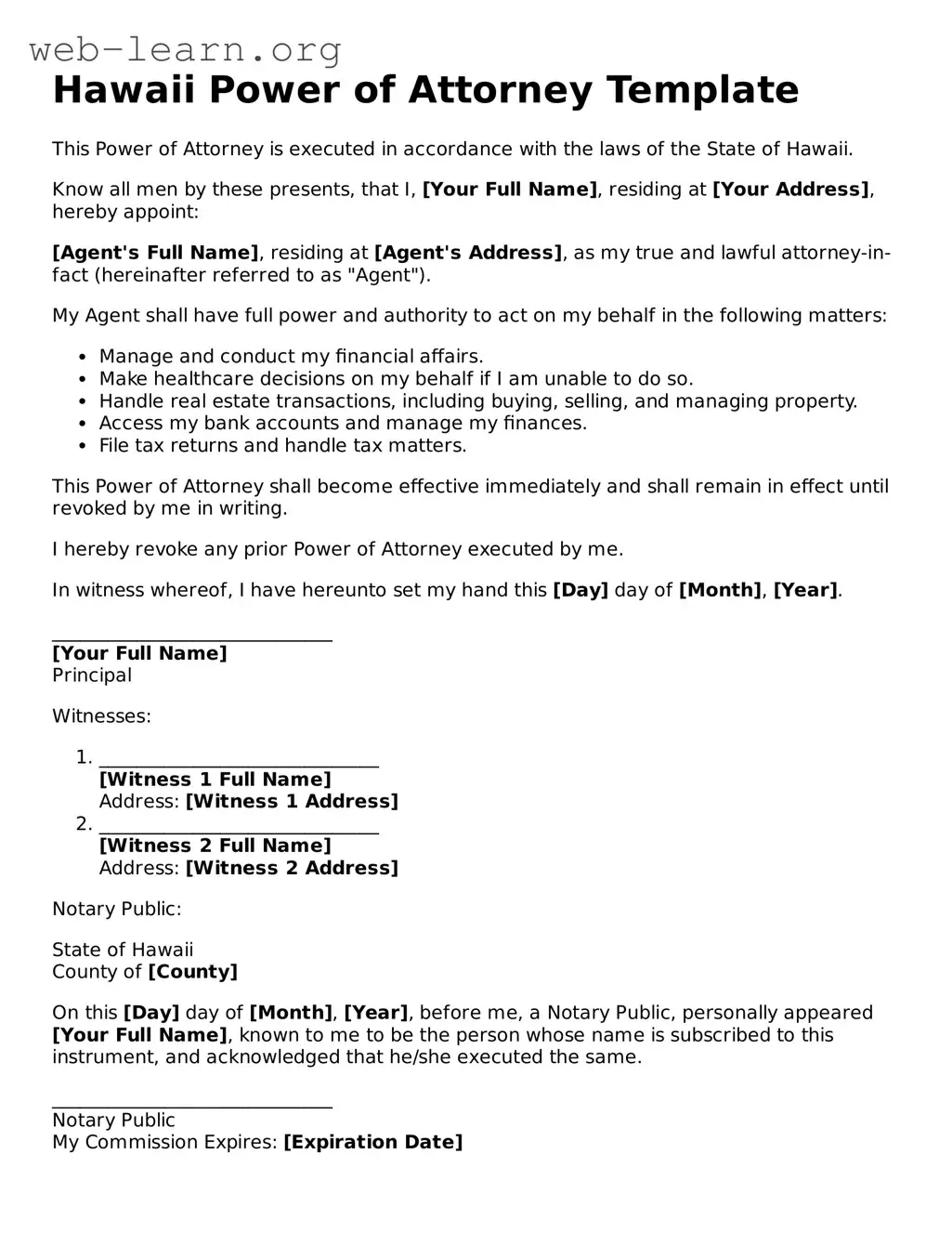
Hawaii Power of Attorney Template
This Power of Attorney is executed in accordance with the laws of the State of Hawaii.
Know all men by these presents, that I, [Your Full Name], residing at [Your Address], hereby appoint:
[Agent's Full Name], residing at [Agent's Address], as my true and lawful attorney-in-fact (hereinafter referred to as "Agent").
My Agent shall have full power and authority to act on my behalf in the following matters:
This Power of Attorney shall become effective immediately and shall remain in effect until revoked by me in writing.
I hereby revoke any prior Power of Attorney executed by me.
In witness whereof, I have hereunto set my hand this [Day] day of [Month], [Year].
______________________________
[Your Full Name]
Principal
Witnesses:
Notary Public:
State of Hawaii
County of [County]
On this [Day] day of [Month], [Year], before me, a Notary Public, personally appeared [Your Full Name], known to me to be the person whose name is subscribed to this instrument, and acknowledged that he/she executed the same.
______________________________
Notary Public
My Commission Expires: [Expiration Date]
| Fact Name | Description |
|---|---|
| Definition | A Power of Attorney in Hawaii is a legal document that allows one person to act on behalf of another in legal or financial matters. |
| Types | Hawaii recognizes different types of Power of Attorney, including General, Limited, and Durable Power of Attorney. |
| Governing Law | The Hawaii Power of Attorney form is governed by Hawaii Revised Statutes, Chapter 551E. |
| Durability | A Durable Power of Attorney remains effective even if the principal becomes incapacitated, ensuring continuous representation. |
| Signing Requirements | The form must be signed by the principal and notarized to be legally valid in Hawaii. |
| Revocation | The principal can revoke the Power of Attorney at any time, provided they are mentally competent. |
Filling out the Hawaii Power of Attorney form is a straightforward process. Once you have completed the form, you will need to have it signed and notarized to ensure it is legally valid. Follow these steps to fill out the form correctly.
Once the form is completed and notarized, keep a copy for your records. You may also want to provide copies to your agent and any relevant institutions.
What is a Power of Attorney in Hawaii?
A Power of Attorney (POA) in Hawaii is a legal document that allows one person, known as the principal, to grant authority to another person, referred to as the agent or attorney-in-fact, to make decisions on their behalf. This authority can cover a wide range of matters, including financial transactions, healthcare decisions, and legal affairs. The principal must be of sound mind and able to understand the implications of granting this authority.
What types of Power of Attorney are available in Hawaii?
Hawaii recognizes several types of Power of Attorney, each serving different purposes:
How do I create a Power of Attorney in Hawaii?
Creating a Power of Attorney in Hawaii involves several steps:
Can I revoke a Power of Attorney in Hawaii?
Yes, you can revoke a Power of Attorney at any time, as long as you are mentally competent. To do so, you must create a written document stating your intent to revoke the POA. It is advisable to notify your agent and any institutions that were provided with the original POA. Additionally, if you have filed the POA with a court or other agency, you should inform them of the revocation to prevent any confusion.
Filling out a Power of Attorney (POA) form in Hawaii is an important step in ensuring that your financial and medical decisions can be managed by someone you trust when you are unable to do so. However, many individuals make common mistakes that can lead to complications down the road. Understanding these pitfalls can help you avoid them and create a more effective document.
One frequent error is not clearly identifying the agent. The agent is the person you designate to act on your behalf. If you do not provide a full name and contact information, it may create confusion or legal challenges later. Always ensure that the individual you choose is trustworthy and understands their responsibilities.
Another mistake often made is failing to specify the powers granted to the agent. A general statement may leave too much room for interpretation. Instead, be explicit about what decisions your agent can make, whether they pertain to financial matters, health care, or other specific areas.
Some individuals overlook the need for witnesses or notarization. In Hawaii, a Power of Attorney must be signed in the presence of a notary public or two witnesses. Neglecting this step can render your document invalid. Always check the requirements to ensure compliance with state laws.
Additionally, many people forget to update their Power of Attorney when their circumstances change. Life events such as marriage, divorce, or the death of an agent can necessitate a revision of your document. Regularly reviewing and updating your POA is essential to ensure it reflects your current wishes.
Another common mistake is not discussing the decision with the appointed agent. It's vital to have an open conversation with the person you choose to act on your behalf. This discussion can clarify their willingness to accept the role and ensure they understand your preferences.
Some individuals may also neglect to consider alternate agents. Life is unpredictable, and your first choice may not always be available when needed. Designating a backup agent can provide peace of mind and ensure that your affairs are managed smoothly.
People sometimes forget to include specific instructions regarding health care decisions. This is particularly important if you have particular wishes about medical treatments or end-of-life care. Clear instructions can help your agent make decisions that align with your values and preferences.
Another mistake is using outdated forms. Laws and regulations can change, and using an old form may not comply with current requirements. Always ensure you are using the most recent version of the Power of Attorney form available in Hawaii.
Lastly, failing to distribute copies of the Power of Attorney can lead to confusion. Once the document is completed, it’s important to provide copies to your agent, healthcare providers, and financial institutions. This ensures that your wishes are respected and understood by all parties involved.
By being aware of these common mistakes, you can take the necessary steps to create a clear and effective Power of Attorney. It’s an important tool that can protect your interests and ensure that your wishes are honored when you need it most.
When creating a Power of Attorney in Hawaii, several other forms and documents may be necessary to ensure comprehensive legal coverage. Understanding these documents can provide clarity and help individuals make informed decisions. Here’s a list of commonly used forms that often accompany the Hawaii Power of Attorney.
Each of these documents plays a vital role in personal and financial planning. By understanding their purposes and how they work together with a Power of Attorney, individuals can ensure that their wishes are honored and their affairs are managed according to their preferences.
The Power of Attorney (POA) form shares similarities with several other legal documents. Here are four documents that are comparable to a Power of Attorney:
When filling out the Hawaii Power of Attorney form, it's important to follow certain guidelines to ensure the document is valid and effective. Here are five things you should and shouldn't do:
Understanding the Hawaii Power of Attorney form is essential for effective estate planning. However, several misconceptions can lead to confusion. Here are nine common misconceptions:
Awareness of these misconceptions can help individuals make informed decisions regarding their legal and financial planning in Hawaii.
When considering a Power of Attorney (POA) in Hawaii, it's important to understand the implications and the process involved. Here are some key takeaways to keep in mind:
By keeping these points in mind, you can effectively navigate the process of establishing a Power of Attorney in Hawaii, ensuring that your wishes are respected and your affairs are managed according to your preferences.
How to Get Power of Attorney in Idaho - It is advisable to consult an attorney when drafting a Power of Attorney.
Alabama Power of Attorney Form - This form can be an important step in responsible financial planning.