In the picturesque state of Hawaii, where the sun kisses the ocean and the spirit of aloha prevails, the relationship between landlords and tenants is governed by specific legal frameworks designed to protect both parties. One crucial aspect of this relationship is the Notice to Quit form, a vital document that serves as a formal communication tool when a landlord seeks to terminate a tenancy. This form outlines the reasons for the termination, whether due to non-payment of rent, lease violations, or other justifiable causes. It provides essential information, including the time frame within which the tenant must vacate the premises, ensuring clarity and fairness in the process. By adhering to the regulations stipulated in Hawaii's landlord-tenant laws, landlords can effectively navigate the complexities of eviction proceedings while tenants are given a fair opportunity to respond or rectify the situation. Understanding the nuances of the Notice to Quit form is essential for both parties, as it sets the stage for what can often be a challenging transition, ensuring that the rights and responsibilities of everyone involved are respected.
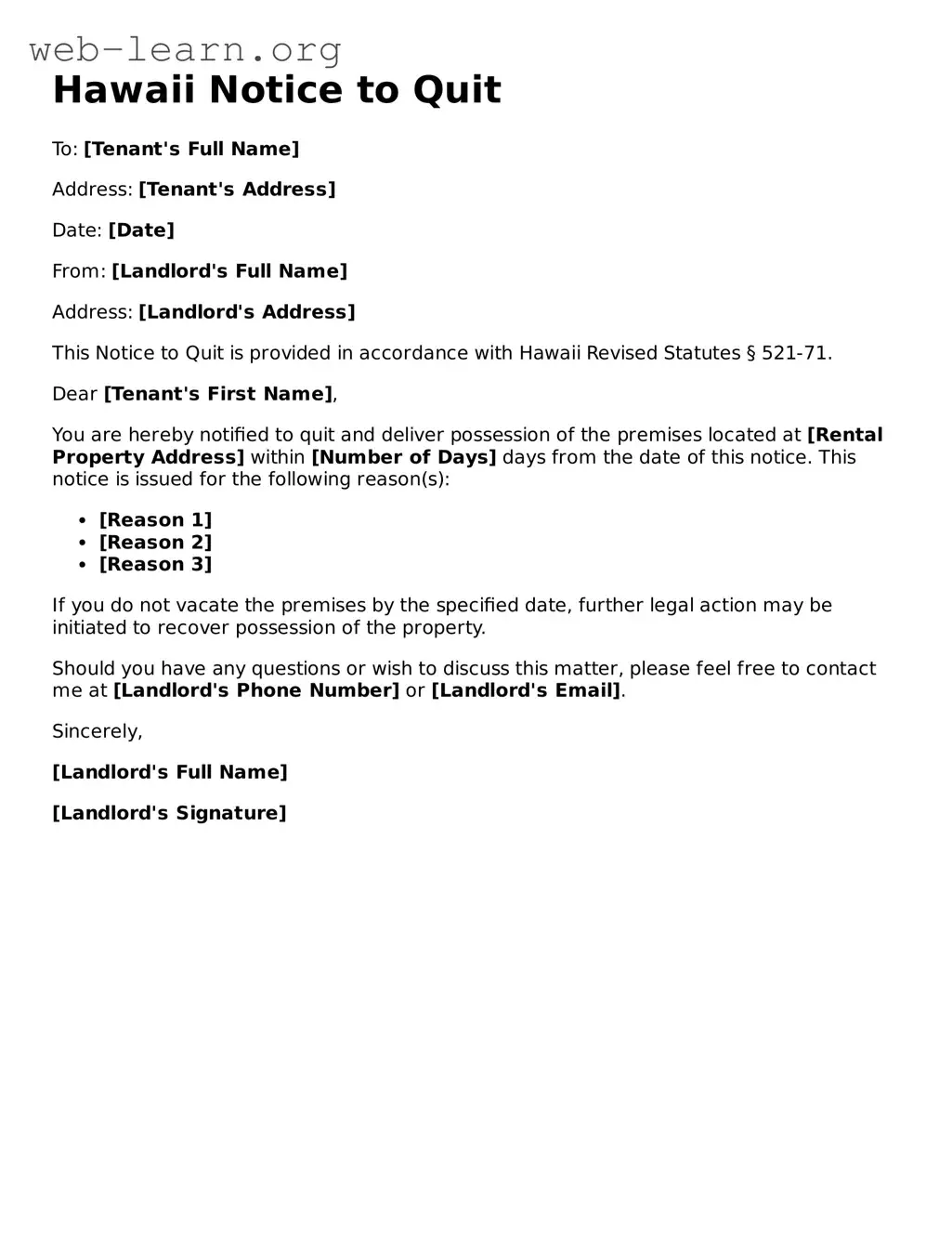
Hawaii Notice to Quit
To: [Tenant's Full Name]
Address: [Tenant's Address]
Date: [Date]
From: [Landlord's Full Name]
Address: [Landlord's Address]
This Notice to Quit is provided in accordance with Hawaii Revised Statutes § 521-71.
Dear [Tenant's First Name],
You are hereby notified to quit and deliver possession of the premises located at [Rental Property Address] within [Number of Days] days from the date of this notice. This notice is issued for the following reason(s):
If you do not vacate the premises by the specified date, further legal action may be initiated to recover possession of the property.
Should you have any questions or wish to discuss this matter, please feel free to contact me at [Landlord's Phone Number] or [Landlord's Email].
Sincerely,
[Landlord's Full Name]
[Landlord's Signature]
| Fact Name | Details |
|---|---|
| Purpose | The Hawaii Notice to Quit form is used by landlords to formally notify tenants to vacate the rental property. |
| Governing Law | This form is governed by Hawaii Revised Statutes (HRS) § 521-71. |
| Types of Notices | There are different types of notices, including a 5-day notice for non-payment of rent and a 10-day notice for lease violations. |
| Delivery Methods | Landlords can deliver the notice by personal service, mailing, or posting on the property. |
| Tenant's Rights | Tenants have the right to contest the notice in court if they believe it was issued improperly. |
| Timeframe for Response | Tenants typically have a limited timeframe to respond or vacate, depending on the type of notice issued. |
| Legal Consequences | Failure to comply with a Notice to Quit can lead to eviction proceedings initiated by the landlord. |
| Form Requirements | The form must include specific information such as the tenant's name, address, and the reason for the notice. |
| Record Keeping | Landlords should keep a copy of the notice and proof of delivery for their records. |
| Local Variations | Some counties in Hawaii may have additional regulations or requirements for the Notice to Quit. |
After you fill out the Hawaii Notice to Quit form, you will need to deliver it to the tenant. This is an important step in the process, as it officially notifies the tenant of the need to vacate the property. Make sure to keep a copy for your records.
What is a Hawaii Notice to Quit form?
The Hawaii Notice to Quit form is a legal document used by landlords to inform tenants that they must vacate the rental property. This notice typically outlines the reasons for termination of the tenancy, which may include non-payment of rent, lease violations, or the end of a rental agreement. It serves as a formal request for the tenant to leave the premises within a specified timeframe.
How much notice is required in Hawaii?
The notice period in Hawaii can vary depending on the reason for the eviction. Generally, landlords must provide:
It is important for landlords to ensure that the notice is delivered properly and that the specified time is adhered to in order to comply with state laws.
What should be included in the Notice to Quit?
A well-prepared Notice to Quit should include the following information:
Including these details helps ensure clarity and can aid in the legal process if further action is required.
Can a tenant contest a Notice to Quit?
Yes, tenants have the right to contest a Notice to Quit. If a tenant believes the notice is unjust or incorrect, they can respond by communicating with the landlord or seeking legal advice. In some cases, tenants may choose to file a complaint or seek mediation. It is advisable for tenants to act promptly, as failing to respond may lead to further legal action.
What happens if a tenant does not comply with the Notice to Quit?
If a tenant does not vacate the property by the deadline specified in the Notice to Quit, the landlord may initiate formal eviction proceedings. This process typically involves filing a lawsuit in the appropriate court. It is crucial for landlords to follow legal procedures to avoid potential complications. Tenants should understand their rights and may wish to seek legal assistance if faced with eviction.
Filling out the Hawaii Notice to Quit form can be a straightforward process, but many people make common mistakes that can complicate matters. Understanding these pitfalls can help ensure that the form is completed correctly and legally. Here are seven mistakes to avoid.
One frequent error is failing to provide accurate tenant information. It’s crucial to include the full name of the tenant as it appears on the lease agreement. Omitting or misspelling names can lead to confusion and may even render the notice invalid. Always double-check the details before submission.
Another mistake is not specifying the reason for the eviction. In Hawaii, landlords must state a valid reason for issuing a Notice to Quit. Whether it’s for non-payment of rent or lease violations, clarity is essential. Leaving this section blank can lead to legal challenges down the line.
Many people overlook the importance of including the correct date. The Notice to Quit must clearly indicate when the tenant is expected to vacate the property. If the date is ambiguous or incorrect, it could cause delays and misunderstandings. Always ensure that the date is clearly stated.
Additionally, some individuals fail to sign the form. A signature is a critical component of the Notice to Quit. Without it, the document may not be considered valid. Make sure to sign and date the form before delivering it to the tenant.
Another common oversight is neglecting to deliver the notice properly. In Hawaii, the Notice to Quit must be delivered in a specific manner, such as personally handing it to the tenant or sending it via certified mail. Skipping this step can invalidate the notice and prolong the eviction process.
Some people also forget to keep a copy of the Notice to Quit for their records. Documentation is essential in case disputes arise later. Keeping a copy ensures that you have proof of the notice and its contents, which can be invaluable if legal action becomes necessary.
Finally, many individuals fail to understand the timeline involved. Hawaii law outlines specific timeframes for tenants to respond to a Notice to Quit. Ignoring these timelines can lead to complications in the eviction process. Familiarize yourself with these requirements to avoid unnecessary delays.
When dealing with rental agreements or landlord-tenant relationships in Hawaii, several documents may accompany the Notice to Quit form. Each of these forms serves a specific purpose and can help clarify the rights and responsibilities of both parties involved. Below is a list of common documents that are often used alongside the Notice to Quit form.
Understanding these documents can help both landlords and tenants navigate their rights and responsibilities effectively. It’s important to ensure that all paperwork is completed accurately and filed in accordance with state regulations to maintain a smooth rental process.
When filling out the Hawaii Notice to Quit form, it’s essential to approach the task with care. Here are six key do's and don'ts to keep in mind:
Following these guidelines can help ensure that the form is filled out correctly and effectively communicates your intentions.
Understanding the Hawaii Notice to Quit form is essential for both landlords and tenants. However, several misconceptions often arise regarding its purpose and use. Below is a list of common misunderstandings about this important legal document.
It is crucial for both landlords and tenants to understand these misconceptions to navigate the rental process effectively. Seeking legal advice when necessary can help clarify any uncertainties and ensure that rights are protected.
When dealing with the Hawaii Notice to Quit form, understanding its key aspects can help ensure a smoother process. Here are some important takeaways:
Following these takeaways can help both landlords and tenants navigate the eviction process more effectively.
Florida Eviction Notice - Landlords should follow up appropriately after issuing the notice.
Georgia Tenant at Will 60 Day Notice - It provides a timeline for the tenant to vacate the premises, typically ranging from a few days to several weeks.