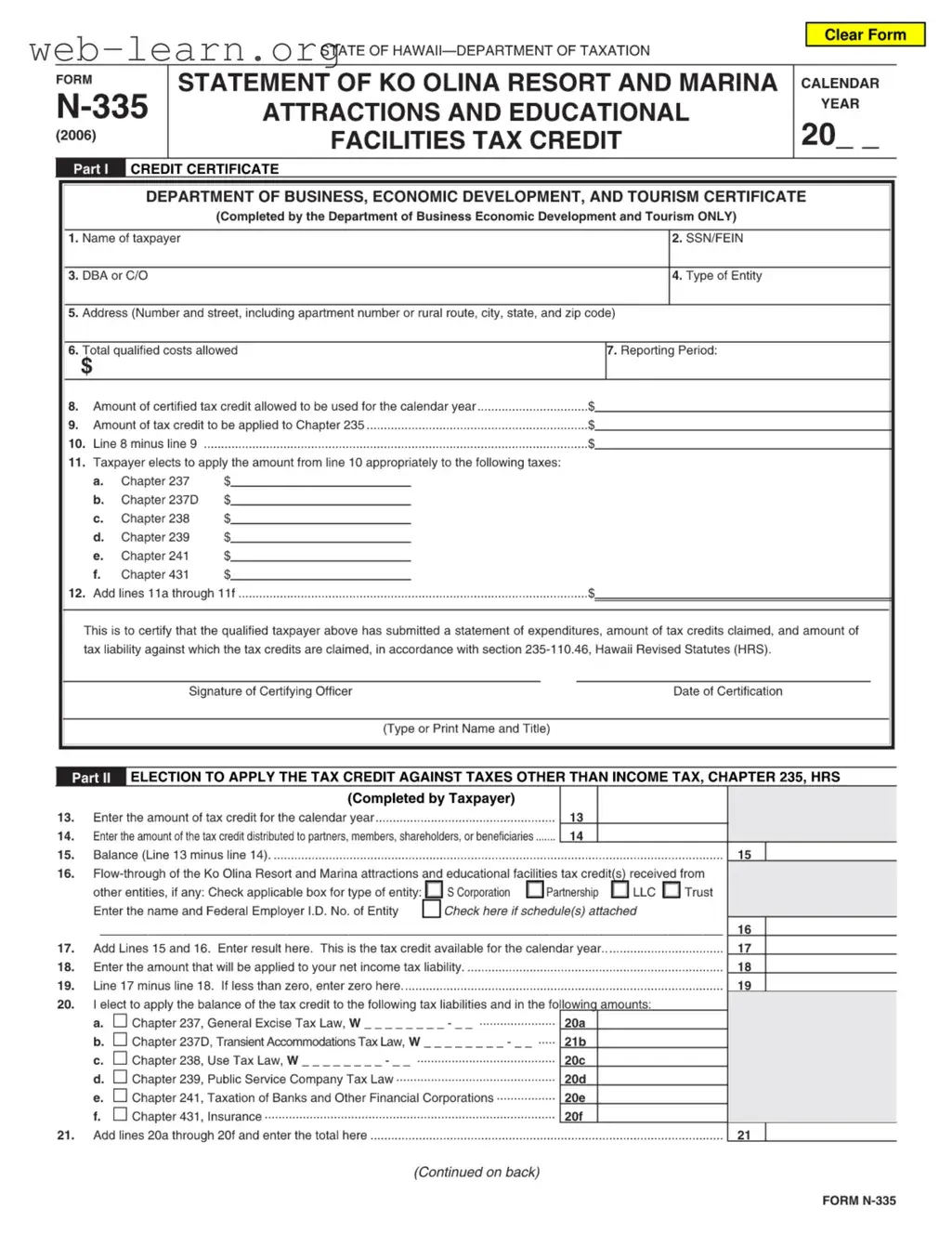
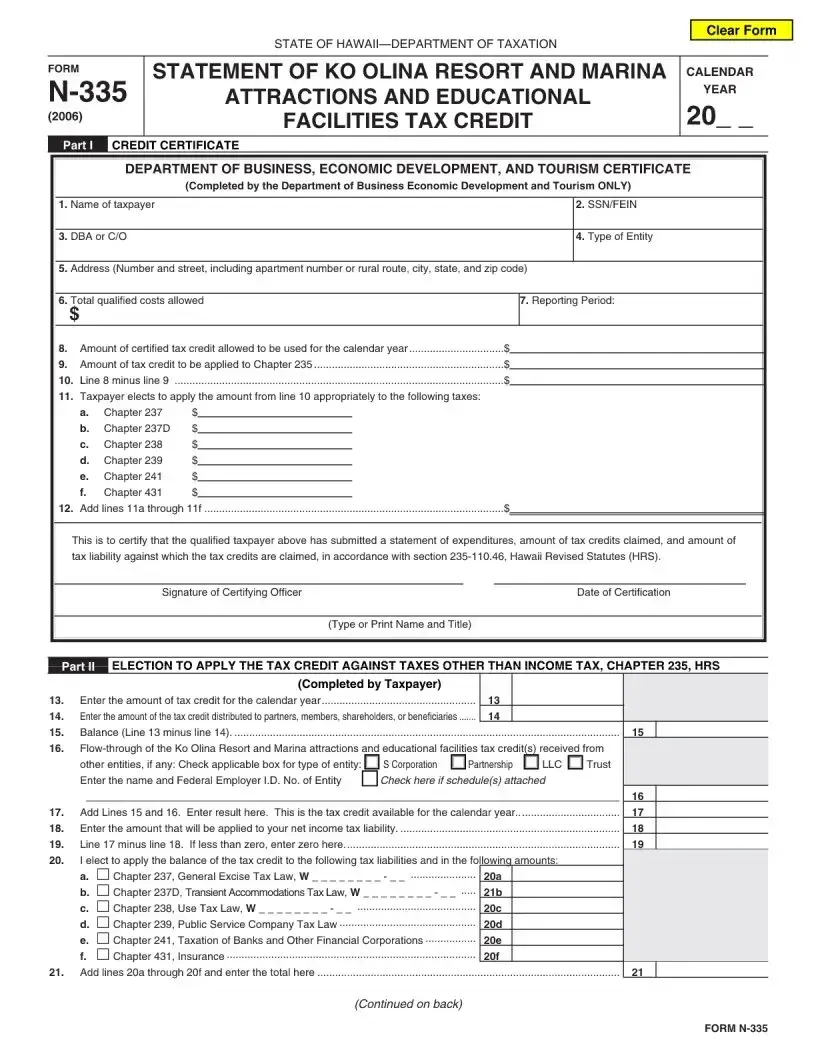
The Hawaii N-335 form is essential for taxpayers involved with the Ko Olina Resort and Marina attractions and educational facilities tax credit. This form allows eligible taxpayers to claim credits for qualified expenditures incurred during the calendar year. It includes sections for taxpayer identification, such as name, social security number, and address, as well as details about the type of entity filing. The form requires reporting of total qualified costs and the amount of tax credit certified for use. Taxpayers can elect to apply the credit against various tax liabilities beyond income tax, including general excise and transient accommodations taxes. Furthermore, the form accommodates flow-through entities, enabling them to allocate credits to partners, members, or shareholders. Accurate completion of the N-335 is crucial, as it certifies the taxpayer's compliance with Hawaii Revised Statutes and ensures proper credit allocation. Understanding the components of this form will help taxpayers navigate their tax obligations effectively.
| Fact Name | Description |
|---|---|
| Form Purpose | The Hawaii N-335 form is used to claim the Ko Olina Resort and Marina Attractions and Educational Facilities Tax Credit for a specified calendar year. |
| Governing Law | This form is governed by section 235-110.46 of the Hawaii Revised Statutes (HRS). |
| Filing Requirement | Taxpayers must complete the form and submit it to the Department of Business, Economic Development, and Tourism to receive certification for the tax credit. |
| Taxpayer Information | Taxpayers must provide personal identification details, including their name, Social Security Number (SSN) or Federal Employer Identification Number (FEIN), and address. |
| Credit Calculation | The form includes sections for calculating the total qualified costs and the amount of tax credit allowed for the calendar year. |
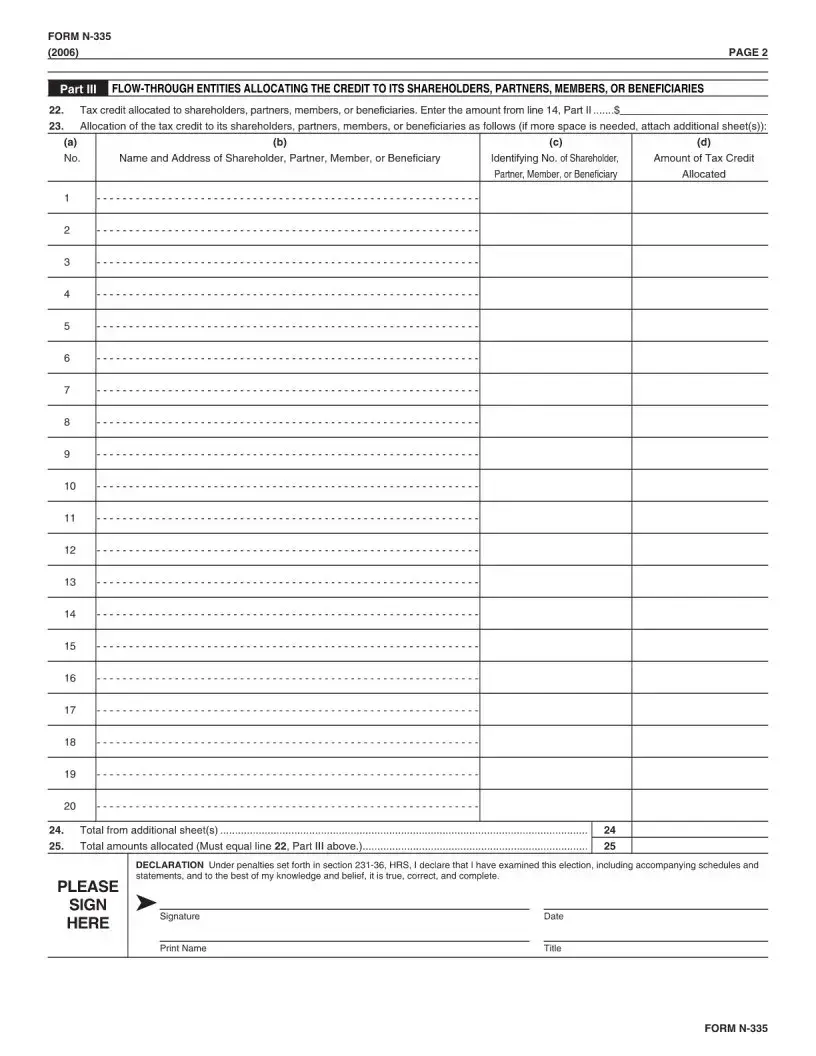
| Flow-Through Entities | Entities such as S Corporations and Partnerships can allocate the tax credit to their shareholders, partners, or members, as outlined in the form. |
| Signature Requirement | A certifying officer must sign the form, affirming that the information provided is accurate and complete, under penalties of perjury. |
Filling out the Hawaii N-335 form requires careful attention to detail. This form is essential for claiming tax credits related to the Ko Olina Resort and Marina attractions and educational facilities. Ensure that you have all the necessary information at hand before you begin. Follow these steps to complete the form accurately.
Once you have completed the form, review it for accuracy. Make sure all calculations are correct and that you have signed it. After that, submit the form to the appropriate department, either electronically or by mail, following the instructions provided on the form. Be mindful of deadlines to ensure you receive the tax credits you are entitled to.
What is the purpose of the Hawaii N-335 form?
The Hawaii N-335 form is used to claim a tax credit for qualified expenditures related to attractions and educational facilities at the Ko Olina Resort and Marina. This credit is available to eligible taxpayers who have incurred certain costs and want to reduce their tax liability.
Who is eligible to file the N-335 form?
Eligible taxpayers include individuals and entities that have made qualified expenditures at the Ko Olina Resort and Marina. This may include businesses, partnerships, and other organizations that meet the criteria outlined in the relevant tax statutes.
What information is required on the N-335 form?
The form requires various details, including:
How do I determine the amount of tax credit I can claim?
The amount of tax credit is based on the total qualified costs incurred. Taxpayers must carefully calculate their eligible expenses and report them accurately on the form. The form provides specific lines to indicate the total costs and the corresponding credit amount.
Can the tax credit be applied to multiple tax liabilities?
Yes, taxpayers can elect to apply the tax credit to various tax liabilities, including general excise tax, transient accommodations tax, and others. The form allows for specifying how much of the credit will be allocated to each type of tax.
What should I do if I have partners or shareholders?
If you are part of a partnership or corporation, you will need to allocate the tax credit among partners, members, or shareholders. The N-335 form includes sections for reporting these allocations, ensuring that each individual receives their appropriate share of the credit.
Is there a deadline for submitting the N-335 form?
The N-335 form must be submitted by the tax filing deadline for the calendar year in which the qualified costs were incurred. It is essential to keep track of these dates to ensure compliance and to receive the credit.
What happens if I make a mistake on the N-335 form?
If you discover an error after submitting the form, you should file an amended return as soon as possible. Corrections can help avoid potential issues with the Department of Taxation and ensure that you receive the correct amount of credit.
Where can I find additional resources or assistance regarding the N-335 form?
For more information, you can visit the Hawaii Department of Taxation's website. They provide guidelines, instructions, and contact information for assistance. Additionally, consulting a tax professional may be beneficial for personalized advice.
Are there penalties for incorrect claims on the N-335 form?
Yes, there are penalties for submitting incorrect information. Under Hawaii law, taxpayers must declare that their submissions are true and complete. If inaccuracies are found, taxpayers may face fines or other consequences. It is crucial to ensure that all information is accurate before submission.
Completing the Hawaii N-335 form can be a straightforward process, but many individuals make mistakes that can lead to delays or complications. One common error is failing to provide a complete name of the taxpayer. It is essential to ensure that the name matches exactly with the records held by the Department of Taxation. Any discrepancies can result in unnecessary inquiries or rejections.
Another frequent mistake involves the omission of the Social Security Number (SSN) or Federal Employer Identification Number (FEIN). This information is critical for identification purposes. Leaving it blank or entering incorrect numbers can hinder the processing of the form. Always double-check this section for accuracy.
Inaccurate reporting of the total qualified costs is also a significant issue. Taxpayers sometimes miscalculate these amounts or fail to include all eligible expenses. It is crucial to review all expenditures carefully to ensure that the total reported reflects the actual qualified costs incurred during the reporting period.
Many people also neglect to fill out the section regarding the amount of certified tax credit allowed. This oversight can lead to confusion and potential loss of benefits. Ensure that the figures from previous calculations are accurately transcribed into the correct fields.
Additionally, taxpayers often make errors when electing to apply the tax credit against specific taxes. Misunderstanding which tax liabilities are applicable can result in incorrect entries. It is vital to read the instructions carefully and select the appropriate options based on your unique tax situation.
For those using flow-through entities, failing to report the correct allocation of tax credits to shareholders, partners, or beneficiaries is another common pitfall. This section requires precise documentation, and any errors can lead to complications for all parties involved.
Not attaching necessary schedules or additional sheets can also be a major oversight. If the space provided on the form is insufficient, it is essential to include all relevant information on separate sheets. Be sure to indicate that these attachments are included to avoid confusion.
Another mistake is related to the declaration section. Some individuals forget to sign and date the form. This signature is a critical part of the submission process, and without it, the form may be deemed incomplete.
Finally, failing to keep a copy of the submitted form for personal records can lead to difficulties in future dealings with the Department of Taxation. Always retain a copy for your files to ensure you have a reference point for any questions or issues that may arise later.
In summary, attention to detail is paramount when filling out the Hawaii N-335 form. By avoiding these common mistakes, taxpayers can ensure a smoother process and minimize the risk of complications.
The Hawaii N-335 form is essential for claiming the Ko Olina Resort and Marina Attractions and Educational Facilities Tax Credit. Several other documents may accompany this form to ensure compliance with state regulations and to provide necessary supporting information. Below is a list of these documents, each described briefly.
Each of these documents plays a crucial role in the tax credit process, ensuring that taxpayers provide the necessary information to qualify for credits accurately. It is important to gather and complete these forms meticulously to avoid delays or issues with tax credit claims.
The Hawaii N 335 form is primarily used for claiming tax credits related to the Ko Olina Resort and Marina attractions and educational facilities. It shares similarities with several other tax-related documents. Below are four forms that are comparable to the Hawaii N 335, along with an explanation of how they are similar:
When filling out the Hawaii N-335 form, attention to detail is crucial. Here are some important do's and don'ts to keep in mind:
By following these guidelines, you can help ensure that your Hawaii N-335 form is completed accurately and efficiently. Taking these steps can lead to a smoother process and a better experience overall.
Misconceptions about the Hawaii N-335 form can lead to confusion and errors in tax filings. Below are seven common misconceptions clarified for better understanding.
Understanding these misconceptions can help taxpayers navigate the complexities of the Hawaii N-335 form more effectively, ensuring they maximize their potential tax benefits.
When filling out the Hawaii N-335 form, there are several important points to keep in mind. Here are key takeaways to help you navigate the process:
Following these steps can help streamline the process and ensure that you make the most of the tax credit available to you.