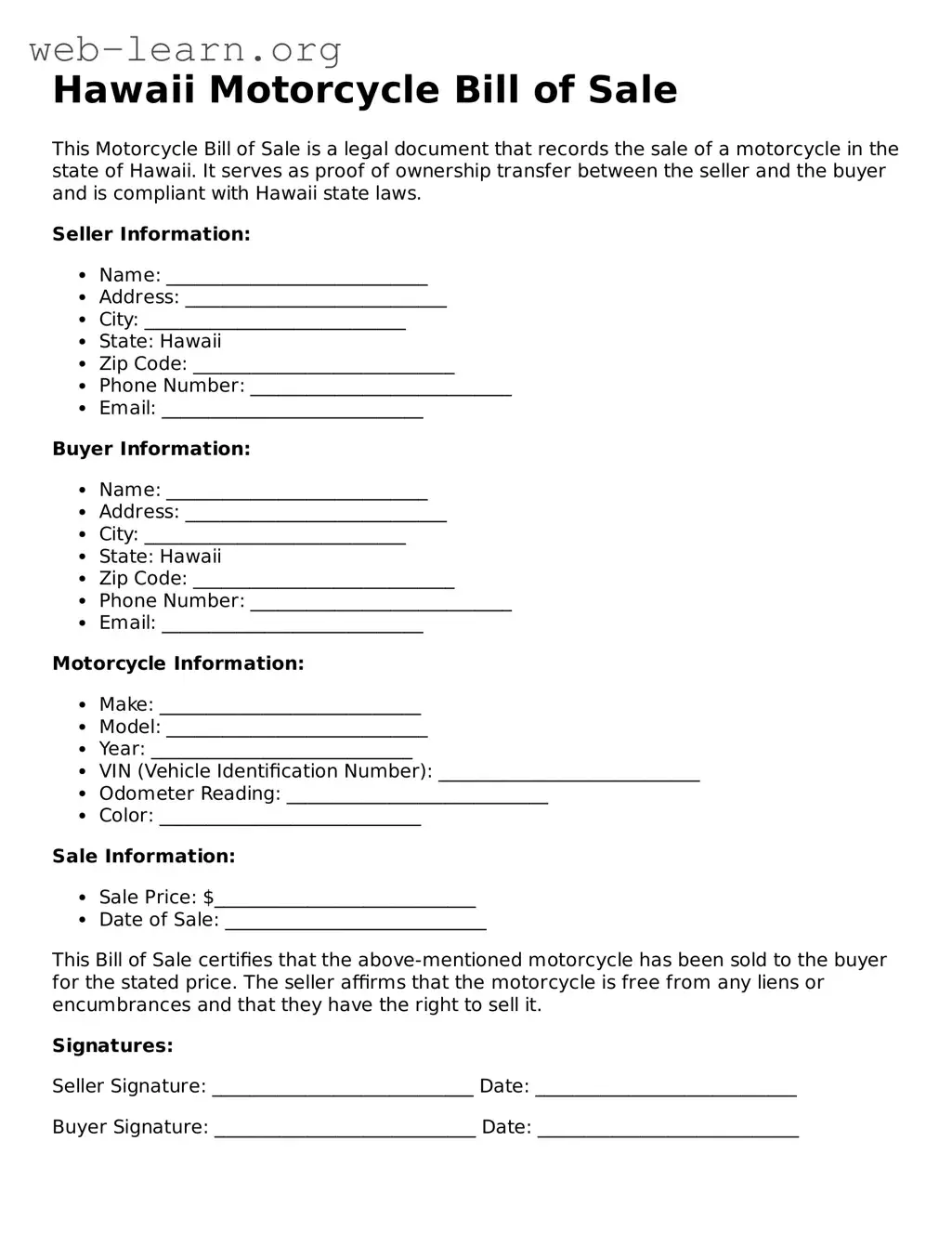
When it comes to buying or selling a motorcycle in Hawaii, having the right documentation is crucial. The Hawaii Motorcycle Bill of Sale form serves as an essential record of the transaction between the buyer and the seller. This form typically includes important details such as the names and addresses of both parties, the motorcycle's make, model, year, and Vehicle Identification Number (VIN). It also outlines the sale price and any terms of the sale, ensuring both parties are clear on the agreement. Additionally, the form may require signatures from both the buyer and seller, which helps protect everyone involved. By using this form, individuals can avoid misunderstandings and have a clear, legal record of the transfer of ownership. Whether you’re a seasoned rider or new to the motorcycle community, understanding this form can make the buying or selling process smoother and more secure.
Hawaii Motorcycle Bill of Sale
This Motorcycle Bill of Sale is a legal document that records the sale of a motorcycle in the state of Hawaii. It serves as proof of ownership transfer between the seller and the buyer and is compliant with Hawaii state laws.
Seller Information:
Buyer Information:
Motorcycle Information:
Sale Information:
This Bill of Sale certifies that the above-mentioned motorcycle has been sold to the buyer for the stated price. The seller affirms that the motorcycle is free from any liens or encumbrances and that they have the right to sell it.
Signatures:
Seller Signature: ____________________________ Date: ____________________________
Buyer Signature: ____________________________ Date: ____________________________
Both parties should retain a copy of this document for their records. This Bill of Sale is governed by the laws of the state of Hawaii.
| Fact Name | Description |
|---|---|
| Purpose | The Hawaii Motorcycle Bill of Sale form is used to document the sale and transfer of ownership of a motorcycle. |
| Parties Involved | The form includes spaces for the seller and buyer's names and addresses. |
| Vehicle Information | Details about the motorcycle, including make, model, year, and Vehicle Identification Number (VIN), must be provided. |
| Purchase Price | The agreed-upon purchase price must be clearly stated on the form. |
| Governing Law | This form is governed by the laws of the State of Hawaii, specifically under HRS § 286-2. |
| Signatures Required | Both the seller and buyer must sign the form to validate the transaction. |
| Notarization | Notarization is not required but can provide additional assurance of the transaction's legitimacy. |
| Record Keeping | It is advisable for both parties to keep a copy of the completed Bill of Sale for their records. |
After obtaining the Hawaii Motorcycle Bill of Sale form, you will need to fill it out accurately. This document is essential for transferring ownership of a motorcycle in Hawaii. Follow these steps to complete the form correctly.
What is a Motorcycle Bill of Sale?
A Motorcycle Bill of Sale is a legal document that serves as proof of the sale and transfer of ownership of a motorcycle. It includes important details about the motorcycle, the buyer, and the seller, ensuring that both parties have a record of the transaction.
Why do I need a Motorcycle Bill of Sale in Hawaii?
In Hawaii, a Motorcycle Bill of Sale is essential for registering the motorcycle in the new owner's name. It protects both the buyer and seller by providing a clear record of the transaction, which can be important for future reference or in case of disputes.
What information is included in the Motorcycle Bill of Sale?
The Motorcycle Bill of Sale typically includes:
Is the Motorcycle Bill of Sale required to be notarized?
In Hawaii, notarization is not required for a Motorcycle Bill of Sale. However, having the document notarized can provide an additional layer of security and verification for both parties.
Can I create my own Motorcycle Bill of Sale?
Yes, you can create your own Motorcycle Bill of Sale as long as it includes all the necessary information. There are also templates available online that can help ensure you include everything needed for the document to be valid.
Do I need to keep a copy of the Motorcycle Bill of Sale?
Yes, both the buyer and seller should keep a copy of the Motorcycle Bill of Sale for their records. This document can be useful for future reference, especially if questions about ownership arise.
What if I lose the Motorcycle Bill of Sale?
If you lose the Motorcycle Bill of Sale, you may need to create a new one or obtain a duplicate from the other party involved in the transaction. Having a copy is important for registration and proof of ownership.
Is a Motorcycle Bill of Sale the same as a title?
No, a Motorcycle Bill of Sale is not the same as a title. The title is an official document that proves ownership of the motorcycle, while the Bill of Sale is a record of the transaction. Both documents are important for transferring ownership.
What should I do if there are discrepancies in the Motorcycle Bill of Sale?
If you notice any discrepancies in the Motorcycle Bill of Sale, address them immediately with the other party. It is crucial to ensure that all information is accurate before finalizing the sale to avoid complications later.
Where can I obtain a Motorcycle Bill of Sale form for Hawaii?
You can find Motorcycle Bill of Sale forms online through various legal websites, or you may create your own using a template. Additionally, some local motorcycle dealerships may provide forms as well.
When completing the Hawaii Motorcycle Bill of Sale form, individuals often overlook critical details that can lead to complications down the line. One common mistake is failing to provide accurate vehicle identification numbers (VIN). The VIN is essential for identifying the motorcycle and ensuring that the transaction is legitimate. If this number is incorrect, it could result in legal issues or difficulties in registering the motorcycle.
Another frequent error is neglecting to include the seller's and buyer's full names and addresses. This information is vital for establishing a clear record of ownership transfer. Incomplete or inaccurate contact information can create confusion and may hinder future communications regarding the motorcycle.
Many people also forget to include the sale date on the form. The sale date is important for various reasons, including tax purposes and determining the timeline of ownership. Without this date, it may be challenging to resolve disputes or verify ownership in the future.
Additionally, individuals sometimes fail to indicate the purchase price. This omission can lead to misunderstandings about the transaction. It's important for both parties to agree on a price and document it clearly to avoid any potential disputes later on.
Some people mistakenly assume that a signature is not required on the form. Both the seller and buyer must sign the Bill of Sale to validate the transaction. Without signatures, the document may not hold up in legal situations, making it crucial to ensure that both parties complete this step.
Another common mistake is not keeping a copy of the completed Bill of Sale. After the transaction, both parties should retain a copy for their records. This document serves as proof of the sale and can be essential for future reference, especially if questions about ownership arise.
Individuals often overlook the need to check for any liens on the motorcycle. Before finalizing the sale, it’s wise to ensure that the motorcycle is free of any outstanding debts or claims. Ignoring this step can lead to complications for the buyer, who may find themselves responsible for debts they were unaware of.
In some cases, people fail to verify the motorcycle's condition before completing the sale. It is essential for buyers to conduct a thorough inspection to ensure they are aware of any issues that may exist. Rushing through this process can lead to regrets later on.
Another mistake involves not understanding the difference between a Bill of Sale and a title transfer. While the Bill of Sale documents the transaction, the title transfer is what officially changes ownership. Both processes are necessary, and individuals must ensure they complete both to avoid issues with registration.
Lastly, some individuals may not be aware of the specific requirements set by the state of Hawaii for the Bill of Sale. Each state has its regulations, and failing to comply with these can result in an invalid document. It's crucial to familiarize oneself with local laws to ensure that the Bill of Sale meets all necessary criteria.
The Hawaii Motorcycle Bill of Sale form serves as a crucial document in the transfer of ownership for motorcycles. However, it is often accompanied by other forms and documents that facilitate a smooth transaction. Below is a list of commonly used documents that complement the Bill of Sale in Hawaii.
Each of these documents plays a vital role in ensuring that the motorcycle sale is conducted legally and efficiently. Proper preparation and understanding of these forms can prevent potential disputes and facilitate a seamless transfer of ownership.
The Motorcycle Bill of Sale form shares similarities with several other documents. Here are four examples:
When filling out the Hawaii Motorcycle Bill of Sale form, attention to detail is crucial. Here are six important dos and don’ts to ensure a smooth process.
Understanding the Hawaii Motorcycle Bill of Sale form is essential for anyone involved in buying or selling a motorcycle in the state. However, several misconceptions can lead to confusion. Here are five common misunderstandings:
Misconception 1: The Bill of Sale is not legally required.
While it is true that a Bill of Sale is not mandated by law in Hawaii, having one is highly recommended. This document serves as proof of the transaction and can protect both the buyer and seller in case of disputes.
Misconception 2: The form must be notarized.
Many believe that notarization is necessary for the Bill of Sale to be valid. In Hawaii, notarization is not a requirement. However, having it notarized can add an extra layer of authenticity and may be beneficial in certain situations.
Misconception 3: Only the seller needs to sign the Bill of Sale.
Some individuals think that only the seller's signature is sufficient. In reality, both the buyer and seller should sign the document. This ensures that both parties acknowledge the terms of the sale.
Misconception 4: A Bill of Sale is the same as a title transfer.
While the Bill of Sale documents the transaction, it does not serve as a title transfer. To officially transfer ownership of the motorcycle, the seller must provide the buyer with the title, and the buyer must complete the necessary paperwork with the state.
Misconception 5: The Bill of Sale is only for used motorcycles.
Many think that this form is only applicable for used motorcycles. In fact, it can be used for both new and used motorcycles. It provides a record of the sale regardless of the condition of the vehicle.
Clarifying these misconceptions can help ensure smoother transactions and better protection for all parties involved.
When filling out and using the Hawaii Motorcycle Bill of Sale form, there are several important points to keep in mind. Here are some key takeaways to ensure a smooth process:
By following these guidelines, you can confidently complete the Hawaii Motorcycle Bill of Sale form and ensure a successful transfer of ownership.
Where to Sign Title When Selling Car in Georgia - The bill of sale can be used in conjunction with other documents, such as the title transfer.
Q-1 Form Ct Dmv - The form can be customized to fit specific sale agreements between the parties.
Bill of Sale for a Motor Vehicle - In some states, notarization of the Bill of Sale may be recommended or required.