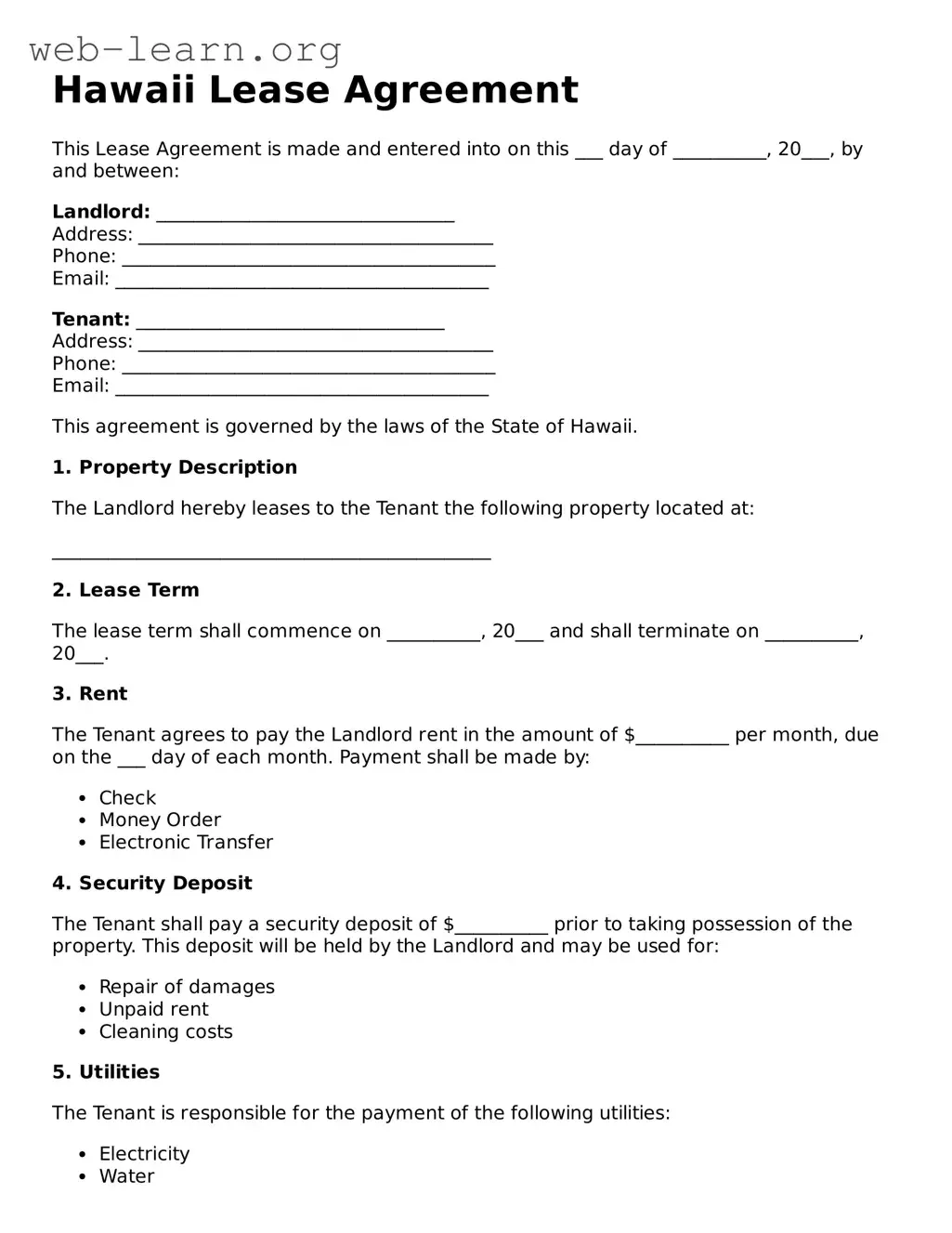
When entering into a rental agreement in Hawaii, understanding the Hawaii Lease Agreement form is essential for both landlords and tenants. This document outlines the terms and conditions that govern the rental relationship, including the duration of the lease, monthly rent, security deposits, and maintenance responsibilities. It typically includes provisions regarding the use of the property, rules for pets, and the process for handling disputes. Additionally, the form addresses the rights and obligations of both parties, ensuring that everyone is aware of their responsibilities. By clearly defining these aspects, the Hawaii Lease Agreement aims to create a fair and transparent rental experience, minimizing potential conflicts and misunderstandings. Whether you are a seasoned property owner or a first-time renter, familiarizing yourself with this form can help protect your interests and foster a positive rental relationship.
Hawaii Lease Agreement
This Lease Agreement is made and entered into on this ___ day of __________, 20___, by and between:
Landlord: ________________________________
Address: ______________________________________
Phone: ________________________________________
Email: ________________________________________
Tenant: _________________________________
Address: ______________________________________
Phone: ________________________________________
Email: ________________________________________
This agreement is governed by the laws of the State of Hawaii.
1. Property Description
The Landlord hereby leases to the Tenant the following property located at:
_______________________________________________
2. Lease Term
The lease term shall commence on __________, 20___ and shall terminate on __________, 20___.
3. Rent
The Tenant agrees to pay the Landlord rent in the amount of $__________ per month, due on the ___ day of each month. Payment shall be made by:
4. Security Deposit
The Tenant shall pay a security deposit of $__________ prior to taking possession of the property. This deposit will be held by the Landlord and may be used for:
5. Utilities
The Tenant is responsible for the payment of the following utilities:
6. Maintenance and Repairs
The Tenant agrees to maintain the property in good condition. Any repairs needed must be reported to the Landlord immediately.
7. Termination
Either party may terminate this agreement by providing a written notice of at least ___ days prior to the intended termination date.
8. Governing Law
This agreement shall be governed by the laws of the State of Hawaii.
9. Signatures
By signing below, both parties agree to the terms outlined in this Lease Agreement.
______________________________
Landlord Signature
Date: ________________
______________________________
Tenant Signature
Date: ________________
| Fact Name | Description |
|---|---|
| Governing Law | The Hawaii Lease Agreement is governed by Hawaii state law. |
| Parties Involved | The lease agreement involves a lessor (landlord) and a lessee (tenant). |
| Property Description | The agreement must include a clear description of the rental property. |
| Lease Term | The lease specifies the duration of the rental period, whether fixed or month-to-month. |
| Rent Amount | The lease must state the amount of rent due and the payment schedule. |
| Security Deposit | Details regarding the security deposit, including amount and conditions for return, must be included. |
| Maintenance Responsibilities | The agreement outlines the responsibilities for property maintenance and repairs. |
| Termination Conditions | The lease should specify conditions under which either party can terminate the agreement. |
| Dispute Resolution | The lease may include provisions for resolving disputes, such as mediation or arbitration. |
Filling out the Hawaii Lease Agreement form requires careful attention to detail. Make sure you have all necessary information ready before you begin. Completing this form accurately is crucial for establishing a clear understanding between both parties involved.
Once the form is completed, review it carefully to ensure all information is accurate. Both parties should keep a copy for their records. This will help in maintaining a smooth landlord-tenant relationship moving forward.
What is a Hawaii Lease Agreement?
A Hawaii Lease Agreement is a legally binding contract between a landlord and a tenant. It outlines the terms and conditions for renting a residential or commercial property in Hawaii. This document specifies the rental amount, duration of the lease, and responsibilities of both parties.
What are the key components of a Hawaii Lease Agreement?
Key components typically include:
How long is a typical lease term in Hawaii?
Lease terms in Hawaii can vary. They typically range from six months to one year for residential properties. However, month-to-month leases are also common, providing flexibility for both landlords and tenants.
Is a security deposit required in Hawaii?
Yes, landlords in Hawaii often require a security deposit. This deposit usually amounts to one month's rent but can be higher in some cases. The deposit protects the landlord against damages or unpaid rent and must be returned to the tenant within 14 days after the lease ends, minus any deductions.
Can a landlord enter the rental property without notice?
Generally, landlords must provide at least 24 hours' notice before entering the rental property. Exceptions may apply in emergencies. It's essential for both parties to understand these rules to maintain a good relationship.
What happens if the tenant wants to break the lease early?
If a tenant wishes to break the lease early, they should review the lease agreement for any specific terms regarding early termination. Often, tenants may need to provide notice and may be responsible for paying rent until a new tenant is found.
Are there specific laws governing lease agreements in Hawaii?
Yes, Hawaii has specific laws that govern lease agreements. These laws cover various aspects, including security deposits, eviction procedures, and tenant rights. It’s crucial for both landlords and tenants to be aware of these regulations to ensure compliance.
How can I obtain a Hawaii Lease Agreement form?
You can obtain a Hawaii Lease Agreement form through various sources. Many online legal services offer customizable templates. Additionally, local real estate offices or legal aid organizations may provide forms and guidance.
When filling out the Hawaii Lease Agreement form, many individuals overlook critical details that can lead to complications down the road. One common mistake is failing to include all required information. This includes the names of all tenants and landlords, the rental property address, and the lease term. Omitting even a small detail can result in misunderstandings or disputes later on.
Another frequent error is not specifying the rental amount clearly. It is essential to state the monthly rent, payment due dates, and acceptable payment methods. Without this clarity, tenants may miss payments, leading to late fees or even eviction. Ensuring that this information is explicit helps maintain a smooth landlord-tenant relationship.
People often neglect to read the lease agreement thoroughly before signing. This document contains important terms and conditions that govern the rental relationship. By skipping this step, tenants might unknowingly agree to clauses that they find unacceptable later. Taking the time to review the lease can prevent future issues.
Additionally, many individuals forget to include provisions for maintenance and repairs. It’s crucial to outline who is responsible for what in terms of upkeep. If these responsibilities are not clearly defined, disagreements may arise regarding who should handle repairs, potentially leading to frustration for both parties.
Lastly, failing to understand the legal implications of the lease agreement can be a significant oversight. Some tenants might assume that verbal agreements or understandings will suffice. However, a written lease is a binding contract that protects both parties. Understanding its terms ensures that everyone is on the same page and reduces the risk of legal disputes.
When entering into a lease agreement in Hawaii, several other forms and documents may be necessary to ensure all parties are protected and informed. Below is a list of commonly used documents that complement the Hawaii Lease Agreement.
Having these documents in place can help facilitate a smooth rental experience. They provide clarity and protection for both landlords and tenants, ensuring that all parties understand their rights and responsibilities.
Rental Agreement: Similar to a lease, a rental agreement typically covers a shorter duration, often month-to-month, and outlines the terms of tenancy.
Sublease Agreement: This document allows a tenant to rent out their leased space to another party. It includes similar terms as a lease but is specific to the subtenant.
Commercial Lease Agreement: Used for business properties, this agreement details terms specific to commercial use, including rent, duration, and responsibilities.
Month-to-Month Lease: This flexible agreement allows tenants to occupy a property on a monthly basis, with terms that can change with proper notice.
Lease Option Agreement: This document grants a tenant the right to purchase the property at a later date, combining leasing terms with potential ownership.
Rent-to-Own Agreement: Similar to a lease option, this agreement allows tenants to rent with the intention of buying the property, outlining terms for both renting and purchasing.
Property Management Agreement: This document outlines the relationship between property owners and managers, detailing responsibilities similar to those in a lease.
Roommate Agreement: This agreement is used among individuals sharing a rental space. It covers similar terms as a lease, addressing responsibilities and expectations.
Tenancy Agreement: This is a broader term that encompasses various forms of leases and rental agreements, focusing on the rights and duties of both landlord and tenant.
When filling out the Hawaii Lease Agreement form, it is important to be careful and thorough. Here are some guidelines to help you navigate the process.
Following these steps can help ensure a smooth leasing experience. Always prioritize clear communication and understanding throughout the process.
When it comes to the Hawaii Lease Agreement form, several misconceptions can lead to confusion for both landlords and tenants. Understanding these misconceptions is crucial for a smooth leasing experience. Below are some common misunderstandings.
By dispelling these misconceptions, both landlords and tenants can navigate the leasing process in Hawaii more effectively. Understanding the specifics of the lease agreement is key to a successful rental experience.
When dealing with the Hawaii Lease Agreement form, there are several important points to keep in mind. Understanding these can help ensure a smooth leasing process.
By keeping these takeaways in mind, both landlords and tenants can navigate the leasing process more effectively in Hawaii.
House Rental Agreement Template - The document can specify any restrictions on noise or disruptive behavior.
Arkansas Lease Agreement - Details the security deposit requirements and conditions.