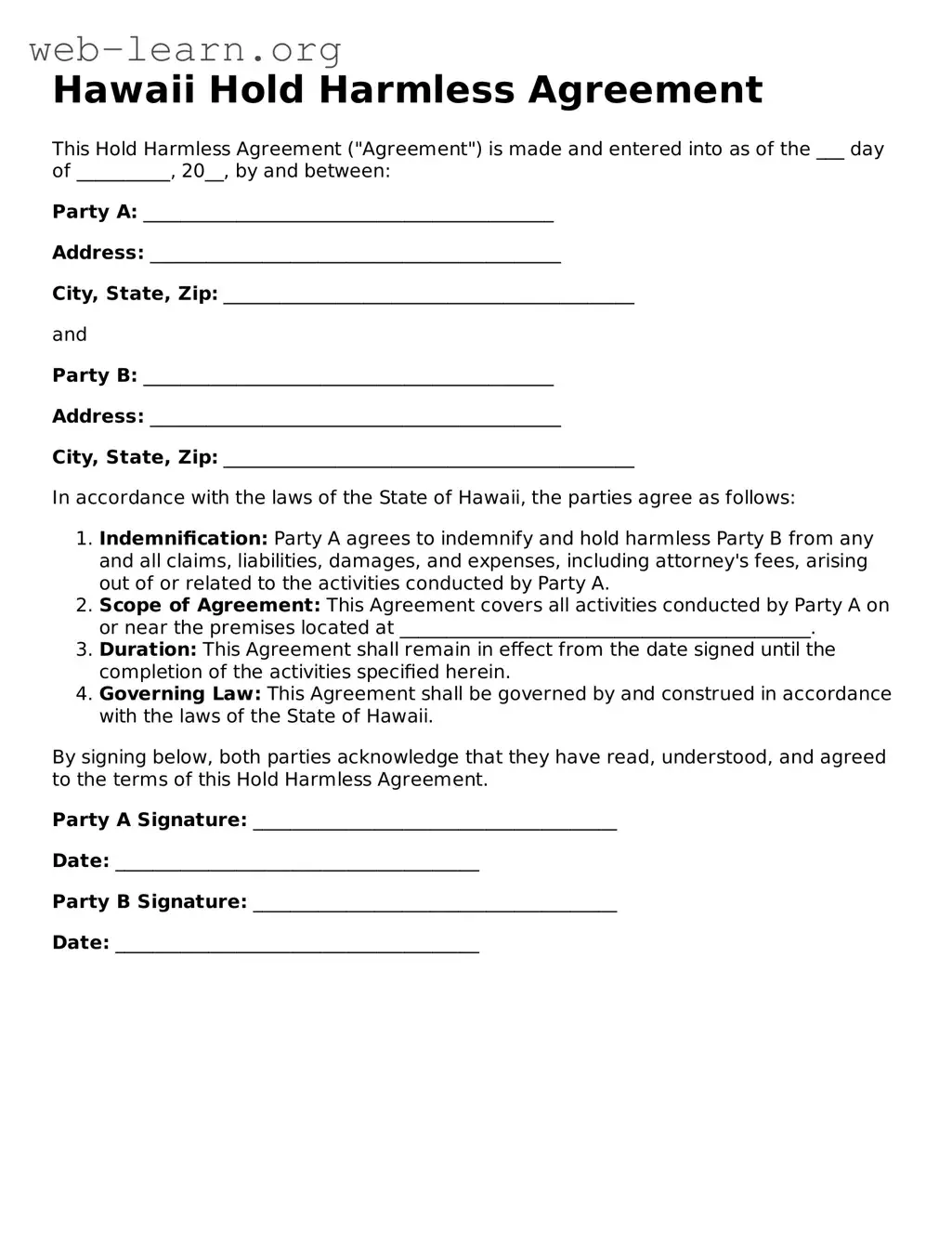
The Hawaii Hold Harmless Agreement form plays a crucial role in various transactions and activities, particularly in protecting individuals and organizations from potential liabilities. This agreement is often used in situations where one party agrees to indemnify another, meaning they take responsibility for any claims or damages that may arise. It is commonly utilized in rental agreements, event planning, and construction projects, ensuring that parties involved understand their responsibilities and the associated risks. By outlining the terms clearly, the form helps establish a mutual understanding and provides a layer of security for all parties. Additionally, the agreement typically includes provisions that specify the scope of indemnification, the duration of the agreement, and any limitations on liability. Understanding these components can aid in navigating the complexities of contractual relationships in Hawaii, making it an essential document for anyone engaging in activities that may expose them to legal risks.
Hawaii Hold Harmless Agreement
This Hold Harmless Agreement ("Agreement") is made and entered into as of the ___ day of __________, 20__, by and between:
Party A: ____________________________________________
Address: ____________________________________________
City, State, Zip: ____________________________________________
and
Party B: ____________________________________________
Address: ____________________________________________
City, State, Zip: ____________________________________________
In accordance with the laws of the State of Hawaii, the parties agree as follows:
By signing below, both parties acknowledge that they have read, understood, and agreed to the terms of this Hold Harmless Agreement.
Party A Signature: _______________________________________
Date: _______________________________________
Party B Signature: _______________________________________
Date: _______________________________________
| Fact Name | Description |
|---|---|
| Definition | A Hold Harmless Agreement is a legal document where one party agrees not to hold another party responsible for any potential losses or damages. |
| Purpose | This agreement is often used in situations involving rentals, events, or activities where risk of injury or damage exists. |
| Parties Involved | Typically, two parties are involved: the indemnitor (the one who agrees to hold harmless) and the indemnitee (the one being protected). |
| Governing Law | In Hawaii, the agreement is governed by state laws that pertain to contracts and liability. |
| Enforceability | For the agreement to be enforceable, it must be clear, specific, and voluntarily signed by both parties. |
| Limitations | Hold Harmless Agreements cannot protect against gross negligence or willful misconduct. |
| Common Uses | These agreements are frequently used in recreational activities, construction contracts, and lease agreements. |
| Legal Advice | It is advisable to consult with a legal professional before signing a Hold Harmless Agreement to ensure it meets your needs. |
After obtaining the Hawaii Hold Harmless Agreement form, you will need to carefully complete it to ensure it accurately reflects your intentions. This process involves providing specific information and signatures, which will help to formalize the agreement.
Once you have completed these steps, you can submit the form to the relevant party or organization as instructed. Keep a copy for your records, as it may be important for future reference.
A Hawaii Hold Harmless Agreement is a legal document that protects one party from liability for any injuries or damages that may occur during a specific activity or event. This agreement is often used in situations where one party is providing services or facilities to another, ensuring that the service provider is not held responsible for accidents or injuries that may happen as a result of the activity.
This agreement is commonly used by businesses, organizations, and individuals involved in activities such as recreational events, sports, construction projects, and rental agreements. For example, a venue owner may require event organizers to sign a Hold Harmless Agreement to mitigate risks associated with hosting events on their property.
A typical Hold Harmless Agreement includes several important elements:
Yes, a Hold Harmless Agreement is generally considered legally binding as long as it is properly drafted and signed by all parties. However, it is important to note that certain conditions may affect its enforceability. For example, if the agreement contains ambiguous language or if it attempts to waive liability for gross negligence, a court may find it unenforceable.
Yes, a Hold Harmless Agreement can be modified if all parties agree to the changes. It is advisable to document any modifications in writing and have all parties sign the revised agreement. This helps ensure that everyone is aware of the new terms and conditions, maintaining clarity and reducing the risk of disputes.
Filling out the Hawaii Hold Harmless Agreement form can be a straightforward process, but there are common mistakes that individuals often make. One frequent error is failing to provide complete information. Each section of the form must be filled out accurately. Missing details can lead to delays or even the rejection of the agreement.
Another mistake is not reading the entire document before signing. It is essential to understand the terms and conditions outlined in the agreement. Skipping this step may result in unintended obligations or liabilities. Taking the time to review the document can prevent misunderstandings later on.
Many people also overlook the importance of providing correct dates. The effective date of the agreement should be clearly indicated. If the date is incorrect or missing, it could create confusion about when the terms apply. This oversight can complicate matters if a dispute arises.
Some individuals fail to include necessary signatures. Each party involved in the agreement must sign for it to be valid. Neglecting to obtain all required signatures can render the agreement unenforceable. Ensure that all relevant parties review and sign the document.
Another common error involves not keeping a copy of the completed agreement. After filling out the form, it is crucial to retain a signed copy for personal records. This document serves as proof of the agreement and can be referenced in the future if needed.
Additionally, individuals may not consult legal counsel when necessary. While the form is designed to be user-friendly, seeking advice from a legal professional can provide clarity on complex issues. This step is particularly important for those unfamiliar with legal agreements.
Some people also fail to check for updates or changes to the form. Legal documents can be revised over time. Using an outdated version of the agreement may lead to complications. Always ensure that the most current form is being utilized.
Finally, individuals might rush through the process. Taking the time to carefully complete each section of the form can prevent errors. Patience and attention to detail are key to ensuring that the agreement is filled out correctly.
A Hawaii Hold Harmless Agreement is a legal document designed to protect one party from liability for certain actions or events. Often, this agreement is used in conjunction with other documents to ensure comprehensive coverage and clarity in various situations. Below is a list of related forms and documents that may be used alongside the Hold Harmless Agreement.
These documents work together to create a comprehensive framework for managing risks and responsibilities. When used in conjunction with the Hawaii Hold Harmless Agreement, they help clarify expectations and protect all parties involved.
A Hold Harmless Agreement is a legal document that protects one party from liability or claims made by another party. Several other documents serve similar purposes in various contexts. Here are four documents that share similarities with a Hold Harmless Agreement:
When filling out the Hawaii Hold Harmless Agreement form, it is important to follow certain guidelines to ensure accuracy and compliance. Below are some things you should and shouldn't do.
Following these simple guidelines can help you navigate the process smoothly. Always prioritize clarity and understanding when dealing with legal documents.
Understanding the Hawaii Hold Harmless Agreement form can be challenging. Here are six common misconceptions that may lead to confusion:
Being informed about these misconceptions can help individuals and businesses navigate their legal responsibilities more effectively.
When filling out and using the Hawaii Hold Harmless Agreement form, keep the following key points in mind:
Hold Harmless Agreement - A Hold Harmless Agreement can cover bodily injury, property damage, and other liabilities.
Hold Harmless Agreement - A Hold Harmless Agreement can be a proactive measure for anyone hosting events or gatherings.
Hold Harmless Agreement - These agreements are beneficial in recreational activities, protecting organizers from claims.