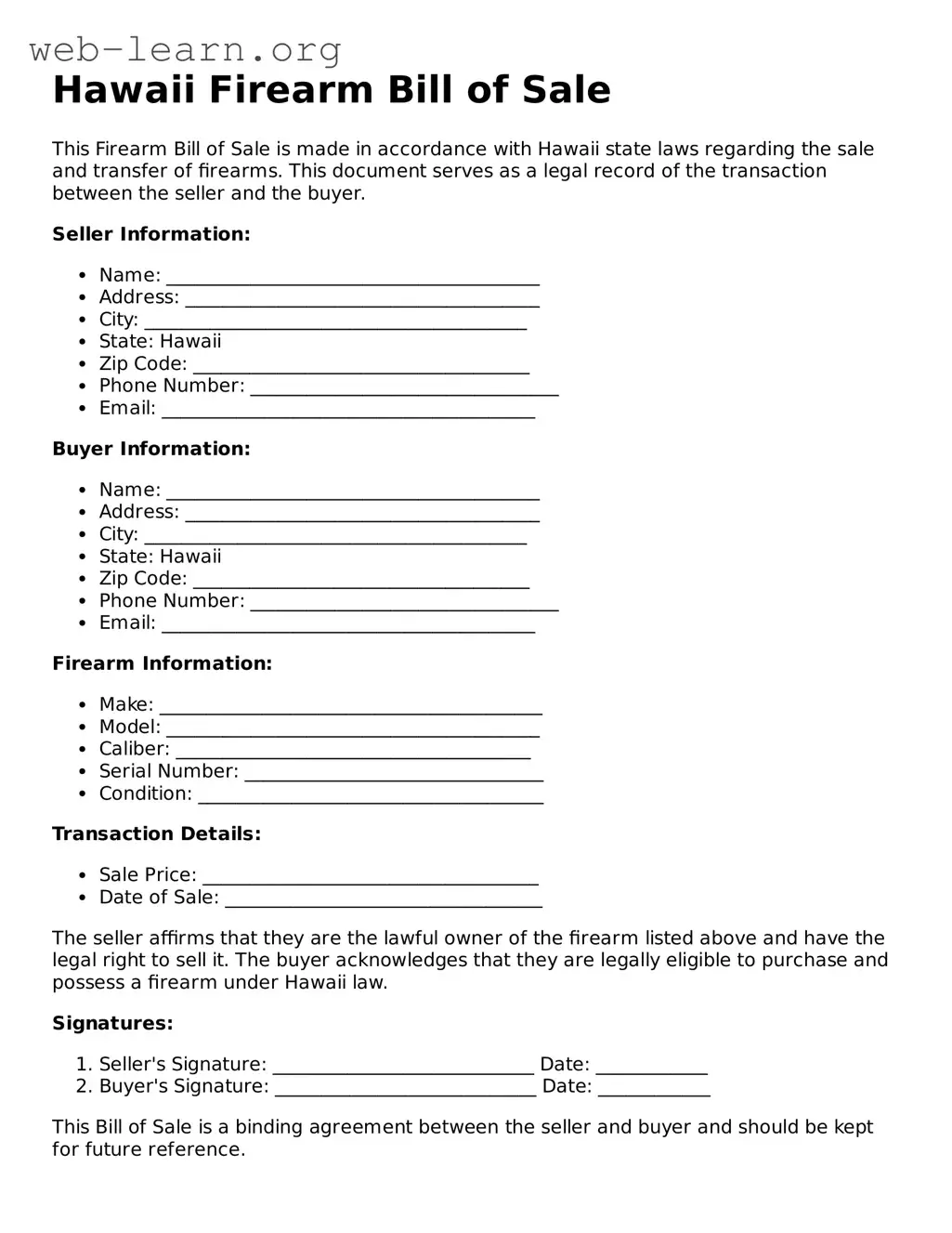
The Hawaii Firearm Bill of Sale form serves as a crucial document in the transfer of firearm ownership within the state, ensuring that both buyers and sellers adhere to local laws and regulations. This form captures essential details such as the names and addresses of both parties, the type of firearm being sold, and its unique identifying information, including the serial number. Additionally, it stipulates the date of the transaction, providing a clear record of when the ownership change occurred. By requiring signatures from both the seller and the buyer, the form helps establish a legally binding agreement, promoting accountability and transparency in firearm transactions. Furthermore, the form may include a declaration affirming that both parties are in compliance with state laws regarding firearm ownership, reinforcing the importance of responsible gun ownership in Hawaii. Overall, the Firearm Bill of Sale form not only facilitates the sale of firearms but also plays a vital role in maintaining public safety and regulatory compliance in the state.
Hawaii Firearm Bill of Sale
This Firearm Bill of Sale is made in accordance with Hawaii state laws regarding the sale and transfer of firearms. This document serves as a legal record of the transaction between the seller and the buyer.
Seller Information:
Buyer Information:
Firearm Information:
Transaction Details:
The seller affirms that they are the lawful owner of the firearm listed above and have the legal right to sell it. The buyer acknowledges that they are legally eligible to purchase and possess a firearm under Hawaii law.
Signatures:
This Bill of Sale is a binding agreement between the seller and buyer and should be kept for future reference.
| Fact Name | Description |
|---|---|
| Purpose | The Hawaii Firearm Bill of Sale form is used to document the sale and transfer of firearms between private parties in Hawaii. |
| Governing Law | This form is governed by Hawaii Revised Statutes § 134-2, which outlines the regulations surrounding firearm transactions in the state. |
| Requirements | Both the seller and buyer must provide valid identification and ensure that the transaction complies with all state and federal laws. |
| Record Keeping | It is recommended that both parties retain a copy of the completed Bill of Sale for their records, as it serves as proof of the transaction. |
Completing the Hawaii Firearm Bill of Sale form is an essential step in the transfer of firearm ownership. After filling out the form, both parties will have a record of the transaction, which can be useful for legal and personal purposes. Follow these steps to ensure that the form is completed correctly.
What is a Hawaii Firearm Bill of Sale form?
The Hawaii Firearm Bill of Sale form is a legal document used to record the sale or transfer of a firearm between a seller and a buyer in the state of Hawaii. This form serves as proof of the transaction and includes essential details about the firearm, the parties involved, and the terms of the sale.
Is the Bill of Sale required for all firearm transactions in Hawaii?
While the Bill of Sale is not legally required for every firearm transaction, it is highly recommended. Having a Bill of Sale provides both parties with a written record of the transaction, which can be useful for legal purposes, such as proving ownership or resolving disputes.
What information is typically included in the Bill of Sale?
The Bill of Sale usually contains the following information:
Do I need to have the Bill of Sale notarized?
No, notarization is not a requirement for the Bill of Sale in Hawaii. However, having the document notarized can add an extra layer of authenticity and may be beneficial in case of future disputes.
What should I do with the Bill of Sale after the transaction?
Both the seller and the buyer should keep a copy of the Bill of Sale for their records. This document can serve as proof of ownership and may be necessary for future transactions, such as selling the firearm again or applying for permits.
Are there any penalties for not using a Bill of Sale?
While there may not be specific penalties for failing to use a Bill of Sale, not having one can lead to complications. Without documentation, proving ownership or resolving disputes may become challenging, potentially leading to legal issues down the line.
When completing the Hawaii Firearm Bill of Sale form, individuals often encounter several common pitfalls that can lead to complications. One significant mistake is failing to provide accurate information about the firearm. This includes details such as the make, model, and serial number. Inaccuracies can cause issues in the future, especially if the firearm is ever involved in a legal matter.
Another frequent error is neglecting to include the full names and addresses of both the buyer and the seller. This information is crucial for the validity of the transaction. Omitting or misspelling names can create confusion and may even invalidate the sale. Ensuring that all parties' information is correct and legible is essential.
People also often forget to sign and date the form. A signature signifies agreement and acceptance of the terms laid out in the bill of sale. Without it, the document lacks legal standing. Both the buyer and seller must ensure they complete this step to protect their interests.
In addition, individuals may overlook the need for witnesses or notary services, depending on the specific requirements in Hawaii. While not always necessary, having a witness can provide additional verification of the transaction. If the form requires notarization, failing to have it notarized can lead to legal challenges later on.
Another common mistake is not keeping a copy of the completed bill of sale. After the transaction, both parties should retain a copy for their records. This documentation serves as proof of ownership and can be important for future reference, especially if questions about the sale arise.
Lastly, individuals sometimes ignore the local and state laws regarding firearm transactions. Each jurisdiction may have specific regulations that must be followed. Being aware of these laws can prevent potential legal issues and ensure a smooth transaction process. Always take the time to research and understand the requirements before completing the bill of sale.
When engaging in the sale or transfer of firearms in Hawaii, several important forms and documents accompany the Firearm Bill of Sale. Each of these documents serves a specific purpose, ensuring that the transaction is legal and properly documented. Below is a list of common forms used in conjunction with the Firearm Bill of Sale.
Having these forms and documents in order not only helps facilitate a smooth transaction but also protects both parties involved. Always ensure that you are following the latest regulations and requirements when buying or selling firearms in Hawaii.
When filling out the Hawaii Firearm Bill of Sale form, it is essential to approach the process with care and attention to detail. Here is a list of things you should and shouldn't do:
By following these guidelines, you can help ensure a smooth and lawful transaction when buying or selling a firearm in Hawaii.
Understanding the Hawaii Firearm Bill of Sale form is important for both buyers and sellers. However, several misconceptions can create confusion. Here is a list of common misunderstandings about this form:
Being informed about these misconceptions can help ensure a smooth and legal transaction when buying or selling firearms in Hawaii.
When filling out and using the Hawaii Firearm Bill of Sale form, it is important to keep several key points in mind.
Does a Gun Bill of Sale Have to Be Notarized - The Firearm Bill of Sale can be beneficial for record-keeping in the future.
Michigan Firearm Bill of Sale Form - Helps ensure compliance with local firearm laws.