The Hawaii Durable Power of Attorney form is a crucial legal document that allows individuals to designate a trusted person to make decisions on their behalf in the event they become incapacitated. This form is particularly important for ensuring that one’s financial and medical affairs are managed according to personal wishes when the individual is unable to communicate or act for themselves. The appointed agent, often referred to as an attorney-in-fact, gains the authority to handle a variety of matters, including managing bank accounts, paying bills, and making healthcare decisions. Unlike a standard power of attorney, the durable version remains effective even if the principal becomes mentally incompetent, providing peace of mind for both the individual and their loved ones. Completing this form requires careful consideration of who to appoint, as the chosen agent will have significant control over important aspects of life. Additionally, the form must be signed and notarized to ensure its legal validity, following specific state guidelines. Understanding the implications and responsibilities associated with this document is essential for anyone considering its use in Hawaii.
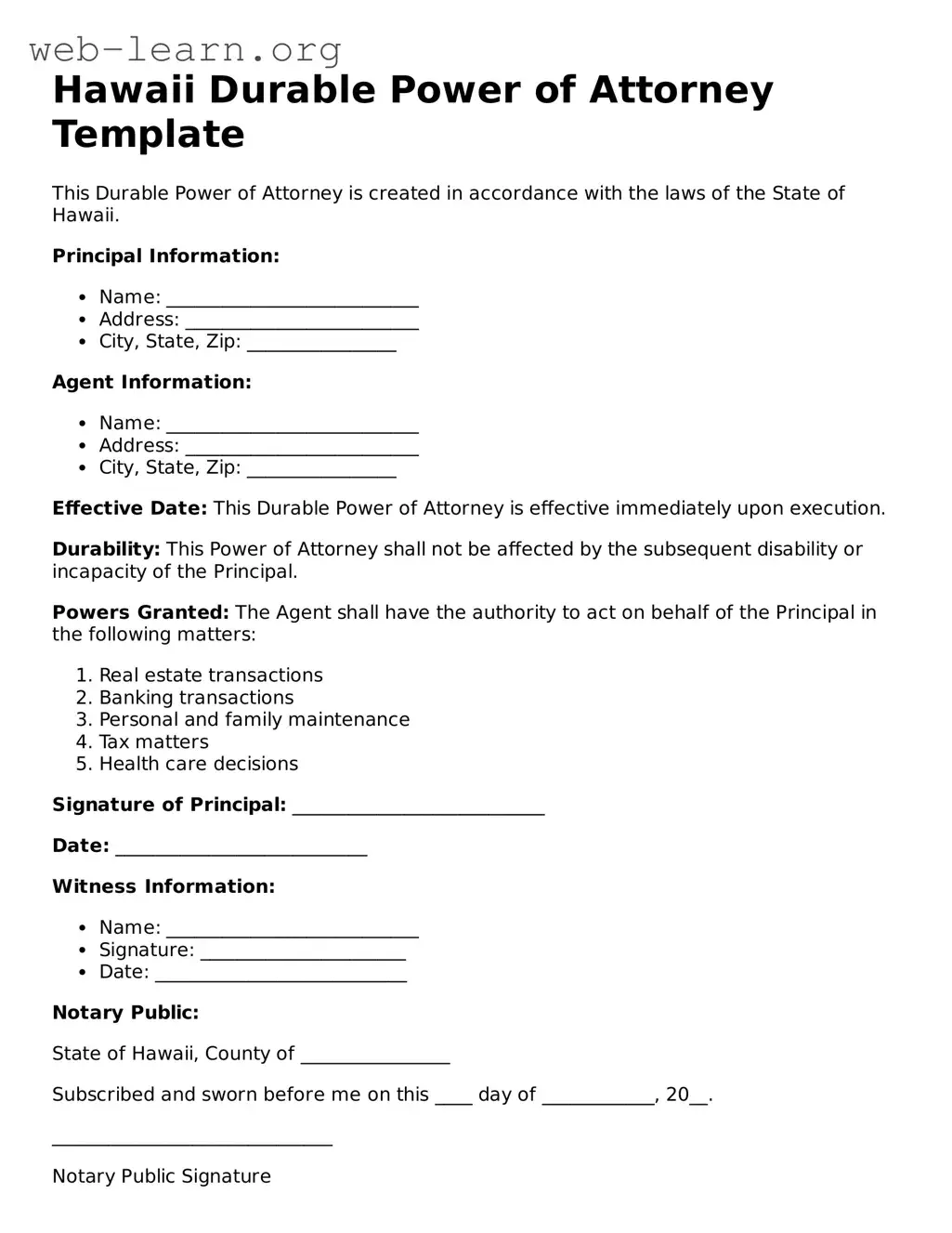
Hawaii Durable Power of Attorney Template
This Durable Power of Attorney is created in accordance with the laws of the State of Hawaii.
Principal Information:
Agent Information:
Effective Date: This Durable Power of Attorney is effective immediately upon execution.
Durability: This Power of Attorney shall not be affected by the subsequent disability or incapacity of the Principal.
Powers Granted: The Agent shall have the authority to act on behalf of the Principal in the following matters:
Signature of Principal: ___________________________
Date: ___________________________
Witness Information:
Notary Public:
State of Hawaii, County of ________________
Subscribed and sworn before me on this ____ day of ____________, 20__.
______________________________
Notary Public Signature
My commission expires: ________________
| Fact Name | Details |
|---|---|
| Definition | A Hawaii Durable Power of Attorney allows an individual to designate another person to make financial and legal decisions on their behalf, even if they become incapacitated. |
| Governing Law | This form is governed by the Hawaii Revised Statutes, specifically Chapter 551E, which outlines the requirements and regulations for durable powers of attorney. |
| Durability | One key feature of this form is its durability. It remains effective even if the principal becomes mentally incompetent, ensuring that their affairs can still be managed. |
| Revocation | The principal can revoke the Durable Power of Attorney at any time, as long as they are mentally competent. A written notice is typically required for revocation. |
| Agent's Authority | The agent, or attorney-in-fact, has the authority to handle a wide range of financial matters, including banking, real estate transactions, and tax matters, depending on the specific powers granted in the document. |
Filling out the Hawaii Durable Power of Attorney form is an important step in ensuring that your financial and legal affairs are managed according to your wishes, should you become unable to do so yourself. After completing the form, it will need to be signed and witnessed to ensure its validity.
What is a Durable Power of Attorney in Hawaii?
A Durable Power of Attorney (DPOA) is a legal document that allows you to appoint someone to make decisions on your behalf if you become unable to do so. This can include financial decisions, medical care, and other personal matters. The term "durable" means that the authority granted continues even if you become incapacitated.
Who can be appointed as an agent in a Durable Power of Attorney?
You can choose anyone you trust to be your agent, often referred to as your attorney-in-fact. This could be a family member, friend, or a professional such as an attorney or financial advisor. It's important that the person you select is reliable and understands your wishes.
Does a Durable Power of Attorney need to be notarized in Hawaii?
Yes, in Hawaii, a Durable Power of Attorney must be notarized to be valid. This means that you need to sign the document in the presence of a notary public, who will then verify your identity and witness your signature. This step helps ensure that the document is legally binding.
Can I limit the powers granted in a Durable Power of Attorney?
Absolutely. You have the option to specify which powers your agent will have. For example, you might allow them to manage your finances but not make medical decisions. Clearly outlining these limitations in the document can help avoid misunderstandings later on.
How does a Durable Power of Attorney become effective?
A Durable Power of Attorney typically becomes effective immediately upon signing, unless you specify a different start date. You can also choose to make it effective only when you become incapacitated. This flexibility allows you to tailor the document to your needs.
Can I revoke a Durable Power of Attorney?
Yes, you can revoke a Durable Power of Attorney at any time, as long as you are mentally competent. To do this, you should create a written revocation and notify your agent and any institutions that may have a copy of the original document. This ensures that everyone is aware of the change.
What happens if I don’t have a Durable Power of Attorney?
If you become incapacitated without a Durable Power of Attorney in place, your family may need to go through a legal process called guardianship to make decisions on your behalf. This can be time-consuming and costly, which is why having a DPOA is often recommended.
Is it advisable to have a Durable Power of Attorney?
Yes, having a Durable Power of Attorney is generally considered a wise decision. It provides peace of mind knowing that someone you trust can manage your affairs if you are unable to do so. This proactive step can save your loved ones from potential stress and confusion during difficult times.
Filling out a Durable Power of Attorney (DPOA) form in Hawaii can be a straightforward process, but many people make common mistakes that can lead to complications down the line. Understanding these pitfalls can help ensure that your document is valid and reflects your wishes accurately.
One frequent mistake is not selecting the right agent. The agent is the person you trust to make decisions on your behalf. Choosing someone who may not understand your values or who might not be able to handle the responsibility can create issues. It’s crucial to discuss your intentions with your chosen agent before naming them in the document.
Another common error is failing to specify the powers granted to the agent. Some individuals assume that a general grant of authority is sufficient. However, it’s important to outline specific powers, such as financial decisions, health care choices, or property management. This clarity helps prevent misunderstandings and ensures that your agent acts according to your wishes.
Many people also overlook the requirement for witnesses or notarization. In Hawaii, a DPOA must be signed in the presence of a notary public or two witnesses who are not related to you. Skipping this step can render the document invalid, so it’s essential to follow the legal requirements carefully.
Another mistake involves not updating the DPOA when circumstances change. Life events such as marriage, divorce, or the death of an agent can affect your choices. Regularly reviewing and updating your DPOA ensures that it reflects your current situation and intentions.
Some individuals forget to include a date on the document. While it may seem minor, omitting the date can create confusion about when the powers take effect. Always include the date to provide clarity and context for your agent and any institutions they may interact with.
Additionally, people sometimes fail to communicate their wishes to family members. If your loved ones are unaware of your DPOA and your choices, they may be caught off guard during a critical time. Open discussions can help prevent conflicts and ensure that everyone is on the same page.
Lastly, some may not consider the implications of choosing a co-agent. While having multiple agents can provide checks and balances, it can also lead to disagreements or delays in decision-making. Carefully consider whether co-agents are necessary and how they will work together.
By being aware of these common mistakes, you can fill out your Durable Power of Attorney form with confidence. Taking the time to do it correctly will help ensure that your wishes are honored and that your agent is prepared to act on your behalf.
When creating a Hawaii Durable Power of Attorney, there are several other forms and documents that may be useful to consider. Each serves a specific purpose and can help ensure that your wishes are respected and your affairs are managed properly.
Considering these documents alongside your Hawaii Durable Power of Attorney can provide comprehensive coverage for your health and financial decisions. It’s important to consult with a legal professional to ensure that all documents are properly executed and reflect your wishes.
The Durable Power of Attorney (DPOA) is a crucial legal document that allows one person to act on behalf of another in financial or medical matters. Several other documents share similarities with the DPOA in terms of granting authority or making decisions. Here are eight such documents:
When filling out the Hawaii Durable Power of Attorney form, it is essential to approach the task with care and attention to detail. This document allows someone to make decisions on your behalf, so accuracy is paramount. Below is a list of things you should and shouldn't do while completing the form.
By following these guidelines, you can help ensure that your Durable Power of Attorney form is filled out correctly, reflecting your wishes and providing peace of mind for you and your loved ones.
Understanding the Hawaii Durable Power of Attorney form is essential for making informed decisions about your legal and financial matters. However, several misconceptions can lead to confusion. Here are eight common misconceptions, along with clarifications:
The Hawaii Durable Power of Attorney can cover various areas, including health care decisions. It allows you to designate someone to make choices on your behalf in multiple aspects of your life.
While many older individuals utilize this document, anyone over 18 can create a Durable Power of Attorney. Life is unpredictable, and having this form can benefit anyone.
You can revoke or modify your Durable Power of Attorney at any time, as long as you are mentally competent. This flexibility allows you to adapt to changing circumstances.
In Hawaii, a Durable Power of Attorney can be effective immediately upon signing or at a specified future date. You have the choice to determine when it takes effect.
Your agent must act in your best interest and follow the guidelines set forth in the document. They are not free to misuse your assets or make decisions contrary to your wishes.
A Durable Power of Attorney remains valid even if you become incapacitated, whereas a regular Power of Attorney typically becomes void in such situations.
A will only takes effect after your death. A Durable Power of Attorney is crucial for managing your affairs while you are still alive but unable to make decisions.
Hawaii's Durable Power of Attorney is generally recognized in other states, but it’s wise to check the specific laws of the state where you may need to use it.
By addressing these misconceptions, individuals can better understand the significance and functionality of the Hawaii Durable Power of Attorney form, ensuring they are prepared for the future.
When filling out and using the Hawaii Durable Power of Attorney form, it's important to keep several key points in mind. Here are five essential takeaways:
By following these guidelines, you can ensure that your Durable Power of Attorney is effective and meets your needs.
Living Will Kansas - A Durable Power of Attorney is an important step in protecting your rights and interests.
General Power of Attorney California - It can be particularly useful for individuals traveling or living abroad.
Free Printable Durable Power of Attorney Form Alabama - The Durable Power of Attorney can be tailored to fit your specific needs.