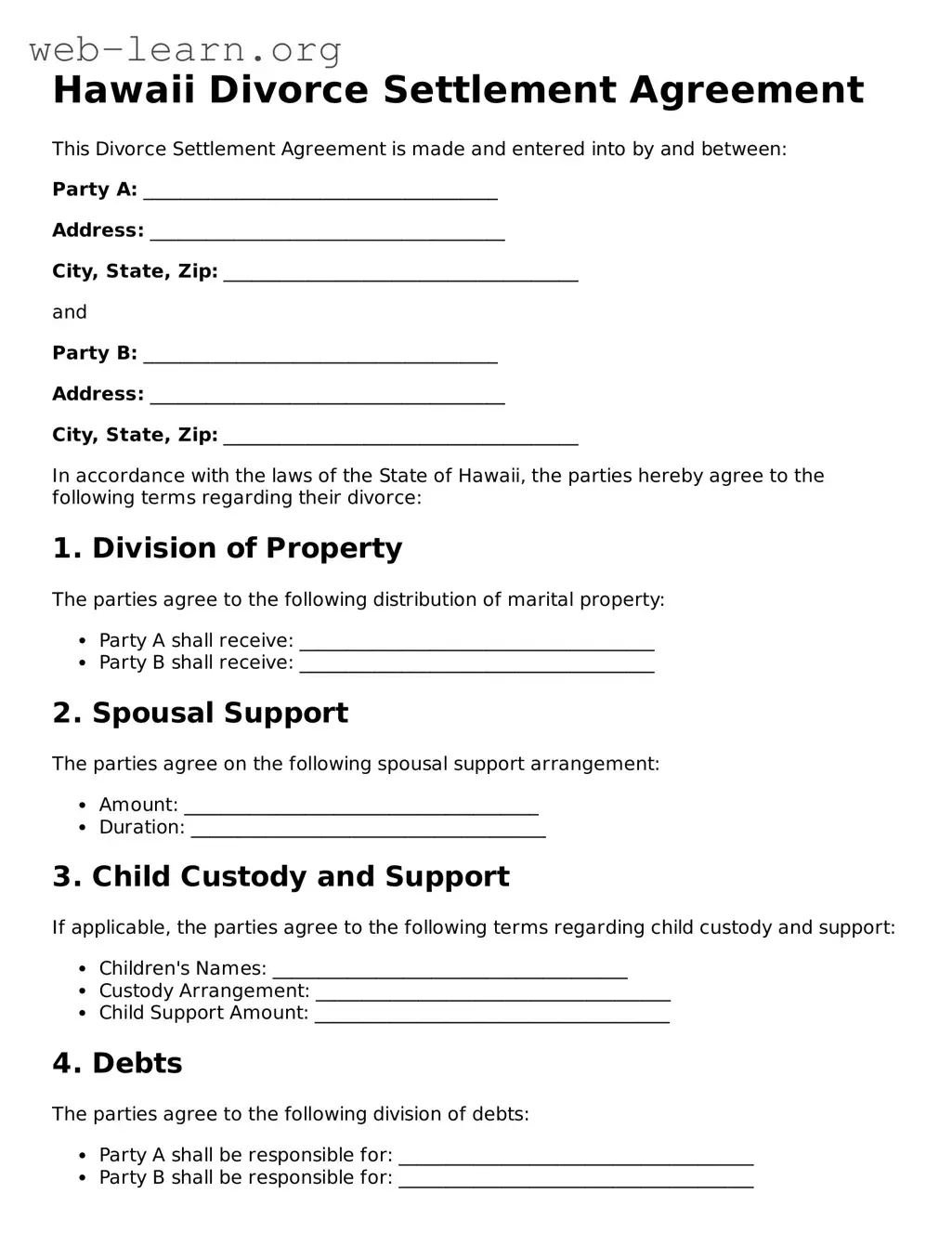
When navigating the complexities of divorce in Hawaii, one crucial document stands out: the Divorce Settlement Agreement form. This form serves as a vital tool for couples seeking to outline the terms of their separation in a clear and organized manner. It addresses essential aspects such as the division of marital property, child custody arrangements, and financial support obligations. By detailing how assets and debts will be split, the agreement aims to minimize conflict and provide a sense of closure for both parties. Additionally, it includes provisions for child support, ensuring that the needs of any children involved are prioritized. The form also allows for the establishment of visitation rights, which can help maintain healthy relationships between parents and their children post-divorce. Ultimately, the Divorce Settlement Agreement form is designed to facilitate a smoother transition into a new chapter of life, making it a cornerstone of the divorce process in Hawaii.
Hawaii Divorce Settlement Agreement
This Divorce Settlement Agreement is made and entered into by and between:
Party A: ______________________________________
Address: ______________________________________
City, State, Zip: ______________________________________
and
Party B: ______________________________________
Address: ______________________________________
City, State, Zip: ______________________________________
In accordance with the laws of the State of Hawaii, the parties hereby agree to the following terms regarding their divorce:
1. Division of Property
The parties agree to the following distribution of marital property:
2. Spousal Support
The parties agree on the following spousal support arrangement:
3. Child Custody and Support
If applicable, the parties agree to the following terms regarding child custody and support:
4. Debts
The parties agree to the following division of debts:
5. Miscellaneous Provisions
The parties further agree to the following:
IN WITNESS WHEREOF, the parties have executed this Divorce Settlement Agreement as of the ___ day of __________, 20__.
Party A Signature: ________________________________
Date: ________________________________
Party B Signature: ________________________________
Date: ________________________________
This document is intended to serve as a template. It is advisable to seek legal counsel to ensure compliance with all applicable laws and regulations.
| Fact Name | Description |
|---|---|
| Purpose | The Hawaii Divorce Settlement Agreement form outlines the terms agreed upon by both parties regarding the dissolution of marriage, including asset division, child custody, and support obligations. |
| Governing Law | This form is governed by the laws of the State of Hawaii, specifically under Hawaii Revised Statutes Chapter 580, which pertains to divorce and family law. |
| Filing Requirements | The completed form must be filed with the family court in the appropriate jurisdiction, along with any other required documents to finalize the divorce process. |
| Mutual Agreement | Both parties must mutually agree to the terms outlined in the settlement agreement for it to be valid and enforceable. |
| Modification | Any changes to the settlement agreement must be made in writing and approved by the court to ensure they are legally binding. |
After obtaining the Hawaii Divorce Settlement Agreement form, you will need to complete it accurately to ensure that your divorce proceedings can move forward smoothly. Follow the steps outlined below to fill out the form correctly.
What is a Hawaii Divorce Settlement Agreement?
A Hawaii Divorce Settlement Agreement is a legal document that outlines the terms of a divorce between two parties. It addresses various aspects such as property division, child custody, child support, and spousal support. This agreement serves to ensure that both parties understand their rights and responsibilities following the divorce.
Who needs to complete this form?
Both spouses involved in the divorce need to complete the Divorce Settlement Agreement. This form is essential for couples who are able to reach a mutual agreement on the terms of their divorce without going to court. It is important for both parties to review the terms carefully and ensure they are in agreement before signing.
How is the agreement enforced?
Once the Divorce Settlement Agreement is signed by both parties, it becomes a legally binding document. If one party fails to comply with the terms outlined in the agreement, the other party may seek enforcement through the court system. Courts generally take these agreements seriously, so adherence to the terms is crucial.
Can the agreement be modified?
Yes, the Divorce Settlement Agreement can be modified after it has been finalized, but this typically requires a mutual agreement from both parties. Changes may be necessary due to changes in circumstances, such as relocation or changes in income. To modify the agreement legally, it is recommended to file a request with the court.
What happens if we cannot agree on the terms?
If the parties cannot reach an agreement on the terms of the divorce, they may need to consider mediation or court intervention. Mediation involves a neutral third party who helps facilitate discussions and negotiations. If mediation fails, the case may proceed to court, where a judge will make the final decisions regarding the divorce terms.
Is legal assistance necessary when completing this form?
While it is not mandatory to have legal assistance when completing a Divorce Settlement Agreement, it is highly recommended. Legal professionals can provide valuable guidance and ensure that the agreement complies with state laws. They can also help address any potential issues that may arise during the divorce process.
Filling out the Hawaii Divorce Settlement Agreement form can be a daunting task. Many people find themselves making mistakes that could delay the process or complicate their situation. One common error is failing to provide complete information. When sections are left blank or filled out incompletely, it can lead to confusion and may require additional time to resolve.
Another mistake often made is not being specific enough about assets and debts. It’s crucial to clearly list all property, bank accounts, and liabilities. Vague descriptions can result in disputes later on. For example, stating "some furniture" instead of detailing the specific items can create misunderstandings between both parties.
People frequently overlook the importance of double-checking their calculations. Whether it's child support, alimony, or division of assets, incorrect figures can lead to significant issues. A simple math error can have lasting implications, so it’s wise to review all numbers carefully before submission.
Additionally, some individuals forget to include all necessary documents. Supporting paperwork, such as financial statements and tax returns, may be required to substantiate claims made in the agreement. Omitting these documents can lead to delays and might even result in the agreement being rejected.
Another common pitfall is not understanding the implications of the agreement. Some people sign without fully grasping what they are agreeing to. It’s essential to take the time to read and comprehend each section. Seeking clarification on any confusing terms can prevent future regrets.
Finally, a lack of communication between the parties can lead to misunderstandings. If one spouse fills out the form without discussing it with the other, it can result in discrepancies. Open dialogue ensures that both parties are on the same page, which can make the process smoother and more amicable.
When navigating a divorce in Hawaii, several key documents often accompany the Divorce Settlement Agreement. Each of these forms plays a crucial role in ensuring a smooth legal process. Below is a list of these documents, along with a brief description of each.
Understanding these documents is essential for anyone going through a divorce in Hawaii. Each one serves a specific purpose and contributes to the overall resolution of the divorce process.
When filling out the Hawaii Divorce Settlement Agreement form, it's important to approach the process carefully. Here are some key dos and don'ts to keep in mind:
When it comes to divorce, many people have questions about the process and the necessary paperwork. The Hawaii Divorce Settlement Agreement form is no exception. Here are nine common misconceptions that people often have about this important document:
Many believe that a Divorce Settlement Agreement is only needed when both spouses are in agreement. In reality, even if there are disagreements, this form can help clarify terms and facilitate negotiations.
While financial issues are a significant part of the agreement, it also addresses child custody, visitation rights, and other important aspects of family life.
Though it’s possible to fill out the form on your own, having legal guidance can ensure that all necessary details are included and that your rights are protected.
Some think that once the agreement is signed, it cannot be changed. However, if circumstances change, modifications can be made through the court.
This form is relevant for all divorcing couples, regardless of whether children are involved. It provides a framework for settling all aspects of the divorce.
While the agreement needs to be submitted to the court, it does not have to be done right away. Couples can take their time to negotiate terms before filing.
The agreement is a reflection of what both parties negotiate. Fairness depends on the willingness of both sides to compromise and communicate effectively.
It’s common for couples to fill out the form and later negotiate specific terms. The form can serve as a starting point for discussions.
Even after signing, there may be grounds for contesting the agreement, especially if one party was misled or if there was a significant change in circumstances.
Understanding these misconceptions can help you navigate the divorce process more effectively. Always consider seeking professional advice to ensure your interests are fully protected.
Filling out the Hawaii Divorce Settlement Agreement form requires careful attention to detail. Here are key takeaways to ensure the process goes smoothly:
How Much Is a Divorce in Arkansas - Both parties should ensure that the agreement is fair and equitable.
Settlement Agreement Divorce Georgia - It may also include a timeline for the implementation of the terms.