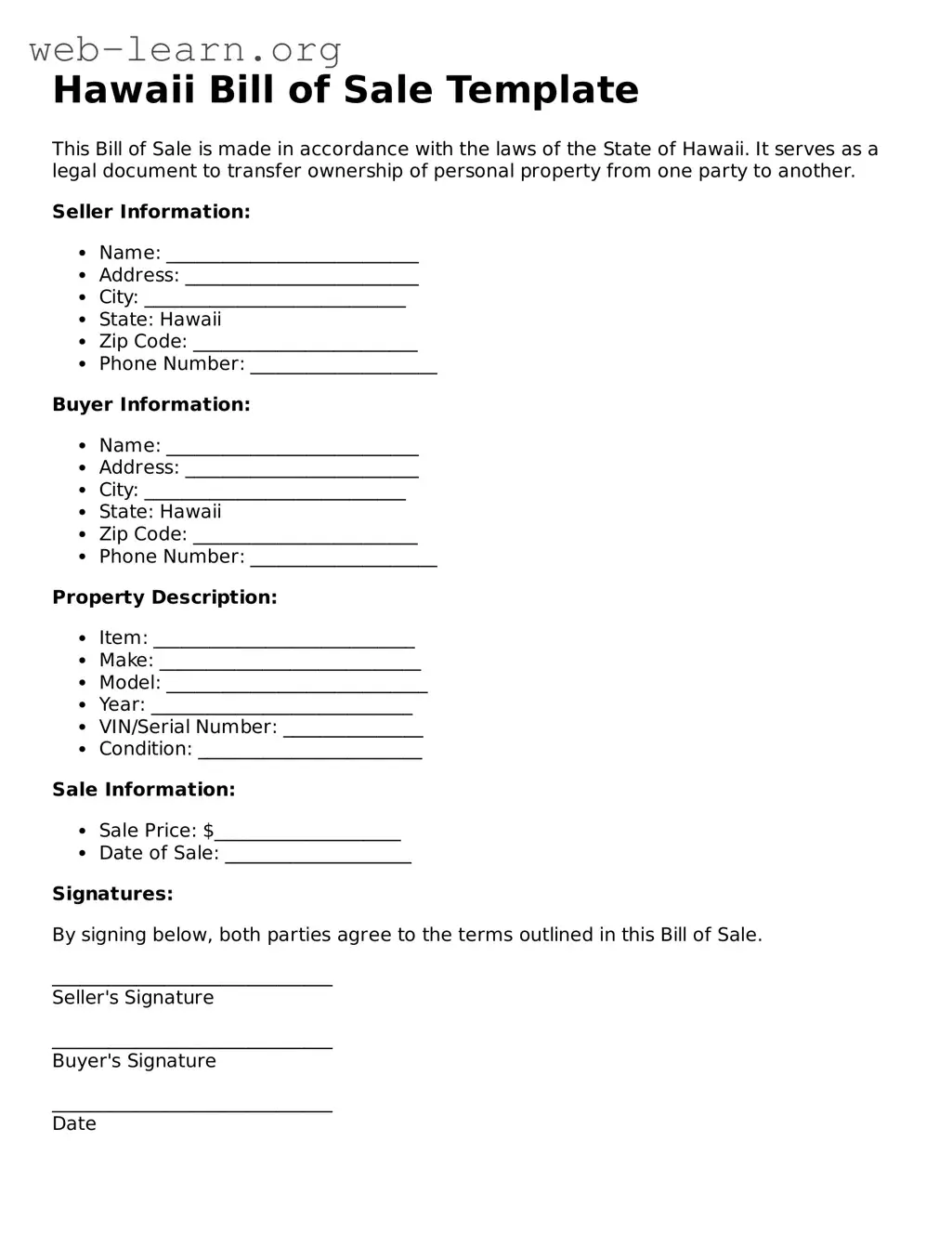
When engaging in the buying or selling of personal property in Hawaii, a Bill of Sale form becomes an essential document to ensure a smooth transaction. This form serves as a legal record that outlines the details of the sale, including the names and addresses of both the buyer and seller, a description of the item being sold, and the purchase price. Additionally, it may include information about any warranties or guarantees provided by the seller. The Bill of Sale not only protects the interests of both parties but also helps establish clear ownership of the property once the transaction is complete. In Hawaii, specific requirements and considerations may apply, particularly for certain types of property, such as vehicles or boats. Understanding these nuances can help individuals navigate the process effectively and avoid potential disputes down the line.
Hawaii Bill of Sale Template
This Bill of Sale is made in accordance with the laws of the State of Hawaii. It serves as a legal document to transfer ownership of personal property from one party to another.
Seller Information:
Buyer Information:
Property Description:
Sale Information:
Signatures:
By signing below, both parties agree to the terms outlined in this Bill of Sale.
______________________________
Seller's Signature
______________________________
Buyer's Signature
______________________________
Date
| Fact Name | Description |
|---|---|
| Purpose | The Hawaii Bill of Sale form is used to document the transfer of ownership of personal property from one individual to another. |
| Governing Law | This form is governed by Hawaii Revised Statutes, specifically Chapter 490, which pertains to the Uniform Commercial Code. |
| Types of Property | The form can be used for various types of personal property, including vehicles, boats, and equipment. |
| Signatures Required | Both the seller and the buyer must sign the form to validate the transaction and confirm the transfer of ownership. |
| Record Keeping | It is advisable for both parties to keep a copy of the Bill of Sale for their records, as it serves as proof of the transaction. |
After obtaining the Hawaii Bill of Sale form, you will need to fill it out carefully to ensure all necessary information is provided. This document serves as proof of the transaction between the buyer and the seller. Completing the form accurately is crucial for both parties involved.
A Bill of Sale is a legal document that records the transfer of ownership of an item from one person to another. In Hawaii, it is often used for the sale of personal property, including vehicles, boats, and other valuable items. This document serves as proof of the transaction and includes details about the item, the buyer, and the seller.
While a Bill of Sale is not always legally required for every transaction, it is highly recommended. For certain items, such as vehicles, it is necessary for registering the vehicle with the state. Having a Bill of Sale can help protect both the buyer and seller by providing a clear record of the transaction.
A comprehensive Bill of Sale should include the following information:
Including this information helps ensure clarity and can prevent disputes in the future.
Yes, you can create your own Bill of Sale. Many templates are available online, allowing you to customize the document to fit your specific needs. Just ensure that all necessary information is included and that both parties sign the document. This can help avoid any potential legal issues later on.
A witness or notary is not required for a Bill of Sale in Hawaii, but having one can add an extra layer of security. If a dispute arises, a notarized document can serve as stronger evidence of the transaction. It’s always a good idea to check if specific items, like vehicles, have additional requirements.
After the transaction, both the buyer and seller should keep a copy of the Bill of Sale for their records. The buyer may need it for registration or insurance purposes, while the seller should keep it as proof of the sale. It’s wise to store the document in a safe place to ensure it is easily accessible if needed in the future.
When completing the Hawaii Bill of Sale form, individuals often encounter several common mistakes that can lead to complications. One frequent error is failing to provide accurate information about the buyer and seller. Each party's full name, address, and contact details are essential. Omitting or incorrectly entering this information can create confusion and legal challenges down the line.
Another common mistake is neglecting to include a detailed description of the item being sold. The Bill of Sale should clearly outline the item’s make, model, year, and any identifying numbers, such as a Vehicle Identification Number (VIN) for vehicles. Without this information, it may be difficult to prove ownership or resolve disputes regarding the sale.
Many people also overlook the importance of documenting the sale price. The form must clearly state the amount paid for the item. Leaving this section blank or entering an incorrect figure can lead to misunderstandings between the buyer and seller, especially if issues arise after the transaction is completed.
Failure to sign the Bill of Sale is another critical mistake. Both the buyer and seller must sign the document to validate the transaction. A lack of signatures can render the Bill of Sale ineffective, making it difficult to enforce any agreements made during the sale.
Additionally, some individuals forget to include the date of the transaction. This information is crucial for establishing the timeline of ownership and for any future legal matters that may arise. Without a date, it may be challenging to prove when the sale occurred.
Lastly, people often do not keep copies of the completed Bill of Sale. It is vital to retain a copy for personal records. Having this document on hand can help resolve disputes or provide proof of ownership in the future. Failing to keep a copy can lead to unnecessary complications if questions about the sale arise later.
When completing a transaction in Hawaii, several other forms and documents may accompany the Bill of Sale to ensure clarity and legality. Below is a list of common documents that may be used in conjunction with the Hawaii Bill of Sale.
These documents help ensure a smooth transaction and protect both the buyer and seller. It is advisable to gather all necessary paperwork before finalizing any sale to avoid complications later.
The Bill of Sale form is a vital document in various transactions, particularly those involving the transfer of ownership of goods or property. Several other documents serve similar purposes, each with its own specific context and details. Below is a list of ten documents that are similar to a Bill of Sale, along with explanations of how they are alike.
When filling out the Hawaii Bill of Sale form, it's essential to be thorough and accurate. Here are some important dos and don'ts to consider:
By following these guidelines, you can help ensure that your Bill of Sale is valid and serves its purpose effectively.
The Hawaii Bill of Sale form is often misunderstood. Here are four common misconceptions:
When dealing with the Hawaii Bill of Sale form, it is important to understand its purpose and how to fill it out correctly. Here are some key takeaways to keep in mind:
Bill of Sale in Alabama - The document may specify whether the sale is "as-is" or if any warranties apply.
Automobile Bill of Sale - This document can provide peace of mind for both parties involved in the transaction.